
FlyCart 30 for Solar Farm Surveys at Dusk
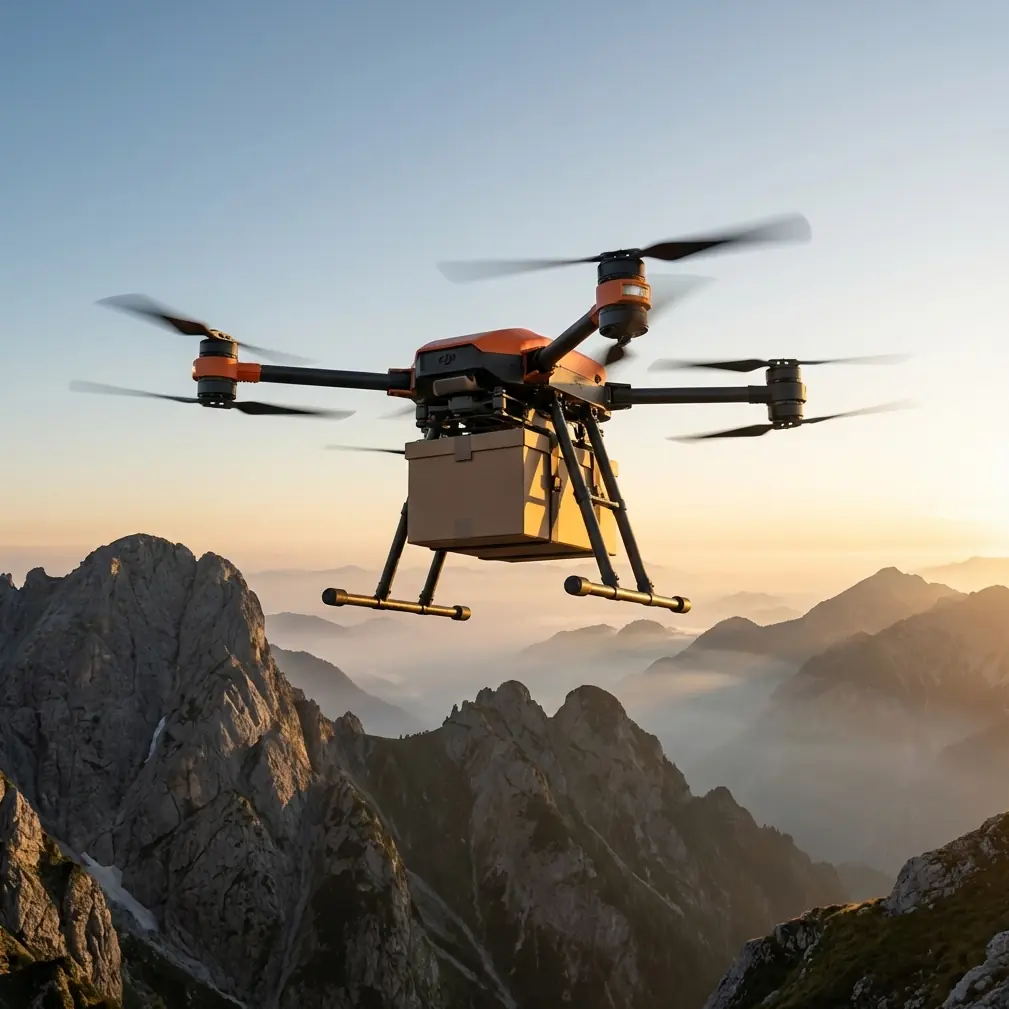
FlyCart 30 for Solar Farm Surveys at Dusk: A Field Tutorial on Seeing More When Light Gets Thin
META: A practical FlyCart 30 tutorial for low-light solar farm surveying, covering route planning, winch workflows, dual-battery reliability, obstacle sensing, and why focus stacking matters for close-up defect documentation.
I spend a lot of time around logistics aircraft, but the job changes when the assignment is a solar farm survey late in the day. The stakes are different. Light drops fast. Panel rows turn into repeating dark geometry. Surface defects that looked obvious an hour earlier start disappearing into reflected sky. And if the site is large enough, walking every string with handheld gear is the slowest possible way to learn what is actually happening.
That is where the FlyCart 30 becomes more interesting than its name suggests.
Most people hear “cargo drone” and think only about transport. On a solar site, especially in low light, that misses the point. The aircraft’s value is not just what it can carry. It is what that carrying capacity lets a survey team do without constantly returning to base, swapping tools, or improvising with underpowered platforms. Payload ratio matters here because survey work is rarely just a camera in the air. You are balancing optics, lighting, mounting options, data collection accessories, and sometimes a winch-based drop or retrieval workflow for sensors positioned in hard-to-reach zones between arrays.
This tutorial is built for a specific scenario: using the FlyCart 30 to survey solar farms when daylight is fading. I’ll also connect one unusual but useful idea from a camera workflow that deserves more attention in UAV operations: focus bracketing. A recent piece on the Canon 5D Mark IV highlighted a simple three-step focus bracketing process designed to solve shallow depth-of-field problems in close-up photography. The examples were flowers, jewelry, and miniature models—subjects where the front may look sharp while the rear falls soft. That same problem appears during solar inspections more often than people admit, especially when you need close documentation of connectors, frame damage, labeling, surface contamination, or small cracks at awkward angles near dusk.
If your survey workflow ignores that, your final report can look complete while quietly missing detail.
Why low-light solar surveying is different
A solar farm at dusk is not just a dimmer version of the same site. The entire visual environment changes.
Glare can reduce in some sections, which is good. But contrast becomes less predictable. Long shadows mask cable runs and mounting hardware. Repeating rows reduce visual separation, making manual line-of-sight orientation harder. Wildlife becomes more active around the perimeter and drainage areas. Crews are often trying to finish one last pass before conditions fall below their standard operating threshold.
On one site, just before sunset, we had a deer move across a service corridor between panel blocks. That is not unusual in itself. What mattered was that the aircraft’s sensing system recognized the obstacle environment and let us pause and reroute cleanly instead of forcing a rushed manual correction near the arrays. In solar work, obstacle sensing is not only about poles and wires. It is also about managing the unpredictable movement that appears at exactly the time many teams are tempted to hurry.
That moment reinforced a lesson I trust more every year: route optimization is not just about speed. It is about preserving decision quality when the light, terrain, and schedule all start compressing your margin.
Step 1: Build the mission around the aircraft’s carrying logic
The FlyCart 30 is at its best when you stop treating payload as a raw number and start treating it as a workflow multiplier.
For low-light solar farm surveys, think in modules:
- primary imaging payload
- supplemental close-up documentation kit
- portable lighting or sensor package
- winch-delivered accessories for spot checks or remote placement
- spare field essentials tied to turnaround speed
The reason payload ratio matters is simple. A drone that can carry meaningful equipment without becoming operationally clumsy gives you fewer compromises in the field. On large utility-scale sites, every forced landing to change tools steals the very light window you were trying to use.
With the FlyCart 30, the dual-battery configuration also has practical significance beyond endurance talk. Low-light surveying tends to happen at the edge of the workday, when crews are already mentally and physically taxed. Dual-battery architecture supports continuity and operational resilience. If your workflow depends on making one final sector pass, documenting a defect zone, then returning with enough confidence margin left for changing conditions, redundancy is not a luxury. It is what keeps the mission structured instead of improvised.
When planning, decide what absolutely must happen in one sortie. Do not overload the aircraft simply because it can carry more. Carry what shortens the overall survey chain.
Step 2: Use route optimization for data quality, not just coverage
A lot of solar survey plans are built like mowing patterns: parallel lanes, consistent altitude, neat completion maps. That looks efficient in briefing slides. It is not always efficient in failing light.
At dusk, route optimization should prioritize three things:
- sections that lose detail fastest
- corridors with more obstacles or terrain variation
- areas where a second pass may be needed for close inspection
This is where BVLOS planning also deserves careful thought where regulations, site conditions, and authorization support it. On expansive solar facilities, BVLOS-capable workflows can reduce wasted repositioning and help teams maintain a cleaner survey structure across distant blocks. The value is not novelty. The value is maintaining consistency over distance, especially when the light window is shrinking.
My recommendation is to divide the site into visual-risk zones rather than equal acreage. For example:
- edge rows near tree lines or berms
- drainage crossings
- inverter and combiner concentration areas
- sections with known soiling, shading, or mechanical defect history
Fly those first if they degrade visually sooner or require closer confirmation. Uniform rows in open center sections can often tolerate later passes better than cluttered boundary areas.
If the route is optimized only for distance, your final data set may be geographically complete but operationally weak. In practice, the best route is the one that captures the most decision-relevant detail before conditions deteriorate.
Step 3: Let the winch system do more than transport
The FlyCart 30’s winch system is often framed around delivery tasks, but on a solar farm it can support smarter survey execution.
A winch gives you options in places where landing is inconvenient, dusty, uneven, or simply too slow. You can lower lightweight accessories, retrieve small field instruments, or support remote spot-check workflows near structures and tight corridors without committing the aircraft to a full touchdown. That reduces contamination risk around sensitive inspection equipment and keeps the mission moving.
On large sites, the difference between landing repeatedly and using a controlled winch deployment can be the difference between finishing a defect confirmation cycle before dark and coming back another day.
Operationally, this matters most when paired with route planning. If a zone is likely to require close verification, preload the mission with the right accessory package and use the winch strategically rather than treating every anomaly as a reason to break the sortie.
Step 4: Borrow a lesson from macro photography: bracket focus for close-up defect evidence
This is the most overlooked part of low-light survey documentation.
The camera article I mentioned centered on the Canon 5D Mark IV and its focus bracketing feature. The problem it addresses is shallow depth of field in close work. The examples—flowers, jewelry, miniature models—sound unrelated to solar infrastructure until you remember what a defect report often needs: a sharp image of a small issue across uneven depth.
Think about:
- cracked glass near a frame edge
- cable connector wear
- label plates at angle
- corrosion around hardware
- localized debris accumulation with raised and recessed surfaces
In those situations, especially under low light, one focal plane is often not enough. You get the front edge sharp, but the rear detail softens. Or the center detail holds while the outer damage pattern fades. The Canon workflow described this as a three-step path to getting the subject sharp “from front to back.” That concept translates directly to drone-supported inspection reporting when you are collecting close-up images after the main survey pass.
If your imaging stack or ground camera workflow supports focus bracketing, use it for defect confirmation. Capture multiple focal planes and merge them later for a deeper-focus result. This is not a stylistic flourish. It has operational significance. A maintenance team deciding whether to dispatch for a minor seal issue or a more serious component replacement needs evidence that is both accurate and readable.
Low-light conditions make this even more valuable because aperture and shutter compromises can otherwise force you into soft or noisy documentation. Focus-bracketed close-ups can rescue detail that a single image would lose.
Step 5: Work the safety stack as part of productivity
The best-performing dusk surveys are rarely the most aggressive ones. They are the ones with disciplined fallback layers.
For the FlyCart 30, two features matter here in practical field terms: the dual-battery setup already mentioned, and the emergency parachute. The parachute is not something you plan to use, obviously. Its value is in risk management over complex sites where you may be operating around expensive infrastructure and variable terrain. Safety systems preserve operational confidence, and confidence preserves workflow discipline.
That matters because low-light operations encourage bad habits:
- stretching a leg too long
- rushing a return
- cutting a verification pass short
- forcing a landing where the surface is poor
Teams that trust their safety stack tend to make better timing decisions. They abort earlier when needed. They preserve clean logs. They do not turn a survey into a recovery problem.
Step 6: Use wildlife and edge conditions as planning inputs, not surprises
Back to the deer.
The reason I mention that encounter is not for storytelling decoration. It is a reminder that solar farms are living environments. Near dusk, birds, deer, and smaller animals move differently than they do at midday. Sensor awareness and obstacle handling become more than technical bullet points. They directly affect how calmly a mission can adapt.
When you brief the site, mark likely wildlife corridors just as you would drainage lines or access roads. Build in reroute logic. Do not assume the most efficient path on paper will remain the best path in motion.
This is another place where the FlyCart 30’s stability as a utility platform helps. A heavier-duty aircraft designed for serious work can make route changes feel deliberate rather than twitchy. That becomes especially useful when you are carrying a mixed survey payload and working in the visual ambiguity that dusk creates.
Step 7: Tie your field workflow to the final report
A solar survey only becomes valuable when the output supports action.
My preferred reporting chain for a low-light FlyCart 30 mission looks like this:
- broad coverage pass to identify suspect zones
- route-prioritized revisit of those zones
- close-up imaging for defect confirmation
- focus-bracketed stills where depth detail matters
- clear note of lighting conditions and any route deviations caused by wildlife or obstacles
That last point is not administrative clutter. If a team member revisits the site later under different light, route deviations explain why certain angles or sectors were documented differently. Good reporting preserves context.
If your team is still refining these workflows, it helps to compare aircraft setup, mission logic, and accessory choices with someone who has built utility-style drone operations before. If that would be useful, you can message our flight planning desk here.
What makes the FlyCart 30 unusually useful here
The reason I keep coming back to this aircraft for dusk solar survey work is not that it replaces specialized inspection drones in every scenario. It does not. The reason is that it expands what one sortie can accomplish.
That comes from a combination of factors:
- strong payload logic
- a winch system that reduces unnecessary landings
- dual-battery resilience during narrow operational windows
- route flexibility across large sites, including BVLOS-oriented planning where appropriate
- safety architecture that supports disciplined operations
- enough utility to carry the tools that make low-light documentation genuinely useful, not merely possible
Add one more layer—the focus-bracketing mindset borrowed from close-up photography—and the workflow gets better still. The article about the 5D Mark IV was aimed at macro shooters dealing with petals, jewelry surfaces, and miniature objects. Yet the central lesson is broader: when depth is shallow and detail matters, one frame often tells only part of the story. On a solar farm, that can mean the difference between spotting a defect and proving it.
That is the kind of operational thinking the FlyCart 30 rewards. Not bigger for the sake of bigger. More capable in ways that reduce compromise when the light is running out and the site is still asking questions.
Ready for your own FlyCart 30? Contact our team for expert consultation.