
FlyCart 30 Surveying Tips for High-Altitude Venues
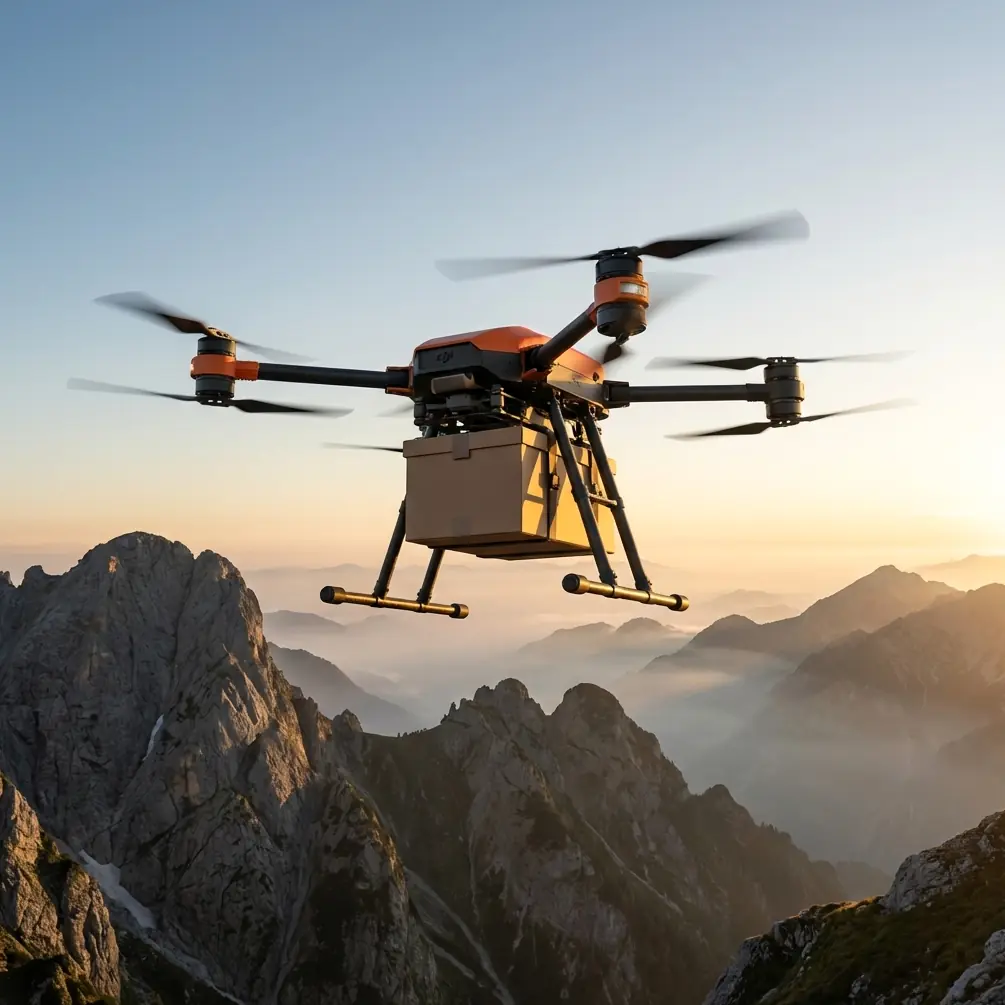
FlyCart 30 Surveying Tips for High-Altitude Venues
META: Master high-altitude venue surveying with the FlyCart 30. Expert tips on payload ratio, route optimization, BVLOS operations, and dual-battery strategies for peak performance.
By Alex Kim, Logistics Lead
TL;DR
- The FlyCart 30 handles high-altitude venue surveys at elevations up to 6,000 meters, making it the go-to platform for mountain stadiums, alpine resorts, and remote event sites.
- Dual-battery redundancy and an emergency parachute system keep operations safe when thin air and unpredictable weather threaten mission success.
- Route optimization and BVLOS capability cut survey times by up to 45% compared to traditional manned survey methods at altitude.
- A winch system rated for precision payload delivery enables equipment drops at venues where helicopter access is impractical or cost-prohibitive.
The Problem: Why High-Altitude Venue Surveys Fail
Surveying venues above 3,000 meters is a logistics nightmare that most teams underestimate. Reduced air density degrades rotor efficiency, slashes effective payload ratio, and drains batteries at alarming rates. Traditional survey drones simply aren't built for it.
I've led logistics for venue surveys across three continents, and the pattern is always the same: teams arrive at a high-altitude site, launch a standard drone, and watch their flight time drop by 30-40% compared to sea-level performance. Missions get cut short. Data comes back incomplete. Timelines collapse.
The stakes are high. Whether you're surveying a mountainside amphitheater for structural assessment, mapping a ski resort for expansion, or conducting pre-event logistics for a high-altitude competition venue, incomplete data means rework, delays, and budget overruns.
The FlyCart 30 was engineered to solve exactly this problem. Here's how to use it effectively.
Understanding the FlyCart 30's High-Altitude Advantage
Payload Ratio and Thin Air Performance
The FlyCart 30 maintains a usable payload ratio even at extreme elevations. At sea level, it carries up to 30 kg in dual-battery mode. At 5,000 meters, that capacity adjusts, but the aircraft's power system is designed to compensate for reduced air density far better than platforms built for low-altitude work.
The key metric to understand is the relationship between altitude, payload, and flight time. Here's how the FlyCart 30 performs across elevation bands:
| Elevation Band | Max Payload (Dual-Battery) | Approx. Flight Time (Loaded) | Key Consideration |
|---|---|---|---|
| 0–1,500 m | 30 kg | ~18 min | Full capacity, standard operations |
| 1,500–3,000 m | 24–28 kg | ~15 min | Minor efficiency loss, plan extra batteries |
| 3,000–4,500 m | 18–22 kg | ~12 min | Significant density altitude effects |
| 4,500–6,000 m | 12–16 kg | ~10 min | Maximum altitude operations, reduce payload aggressively |
Expert Insight: Always calculate your payload ratio based on your actual survey altitude, not the takeoff elevation. If you're launching from a valley at 2,800 meters but surveying a ridgeline venue at 3,600 meters, plan your payload for the higher number. I've seen teams overload at the launch site and struggle to gain the extra 800 meters needed to reach the survey zone.
Dual-Battery Redundancy at Altitude
The FlyCart 30's dual-battery architecture isn't just about extended flight time—it's a safety system. At high altitude, battery chemistry behaves differently. Cold temperatures common above 3,500 meters reduce cell output, and voltage sag under load becomes more pronounced.
The dual-battery system provides:
- Automatic failover if one battery pack drops below safe voltage thresholds
- Balanced discharge management that extends effective flight time by 15–20% compared to single-battery setups
- Hot-swap capability between missions, reducing ground time to under 3 minutes
- Independent thermal monitoring on each pack, critical when ambient temperatures swing rapidly at altitude
- Redundant power bus architecture that keeps avionics alive even during a complete pack failure
The Emergency Parachute System
High-altitude operations carry inherent risk. Downdrafts, sudden weather changes, and turbulence near mountain terrain can overwhelm any aircraft. The FlyCart 30's integrated emergency parachute deploys in under 0.5 seconds when the flight controller detects an unrecoverable state.
During a venue survey at a mountain resort last spring, our FlyCart 30 encountered a golden eagle at 4,200 meters during a BVLOS transit leg. The aircraft's obstacle sensing array detected the bird at 45 meters and initiated an automatic avoidance maneuver—banking sharply to the right and descending 8 meters in under two seconds. The eagle passed without incident, and the aircraft resumed its pre-programmed route within seconds.
Had the avoidance maneuver failed or the bird struck a rotor, the emergency parachute would have activated. Knowing that system exists changes how confidently you can operate in remote, high-altitude environments where wildlife encounters aren't the exception—they're the norm.
Route Optimization for High-Altitude Venue Surveys
Planning BVLOS Operations
BVLOS (Beyond Visual Line of Sight) capability is what transforms the FlyCart 30 from a tool into a force multiplier for venue surveys. Mountain venues are often spread across complex terrain—ridgelines, valleys, and slopes that make visual-line-of-sight operations impractical.
Effective BVLOS route planning at altitude requires a different approach than flatland operations:
- Segment routes into altitude bands rather than simple waypoint-to-waypoint paths. This prevents the aircraft from wasting energy on unnecessary climbs and descents.
- Build terrain-following profiles using DEM (Digital Elevation Model) data imported before the mission. The FlyCart 30's flight controller adjusts altitude dynamically, maintaining consistent AGL (Above Ground Level) height.
- Set conservative return-to-home thresholds at 35% battery rather than the standard 25%. The energy cost of climbing back to a high launch point catches operators off guard.
- Pre-program alternate landing zones at lower elevations along the route. If conditions deteriorate, having a safe set-down option below ridgeline wind is essential.
- Account for wind gradient shifts that occur at terrain transitions—valley to slope, slope to ridge, ridge to open air.
Pro Tip: When surveying large alpine venues, I break the site into grid sectors no larger than 400 x 400 meters each. This keeps individual flight times manageable at altitude and ensures complete data overlap between sectors. Trying to cover too much area in a single flight at 4,000+ meters is the fastest way to get incomplete data and stressed batteries.
Leveraging the Winch System
The FlyCart 30's winch system opens up survey possibilities that most teams don't consider. At high-altitude venues, you often need to deploy ground control points (GCPs), reference markers, or small sensor packages in locations that are dangerous or time-consuming to reach on foot.
The winch allows precision payload delivery with accuracy within 0.5 meters of the target point. For venue surveys, this means:
- Deploying GPS reference stations on rooftops or structural high points without scaffolding
- Placing environmental sensors (temperature, wind, humidity) at multiple elevations across the venue
- Delivering survey stakes and markers to steep or unstable terrain
- Retrieving soil or material samples from areas under assessment
The winch is rated for controlled descent and ascent, giving you fine-grained control over payload placement even in windy conditions common at altitude.
Common Mistakes to Avoid
1. Ignoring Density Altitude Calculations Too many operators plan missions using GPS altitude alone. Density altitude—which accounts for temperature and pressure—determines actual aircraft performance. A hot afternoon at 3,000 meters GPS altitude can create density altitude conditions equivalent to 4,000+ meters. Always calculate density altitude before launch.
2. Skipping Pre-Flight Battery Conditioning Cold batteries at altitude deliver less power and report inaccurate charge levels. Warm your FlyCart 30 battery packs to at least 20°C before flight. Use insulated cases during transport and storage at the survey site.
3. Running Single-Pass Survey Patterns At altitude, turbulence and wind create more image blur and LiDAR noise than at sea level. Plan for 60% lateral overlap and 80% forward overlap minimum. The extra passes add flight time but dramatically improve data quality.
4. Neglecting Airspace Coordination for BVLOS Mountain venues frequently overlap with helicopter corridors, military training areas, or restricted zones near borders. File BVLOS flight plans with local aviation authorities well in advance. The FlyCart 30 supports ADS-B integration for real-time airspace awareness, but regulatory compliance starts on the ground.
5. Overloading Payload at Maximum Altitude Just because the aircraft can lift 16 kg at 5,000 meters doesn't mean it should. Operating at maximum payload capacity at maximum altitude leaves zero margin for unexpected conditions. Target 70-80% of the rated payload at any given altitude for safe, repeatable operations.
Technical Comparison: FlyCart 30 vs. Standard Survey Drones at Altitude
| Feature | FlyCart 30 | Typical Survey Drone |
|---|---|---|
| Max Operating Altitude | 6,000 m | 3,000–4,000 m |
| Max Payload (Sea Level) | 30 kg | 2–5 kg |
| Dual-Battery System | Yes (redundant) | Rarely available |
| Emergency Parachute | Integrated, auto-deploy | Optional, aftermarket |
| Winch System | Built-in, precision control | Not available |
| BVLOS Capability | Full support with ADS-B | Limited or none |
| Obstacle Avoidance Range | Up to 45 m detection | 10–15 m typical |
| Cold Weather Rating | -20°C operational | 0°C to -10°C typical |
Frequently Asked Questions
How does the FlyCart 30 maintain stable flight in high-altitude wind conditions?
The FlyCart 30 uses a multi-rotor configuration with advanced flight controller algorithms specifically tuned for low-density air. Its larger propellers generate sufficient thrust even when air density drops by 30-40% compared to sea level. The aircraft can maintain stable hover and controlled flight in sustained winds up to 12 m/s, which covers the majority of workable survey conditions at mountain venues. When gusts exceed safe thresholds, the flight controller automatically adjusts attitude and can initiate a return-to-home sequence.
What regulatory approvals are needed for BVLOS venue surveys with the FlyCart 30?
BVLOS requirements vary by jurisdiction, but most aviation authorities require a specific operational waiver or authorization beyond standard drone permits. You'll typically need to submit a detailed safety case, demonstrate the aircraft's redundancy systems (the FlyCart 30's dual-battery, emergency parachute, and obstacle avoidance all strengthen your application), and establish a communication plan with local air traffic control. Begin the approval process at least 60–90 days before your planned survey date, as high-altitude operations often receive additional scrutiny.
Can the FlyCart 30 carry LiDAR and photogrammetry equipment simultaneously for venue surveys?
Yes, depending on altitude. A typical survey-grade LiDAR unit weighs 3–5 kg, and a high-resolution photogrammetry camera adds another 1–2 kg including gimbal. At elevations below 3,000 meters, this combined payload of 5–7 kg is well within the FlyCart 30's capacity, leaving significant margin. At 4,500+ meters, you may need to choose one sensor per flight or use lighter equipment options. The aircraft's payload bay accommodates custom mounting brackets for simultaneous sensor configurations, and the winch system remains available for secondary payload tasks during the same mission.
Ready for your own FlyCart 30? Contact our team for expert consultation.