
FlyCart 30 Field Report: What a Portable Drone Dock Means
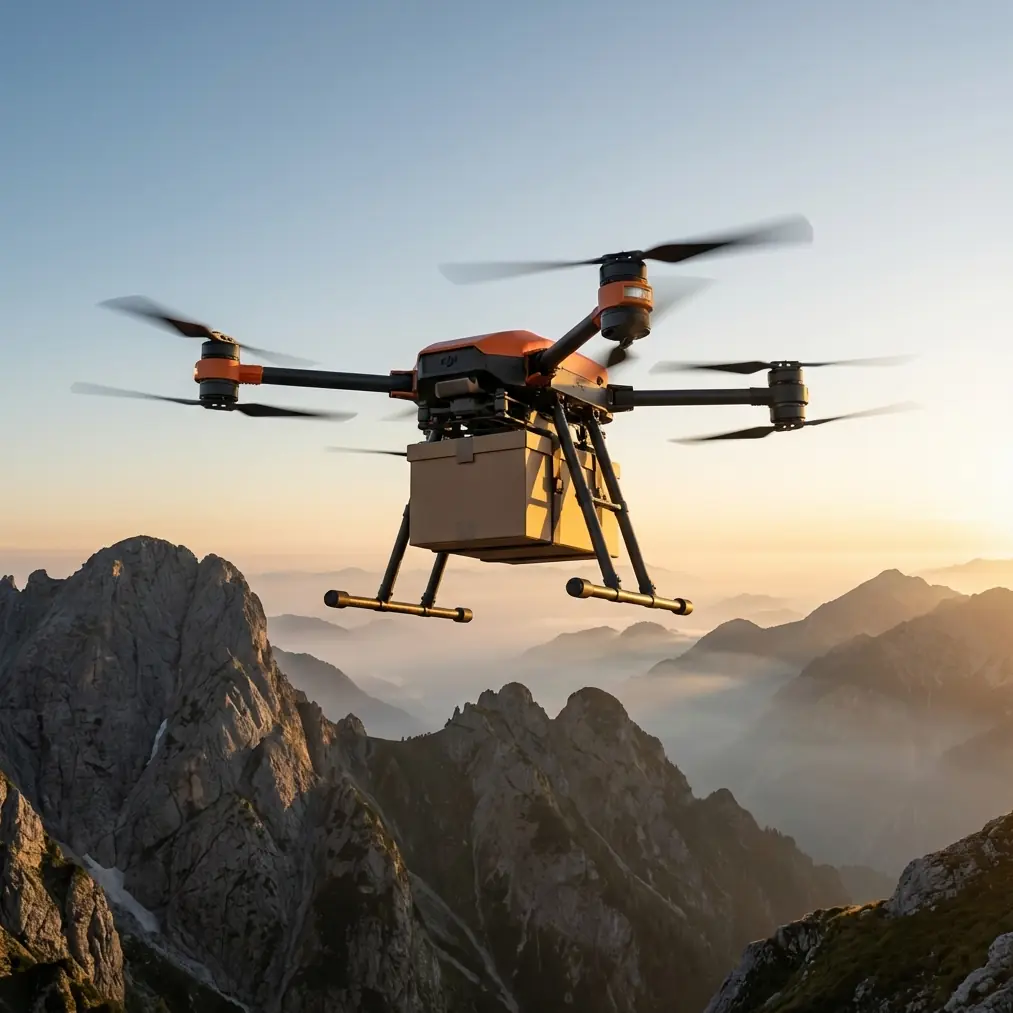
FlyCart 30 Field Report: What a Portable Drone Dock Means for Remote Coastline Tracking
META: A field report on what Flying Lion’s new DroneBooth reveals about FlyCart 30-style remote shoreline operations, including BVLOS logistics, off-grid deployment, payload planning, winch use, and pre-flight safety checks.
Remote coastline work exposes every weak point in an aviation workflow.
You feel it first in the setup. Salt hangs in the air. Fine grit finds seals and connectors. Cellular coverage fades a few kilometers past the last service road. Fixed infrastructure—the kind planners assume will be there—often is not. For teams running shoreline inspection, erosion tracking, habitat monitoring, or supply drops to isolated outposts, the real constraint is rarely pure flight performance. It is operational continuity.
That is why the recent launch of Flying Lion’s DroneBooth deserves attention well beyond the dock segment itself. The headline detail is simple: a portable enclosure built to support drone dock operations in places without permanent infrastructure, designed around 24×7 operations without fixed power or internet. On paper, that sounds like a docking story. In the field, it lands squarely in FlyCart 30 territory.
I look at this as a logistics lead, not as someone chasing novelty. When a system is specifically built for areas with no permanent power and no wired connectivity, it changes the planning model for remote UAV work. It pushes deployment closer to where the work actually happens. For coastline tracking, that matters more than many operators admit.
Why this news matters to FlyCart 30 users
The FlyCart 30 sits in a category where aircraft capability only becomes valuable when the supporting chain keeps up. Payload ratio, battery strategy, route optimization, and recovery planning all matter. But once your mission moves into isolated coastal strips, cliffs, marsh edges, or temporary command points, the question becomes: how fast can you establish a repeatable operating node without building a site around the drone?
That is the operational significance of DroneBooth’s announcement.
A portable dock enclosure is not just a convenience. It signals a broader shift away from fixed-base assumptions. If a dock can function without fixed power or internet infrastructure, a FlyCart 30 team can rethink how it stages missions around temporary shoreline events: post-storm assessment, tidal infrastructure checks, offshore support handoffs, wildlife observation windows, or resupply to survey crews moving along the coast.
In other words, the distance between “we can technically fly there” and “we can sustainably operate there” gets smaller.
For FlyCart 30 operators, that gap has always been the expensive part.
Remote coastlines punish static planning
Coastal missions look straightforward in a slide deck. They are not straightforward at dawn with wet gear and a shifting weather edge.
You may launch from a harbor one day, a gravel pull-off the next, and a temporary conservation camp after that. The area of interest moves. Access points change with tides and local restrictions. Power access is unreliable. Backhaul is often intermittent. Yet the mission still demands continuity, especially if you are collecting repeatable shoreline imagery, tracking debris movement, or supporting crews positioned beyond direct road access.
This is exactly where the DroneBooth announcement has practical relevance. The reference detail that stands out is not only portability, but the claim of 24×7 operations without fixed power or internet. Those two constraints—power and connectivity—are the usual reasons remote sites remain ad hoc. Remove enough of that dependency and you start creating distributed operational cells instead of one overstretched home base.
For a FlyCart 30, that creates several immediate advantages:
- Shorter repositioning time between mission windows
- Better battery cycle management at the edge of the operating area
- More efficient route optimization because launch points can move closer to target corridors
- Lower exposure to transport delays when teams must carry equipment into temporary sites
This is where news about docking infrastructure becomes logistics news for heavy-lift UAV teams.
The FlyCart 30 angle: payload is only useful if the workflow survives contact with the environment
People tend to discuss the FlyCart 30 in terms of lift, delivery profiles, and mechanical systems. Fair enough. It is built for work. But on a remote coastline, payload ratio is not just a specification. It becomes a planning discipline.
If you are supporting shoreline teams, every kilogram allocated to mission payload competes with everything else the field unit needs: batteries, spare landing gear components, weather covers, comms devices, first-aid gear, and cleaning supplies. A portable dock model changes that calculation because the site itself can absorb more of the continuity function.
That lets the FlyCart 30 do what it is best at—moving useful loads or conducting operational sorties—without requiring the human crew to build a permanent support environment from scratch.
A lot of operators miss this. They optimize the aircraft and under-optimize the node. Then they wonder why sortie rates collapse after day one.
With an off-grid dock concept entering the conversation, FlyCart 30 teams should be thinking less about isolated flights and more about networked coastal workflows. A shoreline monitoring operation is never just about one route. It is a chain of launch, transit, task execution, handoff, recovery, battery turnover, inspection, and redeployment. If any one of those links remains tied to fixed infrastructure, the whole system becomes brittle.
A field habit that matters more near saltwater: clean before you trust
One small point deserves more emphasis than it usually gets: pre-flight cleaning.
That may sound mundane next to talk of BVLOS corridors and route optimization, but on coastline jobs it is a safety issue. Salt spray, airborne sand, and moisture contamination do not need much time to degrade confidence in critical systems. Before the aircraft goes back into rotation, I want a deliberate cleaning pass on exposed surfaces, landing interfaces, sensor windows, connector areas, and anything tied to safety systems.
This is especially relevant when operating a FlyCart 30 with an emergency parachute architecture in mind, or when relying on a winch system for precise transfers in uneven or inaccessible landing zones. Safety features are only reassuring when they are physically ready to function. Dirt, salt residue, and micro-debris are how teams talk themselves into preventable failures.
So yes, when I see a portable enclosure designed to support continuous operation, I do not just think about convenience. I think about controlled turnaround. A better operating shell can help crews perform disciplined inspections and cleaning between sorties instead of improvising on the tailgate of a truck in coastal wind.
That is the kind of small process upgrade that protects bigger assets.
BVLOS becomes more realistic when the launch architecture is mobile
Remote coastline tracking often pushes teams toward BVLOS logic even before regulations, waivers, and site procedures are fully harmonized. The geography almost demands it. Long shore arcs, inaccessible inlets, erosion fronts, and offshore-adjacent infrastructure create tasks that are awkward to cover with repeated short-range repositioning.
But BVLOS is not only a matter of airspace approval or command-and-control confidence. It is also a matter of where the aircraft lives between missions.
If your support node is fixed far inland, every route inherits inefficiency. Transit eats useful time. Battery reserves become conservative. Weather windows get tighter because more of the flight is spent commuting to and from the work area. A portable dock architecture, especially one designed for sites lacking fixed internet and power, gives operators a path to stage much closer to the coastline segment that actually needs attention.
That affects route optimization in very practical ways:
- Transit legs shrink
- On-station time becomes more valuable
- Recovery options improve when weather shifts
- Repeated shoreline passes become easier to standardize
- Alternate launch points become part of the plan instead of emergency improvisation
For FlyCart 30 missions, that is a meaningful upgrade in operational geometry.
The winch system case for coastline work
Not every coastal mission calls for landing. In fact, many should avoid it.
Rock shelves, marsh margins, unstable sand, and crowded work zones make touchdown risky or inefficient. This is where a winch system becomes more than a nice accessory. It can be the cleaner option for moving sensors, lightweight provisions, or urgent spares to a field team without forcing a landing footprint into hostile terrain.
Now add the logic of a portable support node. If your dock or enclosure can be established near the mission area without fixed infrastructure, the FlyCart 30 can cycle shorter, more targeted winch-supported trips rather than long rotations from a distant base. That improves tempo and usually simplifies risk management.
This is one reason the DroneBooth announcement matters even if it was not written for FlyCart 30 users specifically. It validates a direction the market has been edging toward: mobility at the support layer. Heavy-lift and utility UAV operations benefit from that shift immediately.
Dual-battery planning is still a human discipline
A portable dock does not solve weak battery decisions.
It helps, certainly. But dual-battery operations still depend on judgment, logging discipline, and realistic mission margins. Coastal environments are hard on assumptions. Wind changes are sharper than forecasts suggest. Humidity and salt exposure affect handling and maintenance cycles. Payload drag can punish optimistic route plans. Teams that chase theoretical endurance instead of repeatable endurance usually pay for it.
The better approach with FlyCart 30 shoreline work is to treat dual-battery capacity as a buffer for mission integrity, not as an excuse to stretch every leg. When the support node is more flexible—as this new portable dock concept suggests it can be—you can redesign sorties around steadier reserve margins instead of squeezing range from a single distant staging point.
That is a healthier operating culture.
One odd source detail, and why it still says something useful
The secondary reference bundled with this news set is about portrait lighting. At first glance, it has nothing to do with FlyCart 30. But one detail is strangely applicable: front lighting produces even facial illumination with fewer shadows and more visible detail, though it can flatten depth and reduce drama. In photography, that is often useful for identification images or as fill light.
Why bring that up here? Because remote coastline tracking has its own version of that tradeoff.
Operational systems that prioritize clarity and reliability often look less dramatic than headline-grabbing one-off missions. A portable off-grid dock is not cinematic. A pre-flight cleaning routine is not glamorous. Conservative payload ratio planning does not make for flashy marketing clips. But like flat, detail-rich light in a document photo, these choices reveal what matters clearly. They support repeatability. They reduce ambiguity. They help teams see what is actually there rather than what they hoped would work.
That is the connective lesson across both references: when the objective is usable field information, clarity beats spectacle.
What I would change tomorrow in a FlyCart 30 coastline program
If I were updating a FlyCart 30 coastline workflow based on this news, I would not start by rewriting the aircraft checklist. I would start with deployment architecture.
First, I would identify shoreline segments where missions are currently stretched by distance from the support base. Those are the places where a portable dock-compatible concept has the highest value. Second, I would tighten pre-flight and between-flight cleaning standards, especially around safety-critical components and any equipment supporting emergency parachute readiness. Third, I would review route optimization against temporary staging options rather than assuming all sorties begin from the same fixed point.
Then I would stress-test the winch workflow. Not in ideal terrain. In the ugly places. The uneven access points. The spray-heavy sites. The handoff zones where ground crews wear gloves and cannot waste time fiddling with packaging. That is where FlyCart 30 earns trust.
For teams already running remote shoreline programs, this is the conversation worth having now. If you want to compare notes from the field, here is a direct line that fits real operational planning better than a polished brochure: message me here.
The broader signal from the DroneBooth release
The strongest takeaway from Flying Lion’s March 24, 2026 system introduction is not the enclosure itself. It is the operational assumption behind it: drone work is moving into places where infrastructure is missing, and the support layer has to become portable, resilient, and autonomous enough to follow.
That assumption aligns perfectly with how serious FlyCart 30 missions are developing. Not as isolated demo flights, but as logistics frameworks that can function in rough, shifting environments.
For remote coastline tracking, that is the future that matters. Aircraft capability remains essential. So do BVLOS pathways, payload planning, and route design. But the teams that perform best will be the ones that treat support mobility as part of mission design from the start.
A FlyCart 30 does not need perfect conditions to be useful. It needs a field system that respects reality.
That is what this week’s dock news quietly confirms.
Ready for your own FlyCart 30? Contact our team for expert consultation.