
FlyCart 30 Coastline Tracking Tips: How to Build Stable
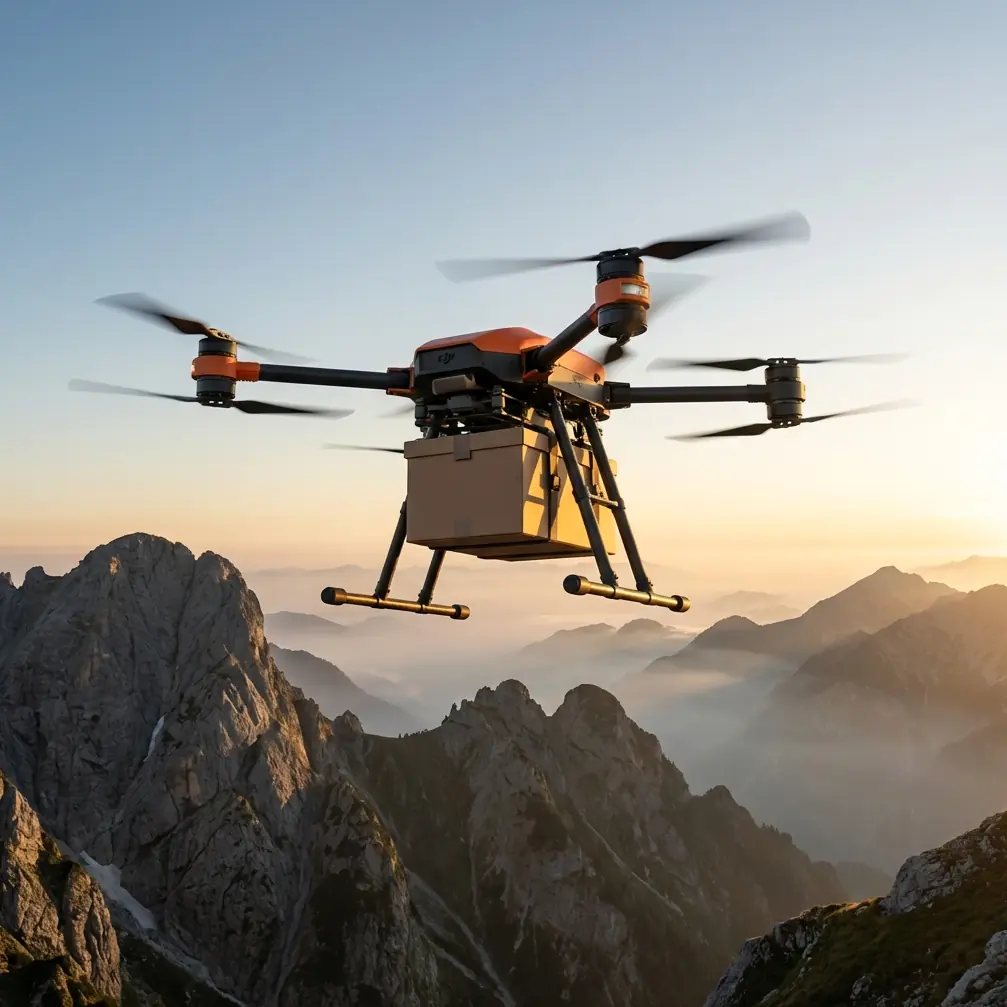
FlyCart 30 Coastline Tracking Tips: How to Build Stable Aerial Logistics Routes in Difficult Terrain
META: Practical FlyCart 30 tutorial for coastline tracking in complex terrain, covering BVLOS planning, winch operations, dual-battery strategy, route optimization, parachute safety, and EMI antenna adjustment.
I approach coastline work with the FlyCart 30 a little differently than most teams.
The mistake is thinking the mission is mainly about reach, payload, or pure image clarity. On paper, those things matter. In the field, they are secondary to something closer to what photographers call visual pull. A recent April 9, 2026 article on image quality made a sharp point: the quality people respond to is not just sharpness, but “visual attraction” or “visual gravity.” That idea translates surprisingly well to drone logistics and shoreline tracking. Along a coast, the best route is rarely the one that looks most direct on a map or the one that produces the prettiest footage. It is the route that holds operational attention on what actually matters: terrain transitions, obstacle rhythm, signal behavior, and delivery geometry.
That is the mindset I recommend for FlyCart 30 operations near shore.
If your team is tracking coastlines in broken terrain, with cliffs, fishing structures, sea walls, inlets, utility lines, and shifting wind, this aircraft can do the job well. But it does not reward lazy planning. The FlyCart 30 becomes most useful when you stop treating it as a simple cargo drone and start treating it as a route-managed system where payload ratio, winch behavior, power redundancy, and communications discipline all work together.
I’ll walk through the process the way I brief crews.
1) Start with route gravity, not route neatness
A lot of operators inherit habits from general drone mapping. They want clean lines, balanced waypoint spacing, and routes that look elegant on a planning screen. Coastal logistics usually punishes that instinct.
The shoreline is messy. Headlands create abrupt airflow changes. Harbors bring cranes, masts, and irregular RF environments. Rocky edges and narrow beaches complicate access. A route that appears tidy often forces the aircraft into the worst possible sections of terrain.
This is where that photography insight becomes useful. The 2026 piece argued that many people fill their phones with photos that are “fine” but not memorable because they chase the wrong indicators. Drone teams do the same thing. They chase route symmetry instead of operational pull.
For FlyCart 30, route gravity means identifying the segments that dominate mission risk and mission success:
- cliff-edge updraft and rotor zones
- electromagnetic interference near coastal communications equipment
- vessel mast fields and marina congestion
- areas where winch lowering is safer than landing
- zones where recovery options are limited if weather turns
When I design a coastline track, I mark those points first. Only after that do I smooth the route. The result is often less pretty and far more reliable.
2) Use payload ratio to decide whether the mission is really airborne logistics or aerial access support
This sounds subtle, but it changes everything.
Operators love to ask, “Can FlyCart 30 carry this?” The better question is, “What payload ratio still leaves enough margin for shoreline conditions?” Along the coast, battery performance and flight behavior are shaped not just by weight but by salt air, gust fronts, vertical terrain changes, and detours around structures.
A high payload ratio may still be technically possible, but not operationally sensible.
In practical terms, I divide coastline jobs into two categories:
A. True transport runs
These are repeatable point-to-point deliveries where the route is relatively predictable and the drop or pickup geometry is stable.
B. Access support runs
These are missions where the payload matters, but the real value is reaching a place people cannot reach quickly by foot or vehicle. Think inspection tools, rope lines, communication gear, medical support items for isolated worksites, or parts transfer to a narrow coastal platform.
The distinction matters because the FlyCart 30’s winch system changes the equation. If the shoreline landing zone is uneven, wave-exposed, debris-covered, or too narrow, using the winch can preserve safety and reduce time spent hovering low in ugly air. In those cases, a moderate payload ratio with a controlled vertical transfer is often the smarter choice than trying to maximize carried weight.
The aircraft is not there to win a payload contest. It is there to complete the mission without forcing a risky terminal phase.
3) In complex shoreline terrain, the winch system is not just a convenience. It is your terrain equalizer.
I see teams underuse the winch because they still think in helicopter-style drop logic or conventional drone landing logic. That leaves performance on the table.
On coastlines, the ground is often the least trustworthy part of the mission. Sand shifts. Rocks move. Surfaces are wet. Human receivers may be standing on a jetty, a dock edge, a vessel deck, or a maintenance platform cut into rock. Landing can be the worst option even when the space looks technically available.
A winch-based handoff gives you three advantages:
- You avoid committing the airframe to uncertain surface conditions.
- You reduce exposure to prop wash interaction with loose salt, dust, rope, nets, or debris.
- You can keep the aircraft in a more stable hover position relative to obstacles.
That last point is especially important in coastline tracking. The best hover point is often not directly above the receiver. It may be offset from a cliff face, offset from a mast cluster, or offset from a reflective metal structure that disturbs signal quality. A disciplined winch procedure lets the aircraft stay where flight conditions are better while the load completes the last vertical segment.
Operationally, I brief crews to evaluate every shoreline drop in this order:
- Is a landing truly safer than a hover transfer?
- Is the receiver zone stable enough for direct approach?
- Would an offset hover and winch descent reduce terrain or obstacle risk?
- Does the planned hover position preserve stronger command and telemetry behavior?
That sequence prevents teams from defaulting to the visually obvious option.
4) BVLOS near coasts is less about distance than about communication discipline
A lot of operators think BVLOS is mainly a range topic. Along the coast, it is usually a continuity topic.
You can have a route that is not especially long but still difficult because the signal environment changes constantly. Sea surfaces reflect. Cliffs shield. Harbor infrastructure creates clutter. Utility corridors add interference. In some shoreline industrial zones, you can watch link quality change dramatically over short distances.
This is where antenna adjustment stops being a theoretical best practice and becomes a field skill.
I’ve had coastal runs where the aircraft itself was performing well, the route was valid, and the weather was acceptable, but telemetry quality dipped near a headland with nearby communications equipment. The fix was not heroic. We repositioned the ground crew slightly, adjusted antenna orientation to match the route geometry instead of the launch geometry, and reran the segment with far better stability.
That sounds basic. It is not. Many teams set antennas once at takeoff and never revisit them mentally. On a coastline route, especially one curving around terrain, your signal relationship is dynamic. If you are handling electromagnetic interference, antenna adjustment should be part of the preplanned mitigation, not a desperate reaction.
My checklist for EMI-sensitive shoreline segments looks like this:
- identify known interference sources before launch
- note any coastal towers, marine comms equipment, metal superstructures, or substations
- orient antennas for the most vulnerable segment, not just the departure leg
- position crew to avoid unnecessary masking by vehicles, containers, or buildings
- predefine a conservative action if link quality degrades at a repeatable waypoint
If your team wants to compare route notes for this kind of setup, I usually recommend sharing the mission sketch directly here: send the coastline segment details on WhatsApp
5) Dual-battery strategy should be mission logic, not just redundancy logic
People hear “dual-battery” and think only about backup. That is too narrow.
On coastal operations, dual-battery architecture matters because shoreline missions often create asymmetrical power demand. You may have a smooth outbound leg with tailwind support and then a more expensive return leg climbing away from terrain or fighting crosswind near a cliff line. If the route includes hover time for winch deployment, that also changes battery usage in a way that simple distance estimates can understate.
The operational value of a dual-battery setup is not merely that there are two batteries. It is that power planning becomes more resilient against the kind of irregular mission profile coastlines produce.
My teams model energy in four chunks:
- outbound transit
- terminal hover and winch time
- reroute reserve for obstacle or vessel movement
- return leg under less favorable wind geometry
That last item is where coastal operators get surprised. They plan the mission around the easy direction. The FlyCart 30 rewards crews who do the opposite.
When reviewing logs, I care less about whether a mission stayed inside the expected average consumption and more about whether the crew had enough margin at the most demanding decision point. Dual-battery design helps, but only if your route planning respects where the real battery stress happens.
6) Emergency parachute planning is not an afterthought over water and rock
I’m glad more crews are talking about emergency parachute systems in the right way now. The point is not to make operators feel invincible. The point is to define what happens when the mission no longer belongs to your plan.
Along coastlines, emergency options are often poor. Below the aircraft may be surf, rocks, moored vessels, catwalks, or inaccessible slopes. That means your safety case has to include descent consequences early, not late.
Parachute readiness changes how you think about corridor selection. If one route passes over open, low-consequence areas for part of the mission while another route trims a little time but spends longer above crowded marina edges or vessel traffic, the first route is usually the better professional choice.
This is one reason I dislike route planning by aesthetics. The shortest line on the screen can be the ugliest line in a contingency.
A mature FlyCart 30 coastline workflow includes:
- a defined parachute decision framework
- avoidance of high-consequence population or vessel clustering where possible
- route offsets that preserve safer emergency descent areas
- crew briefing on when mission continuity is no longer the priority
That is not excessive caution. It is just competent logistics.
7) Route optimization along shorelines should be built around terminal phases
General optimization tools often focus on total path efficiency. That is useful, but on the coast, the terminal phase usually dominates complexity.
A route may be efficient overall yet flawed where it matters most: approach, hover, transfer, and exit. Those are the moments where terrain, wind, and signal issues stack together.
So I optimize backward.
First I define the safest and cleanest delivery or observation geometry at the endpoint. Then I design the exit leg. Then I work back to the entry path. Only after that do I connect the route to the origin.
This produces better FlyCart 30 results because the aircraft often has to perform its most delicate work at the shoreline edge, not in transit. If the endpoint only works when the aircraft arrives with excess speed, poor orientation, or weak signal alignment, the route was never good.
A proper terminal-phase-first plan will answer:
- where the aircraft should hover for the winch or handoff
- what heading minimizes obstacle and wind penalty
- how much lateral offset improves command reliability
- what abort path exists if the receiver zone becomes unusable
- how quickly the aircraft can climb out to a cleaner corridor
That is route optimization that actually earns the name.
8) Good coastline tracking data comes from operational clarity, not image obsession
This brings us back to the reference article’s core point. It rejected the idea that image quality starts with pure sharpness. In shoreline operations, useful tracking does not start with perfect visuals either. It starts with operational clarity.
You can collect crystal-clear footage and still run a weak mission if the route ignored interference, if the hover point was unstable, or if the payload handoff forced an awkward descent near terrain. The best FlyCart 30 coastline missions create data and logistics outcomes that are easy to interpret because the aircraft was positioned correctly in the first place.
That is the real parallel with the 2026 photography piece. Many images fail not because the camera is bad, but because the photographer is solving the wrong problem. Many drone missions underperform for the same reason.
Don’t ask only:
- How clear is the view?
- How direct is the route?
- How heavy is the load?
Also ask:
- What part of this mission has the strongest operational pull?
- Where will terrain, EMI, and hover geometry decide success?
- Does the route preserve options if the endpoint changes?
That is how the FlyCart 30 stops being a spec sheet and starts becoming a dependable coastline tool.
Final field note from a logistics lead
If I had to condense all of this into one instruction for a new team, it would be this: stop treating the coastline as a backdrop.
It is the mission.
Every feature that matters on the FlyCart 30 in this environment—the winch system, BVLOS workflow, dual-battery resilience, route optimization logic, and emergency parachute planning—only pays off when you respect the shoreline as an active force. The terrain shapes air. The water shapes signal. The endpoint shapes battery use. The structures shape your antenna strategy.
The crews that perform well are not the ones chasing the cleanest dashboard screenshot. They are the ones who understand where the mission’s true center of gravity sits and build around it.
Ready for your own FlyCart 30? Contact our team for expert consultation.