
FlyCart 30 for Coastline Tracking in Complex Terrain
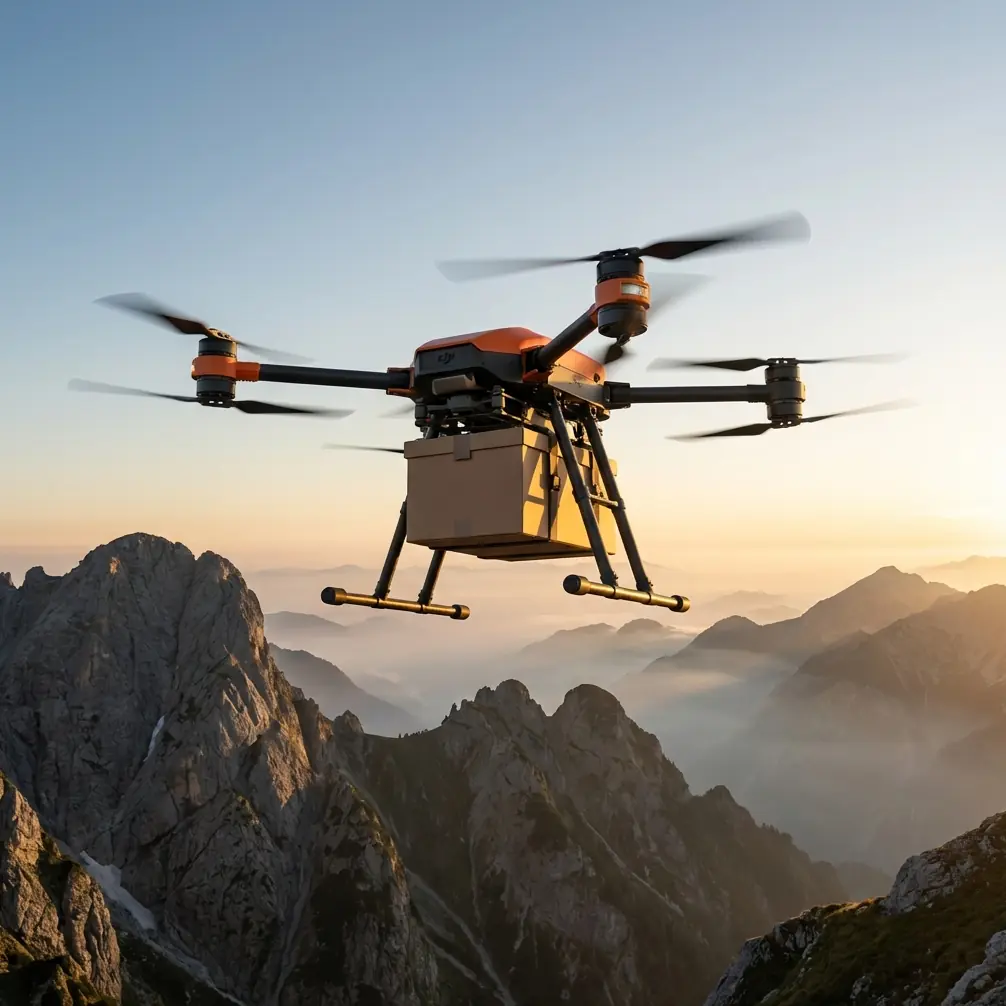
FlyCart 30 for Coastline Tracking in Complex Terrain: A Field Tutorial from the Logistics Side
META: A practical FlyCart 30 tutorial for coastline tracking in complex terrain, covering route planning, dual-battery strategy, winch use, BVLOS workflow, weather shifts, and why early drone detection matters near sensitive airspace.
Coastline work has a way of exposing every weak assumption in a drone plan.
On paper, the mission sounds straightforward: move sensors, markers, or small field supplies along a rugged shoreline, document conditions, and keep teams off unstable slopes and tidal pinch points. In practice, the terrain folds back on itself, salt spray eats visibility, wind behaves differently above rock faces than it does over open water, and your flight path can cross areas where other small drones are difficult to spot until they are uncomfortably close.
That last point deserves more attention than it usually gets. Teledyne FLIR OEM recently launched Prism C-UAS software, an AI-enabled system built to detect and track small, hard-to-detect drones at longer range and earlier in an encounter. Even though that announcement sits outside the FlyCart 30 product sheet, it matters to anyone operating logistics drones near coastlines, industrial corridors, ports, or survey zones where the air picture is rarely as empty as it looks. Earlier detection of nearby small drones supports faster response. Operationally, that can mean the difference between a smooth reroute and a rushed decision in gusting conditions.
I approach FlyCart 30 planning as a logistics lead, not as someone chasing spec-sheet talking points. If the aircraft is going to be useful in complex coastal terrain, it has to do three things well: carry meaningful loads, stay predictable when weather changes mid-flight, and fit into a workflow that assumes the airspace may become more complicated without warning.
This tutorial is built around that reality.
What coastline tracking actually demands from a FlyCart 30
The phrase “tracking coastlines” can mean several different jobs. Sometimes you are moving lightweight monitoring gear between observation points. Sometimes you are supporting a survey team that needs repeated delivery of batteries, anchors, reference markers, or repair tools to spots that are difficult to reach by vehicle. In other cases, the mission is continuity: keeping a moving field team supplied while they trace erosion, inspect shoreline assets, or document environmental changes over long stretches.
The FlyCart 30 enters that picture as a working aircraft, not a camera drone that happens to carry something.
That changes the planning logic. Payload ratio matters because the route is never just a line from launch to destination. On a coastline, climbs, descents, crosswinds, and detours all consume margin. If your payload is too close to the practical limit for the conditions, route optimization stops being a software exercise and becomes a risk-control exercise. The mission still might be feasible, but only with tighter reserves and less room for surprise.
A dual-battery setup matters for the same reason. In complex terrain, redundancy is not just about a component staying online. It is about preserving options. If wind direction shifts around a headland, or if your return path needs to be adjusted because another small drone appears in the operating area, energy flexibility gives you choices that a thinner reserve does not.
Then there is the winch system. Along a coastline, landing is often the weakest part of the plan. Rocky shelves, wet sand, unstable scrub, and narrow ridgelines all turn touchdown into an unnecessary source of exposure. A winch changes the geometry of the mission. Instead of forcing the aircraft to commit to marginal ground, you can hold position and lower the load into a controlled drop zone. That is not just convenient. It reduces rotor wash near loose surfaces, minimizes contact with uneven terrain, and keeps turnaround cleaner for field teams.
Start with route design, not with the aircraft
My rule is simple: if you are tracking a coastline, build the route around terrain behavior before you think about payload.
Open the map and divide the shore into segments based on how wind and access change, not based on distance alone. A single 8-kilometer stretch can contain three completely different operating environments: exposed cliff edge, sheltered inlet, and industrial shoreline with background air traffic. Treating them as one route usually leads to poor assumptions.
For each segment, define:
- launch and recovery options
- preferred transit altitude
- no-go wind angles
- alternate hold points
- winch delivery zones
- communication handoff points for BVLOS oversight where permitted and approved
BVLOS becomes especially relevant on linear coastal work because the mission profile naturally extends beyond a single observer’s easy visual envelope. But BVLOS should never be shorthand for “send it farther.” It should mean the route, procedures, and supervision are mature enough to sustain control over a longer operating corridor. Complex terrain punishes vague planning.
I also recommend marking “decision gates” along the route. These are not physical points for the aircraft. They are operational checkpoints for the team. At each gate, ask the same questions:
- Is the weather trend still within the plan?
- Is the aircraft energy state where it should be?
- Has the airspace picture changed?
- Is the destination zone still suitable for a winch or hover delivery?
That third question is where the Teledyne FLIR Prism C-UAS news becomes more than industry background. The software was introduced specifically to improve detection and tracking of small, hard-to-detect drones, using AI to identify them earlier and at longer range. Near coastlines with overlapping survey, inspection, and industrial activity, that kind of early awareness has direct operational significance. Small drones can be visually lost against water glare, rock contrast, or haze. If your organization or the surrounding site has access to a system that can flag those aircraft sooner, your FlyCart 30 operation gains time to hold, shift altitude according to procedure, or delay the next leg before the encounter compresses.
Payload planning: be honest about the real mission load
Many teams underestimate what “support load” becomes over a day in the field.
The headline payload may be one item, but the operational load includes packaging, weather protection, tie-down method, and whatever handling arrangement the receiving team needs. If the mission is repeating multiple drops across changing terrain, consistency matters more than squeezing out a little more mass on one leg.
This is where payload ratio becomes a practical metric instead of a brochure term. A healthy payload ratio is one that leaves enough performance margin for coastal variability. You are not planning for the calmest moment on the route. You are planning for the section where sea wind rolls upslope, the aircraft has to hold longer than expected, and the return leg is less efficient than the outbound leg.
I tell teams to standardize loads into three classes:
- routine load for normal weather
- reduced load for uncertain weather
- priority load for rapid single-item dispatch
That framework keeps decisions clean when conditions shift. It also prevents the most common mistake in shoreline logistics: trying to preserve schedule by preserving payload. In reality, when weather turns, preserving margin is usually the more valuable choice.
Using the winch system where terrain works against you
A good coastal winch delivery point is boring. That is exactly what you want.
Pick an area with clear vertical separation from obstructions, enough lateral clearance for the suspended load to settle, and surface conditions that will not bounce or snag the item. Avoid spots directly beside cliff lips, driftwood clusters, netting, tall brush, or metallic structures that complicate spatial judgment from the air.
The winch system earns its keep most on partial-access terrain. Think narrow footpaths above the shore, maintenance platforms, breakwater shoulders, and temporary survey stations. In those locations, asking the aircraft to land creates more exposure than the task justifies. Hover, lower, confirm release, climb out.
The second operational benefit is personnel spacing. Your receiving team does not need to crowd beneath the aircraft. They can stage slightly offset, let the load settle, then move in when the line is slack or released according to procedure. On windy shorelines, that separation reduces rushed handling.
When the weather changed mid-flight
One of our most instructive coastal runs started in stable morning air and turned messy halfway through the second segment.
We were moving a compact monitoring package to a team working beyond a rocky outcrop. The first leg was clean. Transit over the waterline was steady, and the planned winch drop zone remained usable. Ten minutes later, the conditions shifted. Wind coming around the headland became uneven, with sharper lateral pushes than the forecast trend had suggested. Visibility did not collapse, but the surface texture on the water changed fast enough to tell us the route we launched with was no longer the route we should keep.
This is where the FlyCart 30 workflow matters more than any single feature.
The aircraft’s dual-battery mindset gave us options. We were not debating whether we had enough reserve to improvise. We were choosing the best alternative among several workable ones. We paused at a preplanned decision gate, reassessed the drop point, and rejected the original approach because the exposed side of the outcrop was now producing too much variability for a tidy delivery window.
Instead of forcing the mission, we shifted to an alternate winch zone on the leeward side that had been marked during route design. The route optimization piece here was not algorithmic magic. It was disciplined preparation. Because the alternates existed before takeoff, the team did not waste time inventing a solution while the aircraft was airborne.
The mission finished without drama. That is the result you want. Not a heroic save. Just a system that absorbs a weather change and continues safely.
An emergency parachute, in this kind of environment, belongs in the same category of thinking. It is not a planning substitute. It is a last-layer risk control. Over broken coastal ground, where recovery access can be poor and bystanders may be spread unpredictably across trails or work zones, having that final protective layer can support a stronger overall safety case when paired with sensible routing and conservative delivery logic.
Why early detection of other small drones matters on the coast
Coastlines attract overlapping users: infrastructure inspectors, environmental teams, photographers, utility crews, and site contractors. Many of them may be operating small aircraft that are difficult to pick up visually against complex backgrounds.
That is why the Teledyne FLIR OEM Prism C-UAS announcement is relevant here. The stated purpose of the software is to improve detection and tracking of small drones, helping identify them at longer range and earlier in an encounter, with faster response to potential drone threats. Strip away the branding, and the operational value is obvious: earlier awareness expands your decision window.
For a FlyCart 30 operator, that can translate into:
- delaying launch before entering a congested segment
- pausing at a hold point instead of pressing toward a blind headland
- changing sequence between delivery legs
- coordinating around nearby commercial activity without rushed maneuvering
This is especially valuable in terrain where line of sight and visual contrast are unreliable. A small drone near a cliff edge can disappear from human view and then reappear too late for comfortable reaction. Any tool that improves the timing of detection changes the quality of the decision.
If your operation touches sensitive shoreline facilities and you want to compare workflow options for coordination and route setup, this direct planning channel is a practical place to start the conversation.
A repeatable FlyCart 30 tutorial for complex coastline work
Here is the workflow I recommend for teams doing civilian coastal tracking missions with the FlyCart 30:
1. Define the shoreline by behavior
Break the route into wind and terrain segments, not equal distances.
2. Build alternates before launch
Every delivery point should have a second choice. Every return path should have a simpler fallback.
3. Keep payload classes standardized
Do not renegotiate weight in the field for every leg. Use pre-approved load categories tied to conditions.
4. Prefer winch delivery over marginal landing
If the ground is questionable, remove landing from the plan unless there is a strong operational reason to keep it.
5. Treat dual-battery capacity as decision margin
Do not spend that reserve in normal cruise planning. Protect it for weather changes and reroutes.
6. Use BVLOS discipline, not BVLOS ambition
Longer routes need stronger procedures, clearer handoffs, and reliable checkpoints.
7. Account for other small drones
Near industrial or shared-use coastlines, assume the air picture may change. Early detection tools matter because they preserve time.
8. Rehearse the “no-drop” outcome
Sometimes the right call is to return with the load. Teams should practice that decision so it feels routine, not like failure.
The bigger lesson
FlyCart 30 missions in complex coastal terrain are won in the planning room and validated in the first weather change.
The aircraft’s value comes from how its core capabilities connect: carrying useful payloads without collapsing your margin, using a winch where landing is the real hazard, leaning on dual-battery resilience when the route changes, and supporting disciplined BVLOS-style corridor work where appropriate. Add stronger awareness of nearby small drones—especially the kind that are hard to detect until late—and the operation becomes noticeably more robust.
That is the difference between a drone that can technically fly the coast and a logistics platform that can support real shoreline work.
Ready for your own FlyCart 30? Contact our team for expert consultation.