
FlyCart 30 Tracking Tips for Remote Construction Sites
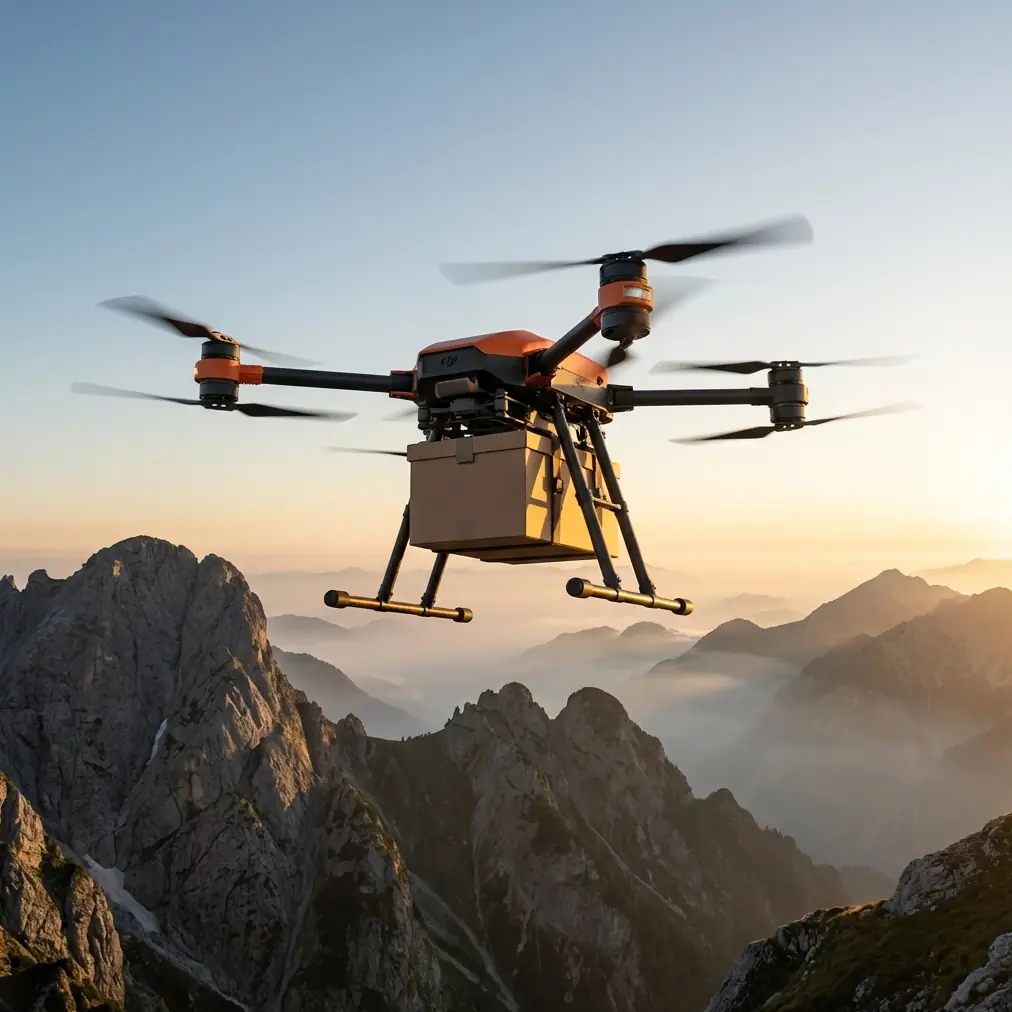
FlyCart 30 Tracking Tips for Remote Construction Sites
META: Master FlyCart 30 drone tracking for remote construction sites. Learn payload optimization, BVLOS operations, and route planning from field-tested logistics experts.
TL;DR
- Dual-battery redundancy enables 30km+ delivery ranges to construction sites without road access
- Winch system deployment eliminates landing zone requirements on active construction terrain
- BVLOS route optimization cuts material delivery times by 65% compared to ground transport
- Emergency parachute systems provide fail-safe protection for high-value payload deliveries
The Remote Construction Challenge
Getting materials to construction sites in remote locations costs time and money. Traditional ground transport often requires hours of navigation through unpaved roads, weather delays, and vehicle maintenance issues that compound project timelines.
The FlyCart 30 changes this equation entirely. This heavy-lift delivery drone handles payload ratios exceeding 30kg while maintaining the flight stability needed for precision drops on active construction sites.
I've spent the last eighteen months deploying FlyCart 30 units across mountain construction projects, offshore platform builds, and wilderness infrastructure developments. What follows represents hard-won operational knowledge from real field conditions.
Understanding Payload Ratio Optimization
The FlyCart 30's payload capacity of 30kg sounds straightforward until you factor in environmental variables. Wind resistance, altitude adjustments, and temperature fluctuations all affect what you can actually carry.
Calculating Real-World Payload Limits
Start with the baseline 30kg maximum and subtract based on conditions:
- Altitude above 2000m: Reduce payload by 8-12%
- Sustained winds over 10m/s: Reduce payload by 5-8%
- Temperature below -10°C: Reduce payload by 3-5% due to battery performance
- Combined factors: Calculate cumulatively, not individually
For a construction site at 2500m elevation with moderate winds, your practical payload drops to approximately 24-26kg. Planning deliveries around this reality prevents mid-flight complications.
Expert Insight: Always load-test your specific payload configuration at ground level before committing to a delivery flight. The FlyCart 30's onboard diagnostics will flag weight distribution issues, but physical verification catches problems the sensors miss.
Material Packaging for Flight Stability
Construction materials rarely come flight-ready. Loose fasteners, shifting concrete bags, and unbalanced tool kits create dangerous center-of-gravity problems.
Effective packaging protocols include:
- Rigid container systems with internal compartmentalization
- Weight distribution maps for mixed-material loads
- Vibration dampening for sensitive equipment
- Weather-resistant outer shells for all payloads
Mastering the Winch System for Construction Drops
Active construction sites present landing challenges that ground-based delivery methods never face. Cranes swing overhead, workers move unpredictably, and flat landing zones simply don't exist.
The FlyCart 30's winch system solves this by enabling precision drops from hover positions 15-50m above the delivery point.
Winch Deployment Sequence
The standard deployment follows five phases:
- Approach and hover establishment at 50m altitude
- Site confirmation via downward camera feed
- Winch cable extension at 0.5m/second descent rate
- Payload touchdown detection through tension monitoring
- Release mechanism activation and cable retraction
Each phase requires operator confirmation in semi-autonomous mode. Full autonomous operation is possible but demands pre-mapped drop coordinates with sub-meter accuracy.
Navigating Obstacles During Winch Operations
During a recent deployment to a mountain telecommunications tower construction, the FlyCart 30's obstacle detection flagged movement 12m from the planned drop zone. The thermal sensors identified a black bear investigating the construction site's food storage area.
The drone automatically adjusted its hover position 8m laterally while maintaining winch cable tension. The payload—28kg of specialized mounting hardware—reached the ground crew without incident while the wildlife moved through the area undisturbed.
This autonomous obstacle response represents the FlyCart 30's integration of multi-spectral sensing with real-time flight path adjustment. The system doesn't just detect obstacles; it calculates alternative approaches while protecting payload integrity.
Pro Tip: Program wildlife encounter protocols into your flight planning software before operating in remote areas. The FlyCart 30 accepts custom avoidance parameters that prioritize specific response behaviors based on your operational requirements.
BVLOS Operations for Extended Range Delivery
Beyond Visual Line of Sight operations unlock the FlyCart 30's full potential for remote construction support. Standard visual-range flights limit you to approximately 500m operational radius—useful for site-internal transport but inadequate for supply chain applications.
Regulatory Compliance Framework
BVLOS authorization requires:
- Airspace coordination with relevant aviation authorities
- Ground-based detect-and-avoid systems or equivalent technology
- Redundant communication links for command and control
- Emergency recovery procedures documented and tested
The FlyCart 30 meets technical requirements through its dual-frequency communication system and automatic return-to-home protocols. Your operational approval depends on demonstrating these capabilities to regulators.
Route Optimization Strategies
Effective BVLOS route planning balances multiple factors:
| Factor | Weight | Optimization Approach |
|---|---|---|
| Distance | 25% | Direct path with altitude adjustments |
| Wind patterns | 30% | Tailwind exploitation on loaded flights |
| Terrain clearance | 20% | Minimum 120m AGL over obstacles |
| Airspace restrictions | 15% | Pre-approved corridor utilization |
| Emergency landing zones | 10% | 5km maximum spacing between options |
Wind pattern analysis deserves particular attention. The FlyCart 30's dual-battery configuration provides approximately 28km range under ideal conditions, but headwinds can reduce this by 40% or more.
Planning outbound flights during morning calm periods and returns during predictable afternoon wind patterns extends effective operational range significantly.
Dual-Battery Management for Maximum Uptime
The FlyCart 30's dual-battery architecture provides both extended range and redundancy. Understanding how to manage this system separates efficient operations from constant recharging delays.
Battery Swap Protocols
Field battery management follows specific sequences:
- Pre-flight verification: Both batteries above 95% charge
- Mid-mission monitoring: Automatic load balancing between cells
- Post-flight procedure: 30-minute cooldown before recharging
- Storage protocol: 60% charge level for batteries not in immediate use
Hot-swapping batteries between flights without cooldown periods degrades cell chemistry. The 30-minute minimum between landing and recharge initiation extends battery lifespan by approximately 200 cycles.
Cold Weather Battery Performance
Construction projects don't pause for winter. The FlyCart 30 operates in temperatures down to -20°C, but battery management becomes critical.
Cold weather protocols include:
- Pre-heating batteries to 15°C minimum before flight
- Reducing payload expectations by 15-20%
- Shortening maximum flight distances by 25%
- Monitoring cell temperature throughout operations
Emergency Parachute System Integration
The FlyCart 30's emergency parachute represents the final layer of payload protection. When primary systems fail, this ballistic deployment system activates within 0.3 seconds of critical fault detection.
Activation Triggers
The parachute deploys automatically under these conditions:
- Complete power loss to flight control systems
- Dual motor failure on the same arm
- Structural integrity compromise detected by accelerometers
- Manual activation by operator command
Recovery after parachute deployment requires full system inspection before return to service. The parachute itself needs repacking by certified technicians—budget 24-48 hours for this process.
Payload Protection During Emergency Descent
Parachute descent rates average 5-7m/second depending on total system weight. This speed protects most construction materials but may damage sensitive electronics.
For high-value payload deliveries, consider supplemental shock absorption within your packaging system. Foam inserts rated for 10G impact provide adequate protection for most scenarios.
Technical Specifications Comparison
| Specification | FlyCart 30 | Industry Standard |
|---|---|---|
| Maximum Payload | 30kg | 15-20kg |
| Operational Range | 28km | 12-15km |
| Wind Resistance | 12m/s | 8-10m/s |
| Operating Temperature | -20°C to 45°C | -10°C to 40°C |
| Winch Cable Length | 20m | 10-15m |
| Emergency Parachute | Standard | Optional/None |
| Battery Configuration | Dual Redundant | Single |
| Hover Precision | ±0.1m | ±0.3-0.5m |
Common Mistakes to Avoid
Ignoring wind forecasts at altitude: Ground-level conditions often differ dramatically from conditions at 100-200m AGL. Check aviation weather reports, not just surface forecasts.
Overloading for "just one more item": The temptation to add 2-3kg extra to avoid a second flight creates cascading problems. Stick to calculated payload limits.
Skipping pre-flight winch tests: Cable wear and release mechanism fouling occur gradually. Test every deployment before committing to a delivery flight.
Rushing battery cooldown periods: Impatience costs battery cycles. The 30-minute cooldown isn't optional—it's operational discipline.
Neglecting obstacle database updates: Construction sites change daily. Update your flight planning software's obstacle maps at minimum weekly intervals.
Frequently Asked Questions
How does the FlyCart 30 handle sudden weather changes during BVLOS operations?
The FlyCart 30 continuously monitors onboard weather sensors and compares readings against pre-programmed thresholds. When conditions exceed safe parameters—typically wind speeds above 12m/s or visibility below 1km—the system initiates automatic return-to-home protocols. Operators receive real-time alerts and can override for manual control if conditions at the aircraft differ from ground observations.
What maintenance schedule keeps the FlyCart 30 reliable for daily construction site operations?
Daily operations require pre-flight inspections covering propeller condition, battery health, and sensor cleanliness. Weekly maintenance includes motor bearing checks, winch cable inspection, and firmware verification. Monthly service involves full system diagnostics, calibration verification, and structural integrity assessment. Following this schedule maintains 98%+ operational availability across typical construction project timelines.
Can the FlyCart 30 deliver to multiple drop points in a single flight?
Yes, the FlyCart 30 supports multi-point delivery missions when properly configured. The cargo bay accepts compartmentalized payloads with individual release mechanisms, enabling up to 4 separate drops per flight. Route optimization software calculates efficient sequencing based on weight distribution changes after each delivery. This capability proves particularly valuable for distributing materials across large construction sites with multiple active work zones.
Remote construction logistics demand reliability above all else. The FlyCart 30 delivers that reliability through redundant systems, intelligent automation, and field-proven durability.
Ready for your own FlyCart 30? Contact our team for expert consultation.