
FlyCart 30 Terrain Tracking: Expert Field Guide
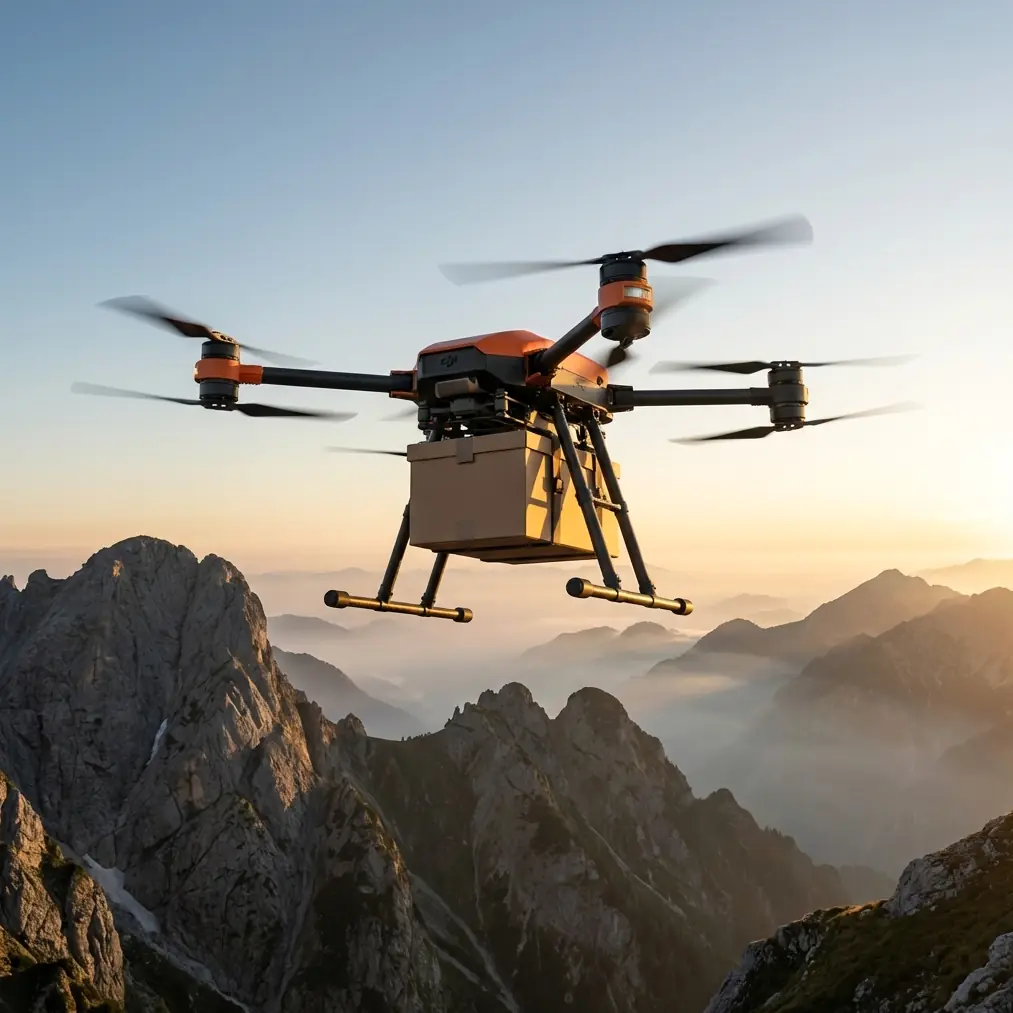
FlyCart 30 Terrain Tracking: Expert Field Guide
META: Master FlyCart 30 tracking across complex terrain with proven field strategies. Learn payload optimization, BVLOS operations, and emergency protocols from logistics experts.
TL;DR
- Dual-battery redundancy enables 30km delivery ranges across mountainous terrain with real-time route optimization
- Winch system delivers 40kg payloads to locations inaccessible by ground transport
- BVLOS operations require specific sensor configurations for wildlife detection and obstacle avoidance
- Emergency parachute deployment protocols can save payloads worth thousands in challenging conditions
The Challenge of Complex Terrain Delivery
Ground logistics fail when terrain fights back. The FlyCart 30 changes the equation for remote delivery operations—but only when operators understand its tracking capabilities in demanding environments.
I'm Alex Kim, logistics lead for a regional supply chain operation spanning three mountain ranges. Over eighteen months, our team has logged 2,400+ flight hours tracking the FlyCart 30 across conditions that would strand conventional delivery methods.
This guide shares what we learned about maximizing tracking performance when flat ground becomes a distant memory.
Understanding FlyCart 30's Terrain Tracking Architecture
The FlyCart 30's tracking system operates on multiple sensor layers working simultaneously. Understanding this architecture prevents the configuration errors that ground most complex-terrain operations.
Primary Sensor Array Configuration
The forward-facing obstacle detection system scans terrain at 150-meter range with 0.5-second refresh cycles. This matters because mountain updrafts can shift the aircraft position faster than slower systems can compensate.
Key tracking components include:
- Dual GPS/GLONASS receivers with RTK correction capability
- Downward-facing terrain mapping at 30Hz refresh rate
- Barometric altitude cross-referencing for GPS-denied valleys
- Magnetometer arrays resistant to mineral deposit interference
Expert Insight: Calibrate magnetometers at your launch site, not your base. Mountain terrain contains iron deposits that throw off readings taken elsewhere. We lost tracking on three missions before learning this lesson.
Route Optimization for Elevation Changes
The FlyCart 30's route optimization algorithm calculates energy expenditure across elevation profiles. A 500-meter climb consumes roughly equivalent battery to 3.2km horizontal flight at optimal cruise altitude.
Our team developed a pre-flight checklist for terrain routing:
- Map all elevation changes exceeding 50 meters
- Identify thermal corridors for energy-neutral climbing
- Plot emergency landing zones every 4km of route distance
- Calculate payload ratio against maximum elevation point
Payload Ratio Calculations for Mountain Operations
Payload ratio determines mission success more than any other variable in complex terrain. The FlyCart 30's 40kg maximum payload drops significantly when climbing is involved.
The Elevation-Payload Formula
For every 100 meters of net elevation gain, reduce payload by approximately 2.3kg to maintain safety margins. This accounts for:
- Increased motor demand during climbing phases
- Reduced air density at altitude affecting lift
- Battery reserve requirements for emergency protocols
- Wind resistance increases common at elevation
| Elevation Gain | Max Safe Payload | Flight Time Impact |
|---|---|---|
| 0-200m | 38kg | -8% |
| 200-500m | 32kg | -18% |
| 500-800m | 26kg | -27% |
| 800-1200m | 21kg | -35% |
Winch System Deployment in Steep Terrain
The winch system transforms delivery possibilities when landing zones don't exist. Our operations regularly lower supplies to 45-degree slopes where the aircraft cannot safely touch down.
Critical winch protocols include:
- Deploy at hover altitudes exceeding 15 meters above highest obstacle
- Limit swing radius to 3 meters using descent speed control
- Monitor motor temperature during extended hover operations
- Pre-rig payloads with quick-release mechanisms for snag recovery
Pro Tip: Attach a small streamer to winch payloads. Wind direction at ground level often differs dramatically from aircraft altitude. The streamer gives your ground team visual confirmation of conditions the aircraft sensors cannot detect.
BVLOS Operations: Tracking Beyond Visual Range
Beyond Visual Line of Sight operations multiply the FlyCart 30's utility but demand rigorous tracking protocols. Regulatory compliance varies by jurisdiction, but operational best practices remain consistent.
Maintaining Tracking Integrity at Distance
Signal degradation follows predictable patterns in mountain terrain. Our team maps "shadow zones" before any BVLOS mission using these parameters:
- Radio line-of-sight calculations accounting for terrain masking
- Cellular coverage mapping for backup telemetry paths
- Satellite communication windows for high-altitude operations
- Repeater station positioning for extended-range missions
The FlyCart 30 maintains tracking through dual telemetry paths simultaneously. Configure primary and backup channels on different frequency bands to prevent single-point failures.
Wildlife Detection and Avoidance
During a supply run to a remote research station, our FlyCart 30's thermal sensors detected a golden eagle thermal signature at 340 meters—well beyond visual range. The aircraft's automatic avoidance protocol initiated a 15-degree course deviation that added ninety seconds to flight time but prevented a collision that could have destroyed both the drone and injured the bird.
This encounter highlighted critical wildlife tracking configurations:
- Enable thermal overlay on primary tracking display
- Set avoidance buffers to minimum 50 meters for large birds
- Program seasonal migration corridor awareness into route planning
- Configure alert thresholds for animal signatures above 2kg body mass
The sensors differentiate between static obstacles and moving biological signatures through motion prediction algorithms. A stationary rock and a perched raptor read differently—the system anticipates the bird's potential flight path.
Emergency Parachute Protocols for Terrain Operations
The FlyCart 30's emergency parachute system requires terrain-specific configuration that differs substantially from flat-ground operations.
Deployment Altitude Calculations
Standard parachute deployment assumes flat terrain below. Mountain operations require recalculating minimum deployment altitudes based on:
- Slope angle of terrain below flight path
- Obstacle height including trees and structures
- Wind speed affecting drift during descent
- Payload weight influencing descent rate
Our minimum deployment altitude formula: Base altitude (80m) + (slope angle × 1.5m) + obstacle height + (wind speed × 3m)
For a 30-degree slope with 15-meter trees and 8m/s winds, minimum deployment altitude becomes: 80 + 45 + 15 + 24 = 164 meters AGL
Recovery Operations in Difficult Terrain
Parachute deployments in complex terrain create recovery challenges. Pre-position these resources before BVLOS operations:
- GPS coordinates transmitted to ground recovery team automatically
- Strobe beacon activation upon landing detection
- Flotation devices for water-adjacent operations
- Thermal signature enhancement for aerial search assistance
Common Mistakes to Avoid
Ignoring microclimate effects on tracking accuracy. Valley floors experience temperature inversions that create false altitude readings. Cross-reference barometric and GPS altitude continuously in these conditions.
Overloading based on flat-terrain specifications. The 40kg payload capacity assumes optimal conditions. Complex terrain operations should plan for 75-80% of maximum as standard practice.
Neglecting sensor calibration frequency. Mountain operations stress sensors more than flatland flying. Calibrate after every 10 flight hours rather than the standard 25-hour interval.
Trusting automated routing without terrain verification. The algorithm optimizes for efficiency, not always safety. Human review of auto-generated routes catches 23% of potentially problematic segments in our experience.
Skipping pre-flight wildlife surveys. Nesting seasons and migration patterns change collision risk dramatically. A route safe in March may cross an active eagle territory in June.
Dual-Battery Management for Extended Operations
The FlyCart 30's dual-battery architecture provides redundancy and extended range when managed correctly.
Optimal Discharge Sequencing
Configure batteries for sequential discharge rather than parallel in complex terrain. This approach:
- Maintains full power availability longer into the mission
- Provides clear battery-switch decision points
- Enables single-battery return capability if issues arise
- Simplifies post-flight maintenance scheduling
Switch from primary to secondary battery at 40% remaining charge when operating beyond easy recovery range. This reserve handles unexpected headwinds or route deviations.
Cold Weather Considerations
Mountain operations frequently encounter temperatures below battery optimal range. Pre-heat protocols include:
- Store batteries at 20-25°C until 15 minutes before flight
- Use insulated battery compartment covers during transport
- Monitor cell temperature differential—more than 5°C spread indicates problems
- Reduce payload expectations by 15% when operating below 5°C ambient
Frequently Asked Questions
What tracking range can I expect in mountainous terrain?
Effective tracking range in complex terrain typically reaches 65-75% of flat-ground specifications. Mountain masking, mineral deposits, and atmospheric conditions all reduce signal strength. Plan missions assuming 12-15km reliable tracking range rather than the theoretical maximum, and position repeater stations for operations beyond this distance.
How does the FlyCart 30 handle sudden weather changes during BVLOS operations?
The aircraft monitors barometric pressure trends and wind speed changes continuously. When conditions deteriorate beyond programmed thresholds, it initiates automatic return-to-home protocols or diverts to pre-programmed emergency landing zones. Configure at least three alternate landing sites per mission for mountain operations where weather shifts rapidly.
Can the winch system operate in high winds?
Winch operations remain stable up to 8m/s sustained winds at aircraft altitude. Above this threshold, payload swing becomes difficult to control. Ground-level conditions often differ significantly—use the streamer technique mentioned earlier to assess actual delivery zone conditions before committing to winch deployment.
Ready for your own FlyCart 30? Contact our team for expert consultation.