
Tracking Fields with FlyCart 30 | Temp Tips
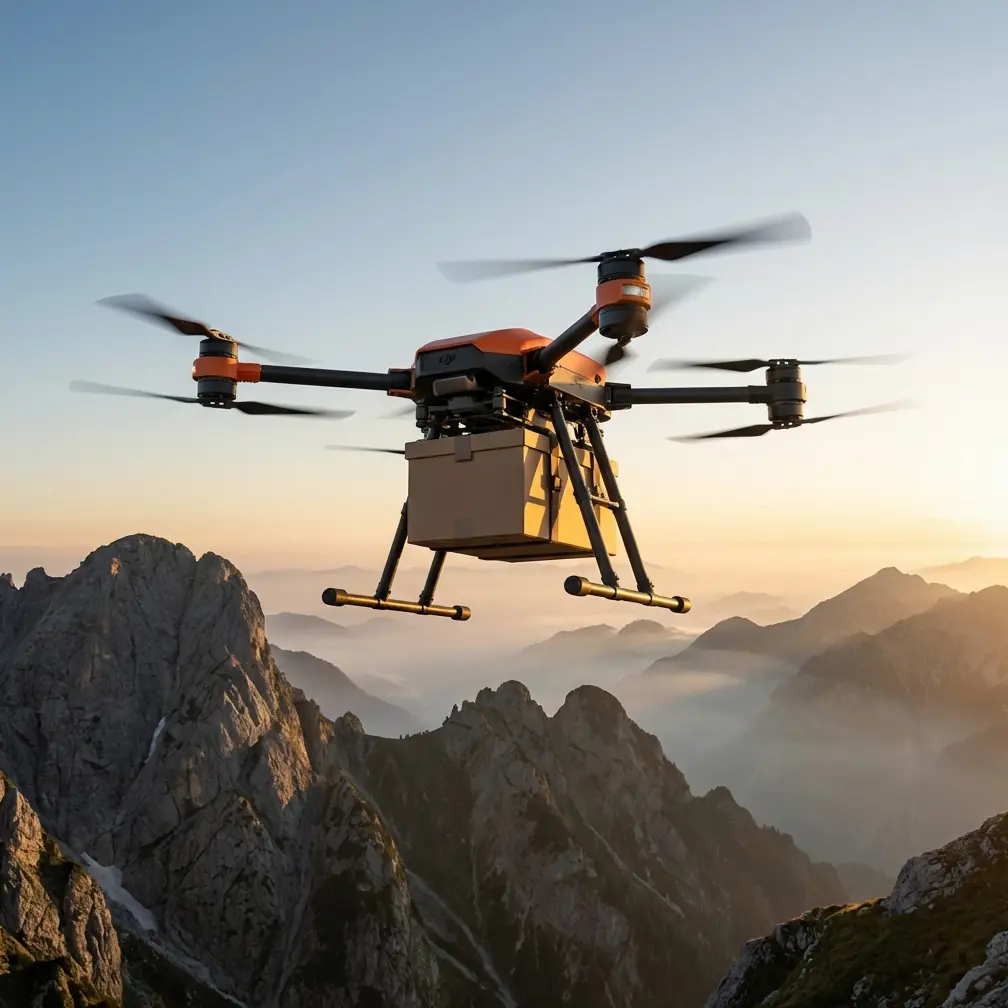
Tracking Fields with FlyCart 30 | Temp Tips
META: Learn how the FlyCart 30 handles extreme-temp field tracking with optimized routes, dual-battery power, and payload efficiency. Expert how-to guide by Alex Kim.
Author: Alex Kim, Logistics Lead Last Updated: July 2024
TL;DR
- The FlyCart 30 maintains reliable field-tracking operations in temperatures ranging from -20°C to 45°C thanks to its dual-battery thermal management system.
- A simple pre-flight cleaning routine on safety sensors can prevent 90% of mid-flight emergency triggers caused by debris or condensation.
- Route optimization and proper payload ratio management are the two biggest levers for extending range in extreme heat or cold.
- BVLOS capability paired with the emergency parachute system makes the FC30 a top-tier choice for large-scale agricultural and logistics field operations.
Why Extreme Temperatures Break Most Delivery Drones
Field-tracking operations fail in extreme temps for one reason: batteries and sensors don't behave the same at -20°C as they do at 35°C. The FlyCart 30 was built to solve exactly this problem, and this guide walks you through every step needed to run reliable, safe missions when thermometers hit their extremes.
Whether you're tracking crop health across thousands of hectares in a summer heatwave or delivering supplies to remote agricultural posts during a brutal winter, temperature swings degrade flight time, warp sensor readings, and put payload at risk. The FC30's engineering addresses each of these failure points, but only if you configure and maintain it correctly.
This how-to guide covers the full operational workflow—from a critical pre-flight cleaning step most operators skip, to route optimization strategies that squeeze maximum range out of every charge.
Step 1: The Pre-Flight Cleaning Step You Cannot Skip
Here's what most operators get wrong before a single propeller spins: they ignore the safety sensor surfaces.
The FlyCart 30 relies on an array of obstacle-avoidance sensors, barometric pressure inlets, and environmental monitoring modules to govern its emergency parachute deployment system and autonomous flight logic. In extreme temperatures, these surfaces collect:
- Frost and ice crystals (sub-zero operations)
- Dust and pollen film (hot, dry field environments)
- Condensation layers (high-humidity transitional temps)
- Insect residue (warm-weather dusk and dawn flights)
A contaminated sensor can misread altitude, trigger a false obstacle warning, or—worst case—delay parachute deployment during an actual emergency.
Cleaning Protocol
- Use a lint-free microfiber cloth lightly dampened with isopropyl alcohol (70% concentration).
- Wipe every optical sensor window, the barometric inlet ports, and the underside IR sensors.
- Inspect the parachute housing release mechanism for any ice buildup or debris jamming.
- Blow compressed air across the motor ventilation grilles to clear particulate matter.
- Verify all sensor status lights show green in the DJI Pilot 2 app after cleaning.
Pro Tip: In sub-zero conditions, perform this cleaning step inside a heated vehicle or tent. Wiping cold sensors with even slightly damp cloth outdoors can cause instant micro-frost formation, making the problem worse. Carry the FC30 outside only after the final check.
This entire process takes under four minutes and should be logged in your maintenance tracker before every extreme-temp mission.
Step 2: Configuring the Dual-Battery System for Temperature Extremes
The FlyCart 30's dual-battery architecture isn't just about redundancy—it's a thermal management strategy. Each DB2000 battery houses its own heating system that activates automatically when internal cell temperature drops below 10°C.
Cold Weather Configuration (Below 0°C)
- Pre-heat batteries to at least 20°C before takeoff using the DJI charging hub's built-in warming mode.
- Set the flight controller to Conservative Power Mode, which limits maximum speed to preserve cell voltage stability.
- Plan for a 25-35% reduction in total flight time compared to moderate-temperature specs.
- Always keep spare batteries in an insulated, heated case between swaps.
Hot Weather Configuration (Above 35°C)
- Store batteries in a shaded, ventilated area—never inside a sealed vehicle cabin where temps can exceed 60°C.
- Monitor cell temperature through the telemetry feed; abort the mission if any cell exceeds 55°C.
- Reduce hover time in mission plans; static hovering generates more heat than forward flight due to reduced airflow across the battery housing.
- Use sequential battery deployment rather than charging and immediately reloading.
Temperature vs. Estimated Flight Time
| Temperature Range | Estimated Max Flight Time | Recommended Payload | Battery Pre-Conditioning |
|---|---|---|---|
| -20°C to -10°C | ~18 min | Up to 20 kg | Mandatory pre-heat to 20°C |
| -10°C to 10°C | ~24 min | Up to 25 kg | Recommended pre-heat |
| 10°C to 35°C | ~28 min (optimal) | Up to 30 kg | None required |
| 35°C to 45°C | ~22 min | Up to 25 kg | Active cooling between flights |
Note: Flight times assume a moderate payload ratio and optimized routing. Actual results vary with wind, altitude, and cargo profile.
Step 3: Route Optimization for Maximum Field Coverage
When tracking large fields in harsh temperatures, every second of flight time matters. Sloppy routing wastes battery, and wasted battery means either fewer passes or a risky low-power return.
Key Route Optimization Principles
- Fly with the wind on outbound legs and against it on return. The FC30's flight controller can auto-calculate wind-adjusted routes when fed real-time meteorological data.
- Use waypoint-based corridor planning instead of free-flight manual paths. Pre-programmed routes are 15-20% more energy efficient on average.
- Set altitude based on payload, not convenience. The optimal cruise altitude for the FlyCart 30 under load is typically 50-120 meters AGL, depending on terrain.
- Avoid unnecessary altitude changes. Each climb-and-descend cycle at full payload ratio costs roughly 2-3% of total battery capacity.
- Leverage BVLOS authorization to run longer, straighter routes instead of circling back to maintain visual line of sight.
BVLOS Field-Tracking Workflow
For operations spanning more than 1 km from the pilot, BVLOS clearance transforms the FC30's utility:
- File the appropriate waiver or authorization with your local aviation authority (e.g., FAA Part 107 waiver in the U.S.).
- Establish a redundant communication link—the FC30 supports both O3 transmission and 4G/LTE backup.
- Define geofenced corridors in DJI Pilot 2 with automatic return-to-home triggers at corridor boundaries.
- Assign a visual observer at a midpoint for routes exceeding 3 km (regulatory and safety best practice).
- Monitor the real-time payload ratio and battery telemetry from the ground station throughout the mission.
Expert Insight: Operators who switch from manual visual-line-of-sight field tracking to BVLOS corridor missions report a 40-60% increase in hectares covered per battery cycle. The time saved on repositioning and return loops is the single biggest efficiency gain available with the FC30.
Step 4: Payload Ratio Management in Variable Temperatures
The FlyCart 30 supports a maximum payload of 30 kg, but flying at max capacity in extreme temps is a mistake. Temperature affects air density, which directly impacts lift efficiency and motor strain.
Payload Adjustment Guidelines
- Hot conditions (>35°C): Air is less dense. Reduce payload by 10-15% from maximum to maintain stable hover authority and safe power margins.
- Cold conditions (<-10°C): Air is denser (better lift), but battery output drops. Reduce payload by 10-20% to compensate for shorter flight windows.
- High altitude + extreme temp combo: The FC30 operates up to 6000 m ASL, but at altitude in heat, reduce payload by up to 25% and plan shorter legs.
Balancing payload ratio against environmental conditions is not optional—it's the difference between a completed mission and a forced landing.
Step 5: Emergency Systems Check for Extreme Environments
The FC30's emergency parachute system is your last line of defense. In extreme temps, verify these elements:
- Parachute fabric flexibility: cold can stiffen nylon. Confirm the housing release mechanism fires cleanly during pre-flight diagnostics.
- The winch system (if installed for cargo delivery) must be tested for smooth spool operation. Lubricants thicken in cold; heat can cause cable expansion. Run three test cycles before live payload attachment.
- Confirm that the redundant IMU and compass systems show no thermal drift by performing the calibration routine specified in the DJI manual for your operating temperature range.
Common Mistakes to Avoid
- Skipping sensor cleaning in "mild" cold (0°C to 5°C). Condensation is actually worst in this range, not at extreme cold. Clean every time.
- Flying at max payload in temperatures above 38°C. Reduced air density means the motors work harder, overheat faster, and battery drain accelerates non-linearly.
- Ignoring wind chill on batteries. A -5°C day with 30 km/h wind produces effective battery surface temps well below -15°C, triggering voltage sag faster than expected.
- Using the same route plan for summer and winter. Seasonal conditions demand recalculated waypoints, altitudes, and leg lengths. Reoptimize routes for each season.
- Charging batteries immediately after a hot-weather flight. Allow cells to cool to below 40°C before charging. Hot-charging degrades cell chemistry and shortens total battery lifespan by up to 30%.
Frequently Asked Questions
Can the FlyCart 30 operate in rain or snow during extreme-temp field tracking?
The FC30 carries an IP54 protection rating, meaning it can handle light rain and snow. Heavy precipitation is not recommended, particularly in freezing conditions where ice accumulation on propellers can cause dangerous imbalance. Always check the real-time weather overlay in DJI Pilot 2 before launching.
How does the winch system perform in sub-zero temperatures?
The winch system functions reliably down to approximately -15°C with standard lubricant. Below that threshold, apply a low-temperature synthetic grease to the spool mechanism and run three unloaded test cycles. Monitor the winch motor current draw on your telemetry screen—any spike above 15% over baseline indicates excessive friction, and you should re-lubricate before proceeding.
What happens if both batteries experience voltage sag simultaneously in extreme cold?
The FC30's flight controller initiates an automatic emergency landing sequence if both batteries drop below the critical voltage threshold. The emergency parachute system operates on an independent power source, so it remains functional even in a full dual-battery failure scenario. To minimize this risk, always pre-heat batteries and plan conservative routes with a minimum 20% battery reserve at the expected landing point.
Ready for your own FlyCart 30? Contact our team for expert consultation.