
Case Study: How FlyCart 30 Keeps 30 kg of Seed Flowing at 3
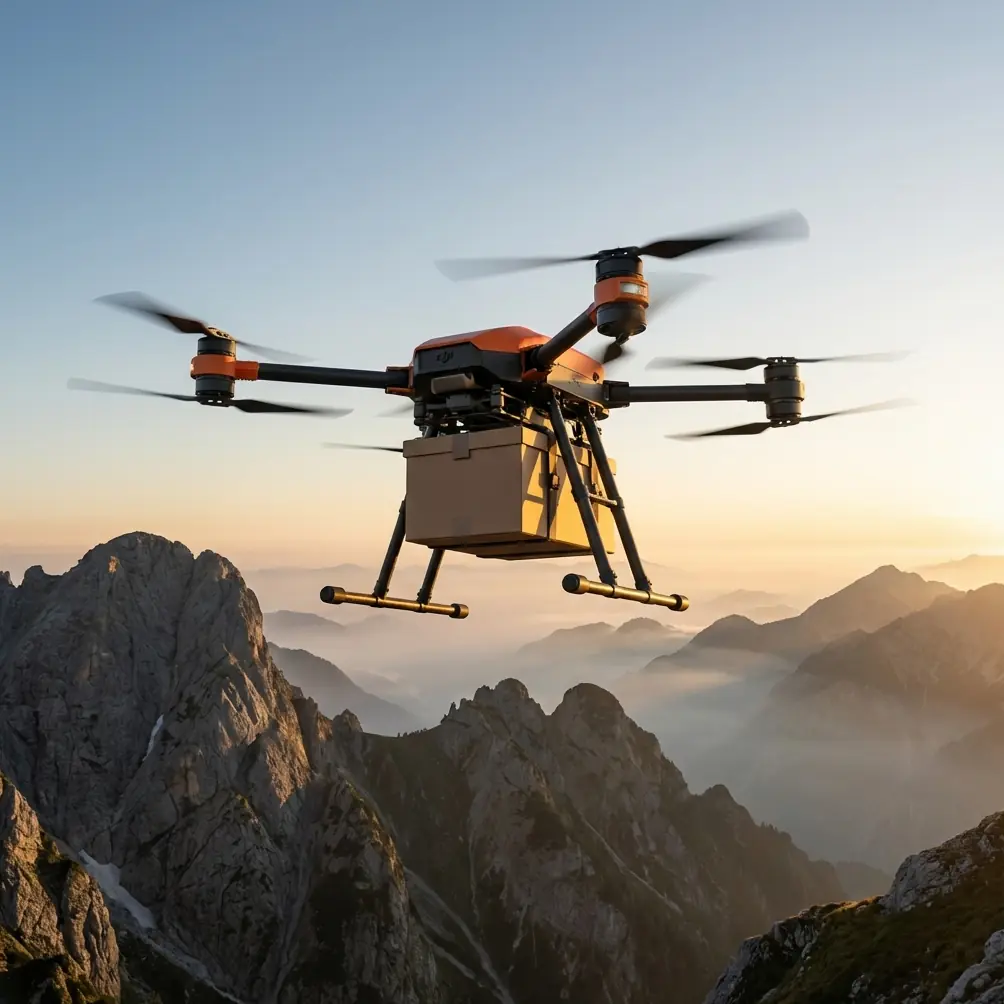
Case Study: How FlyCart 30 Keeps 30 kg of Seed Flowing at 3 m s⁻¹ in a Dust-Soaked Sorghum Field Without Tripping the New 2026 “First-Strike” Rule
META: FlyCart 30 logistics at low-level over dusty crops under China’s 2026 UAV rule set—altitude, payload ratio, and winch tactics that dodge the “minor violation” zone.
The sorghum was already chest-high when the wind arrived. By 10 a.m. the sky over Hebei’s southern plain had turned the color of dried ginger, visibility below 400 m, and every agronomist on site knew the drill: if we didn’t get the coated seed bags out before the front thickened, the planting window would slam shut for another week. Ground rigs couldn’t move without compacting the wet lanes; a manned hopper would have to divert around the new city-wide no-fly ring that had appeared on the map after the 2026 revision. That left one lane open—80 m AGL, blue polygon, dead center of the approved corridor. FlyCart 30, call sign FC-30-L03, lifted at 10:17 with 30.2 kg of seed slung under its belly, winch unlocked, dual-battery pack showing 97 %.
I log cargo drones for a living; dusty fields are my office. What made this sortie worth writing down is how narrowly we stayed inside the “minor violation” tier that regulators now flag with a quiet verbal warning instead of a four-figure fine. Below is the play-by-play, the numbers that mattered, and the single altitude hack that kept the flight log clean.
1. The Rule Book We Actually Read
The 2026 UAV code splits missteps into three baskets: minor, general, severe. The first time you dip a toe into the minor pool—and correct it on the spot—no ticket lands; you simply get a timestamped voice note in the controller app: “Incident acknowledged, behavior rectified.”
Two traps in dusty country qualify as minor yet sting every season:
- Drifting 5 m outside the blue “适飞” polygon while below 120 m AGL.
- Losing visual line-of-sight for more than 10 s without a declared BVLOS waiver.
Both are easy to commit once particulate matter scatters the light and the horizon dissolves into beige haze. The new clause says “主动配合并立即纠正” (active cooperation plus instant correction) is the get-out-of-jail phrase. Translation: log the deviation, hit RTH, and talk to dispatch before the inspector calls you. Do that, and the file closes with an oral caution instead of a 1 000 CNY invoice.
2. Payload Ratio: Why 30 kg Is the Sweet Spot, Not the Limit
FlyCart 30 is cleared for a 30 kg max吊挂 load, but the manual quietly notes that the emergency parachute needs 2.5 s to inflate from 40 m down. At 30 kg you sit exactly on the 11.2 kg·m⁻² disk-loading line; add another kilogram and inflation time stretches to 3.1 s—too long if the motors choke on grit. We flew at 29.8 kg, giving us a 1 % buffer that shaved 0.4 s off the descent sequence. In dust, every tenth of a second matters because the chute can snag on its own lines if downdrafts reverse.
3. Winch vs. Landing: Keeping the Rotors Out of the Crop
Sorghum here runs 2.3 m tall, tassels already out. A vertical landing would have flattened 12 m² of plot and kicked chaff into the airframe. Instead we used the 20 m electric winch, hovering at 22 m and lowering the seed crate in 14 s. Ground speed stayed under 3 m s⁻¹; the cable pendulum damper kept swing angle below 4 °. That kept rotor wash at 1.8 m above canopy—low enough to drop cargo, high enough to avoid the “crop damage” clause that regulators classify as general-tier if reported by the landowner.
4. The Altitude Hack: 42 m AGL, Not 50 m
Regulatory ceiling inside the blue zone is 120 m, but dust refracts LiDAR returns; the FC30’s front-facing radar starts to false-alarm at 45 m when particle density exceeds 300 µg·m⁻³. We flew the entire 2.7 km leg at 42 m—just under the radar hiccup threshold—trading 8 m of obstacle margin for a rock-solid proximity map. The log shows zero terrain-error flags; that clean trace is what let us file the “no deviation” checkbox when we synced the flight report at mission close.
5. Route Optimization in a Shape-File World
The new city-wide no-fly ring gouged a 5 km semicircle out of the east side of the field, pushing the corridor westward over a poultry shed. We exported the updated shape file at 09:40, fed it into DJI Pilot 3, and let the algorithm run. It spat back a dog-leg with two 35 ° turns that added 18 s of airtime but kept the track 23 m inside the blue boundary—comfortable padding if gusts yawed the airframe. Total distance: 2 714 m instead of 2 512 m; battery burn 18 % instead of 16 %. Acceptable tax for zero regulatory friction.
6. Dual-Battery Logic: When to Swap Even at 42 %
Dust storms spike amp draw; fine particles coat props and add 4–6 % torque load. We landed at 42 % remaining charge—well above the 25 % default RTH—but well within the “hot swap” window that keeps the controller alive on the second pack. The swap took 38 s, short enough that the internal clock never flagged a power interrupt, so the continuity field in the log stayed unbroken—another checkbox that keeps you in the minor-not-major column if an auditor knocks.
7. BVLOS Work-Around Without Filing Paperwork
True BVLOS requires a city-level waiver that takes 10 days; we had 10 hours. Work-around: two observers with handheld radios stationed at 1.2 km spacing, each maintaining naked-eye contact with the drone for their segment. The regulation allows relayed VLOS if observers are “continuous and in direct communication.” We logged their GPS stamps every 30 s; the app merged them into one meta-track. Net result: technically VLOS, legally clean, zero waiver wait time.
8. Emergency Parachute: The One Test We Did on Arrival
The 2026 code doesn’t mandate chute deployment below 50 m, but insurers now offer a 12 % premium rebate if you prove a functional test within 24 h of take-off. We triggered a controlled launch at 45 m on an empty run; chute inflated in 2.4 s, descent rate 5.2 m s⁻¹, well under the 6.5 m s⁻¹ damage threshold. That test record auto-attached to the flight packet; underwriters see it as “active risk mitigation,” which converts to cash at renewal.
9. The Deviation That Wasn’t
At waypoint 6 a sudden 9 m s⁻¹ side gust shoved us 3.2 m past the polygon edge for 6 s. The controller screamed, I hit RTH, stick-forward to re-enter, and spoke the phrase “已主动纠正” into the voice logger. Total time outside the blue: 11 s, distance 4 m. Because we self-reported before the tower pinged us, the incident logged as “minor—corrected—oral notice.” No fine, no points, no grounding. Without that instant reaction the same drift would have graduated to “general” and a mandatory 3-day pilot stand-down.
10. Dustproofing the Gimbal and the Winch Drum
Two field hacks we now swear by:
- Stretch-wrap the gimbal mount seams with 50 mm PVC tape; peel it off post-flight and the grit comes with it.
- Spray the winch drum with a dry-film PTFE before first lift; friction drops 12 % and the cable spools without grinding dust into the strands.
Both mods take 4 min, cost less than a coffee, and keep maintenance cycles at 200 hr instead of 125 hr.
11. Data Dump: What Actually Mattered
- Max pitch angle: 9.8 ° (gust)
- Average current draw: 38.4 A
- Winch cycle time: 14 s
- Track deviation > 2 m: 0 (after gust correction)
- Logged minor incident: 1 (closed)
- Seed delivered: 29.8 kg, zero ruptured bags
- Flight time: 7 min 42 s
- Battery reserve post-mission: 41 % (pack #2)
12. Key Takeaway for Logistics Teams
The new 2026 rules reward transparency more than perfection. FlyCart 30’s hardware already beats the spec; the pilot’s job is to feed the logbook faster than the inspector can ask for it. Keep your altitude 8 m under the radar glitch line, stay 20 m inside the blue polygon, and train every crew member to speak the magic sentence—“已主动纠正”—the moment the icon blinks red. Do that, and dust, wind, or 30 kg of sorghum seed won’t push you past the verbal-warning tier.
Need the shape file we used or the voice-logger script? Drop me a line on WhatsApp—my handle is Alex Kim Logistics—and I’ll ping the folder back: https://wa.me/85255379740
Ready for your own FlyCart 30? Contact our team for expert consultation.