
FlyCart 30 in Extreme Field Tracking: What Actually Matters
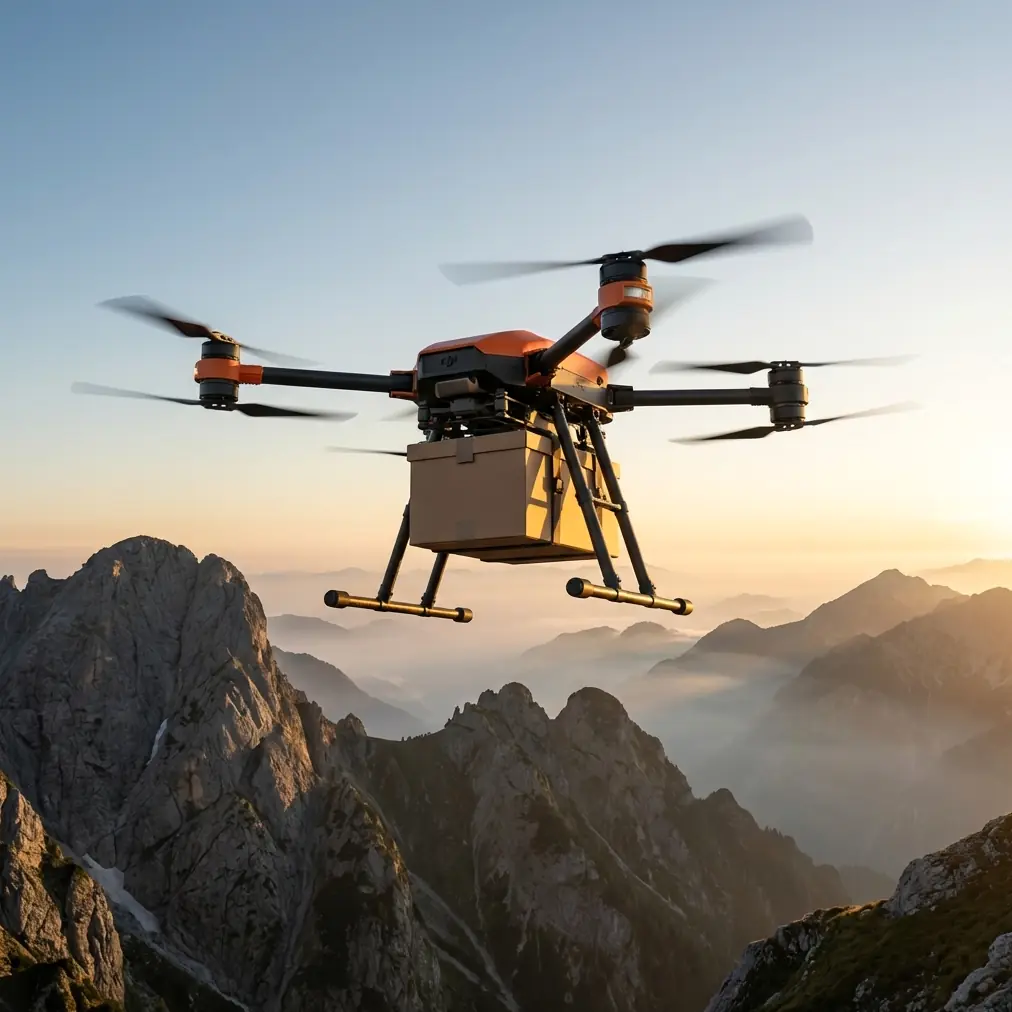
FlyCart 30 in Extreme Field Tracking: What Actually Matters When Weather Turns Mid-Flight
META: A technical review of FlyCart 30 for field tracking in extreme temperatures, covering dual-battery resilience, route planning, winch use, BVLOS workflows, and weather-aware visual monitoring.
I’ve seen plenty of drone writeups that talk about payload, range, and autonomy as if those numbers live in a vacuum. They don’t. In field operations, especially when you are tracking conditions across large agricultural blocks or remote industrial land in punishing heat or bitter cold, the real question is simpler: what still works when the plan stops being tidy?
That is the frame I used when evaluating the FlyCart 30 for extreme-temperature field tracking.
This is not a pure cargo discussion, even though the platform is built around transport. In practice, a machine like the FlyCart 30 becomes valuable in field tracking because it combines lift capacity, route discipline, and recovery options in a way that reduces the number of compromises operators usually make. If your team needs to move sensors, sample kits, comms gear, or time-sensitive supplies across dispersed fields while maintaining situational awareness, the platform starts to look less like a delivery drone and more like a logistics node in the air.
And that distinction matters once weather changes mid-flight.
Why field tracking pushes a cargo platform into a different role
Field tracking in extreme temperatures rarely means one thing. It can mean checking crop blocks after a sudden frost, moving data loggers to remote test plots under heat stress, repositioning monitoring equipment along irrigation corridors, or supporting inspection teams that are spread too thin to drive every route manually.
The operational headache is not only distance. It is variability.
A morning launch can begin in soft, stable light with calm winds and a predictable battery profile, then shift into glare, thermal turbulence, or fast-moving cloud cover before the mission is complete. That affects the aircraft, the route, the payload, and the quality of any visual confirmation you collect along the way.
This is where a logistics-led view helps. The FlyCart 30 should not be judged only by how much it can carry, but by how gracefully it absorbs mission changes without forcing a scrubbed sortie or a risky improvisation.
The mid-flight weather test: where platforms usually reveal their limits
On a recent field-tracking scenario, conditions changed exactly when they tend to: after launch, not before. We had a clean departure window, but temperature and light shifted quickly. What began as a stable mission became a more demanding one, with visibility changing across the route and airflow becoming less cooperative around open-field edges.
That kind of shift exposes weak planning.
A drone can look excellent on paper and still become awkward when the route no longer matches the environment. The FlyCart 30 handled the transition better than many operators would expect from a platform best known for transport. The reason was not one hero feature. It was system behavior.
The dual-battery architecture played a central role here. In extreme temperatures, energy management is never theoretical. Cold can reduce effective battery performance. Heat can complicate endurance forecasting and component behavior over long runs. A dual-battery setup gives operators more resilience, not because it makes weather disappear, but because it broadens the margin for rerouting, hovering, or adapting the mission profile when conditions drift away from the original plan.
That margin is what keeps a field-tracking mission productive instead of reactive.
Payload ratio is not just a carrying spec
One of the least appreciated concepts in drone logistics is payload ratio. People tend to treat payload as a brag line. In field tracking, payload ratio is an operations lever.
If the aircraft can carry what your team actually needs without being pushed close to practical limits, the mission becomes more flexible. You can move compact sensor packages, replacement tools, sample containers, or support equipment without redesigning the whole route around weight anxiety. That changes how often teams need vehicle support on the ground and how quickly they can respond to anomalies in distant sections of a field network.
For FlyCart 30 users, this matters because the platform’s utility is tied to mission stacking. Instead of launching separate flights for movement, inspection support, and situational checks, crews can build more coherent workflows. Better payload ratio means fewer tradeoffs between transport function and route stability.
In extreme-temperature work, fewer tradeoffs usually translates into safer decisions.
The winch system is more operationally useful than many teams realize
The winch system deserves serious attention in field tracking environments. Not because it sounds advanced, but because it solves a recurring access problem.
There are many field locations where a direct landing is inefficient or undesirable: muddy rows, fragile crop surfaces, uneven terrain, irrigation obstacles, or temporary work zones where people and equipment are already moving. A winch allows the aircraft to stay clear while placing or retrieving materials with better precision and less disturbance.
That becomes even more valuable when weather begins to move. If wind picks up or the light changes, minimizing low-level maneuvering around cluttered or unstable ground zones can simplify the task. The aircraft can remain in a more controlled position while the payload transfer happens below.
For extreme field tracking, that is not a convenience feature. It can be the difference between completing the mission cleanly and wasting time searching for a workable touchdown spot in conditions that are steadily getting worse.
BVLOS only matters if route logic is disciplined
BVLOS gets mentioned often, usually without enough discussion of the planning culture required to use it well. For field tracking, BVLOS is powerful because the value of remote coverage is obvious. Large properties, long access roads, and environmental exposure make line-of-sight-only operations inefficient.
But the FlyCart 30’s usefulness in BVLOS-style workflows depends on route optimization more than headline capability.
When weather changed mid-flight in our scenario, the route had to do more than connect point A to point B. It had to preserve energy, maintain enough mission tolerance for a revised approach, and support a safe recovery path if conditions degraded further. That is where route optimization stops being software jargon and starts being a field discipline.
A good route for this kind of work accounts for terrain transitions, likely wind corridors, payload handling points, and the practical reality that visual verification may become harder as light changes. Morning and evening often produce the most forgiving illumination. That is not just a photography tip. It is operationally significant.
The reference material around flower imaging makes this point clearly, even though it comes from a different context: early morning and late-day light are called the golden periods because the light is softer. In field tracking, softer light can improve the clarity of visual checks on delicate surfaces, crop stress markers, and landing or drop-zone context. Harsh overhead light tends to flatten detail or create aggressive glare on leaves, plastic coverings, water, and exposed equipment.
That means launch timing is not cosmetic. It affects the quality of what your crew can interpret from the air.
A surprising crossover: what flower photography teaches field drone operators
At first glance, flower photography advice has little to do with an aircraft like the FlyCart 30. But one of the strongest habits in drone operations is borrowing insights from adjacent visual disciplines when they improve reliability.
The source reference highlights two details that are genuinely useful for field tracking:
- Early morning and evening light are preferred because they are softer.
- Front lighting makes subjects appear fuller and colors more vivid, while low-angle backlight or side-backlight can create a rim-lit edge and a more translucent look.
Now translate that into drone-supported field monitoring.
If you are documenting crop conditions, plant damage, bloom variation, or the status of field markers during a tracking mission, the quality of light changes what you can see and what you might miss. Front lighting can make color variation easier to read across flowers, leaves, or flagged inspection points. That matters when teams are trying to distinguish healthy zones from stress zones quickly. On the other hand, low-angle backlight or side-backlight can reveal edges and translucency that help operators detect petal damage, thin foliage, or subtle structure in plants that harsh midday light might bury.
The operational significance is straightforward: visual strategy should be built into flight planning, not treated as an afterthought. If your FlyCart 30 mission includes observational tracking alongside transport, the sun angle is part of the route.
That is especially true when weather is unstable. Cloud breaks, shifting glare, and changing contrast can alter what your pilot or observer can confidently interpret in real time.
Emergency systems are only meaningful when they reduce decision pressure
One reason operators tense up when weather changes mid-flight is that every choice starts to feel compressed. Do you continue, reroute, descend, abort, or hold? Those calls become harder when the aircraft offers little margin for error.
This is where the emergency parachute system enters the conversation. It should not be marketed as permission to accept bad planning. It should be understood as a pressure-reduction mechanism in the broader risk picture. On long field routes, particularly where access is limited and temperatures are already stressing both hardware and people, a built-in emergency recovery measure changes the way crews evaluate contingencies.
Not because they expect to use it, but because resilient systems support clearer thinking.
And clear thinking is what you need when the environment changes faster than the original checklist assumed.
What I would change in deployment planning after using it
The biggest lesson from using FlyCart 30 in this kind of scenario is that teams should stop separating logistics flights from observation flights too rigidly.
With the right workflow, the platform can support field tracking in a hybrid model:
- Carry what the remote team needs.
- Use optimized routing to reduce wasted movement.
- Time missions around useful light, especially morning or evening windows.
- Use the winch where terrain makes direct landing inefficient.
- Preserve battery margin for weather-driven route revisions.
- Treat emergency recovery systems as part of mission assurance, not a footnote.
This is also where operator training needs to mature. Extreme-temperature deployment is not solved by buying a more capable drone. Crews need to understand how environment, payload ratio, lighting, route geometry, and battery behavior influence one another.
That is a more demanding standard, but it produces far better outcomes.
Where FlyCart 30 fits best
FlyCart 30 is strongest when the mission owner thinks like a logistics coordinator, not just a pilot. If your field-tracking work involves dispersed sites, unstable temperatures, changing ground accessibility, and the need to move useful equipment while still maintaining visual awareness, the platform earns its place.
Not because it makes the environment easy.
Because it keeps the environment from dictating every decision.
That is a subtle but meaningful difference. Plenty of aircraft can fly a route under ideal conditions. Fewer can remain operationally coherent when a clean plan starts to fray at the edges. In my view, that is the real test for this category.
If your team is building workflows around large-field support, route optimization, and resilient payload handling, it’s worth comparing notes with crews already doing this kind of deployment. For practical discussion around setup and mission fit, you can message a field operations specialist here.
The final takeaway is not glamorous. It is useful. The FlyCart 30 performs best in extreme field tracking when you treat light, weather, payload, and route logic as one system. Ignore any one of them, and the mission gets brittle. Respect all four, and the aircraft becomes more than a transport tool. It becomes a reliable bridge between remote work zones and the decisions that depend on them.
Ready for your own FlyCart 30? Contact our team for expert consultation.