
FlyCart 30 in Dusty Field Logistics: What Battery Progress
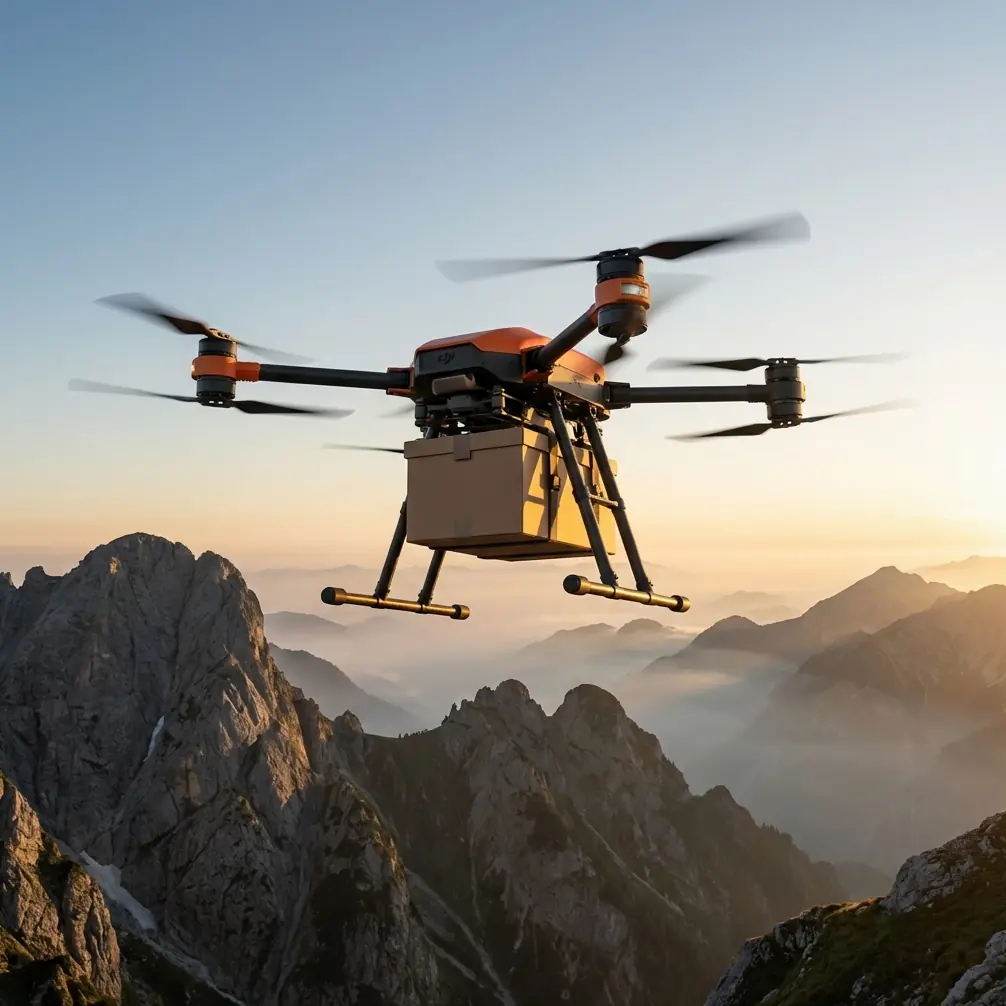
FlyCart 30 in Dusty Field Logistics: What Battery Progress Means for Real Route Planning
META: A practical FlyCart 30 guide for dusty field logistics, focused on battery strategy, route planning, turnaround time, and why newer delivery power systems matter in daily operations.
Dust changes the way people talk about drone logistics.
On paper, a mission across agricultural fields looks simple: lift, transit, lower payload, return, repeat. In the field, especially when you are tracking operations across dry ground, uneven access roads, and dispersed work zones, the real constraint is rarely just payload. It is time. Time between sorties. Time lost to repositioning crews. Time spent waiting on charging cycles. Time consumed by routes that looked efficient in software but failed under actual conditions.
That is why recent battery developments in the delivery drone sector deserve closer attention from anyone evaluating the FlyCart 30 for civilian field work.
A recent industry signal came from the partnership between Amprius Technologies and Matternet, announced on 2026-05-20, centered on silicon anode battery technology for commercial drone delivery systems. The headline points were straightforward: the companies are aiming to improve range, charging time, and the broader economics of commercial drone delivery operations. On the surface, that is about parcel networks. In practice, it speaks directly to the same operational pressures that shape FlyCart 30 deployments in dusty agricultural and industrial corridors.
If you are tracking field teams, moving tools, sensors, treatment materials, spare parts, or critical samples between difficult access points, those three variables—range, charging time, and operating economics—are not abstract engineering goals. They are the difference between a drone becoming part of the workflow or becoming a bottleneck.
The problem I kept seeing in dusty field operations
A few seasons ago, we had a recurring issue on dry inland sites. The distances were not extreme. The payloads were manageable. Yet the operation dragged. Vehicles kicked up dust on every service road, crews were spread out, and the “last mile” inside the field was where delays multiplied. A truck could carry more, sure, but not faster once terrain and stop frequency were factored in.
The real pain point was turnaround consistency.
Every drone operator knows that a mission profile can look healthy in a brochure and still underperform once repetition enters the picture. A single successful flight means very little. What matters is the tenth rotation of the day, when ambient heat, battery management, route spacing, landing zone quality, and crew fatigue begin to stack up. In dusty field logistics, that stack-up is brutal.
This is where the FlyCart 30 starts to make sense—not as a generic heavy-lift aircraft, but as a logistics tool that can reduce friction if the operation is designed properly.
And battery strategy sits right at the center of that design.
Why the Amprius-Matternet news matters to FlyCart 30 buyers
The partnership between Amprius and Matternet is not about the FlyCart 30 specifically. Still, it highlights where the commercial drone market is pushing hardest: better energy density, faster charging, and lower cost per useful mission.
That matters because battery improvements tend to reshape mission planning before they reshape marketing claims.
Take range first. In dusty field environments, route planning usually includes more buffer than people expect. You are not only accounting for distance from point A to point B. You are preserving margin for hover time, wind shifts over exposed ground, vertical delivery, and contingency rerouting when a drop point becomes unsafe or obstructed. If newer battery technology can push practical range upward, operators gain freedom in hub placement and route design. That can reduce the number of battery swaps, staging points, or support vehicles needed across a large site.
Now consider charging time. This is where many operations quietly lose money. A drone with strong lift capacity still sits idle if battery recovery does not match mission tempo. The Amprius-Matternet emphasis on faster charging is a direct acknowledgment that commercial delivery economics are won in turnaround speed, not just endurance. For FlyCart 30 users, this same logic applies whether the payload is field equipment, urgent repair components, or agricultural inputs. Faster energy recovery compresses idle windows and helps maintain sortie cadence.
Then there is the third point: delivery economics. That phrase sounds broad, but on the ground it usually boils down to labor efficiency, asset utilization, and reduced delay. If a battery system allows more productive cycles in the same day, your drone does more real work with fewer interruptions. That is not a small gain. It changes staffing assumptions and the threshold at which drone transport beats truck-based shuttling inside a site.
How to plan a FlyCart 30 workflow for dusty fields
If your use case involves tracking activities across dry agricultural zones or industrial field assets, the smartest way to evaluate the FlyCart 30 is not by starting with headline specifications. Start with the sequence of work.
1. Map the actual movement pattern, not the ideal one
Most route plans begin too cleanly. They assume direct transfers between fixed points. Dusty field operations are rarely that orderly. Crews move. Task locations shift. Temporary no-go areas appear after irrigation changes, vehicle congestion, or ground activity.
Build your route model around three layers:
- fixed hubs
- semi-mobile work zones
- dynamic interruption points
This is where route optimization becomes more than software terminology. With a platform like the FlyCart 30, the goal is not merely shortest path. It is shortest reliable path with enough battery reserve to absorb field unpredictability.
The reason the Amprius-Matternet battery story matters here is simple: every gain in usable energy or charging efficiency expands your routing tolerance. Better batteries do not just let you fly farther. They let you plan more realistically.
2. Use the winch system to avoid dust-heavy landings
In dusty environments, avoiding unnecessary touchdown events can make operations smoother and cleaner. A winch system is operationally significant because it allows payload transfer without forcing the aircraft into every rough, debris-prone, or unstable drop zone.
That matters for two reasons.
First, it reduces the need to prepare formal landing spots across the field. Second, it limits the disturbance caused by rotor wash near dry ground. Anyone who has worked these sites knows how quickly a poor delivery method can turn into a visibility issue, a contamination issue, or simply an inefficient handoff.
For tracking field teams, a winch-supported drop can be the difference between serving a crew where they are and forcing them to walk to a safer but less useful transfer point.
3. Treat dual-battery planning as a scheduling tool, not just a hardware feature
A dual-battery setup often gets discussed as a reliability or endurance talking point, but in daily logistics it also becomes a scheduling tool. Battery architecture affects how you rotate assets, define reserve thresholds, and maintain continuity when conditions shift.
In dusty field operations, reserve discipline matters more than operators sometimes admit. You may need extra margin for a delayed hoist, an alternate approach path, or a last-minute reroute around active machinery. A platform built around robust power management gives planners more confidence to set conservative mission rules without destroying productivity.
This connects directly back to the Amprius-Matternet announcement. When commercial drone companies prioritize battery technology to improve range and charging time, they are targeting the same planning problem: how to increase useful work per cycle without weakening safety margins.
4. Build BVLOS readiness early, even if you are not there yet
For dispersed field logistics, BVLOS potential shapes the long-term value of the aircraft. Even if current operations remain within visual line of sight, the workflows you design now should support future scale. That means standardizing route corridors, logging delivery timings, documenting handoff points, and formalizing battery performance data under real dust and heat conditions.
Why does this matter in an article about battery news? Because BVLOS economics collapse fast if your energy system cannot support predictable dispatch and recovery patterns. Long-range operation is not just about legal approval or radio links. It depends on whether your aircraft can fly repeatable missions with tight turnaround windows.
This is exactly why the Amprius and Matternet partnership is worth watching. It signals that serious commercial operators see battery performance as a first-order economic factor, not an accessory improvement.
5. Use payload ratio discipline to avoid false productivity
One of the easiest mistakes with a logistics drone is assuming that because it can carry more, it should always carry more.
In dusty field scenarios, payload ratio should be tuned to mission frequency, not just maximum lift. A heavier payload may reduce the number of trips, but if it pushes battery consumption high enough to increase charging downtime or reduce route flexibility, the day’s total throughput can actually fall.
This is where experienced operators separate from casual adopters. They look at payload in relation to:
- turnaround time
- battery recovery
- drop method
- route uncertainty
- crew waiting cost
Again, the Matternet-Amprius story reinforces this mindset. Commercial drone delivery economics improve when energy use and mission design are aligned. Better battery chemistry helps, but it does not replace operational discipline.
Safety systems matter more in field logistics than people think
Dusty field work can feel low risk because the environment is open. That is a dangerous assumption. Open land still includes workers, vehicles, irrigation hardware, lines, trees, storage areas, and changing wind exposure.
An emergency parachute is not just a spec-sheet reassurance. Operationally, it supports safer planning over mixed-use work areas and can help risk managers become more comfortable with regular drone logistics in environments where ground activity never fully stops. Safety systems do not eliminate the need for strict procedures, but they improve the viability of drone transport as a repeat business function rather than a one-off demonstration.
For teams setting up recurring field routes, that matters as much as raw lift capacity.
What I would prioritize if I were deploying FlyCart 30 today
If the mission is tracking field operations in dusty conditions, I would focus on five things before anything else:
- Turnaround time per useful delivery, not just flight endurance
- Battery cycle strategy, including swap and charge rhythm
- Winch-based delivery design to reduce unnecessary landings
- Route optimization with reserve margin, especially for changing field positions
- Operational data capture for future BVLOS scaling
That list is shaped by field reality and by the broader direction of the drone delivery sector. When a battery company and a delivery operator form a strategic partnership around silicon anode battery technology, they are effectively saying the next layer of commercial efficiency will come from energy performance that improves daily utilization.
FlyCart 30 operators should hear that clearly.
Not because this aircraft suddenly inherits that exact battery platform. It does not. The significance is strategic. The market is telling us that mature drone logistics will be decided by the systems that can move payloads reliably, recharge quickly, and maintain favorable mission economics over repetitive cycles. Dusty field logistics is one of the clearest places to see that principle at work.
A practical way to decide if FlyCart 30 fits your site
Run a simple test model.
Choose one week of real field movements. Count how many urgent intra-site transfers happen between teams, depots, service points, or inspection zones. Measure not only distance, but delay cost: waiting on a vehicle, crew walking time, deferred repairs, postponed treatments, or idle specialists.
Then compare that workflow against a drone model built around:
- direct aerial routing
- winch delivery
- disciplined payload ratio
- conservative battery reserve
- planned charge or swap intervals
If you want help thinking through that layout, you can reach out through this field logistics chat line and compare route assumptions before committing to a full deployment design.
That kind of evaluation usually reveals the truth fast. The FlyCart 30 is not automatically the answer to every field transport problem. But when road access is slow, crew locations shift, and dust makes constant vehicle movement inefficient, it can remove a surprising amount of friction.
And as the commercial delivery industry keeps investing in battery improvements—like the Amprius and Matternet partnership announced in 2026—that friction should continue to shrink. Better range can widen the operating envelope. Faster charging can tighten the sortie loop. Stronger delivery economics can turn drone logistics from a specialist capability into a routine layer of field operations.
For teams managing dusty agricultural or industrial sites, that is the real story.
Not the drone by itself. Not the battery by itself.
The story is what happens when energy performance, route design, and payload workflow finally start working in the same direction.
Ready for your own FlyCart 30? Contact our team for expert consultation.