
FlyCart 30 Field Report: Tracking Remote Fields When
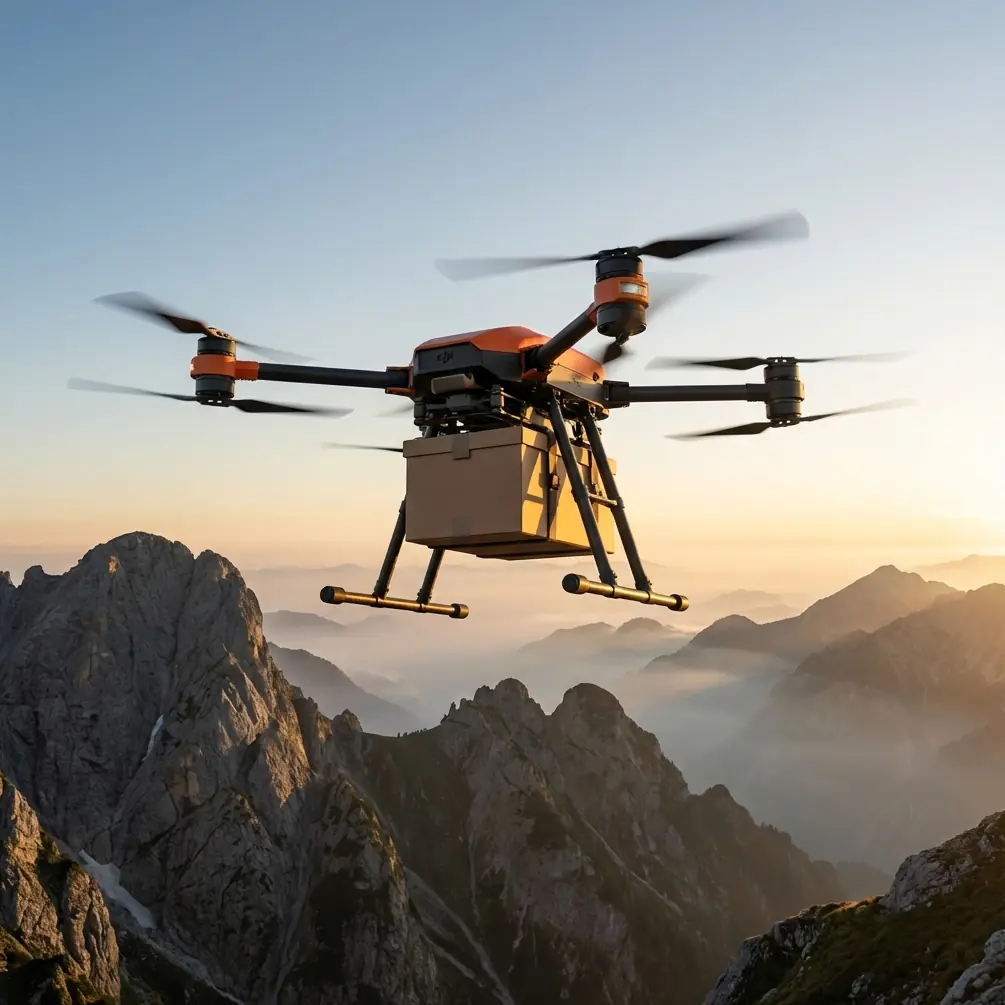
FlyCart 30 Field Report: Tracking Remote Fields When Battery Limits Shape Every Decision
META: A field-tested FlyCart 30 report on tracking fields in complex terrain, with practical insight on battery endurance, cold-weather performance, route planning, winch use, and why new solid-state battery developments matter.
I’m Alex Kim, and most of my work starts where neat mission diagrams stop being useful.
On paper, field tracking in broken terrain sounds straightforward: define the parcels, set the route, launch, collect the data, and move supplies if needed. In reality, the terrain interferes with line of sight, temperature swings drag down battery confidence, and the aircraft’s useful working radius is never just a number on a spec sheet. It is a negotiation between payload, elevation change, wind exposure, and how much margin you insist on keeping for the trip home.
That is why the latest battery news caught my attention.
Factorial Energy recently announced partnerships across three continents to integrate next-generation solid-state batteries into drones. The stated goals are not abstract lab ambitions. They are the exact three pressure points field operators wrestle with every week: better endurance, higher power output, and stronger cold-weather performance. For anyone running a FlyCart 30 in agricultural logistics or field support, those three improvements would not be incremental. They would change how missions are planned from the first waypoint.
This matters especially when the job is not simple point-to-point delivery, but tracking fields in complex terrain.
The mission profile most people underestimate
When people hear “FlyCart 30,” they tend to think first about transport. Fair enough. It is built to move material. But in the field, transport is often tied to information work. You are not just moving supplies into remote plots. You are supporting inspection teams, seed or treatment staging, sensor deployment, and repeated route verification in places where roads are inefficient or nonexistent.
In hilly farmland, terraced plots, orchards cut into slopes, and transitional zones between managed fields and scrubland, route optimization becomes the difference between a smooth operation and a wasted battery cycle. The aircraft may need to approach from a safer angle, hold altitude over uneven ground, lower cargo with a winch system rather than commit to a landing area, and preserve enough reserve to handle a weather shift. If the route also supports field tracking activities, the drone is carrying not just payload but schedule pressure.
That is where battery limitations become operational, not theoretical.
A dual-battery architecture helps reduce mission risk because it provides resilience and power continuity that operators value in remote work. But dual-battery design does not erase the underlying chemistry problem. Cold mornings, sustained climbs, repeated hover events during winch drops, and conservative BVLOS planning all eat into useful endurance. Anyone who says otherwise has not had to recover a mission while watching voltage behavior in a valley with patchy thermal patterns.
Why this battery story is relevant to FlyCart 30 operators now
The drone industry has spent years accepting a tradeoff that everyone dislikes: if you want useful payload capability, you often give up practical endurance. If you need strong power delivery in difficult conditions, you prepare for battery performance to fall off faster in the cold. Factorial Energy’s push into solid-state drone batteries is notable because it targets those tradeoffs directly.
The company’s new partnerships span three continents. That geographic spread is not just a headline flourish. It suggests there is broad demand from operators facing different climates, regulations, and infrastructure constraints. For commercial drone users, that implies the battery bottleneck is no longer being treated as a niche issue. It is moving toward mainstream platform planning.
The two details that matter most here are endurance and cold-weather performance.
Endurance affects route design in a very immediate way. On a FlyCart 30 mission supporting field tracking, extra usable flight time could allow an operator to combine tasks that are currently split into separate sorties. Instead of one mission for moving supplies to a slope-side work point and another for revisiting edge parcels, you may be able to complete both within one carefully managed cycle. That reduces handoff friction, crew idle time, and exposure to changing winds.
Cold-weather performance is even more underestimated. In complex terrain, temperature is rarely uniform. A launch zone may be mild while the upper ridgeline or shaded basin is significantly colder. Battery systems that maintain stronger output in those conditions give crews more predictable climb performance and less anxiety around hover-heavy tasks. For a platform like FlyCart 30, which may use a winch system specifically to avoid landing in rough or obstructed areas, stable power delivery matters during the exact phase of flight where precision counts most.
A field morning that made the battery issue feel personal
One recent operation brought all of this into focus.
We were supporting a tracking routine for a cluster of small agricultural plots separated by gullies and tree breaks. The mission was not just to move lightweight field supplies. We also needed to verify access conditions, confirm activity at the outer terraces, and support a team working beyond a vehicle track. The terrain forced an irregular route. Straight-line planning looked efficient on a tablet, but it ignored updraft pockets and a ridgeline that consistently distorted the safest approach path.
Halfway through the second leg, the aircraft sensors flagged movement at the margin of a field boundary. It turned out to be a wild boar emerging from brush near the intended drop area. That is the sort of detail that never appears in a mission brief and always matters in real operations. The drone’s sensing stack allowed us to hold off, reassess the drop geometry, and shift to a safer hover position before using the winch system. No panic. No rushed decision. Just a reminder that field work is shared with the landscape, not imposed on it.
Moments like that expose how tightly safety systems and battery confidence are linked.
If your aircraft has enough reserve, you can wait, reposition, and complete the task cleanly. If your power margins are thin, every unexpected delay starts to erode decision quality. You become tempted to force the operation into a tighter window than is wise. That is where endurance is not merely a convenience. It becomes part of your risk management framework.
Payload ratio is not only about lifting capacity
Operators love talking about maximum lift, but payload ratio tells the more useful story. In field tracking scenarios, you are balancing cargo mass against route complexity, hover time, wind, and terrain-induced power demand. The platform’s real value is not the biggest theoretical load. It is the amount of useful work you can complete per battery cycle while preserving operational margin.
That is why higher power output from next-generation batteries could be so significant for a FlyCart 30 workflow. More robust power delivery would help during transitions that are common in complex terrain: climbing out after a low-altitude approach, stabilizing during a winch drop, or compensating for gusts rolling over terraces or tree lines. Better output does not just support “more.” It supports cleaner control authority when the terrain starts asking awkward questions.
For logistics leads, that changes planning assumptions. Instead of overpadding every route because battery sag is your hidden tax, you can optimize missions around more consistent aircraft behavior. That does not mean reckless planning. It means fewer compromises built around chemistry weakness.
BVLOS planning still comes back to trust in the energy system
BVLOS operations are usually discussed in terms of regulation, detect-and-avoid logic, communications reliability, and procedural discipline. All true. But energy confidence sits underneath all of it.
When you send a FlyCart 30 deeper into fragmented agricultural terrain, every extension of range or task stack depends on how predictable the battery behaves under load. New solid-state developments are interesting because they are not trying to improve only one variable. According to the announcement, the focus is endurance, power, and cold-weather capability together. That combination is what serious operators need. A battery that lasts longer but struggles in the cold does not solve enough. A battery that delivers strong power but degrades practical route confidence still leaves crews planning around uncertainty.
For FlyCart 30 teams, especially those supporting repeated routes over remote parcels, better battery performance would likely reshape route optimization logic. It could allow more direct corridor selection in some conditions, reduce the need for conservative staging hops, and give teams more flexibility in launch timing on colder mornings.
The quiet importance of the emergency parachute and winch combination
In rugged field environments, a lot of attention goes to what gets the drone to the site. Not enough goes to how the site is actually serviced.
The winch system is one of the most practical features in this kind of work because it lets the aircraft interact with the ground without committing to uncertain landing surfaces. Mud, crop rows, rocks, livestock fencing, and uneven terraces all create reasons to avoid touchdown. The aircraft can remain in a controlled hover and place the load where it needs to go.
Pair that with an emergency parachute mindset and you get a more mature operating model. The point is not that every mission is dangerous. The point is that complex terrain rewards layered risk controls. If battery technology improves in the way these new partnerships suggest, that layered safety model gets stronger because crews have more reserve to execute safe alternatives rather than narrow primary plans.
What I would watch next
The announcement itself does not mean solid-state batteries are suddenly standard on heavy commercial drone operations. Anyone experienced in this industry knows integration takes time. Testing, certification pathways, thermal behavior validation, field cycling, and actual fleet economics all have to prove themselves.
Still, the direction is encouraging because it targets a real bottleneck that FlyCart 30 operators feel daily.
I would watch for three signs.
First, whether these battery integrations demonstrate repeatable gains in cold-weather sorties, not just controlled-condition benchmarks. Complex terrain punishes exaggerated claims quickly.
Second, whether improved endurance translates into better mission productivity at realistic payload ratios. It is one thing to fly longer empty. It is another to perform materially better while doing actual work.
Third, whether operators can use the added performance to simplify route planning instead of merely extending theoretical maximums. The best battery upgrade is not the one that creates bragging rights. It is the one that lets a logistics lead reduce mission fragmentation and finish the day with fewer unnecessary launches.
The practical takeaway for FlyCart 30 field teams
If you are tracking fields across difficult terrain, battery technology deserves more attention than it usually gets in platform discussions.
Not because battery talk is trendy. Because energy limitations are woven into every operational decision you make: how far you push a route, whether you use the winch instead of landing, how much reserve you keep for contingencies, when you launch in colder conditions, and how confidently you can support BVLOS-style workflows as regulations and procedures allow.
Factorial Energy’s move into drone-focused solid-state partnerships across three continents signals that the industry is finally attacking the battery problem at the level it deserves. Better endurance, stronger output, and improved cold-weather performance are not side benefits for a platform like FlyCart 30. They are mission multipliers.
And for crews working among terraces, ridges, and cut-up field boundaries, mission multipliers are rarely abstract. They show up as cleaner route choices, steadier power during demanding phases of flight, safer responses to the unexpected, and more useful work completed before the batteries force the conversation.
If you are evaluating how FlyCart 30 fits into remote field support or want to compare route setups for your own terrain, you can message our operations desk on WhatsApp.
Ready for your own FlyCart 30? Contact our team for expert consultation.