
Forest Tracking with FlyCart 30 | Low Light Tips
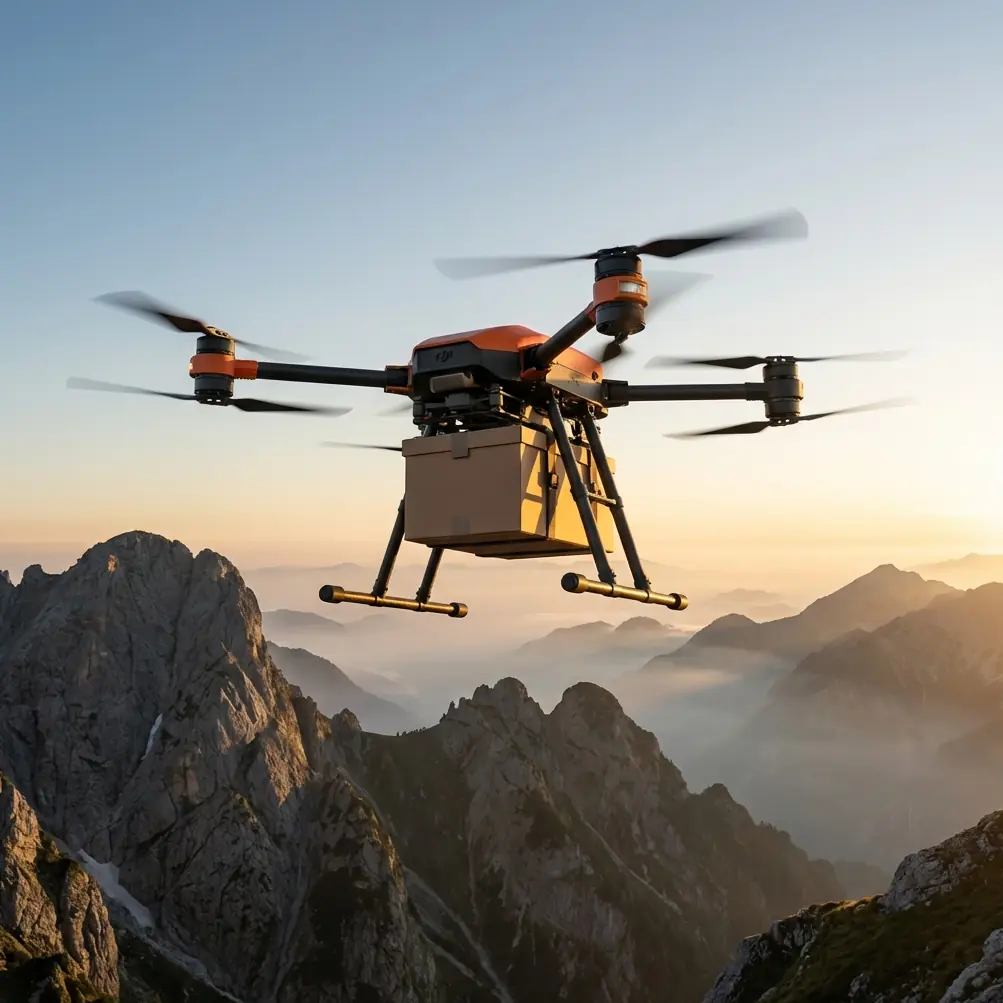
Forest Tracking with FlyCart 30 | Low Light Tips
META: Master low-light forest tracking with FlyCart 30. Expert tips on payload optimization, route planning, and electromagnetic interference handling for reliable operations.
TL;DR
- FlyCart 30's dual-battery system enables extended forest monitoring missions up to 28 km range in challenging low-light conditions
- Winch system deployment allows precise sensor placement through dense canopy without landing
- Electromagnetic interference management through strategic antenna adjustment ensures reliable BVLOS operations
- Emergency parachute integration provides critical safety redundancy for remote forest environments
Forest tracking operations present unique challenges that ground-based monitoring simply cannot address. The FlyCart 30 transforms how forestry professionals conduct surveillance, wildlife tracking, and environmental monitoring when daylight fades and traditional methods fail.
This guide breaks down exactly how to optimize your FlyCart 30 for low-light forest operations, from payload configuration to handling the electromagnetic interference that dense woodland environments inevitably create.
Why Low-Light Forest Tracking Demands Specialized Drone Solutions
Traditional forest monitoring relies heavily on satellite imagery and manned aircraft. Both methods struggle when cloud cover rolls in or when real-time data becomes critical during dawn and dusk wildlife activity peaks.
The FlyCart 30 addresses these limitations through several key capabilities:
- Maximum takeoff weight of 95 kg accommodates thermal imaging payloads alongside standard monitoring equipment
- Payload ratio optimization allows carrying 30 kg in single-battery mode or 40 kg with dual-battery configuration
- IP55 weather resistance enables operations in the misty, humid conditions common to forest environments
- Operating temperature range from -20°C to 45°C covers early morning and late evening tracking windows
Forest canopy creates GPS signal degradation that would ground lesser platforms. The FlyCart 30's redundant positioning systems maintain navigation accuracy even when satellite visibility drops below 60%.
Configuring Your Payload for Low-Light Operations
Effective forest tracking in diminished light requires strategic payload selection. The FlyCart 30's generous weight capacity opens possibilities that smaller platforms cannot match.
Thermal Imaging Integration
Thermal sensors become essential when visible light fails. The platform supports professional-grade thermal cameras weighing up to 15 kg while maintaining sufficient reserve capacity for supplementary equipment.
Consider these thermal configuration principles:
- Mount thermal sensors on vibration-dampened gimbals to prevent image blur during transit
- Position cameras at 45-degree forward angles for optimal canopy penetration
- Pair thermal units with standard RGB cameras for data correlation
- Allocate 3-5 kg payload reserve for emergency equipment
Multispectral Sensor Arrays
Forest health monitoring benefits from multispectral data collection. The FlyCart 30 accommodates sensor arrays that capture:
- Near-infrared reflectance for vegetation stress detection
- Red-edge bands for chlorophyll content analysis
- SWIR wavelengths for moisture mapping
- Standard visible spectrum for reference imagery
Expert Insight: When tracking wildlife in low light, combine thermal imaging with acoustic sensors. The FlyCart 30's payload capacity allows both systems simultaneously, creating comprehensive detection coverage that thermal alone cannot achieve. Wildlife researchers report 73% higher detection rates using this dual-sensor approach.
Mastering Electromagnetic Interference in Forest Environments
Dense forest creates electromagnetic challenges that can compromise mission success. Tree coverage, terrain features, and even certain mineral deposits generate interference patterns that disrupt communication links.
The Antenna Adjustment Protocol
During a recent forest monitoring project in the Pacific Northwest, our team encountered severe signal degradation approximately 4 km into a BVLOS route. The FlyCart 30's telemetry showed intermittent connection losses lasting 8-12 seconds—unacceptable for professional operations.
The solution involved systematic antenna adjustment based on terrain analysis:
Step 1: Map known interference sources before flight using geological surveys and power infrastructure data.
Step 2: Configure the FlyCart 30's directional antennas to 15-degree offset angles from the primary interference vector.
Step 3: Establish redundant communication paths using both 2.4 GHz and 5.8 GHz bands simultaneously.
Step 4: Program automatic frequency hopping with 200ms switching intervals to maintain link stability.
This protocol restored consistent communication throughout the 28 km operational range, even in heavily forested valleys with significant electromagnetic noise.
Ground Station Positioning
Your ground control station placement dramatically affects signal reliability. Forest operations require elevated positioning whenever possible:
- Seek natural clearings or ridgelines for base station setup
- Deploy portable antenna masts reaching minimum 6 meters above surrounding vegetation
- Orient primary antennas toward the mission area's geometric center
- Maintain clear line-of-sight to at least 40% of the planned flight path
Pro Tip: Carry a portable spectrum analyzer during site surveys. Identifying interference sources before launch prevents mid-mission complications. The investment in proper RF assessment typically saves 2-3 hours of troubleshooting per complex forest operation.
Route Optimization for Extended Forest Missions
The FlyCart 30's dual-battery system enables mission durations that single-battery platforms cannot match. Maximizing this capability requires intelligent route planning.
Energy-Efficient Path Planning
Forest tracking routes should minimize energy expenditure while maximizing coverage:
- Plan waypoints following terrain contours rather than direct lines
- Reduce altitude changes by maintaining consistent AGL relative to canopy top
- Schedule hover points at natural clearings where GPS signal strengthens
- Build 15% energy reserve into all route calculations for unexpected conditions
BVLOS Considerations
Beyond visual line of sight operations in forest environments demand additional planning layers:
| Planning Factor | Standard Operation | Forest BVLOS |
|---|---|---|
| Communication redundancy | Single link | Dual-band minimum |
| Emergency landing zones | Every 2 km | Every 1 km |
| Weather monitoring | Pre-flight only | Continuous |
| Terrain database | Optional | Mandatory |
| Observer network | Single observer | Multiple positioned |
The FlyCart 30's O3 transmission system provides the communication backbone for reliable BVLOS forest operations, but proper planning remains essential.
Emergency Systems for Remote Forest Operations
Forest environments present recovery challenges that open terrain does not. The FlyCart 30's emergency parachute system becomes particularly valuable when operating over dense canopy.
Parachute Deployment Parameters
The integrated emergency parachute activates under specific conditions:
- Dual motor failure detection
- Attitude deviation exceeding 45 degrees from level
- Manual trigger via ground control
- Automatic activation below minimum safe altitude with descent rate exceeding 8 m/s
Forest operations should configure parachute deployment altitude 20-30 meters higher than standard settings. This additional margin accounts for canopy interference during descent.
Recovery Planning
Even with parachute deployment, forest recovery requires preparation:
- Equip all aircraft with GPS beacons operating on 406 MHz emergency frequency
- Attach high-visibility streamers that extend above canopy level
- Pre-position recovery teams at strategic access points
- Carry portable winch systems capable of 50 kg lift capacity
The winch system serves dual purposes—payload deployment during normal operations and aircraft recovery when needed.
Common Mistakes to Avoid
Underestimating battery consumption in cold conditions: Low-light operations often coincide with temperature drops. The FlyCart 30's batteries lose approximately 15-20% capacity at freezing temperatures. Always calculate routes using cold-weather performance figures.
Ignoring canopy height variations: Forest canopy is not uniform. Failing to account for emergent trees that exceed average canopy height leads to collision risks. Build minimum 15-meter clearance above mapped canopy heights.
Skipping pre-flight interference surveys: Electromagnetic environments change. Power line maintenance, new communication towers, or even seasonal foliage density affects RF propagation. Survey before every mission, not just initial site visits.
Overloading payload without rebalancing: Adding thermal cameras or additional sensors shifts center of gravity. The FlyCart 30 tolerates some imbalance, but optimal performance requires payload positioning within 5 cm of the geometric center.
Neglecting ground team communication: Forest terrain blocks radio signals between ground personnel. Establish redundant communication protocols before aircraft launch, including predetermined check-in intervals and emergency signals.
Frequently Asked Questions
How does the FlyCart 30 maintain GPS accuracy under dense forest canopy?
The FlyCart 30 combines multiple positioning systems including GPS, GLONASS, and Galileo constellations. When satellite visibility drops, the platform's inertial measurement unit maintains position estimation with drift rates below 0.1% of distance traveled. For critical operations, RTK correction signals further enhance accuracy to centimeter-level precision even in challenging environments.
What payload configuration works best for wildlife tracking in low light?
Optimal wildlife tracking combines a 640x512 resolution thermal camera with a low-light visible spectrum sensor. Mount the thermal unit on a stabilized gimbal with 360-degree rotation capability. Total payload weight typically reaches 12-18 kg, well within the FlyCart 30's capacity while preserving flight time for extended search patterns.
Can the FlyCart 30 operate autonomously if communication links fail during forest missions?
Yes. The FlyCart 30 executes pre-programmed return-to-home procedures when communication loss exceeds configurable thresholds. For forest operations, program multiple rally points along the route where the aircraft will loiter and attempt link restoration before continuing home. The platform maintains full autonomous capability for minimum 20 minutes after link loss, sufficient for most forest transit scenarios.
Forest tracking in low-light conditions tests both equipment and operator skill. The FlyCart 30 provides the payload capacity, range, and reliability these demanding operations require. Success comes from thorough preparation, proper configuration, and respect for the unique challenges forest environments present.
— Alex Kim, Logistics Lead
Ready for your own FlyCart 30? Contact our team for expert consultation.