
FlyCart 30 for Forest Operations: What Antwork’s 10
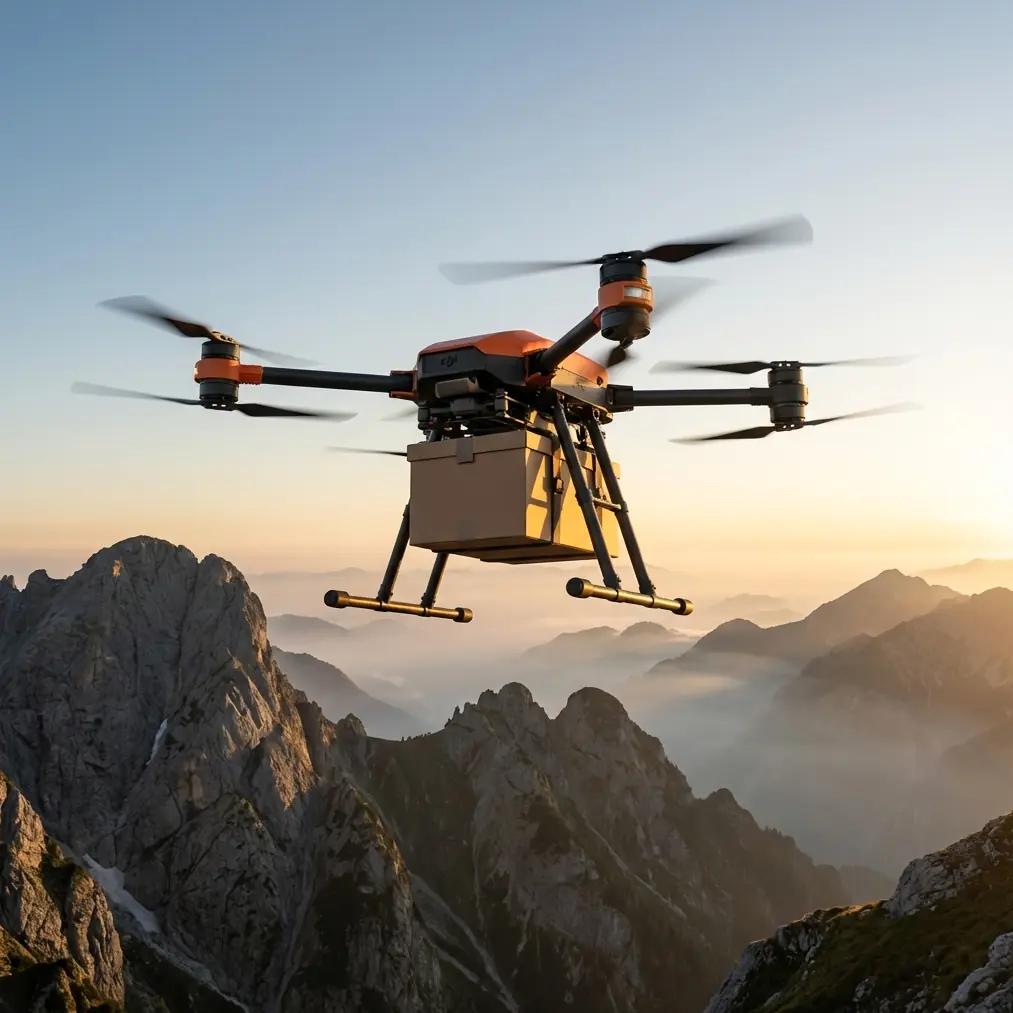
FlyCart 30 for Forest Operations: What Antwork’s 10-Year Milestone Reveals About the Next Phase of UAV Logistics
META: A field-focused FlyCart 30 case study for forest operations, with practical altitude insight, BVLOS planning, winch usage, payload thinking, and why Antwork’s 10-year milestone matters for complex terrain missions.
Forest logistics has a way of exposing the difference between a drone that looks capable on paper and one that can hold a mission together when terrain, canopy, wind, and access constraints start stacking up.
That is why the latest news around Hangzhou Antwork Network Technology carries more weight than a routine anniversary note. On November 17, 2025, the company officially marked 10 years of operation. That milestone matters on its own. But the more telling detail came from the reunion behind it: founder Zhang Lei gathered with the other five members of the original startup team, and although three of the six partners had already moved on, they reportedly still spoke without regret. They joined for conviction and left for rational reasons. That is a rare kind of signal in aviation and robotics. It suggests the original thesis was strong enough to survive both time and turnover.
For anyone evaluating the FlyCart 30 for forest tracking and resupply in complex terrain, this is not just company folklore. It points to something operationally useful: the long-range direction behind cargo UAVs was never a short-term stunt. It was built on a belief that human movement and logistics would shift from two-dimensional ground networks into three-dimensional corridors. Zhang Lei put it plainly: transportation will move from 2D into 3D, and urban air mobility is not optional in the long run. Even if your use case is deep forest rather than dense city, the same logic applies. When roads are slow, blocked, or absent, the third dimension stops being futuristic and becomes practical.
That is the lens through which the FlyCart 30 should be judged in forestry work.
A forest case study mindset, not a spec-sheet mindset
When teams discuss the FlyCart 30 in rugged forest environments, the wrong first question is often, “How much can it carry?” Payload matters, of course. But in real terrain, payload ratio is only meaningful when paired with route geometry, hover exposure, descent method, and recovery margin.
A mountain forest mission is usually not one clean line from point A to point B. It is a chain of compromises. Tree cover interferes with visual confirmation. Ridge lines distort wind behavior. Ground crews may not have a proper landing zone. In some sectors, dropping into a clearing is possible. In others, it is not. That is where the FlyCart 30 conversation becomes more interesting, because the platform is most useful when treated as a logistics system rather than simply a flying box carrier.
For forest tracking teams, that system view includes at least five moving parts:
- payload ratio relative to elevation gain and outbound distance
- route optimization across ridges, valleys, and known wind corridors
- the winch system for deliveries where touchdown is impractical
- dual-battery planning for reserve protection in uneven weather
- emergency parachute logic for risk containment over inaccessible ground
If one of those is weak, the mission may still fly. If two or three are weak, the mission starts consuming too much risk.
Why the Antwork anniversary story actually matters for operators
Anniversary coverage can be fluffy. This one is not, if you read it like an operator.
The detail that six early partners built the company, and three later left without disowning the mission, tells you this segment has been tested by reality rather than hype. Cargo drones live or die on operational friction. They are judged by battery aging, dispatch complexity, maintenance discipline, and what happens when weather collapses a day’s schedule. A 10-year operating milestone is not proof that every product decision is correct. It is proof that the underlying problem is real enough to keep attracting serious effort.
For FlyCart 30 users in forestry, that matters because forest logistics is one of the least forgiving proving grounds. If aerial delivery is going to earn trust anywhere beyond demonstrations, it has to work where roads are weak, manpower is stretched, and every extra kilometer on foot costs time and safety.
The second key detail from the source is Zhang Lei’s original premise about shifting from two-dimensional movement to three-dimensional movement. Operationally, that is more than a vision statement. In forestry, it changes the baseline planning model.
A ground-first logistics plan asks:
- Which trail is passable?
- Which vehicle can get in?
- How many handoffs are needed?
A 3D logistics plan asks:
- Which air corridor is safest?
- Where is canopy clearance adequate?
- What altitude preserves signal, obstacle margin, and battery reserve?
- Where can the payload be lowered without rotor wash causing instability?
That shift is exactly why the FlyCart 30 belongs in the forest conversation.
Optimal flight altitude in complex forest terrain
If you only take one practical takeaway from this article, make it this: in forest terrain, the best altitude is rarely the highest legal altitude you can choose, and it is rarely the lowest altitude that feels efficient.
For most FlyCart 30 forest missions, the optimal working profile is a terrain-aware cruising altitude that stays comfortably above the dominant canopy and isolated protrusions, while remaining low enough to avoid unnecessary wind exposure and energy waste. In plain terms, that often means flying with a modest but consistent vertical buffer above local treetops and ridge obstacles rather than holding one fixed absolute altitude for the whole route.
Why does that matter?
Because forests create false confidence. A route may look manageable on a map, but the local environment changes fast:
- one ridge spills turbulent crosswind into the next valley
- one section of canopy hides a snag or dead crown that extends higher than expected
- one opening offers a safe winch drop while the next is too tight for stable descent
In practice, a FlyCart 30 mission over forests tends to perform best when altitude is adjusted by segment:
- climb before ridge transitions
- reduce excess height over sheltered corridors
- maintain extra clearance when visual cues are degraded
- avoid long, unnecessarily high cruise legs that burn reserve into headwinds
The mistake I see most often is overflying the entire route at a conservative but inefficient altitude. Teams do it because it feels safer. Sometimes it is. Often it just increases energy consumption, extends exposure to stronger upper-layer winds, and leaves less battery flexibility for the hardest part of the mission: the delivery phase.
A better approach is route optimization that separates the mission into three altitude decisions:
- transit altitude
- obstacle transition altitude
- delivery hover altitude
That sounds obvious until you watch how many missions still treat them as the same number.
How the winch system changes forest logistics
In forest operations, touchdown capability is overrated. Not because landing is bad, but because suitable landing surfaces are inconsistent and often operationally expensive to secure.
This is where a winch system becomes more than a convenience. It is what allows the aircraft to remain above uneven ground, loose branches, wet clearings, and uncertain footing while still placing cargo precisely enough for a field team. In steep or densely vegetated sectors, that changes the entire risk profile.
The practical significance is straightforward:
- less dependence on prepared landing spots
- reduced rotor interaction with brush and debris
- faster turnaround at temporary drop points
- fewer reasons to send personnel into awkward recovery zones
For forest tracking teams carrying sensors, batteries, radio equipment, medical kits, or lightweight repair parts, winch delivery can reduce both ground time and exposure. The aircraft stays in a more controllable vertical envelope while the receiving team works from a position that makes sense on the ground.
That is the kind of operational design choice that fits the broader 3D mobility idea from Antwork’s founding logic. The aircraft is not trying to imitate a truck. It is using the air domain to avoid the limitations that make ground access inefficient in the first place.
BVLOS is valuable, but only when the route is disciplined
Forest missions are where BVLOS capability earns its reputation and where sloppy planning gets punished.
Beyond visual line of sight opens genuine reach for monitoring crews, ranger teams, and supply nodes spread across complex terrain. But range alone is not the story. What matters is whether the route has been simplified enough to remain predictable under degraded conditions.
Good BVLOS planning in forests means:
- avoiding unnecessary zigzags caused by poor waypoint logic
- building alternates around terrain masks and weather shifts
- preserving return margin under realistic, not ideal, payload assumptions
- defining clear abort points before the aircraft enters the hardest segment
This is where payload ratio comes back into play. A route that looks viable at a comfortable payload may become fragile when operators push for more cargo on the same profile. That is not a flaw in the aircraft. It is usually a planning error. Every kilogram has a cost in climb performance, reserve depth, and hover stability. Forest routes amplify those costs because elevation changes and wind gradients are less forgiving than open flatland corridors.
If your team is preparing a FlyCart 30 mission set for rugged forest sectors and wants to compare route design options, a direct operations discussion can save a lot of trial and error. Here is a quick field coordination channel: message our UAV logistics desk.
Dual-battery thinking is not just redundancy
In forest work, dual-battery architecture should be thought of less as a comforting backup feature and more as a planning discipline. It gives operators a more resilient power framework, but that does not remove the need for conservative mission design.
The real advantage shows up when conditions stop matching the neat assumptions made at dispatch.
Maybe the valley wind is stronger than forecast. Maybe the receiving team needs a second positioning attempt. Maybe the route home requires a detour around a ridge face now carrying unstable gusts.
Those are not edge cases. They are ordinary complications in complex terrain. A dual-battery setup gives the mission more tolerance, which is exactly what forests demand. The same goes for an emergency parachute. It should never be treated as a primary safety strategy, but in inaccessible landscapes, where forced landing options are limited and recovery can be difficult, that layer of protection matters. Its operational significance is simple: when the environment gives you fewer good outcomes, every controlled contingency becomes more valuable.
The broader takeaway for FlyCart 30 buyers and operators
The reason this news story matters is not sentimentality about a company turning 10. It is that the anniversary reinforces the strategic foundation behind cargo drones at a time when many buyers still evaluate them too narrowly.
Antwork’s origin story was built around a structural belief: mobility would move upward into the third dimension. Ten years later, that idea is still intact. The reunion of the six original partners, including the reality that three had left and still viewed the experience without regret, shows something else: this field has matured beyond pure startup romance. It has become a domain where conviction must survive operations.
For FlyCart 30 users in forestry, that is exactly the standard that matters.
Do not buy into generic drone narratives. Do not obsess over one headline figure. Do not plan forest missions as if terrain were a minor inconvenience.
Instead, evaluate the aircraft as part of an aerial logistics method:
- Can it keep payload ratio sensible for your actual routes?
- Can the winch system reduce landing-zone dependence?
- Can your BVLOS planning handle ridges, canopy, and variable winds?
- Can your altitude strategy adapt by route segment rather than by habit?
- Can dual-battery reserves and emergency parachute protections support real field contingencies?
That is how forest teams should think about the FlyCart 30.
The bigger lesson from the Antwork milestone is that 3D logistics is no longer an abstract promise waiting for the right decade. In difficult terrain, it is already the more rational framework. Roads still matter. Ground crews still matter. But in forests where time, access, and safety are constantly in tension, the third dimension is often the cleanest path left.
Ready for your own FlyCart 30? Contact our team for expert consultation.