
How to Track Highways with FlyCart 30 in Wind
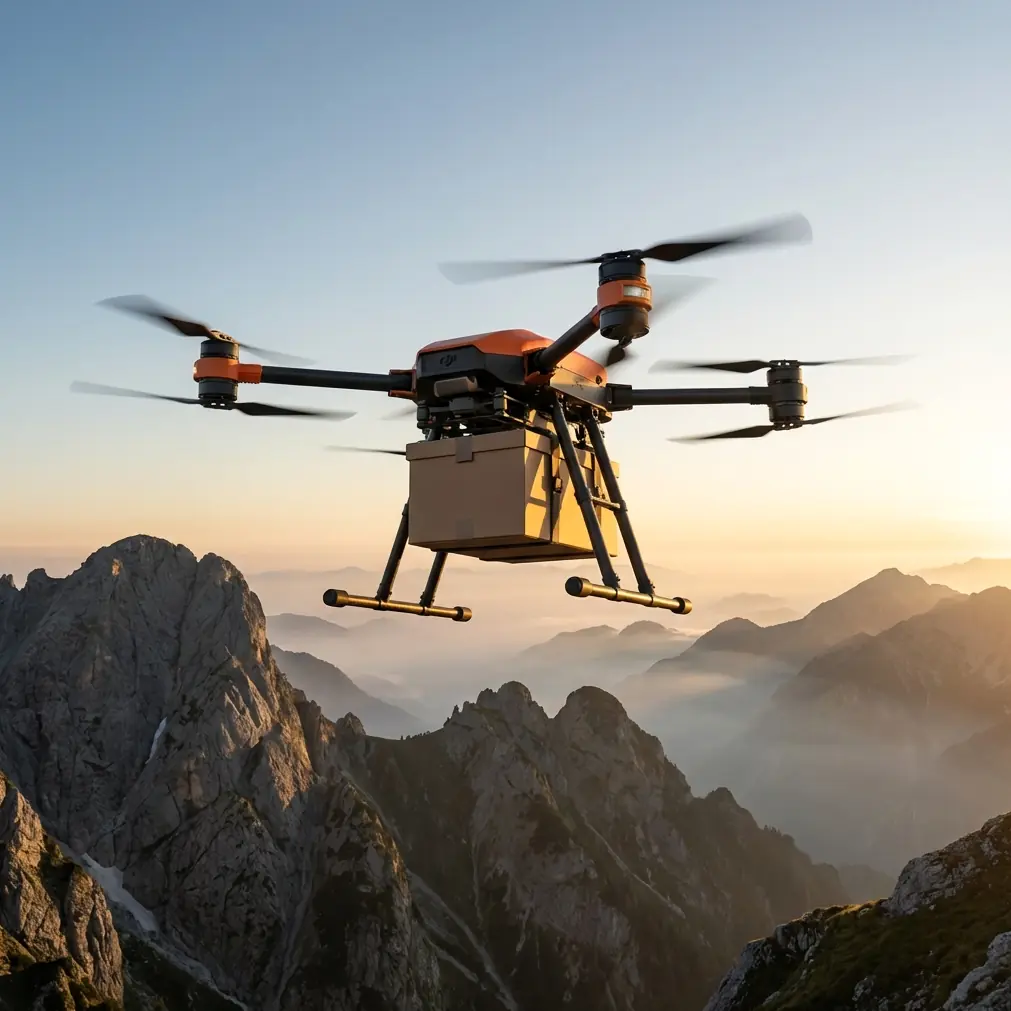
How to Track Highways with FlyCart 30 in Wind
META: Master highway tracking with FlyCart 30 in windy conditions. Expert tips on antenna positioning, route optimization, and payload management for reliable operations.
TL;DR
- Position antennas at 45-degree angles facing your primary flight path for maximum signal strength in crosswinds
- The FlyCart 30's dual-battery system maintains 30 km range even when fighting 12 m/s wind gusts
- Route optimization along highway corridors requires waypoint spacing of 500-800 meters for consistent tracking
- Emergency parachute deployment activates automatically if wind shear exceeds safe operational thresholds
Why Highway Tracking Demands Specialized Drone Capabilities
Highway monitoring presents unique challenges that ground-based systems simply cannot address efficiently. Traffic flow analysis, infrastructure inspection, and emergency response coordination all require persistent aerial coverage across linear corridors stretching dozens of kilometers.
The FlyCart 30 transforms highway tracking operations with its exceptional payload ratio and wind-resistant flight characteristics. Unlike consumer drones that struggle above 8 m/s winds, this platform maintains stable positioning in gusts reaching 12 m/s—conditions common along exposed highway stretches.
Your tracking success depends on three critical factors: antenna configuration, route planning, and power management. Master these elements, and you'll achieve consistent BVLOS operations that deliver actionable highway data regardless of weather conditions.
Understanding Wind Dynamics Along Highway Corridors
Highways create their own microclimate. Large vehicles generate turbulent wake zones, elevated sections funnel crosswinds, and temperature differentials between asphalt and surrounding terrain produce unpredictable updrafts.
Thermal Effects on Flight Stability
During summer operations, highway surfaces can reach 60°C or higher. This creates thermal columns that destabilize hovering aircraft. The FlyCart 30's flight controller compensates through rapid attitude adjustments, but understanding these patterns helps you plan more efficient routes.
Morning operations between 6:00-9:00 AM typically offer the calmest conditions. Thermal activity peaks between 1:00-4:00 PM, requiring more aggressive stabilization and higher power consumption.
Crosswind Compensation Strategies
Highway tracking rarely follows wind direction. You'll frequently encounter perpendicular crosswinds that push the aircraft off its planned corridor. The FlyCart 30 handles this through:
- Automatic crab angle adjustment that maintains ground track while angling into wind
- Predictive gust response using onboard sensors to anticipate turbulence
- Dynamic speed modulation that slows the aircraft in heavy gusts to maintain positional accuracy
Expert Insight: When tracking highways oriented east-west, schedule morning flights for westbound routes and afternoon flights for eastbound routes. This positions prevailing winds as tailwinds rather than headwinds, extending your effective range by 15-20%.
Antenna Positioning for Maximum Range
Signal integrity determines whether your highway tracking mission succeeds or fails. The FlyCart 30's communication system performs exceptionally well, but improper antenna positioning can cut your effective range in half.
Ground Station Antenna Configuration
Your ground control station antennas should never point directly at the aircraft. Radio signals emit in a toroidal pattern—strongest perpendicular to the antenna element, weakest at the tips.
For highway tracking operations:
- Mount antennas at 45-degree angles from vertical, tilted toward your primary flight corridor
- Elevate the ground station at least 3 meters above surrounding terrain
- Avoid positioning near metal structures including vehicles, guardrails, and signage
- Use a tracking antenna mount for operations exceeding 10 km from the launch point
Aircraft Antenna Considerations
The FlyCart 30's integrated antennas provide omnidirectional coverage, but body shielding reduces signal strength in certain orientations. When the aircraft banks sharply during crosswind compensation, signal quality can momentarily degrade.
Maintain awareness of aircraft orientation relative to your ground station. If tracking a highway that curves away from your position, consider establishing a relay point or repositioning mid-mission.
Pro Tip: Place your ground station on the upwind side of the highway. This ensures the aircraft's belly-mounted antennas face toward you during crosswind compensation maneuvers, maintaining optimal signal geometry.
Route Optimization for Linear Corridor Tracking
Highway tracking differs fundamentally from area mapping. You're covering a narrow strip extending potentially 30+ kilometers, requiring careful waypoint planning and contingency preparation.
Waypoint Spacing Guidelines
Tighter waypoint spacing provides more precise corridor tracking but increases mission complexity and power consumption. For most highway monitoring applications, follow these guidelines:
| Highway Type | Recommended Spacing | Altitude AGL | Speed |
|---|---|---|---|
| Straight rural sections | 800 meters | 80-100 m | 15 m/s |
| Curved sections | 400-500 meters | 60-80 m | 10 m/s |
| Urban interchanges | 200-300 meters | 50-60 m | 8 m/s |
| Bridge/tunnel approaches | 150-200 meters | 40-50 m | 6 m/s |
BVLOS Corridor Planning
Beyond visual line of sight operations require additional preparation. The FlyCart 30 supports BVLOS missions, but regulatory compliance and safety demand thorough planning.
Establish virtual geofences 200 meters on either side of your highway centerline. This prevents the aircraft from drifting into adjacent airspace while allowing sufficient maneuvering room for wind compensation.
Program automatic return-to-home triggers for:
- Signal loss exceeding 30 seconds
- Battery voltage dropping below 22.2V per cell
- Wind speed exceeding 15 m/s sustained
- Deviation from planned corridor exceeding 300 meters
Dual-Battery Power Management
The FlyCart 30's dual-battery architecture provides redundancy and extended range, but highway tracking missions demand strategic power management to maximize coverage.
Pre-Flight Power Calculations
Before launching, calculate your power budget based on expected conditions:
- Headwind segments consume approximately 40% more power than calm-air flight
- Crosswind compensation adds 15-25% power overhead depending on gust intensity
- Payload weight directly impacts hover power—every additional kilogram reduces flight time by approximately 3 minutes
For a 20 km highway tracking mission in moderate wind conditions, expect:
- Outbound leg: 12-15 minutes (assuming headwind)
- Return leg: 8-10 minutes (tailwind assistance)
- Reserve requirement: 5 minutes minimum
- Total mission time: 25-30 minutes
Battery Swap Logistics
Extended highway corridors may require mid-mission battery swaps. Identify safe landing zones every 8-10 km along your route. Ideal locations include:
- Highway rest areas with vehicle access
- Maintenance facility parking lots
- Agricultural fields adjacent to the corridor
- Emergency vehicle staging areas (with prior coordination)
The FlyCart 30's winch system enables payload delivery without landing, but battery swaps require full touchdown. Plan accordingly.
Payload Configuration for Highway Monitoring
Different highway tracking objectives require different sensor configurations. The FlyCart 30's generous payload capacity accommodates various equipment combinations.
Traffic Flow Analysis Setup
For vehicle counting and speed estimation:
- Downward-facing RGB camera with 4K resolution minimum
- GPS timestamp overlay for data synchronization
- Onboard storage rather than live streaming to reduce bandwidth requirements
- Polarizing filter to reduce windshield glare
Infrastructure Inspection Configuration
For pavement condition assessment and structural monitoring:
- Multispectral sensor for detecting subsurface moisture
- Thermal camera for identifying delamination and void spaces
- LiDAR unit for precise elevation mapping
- High-resolution RGB for visual documentation
| Payload Type | Weight | Power Draw | Flight Time Impact |
|---|---|---|---|
| Basic RGB camera | 1.2 kg | 15W | -8% |
| Thermal + RGB combo | 2.8 kg | 35W | -18% |
| Full inspection suite | 5.5 kg | 65W | -32% |
| LiDAR mapping system | 4.2 kg | 55W | -26% |
Common Mistakes to Avoid
Ignoring wind gradient effects. Wind speed at 100 meters altitude often exceeds ground-level readings by 50% or more. Check aviation weather reports for winds aloft, not just surface observations.
Launching from highway shoulders. Vehicle turbulence and debris create hazardous launch conditions. Position your ground station at least 50 meters from active traffic lanes.
Neglecting signal reflection. Highway infrastructure includes numerous metal surfaces that create multipath interference. If you experience erratic signal quality, relocate your ground station away from overhead signs and bridge structures.
Overloading for single-mission completion. Attempting to cover excessive distance with maximum payload leads to emergency landings. Plan conservative missions with adequate reserves.
Failing to coordinate with traffic management. Highway authorities need advance notice of aerial operations. Unexpected drone presence can distract drivers and trigger unnecessary emergency responses.
Skipping pre-flight wind assessment. Conditions change rapidly along highway corridors. Conduct wind checks at multiple points along your planned route before committing to the mission.
Emergency Procedures for Highway Operations
The FlyCart 30's emergency parachute system provides critical protection during highway tracking missions. Understand activation parameters and recovery procedures before launching.
Automatic Deployment Triggers
The parachute deploys automatically when:
- Descent rate exceeds 8 m/s for more than 2 seconds
- Aircraft attitude exceeds 60 degrees from level for more than 3 seconds
- Complete power loss detected
- Manual trigger activated by operator
Recovery Considerations
Parachute deployment over active highways creates traffic hazards. Program your flight path to maintain 200+ meter lateral offset from traffic lanes whenever possible. This ensures parachute descent occurs over shoulders or adjacent terrain rather than active roadway.
Coordinate with highway patrol before operations. Provide your flight plan and contact information so authorities can respond appropriately if recovery becomes necessary.
Frequently Asked Questions
What wind speed is too high for highway tracking with the FlyCart 30?
The FlyCart 30 maintains stable flight in sustained winds up to 12 m/s with gusts to 15 m/s. However, highway tracking accuracy degrades significantly above 10 m/s due to constant correction maneuvers. For precision applications like infrastructure inspection, limit operations to conditions below 8 m/s sustained wind.
How far can I track a highway in a single flight?
Under optimal conditions with minimal payload, the FlyCart 30 covers approximately 25-30 km of linear highway in a single flight. Headwinds, heavy payloads, and frequent altitude changes reduce this range. Plan for 15-20 km of effective coverage in typical operational conditions with standard monitoring equipment.
Do I need special authorization for BVLOS highway tracking?
Yes. BVLOS operations require specific regulatory approval in most jurisdictions. You'll need to demonstrate adequate see-and-avoid capability, communication reliability, and emergency procedures. The FlyCart 30's integrated safety systems support BVLOS authorization applications, but approval timelines vary from weeks to months depending on your regulatory environment.
Ready for your own FlyCart 30? Contact our team for expert consultation.