
FlyCart 30 for Dusty Highway Corridors: A Technical Review
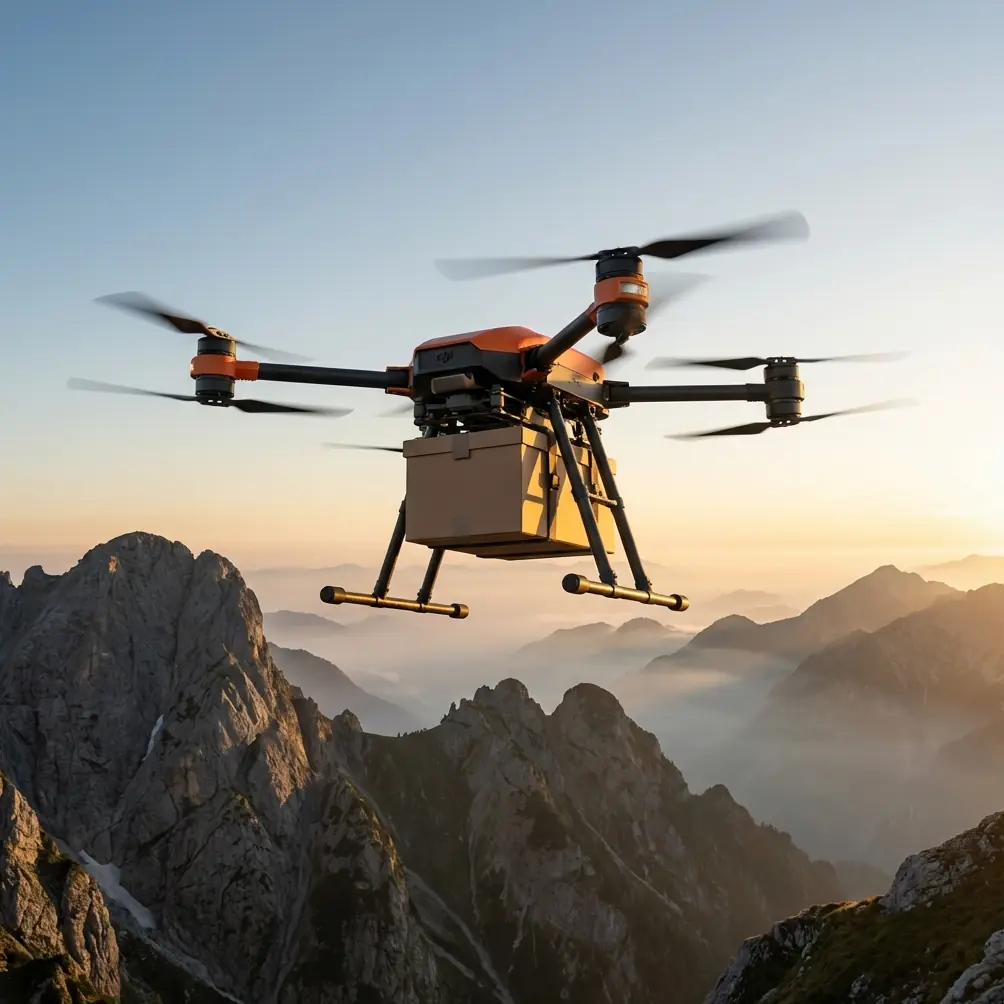
FlyCart 30 for Dusty Highway Corridors: A Technical Review Grounded in Where the Low-Altitude Industry Is Headed
META: Expert review of FlyCart 30 for dusty highway operations, covering payload ratio, winch system, BVLOS workflow, dual-battery reliability, parachute checks, and why recent low-altitude industry signals matter.
Highway support work looks simple from a distance. It isn’t.
Once you move beyond polished demo flights and start thinking about real corridor operations in dusty conditions, the conversation changes fast. Dust affects sensors, cooling paths, connectors, landing surfaces, and the reliability of safety systems people tend to assume will always work when needed. For teams evaluating the FlyCart 30 for highway-adjacent logistics, inspection support, or material drops along long road sections, that detail matters far more than headline specs alone.
What makes the FlyCart 30 interesting right now is not just the aircraft itself. It is the timing. The recent 2026 low-altitude industry development conference in Hengqin put a spotlight on something operators should be paying attention to: the low-altitude sector is no longer being discussed as an isolated drone niche. The event included multiple cooperation projects signed on site, and the public remarks from industry leadership emphasized low-altitude aviation as a strategic development direction, backed by technology innovation, industrial cultivation, and ecosystem building. That matters because heavy-duty logistics drones do not succeed on aircraft performance alone. They succeed when the surrounding system matures: airspace coordination, training pathways, service networks, operating procedures, and commercial confidence.
For anyone tracking whether the FlyCart 30 is just another capable UAV or part of a broader operational shift, those signals are significant.
Why a highway use case is a serious test for FlyCart 30
Dusty highway corridors are a brutal proving ground because they combine several stressors at once.
First, there is linear distance. Even when operations are not truly long-range, road projects and highway inspection support missions stretch teams into corridor-style planning instead of compact site work. That pushes route optimization from a nice-to-have into a central operational discipline.
Second, there is the surface environment. Highways generate a constant mix of fine dust, grit, tire residue, and airflow turbulence from passing vehicles. If a drone is being used to move tools, emergency repair items, lightweight traffic-management supplies, or inspection components between staging points, every takeoff and landing event becomes a contamination event unless the crew has a disciplined process.
Third, there is the reality of partial infrastructure. Not every handoff point will be ideal for landing. That is where the FlyCart 30’s winch-based delivery mode becomes more than a feature on a brochure. In practical terms, a winch system can reduce the need to put the aircraft down on contaminated or uneven roadside surfaces, which lowers exposure to rotor wash recirculating dust and helps preserve stability around cluttered work zones.
That operational significance is easy to miss if you only compare payload numbers.
The bigger industry backdrop matters more than most buyers think
The Hengqin conference is relevant here for a simple reason: serious drone logistics requires institutional support.
At that event, multiple cooperation projects were signed during the conference period. That suggests a market moving from discussion into implementation. When partnerships are formalized at that scale, operators should read it as a signal that the low-altitude sector is building connective tissue, not just attracting attention. For a platform like FlyCart 30, that can influence adoption far beyond the aircraft. It affects integration prospects, training quality, maintenance ecosystems, and the pace at which complex operations become repeatable rather than experimental.
Another detail from the conference deserves more attention. The stated approach highlighted system-level planning alongside market orientation. That pairing is crucial for commercial heavy-lift drones. A system layout mindset means stakeholders are thinking in terms of networks and operational structure. A market-oriented stance means those networks are expected to solve real problems, not just exist on paper. For highway logistics, that translates into a more favorable environment for corridor operations, scheduled deliveries to distributed crews, and scalable workflows that can support BVLOS expansion where permitted.
This is the context in which FlyCart 30 should be assessed. Not as a stand-alone aircraft, but as a tool entering a market that is being deliberately built around low-altitude productivity.
What FlyCart 30 needs to get right in dusty operations
The first point is almost boring, which is exactly why it gets ignored: pre-flight cleaning.
If I were running a highway support team with FlyCart 30 units, I would treat pre-flight cleaning of safety-critical components as mandatory, not optional. Dust accumulation around battery contacts, vent paths, payload interfaces, sensor windows, and parachute-related housings can create subtle faults that stay invisible until the aircraft is under load. On a platform expected to work near active infrastructure, “good enough” cleaning is not good enough.
This is especially relevant when your operation relies on features such as an emergency parachute and dual-battery redundancy. Those systems exist to improve resilience, but resilience is never abstract. A parachute system is only reassuring if its deployment pathway is unobstructed and its triggering environment is properly maintained. A dual-battery architecture only delivers its full value when crews are disciplined about inspecting contact cleanliness, latch integrity, and thermal condition after each dusty mission cycle.
That is why a pre-flight routine for dusty highway work should begin before power-up:
- wipe and inspect exposed sensor surfaces
- clear dust from payload mount and winch attachment areas
- inspect battery terminals and seating points
- examine parachute-related covers and surrounding surfaces
- check for dust ingestion around cooling openings
- verify that the underside and landing gear are free from debris that could shake loose during climb
This is not housekeeping. It is risk management.
Payload ratio is useful only if it remains operationally stable
Payload ratio gets talked about as though it were one number that tells the whole story. In practice, highway operations care less about theoretical ratio than usable ratio under environmental stress.
A drone carrying a strong load on paper may behave very differently after repeated exposure to dust, heat buildup, and stop-start mission tempo. The FlyCart 30’s value in corridor work depends on whether teams can maintain repeatable lifting performance while preserving turnaround speed. That means payload planning has to account for more than cargo weight. It has to include route structure, drop method, ambient contamination, and whether the mission profile favors a landing delivery or winch deployment.
For dusty environments, winch operations often improve the real payload equation. Not because they increase the raw carrying capacity, but because they reduce landing risk and shorten the sequence at pickup or drop-off points that would otherwise force the aircraft into a dust cloud. Less dust on the airframe means cleaner subsequent flights, more predictable sensor performance, and lower maintenance burden over time.
That is what operational payload ratio really means: the amount of useful work you can repeat safely and efficiently across a full day, not just on the first sortie.
Winch system: not a convenience feature, a highway tool
Along highways, the best drop zone is often the one you should not land in.
Shoulder conditions vary. There may be loose aggregate, traffic cones, temporary barriers, vegetation, standing dust, or poor visual references. In those conditions, the winch system changes the delivery model. It lets the aircraft remain in a more stable hover while lowering cargo to a controlled handoff point, keeping rotor wash farther from the ground contact area than a full landing sequence would.
The operational significance is straightforward:
- fewer contaminated landings
- less dust recirculation into the aircraft environment
- safer access to constrained roadside points
- quicker departure after handoff
- lower risk of surface-induced instability
For highway maintenance and support crews, that can mean better consistency in urgent delivery tasks. If a team needs a small replacement component, survey marker set, communications accessory, or maintenance kit moved down a corridor, the ability to avoid a landing can be the difference between an efficient operation and a messy one.
BVLOS and route optimization are inseparable here
A lot of people discuss BVLOS as a regulatory milestone. For corridor work, it is really an operational architecture.
Highway environments are long, repetitive, and ideal for structured route planning, but only if the routes are designed around real terrain, dust sources, work zones, and handoff logic. Route optimization with FlyCart 30 should focus on minimizing unnecessary hover time over high-dust surfaces, reducing low-altitude loiter near moving traffic, and selecting staging points that simplify battery management and payload turnover.
This is where the broader low-altitude industry direction again becomes relevant. If the sector is being treated as a strategic growth area and ecosystem construction is a priority, then corridor operations such as road support become more plausible at scale. They fit the pattern of repeatable, economically clear missions that benefit from coordinated infrastructure and standardized procedures.
A heavy-lift UAV working BVLOS over linear transport corridors needs more than strong airframe design. It needs process maturity around dispatching, contingency handling, route segmentation, and landing alternatives. The market’s shift toward ecosystem thinking directly supports that kind of mission profile.
Dual-battery design earns its value in ugly conditions
On a clean day at a controlled site, dual-battery architecture sounds reassuring. On a dusty highway corridor with repeated cycles and real workload, it becomes part of the aircraft’s business case.
Redundancy matters most when operations are inconvenient, not when they are easy. Dust, vibration, quick redeployment, and irregular staging areas all increase the importance of stable power continuity. That does not mean operators should become casual. Quite the opposite. Redundant systems can hide poor discipline if crews start assuming the aircraft will cover for avoidable mistakes.
My view is simple: dual-battery capability should push teams toward stricter inspection culture, not laxer habits. Every mission cycle should reinforce battery hygiene, temperature awareness, seating verification, and swap discipline. If your crews are not logging contamination findings and battery condition trends after dusty flights, they are not really managing reliability. They are hoping for it.
Emergency parachute: confidence only comes after inspection
The emergency parachute deserves the same treatment. It is a last-line safety feature, not a decorative bullet point.
Highway work puts aircraft near valuable infrastructure, active traffic environments, and work crews who need predictability. A parachute system contributes to the safety case, but confidence in that feature starts on the ground. In dusty operations, that means specific attention to any area where debris, residue, or neglected cleaning could interfere with proper readiness.
The practical lesson is that safety features should shape workflow. They should not be mentally filed away as factory safeguards. Before each mission, crews should be asking: is this system truly ready, or are we just assuming it is because the aircraft passed a basic startup check?
That one question separates professional operations from casual ones.
The FlyCart 30 decision is really a systems decision
If you are evaluating FlyCart 30 for highway corridor work, especially in dusty conditions, the right question is not “Can it carry the load?” The better question is “Can our team build a repeatable operating system around it?”
The conference in Hengqin offered a useful clue about where this market is heading. A sector that is attracting signed cooperation projects and being framed around innovation, industry development, and ecosystem construction is moving toward operational normalization. That is exactly the environment where aircraft like FlyCart 30 can become deeply useful. Not because they are novel, but because they can slot into a larger system that supports routine work.
For logistics leads, that means the aircraft should be judged on five things:
- how cleanly it integrates into route-based corridor workflows
- whether the winch system reduces unsafe or dirty landing events
- how well the dual-battery setup supports reliable sortie tempo
- whether the emergency parachute is backed by disciplined inspection habits
- how the team handles payload planning as an operational, not theoretical, metric
If you are comparing procedures or deployment ideas with other operators, a direct WhatsApp channel can be useful for practical workflow questions: message our flight operations desk.
Final assessment
FlyCart 30 makes the most sense for dusty highway operations when it is treated as a working logistics platform inside a mature process, not as a one-click answer. Its strongest advantages in this scenario are not flashy. They are practical: the ability to use a winch system instead of risky roadside landings, the operational resilience supported by dual-battery architecture, and the presence of an emergency parachute that strengthens the safety case when properly maintained.
The broader low-altitude industry signals coming out of Hengqin add real weight to the platform’s outlook. A conference centered on low-altitude development, combined with multiple cooperation agreements and an explicit push for technology innovation, industrial cultivation, ecosystem building, system planning, and market orientation, points toward a commercial environment where corridor drone logistics can become routine rather than exceptional.
That is the real story around FlyCart 30 right now.
Not just what the aircraft can do in isolation, but how well it fits the next phase of low-altitude operations.
Ready for your own FlyCart 30? Contact our team for expert consultation.