
Tracking Dusty Highways with FlyCart 30: A Field Case Study
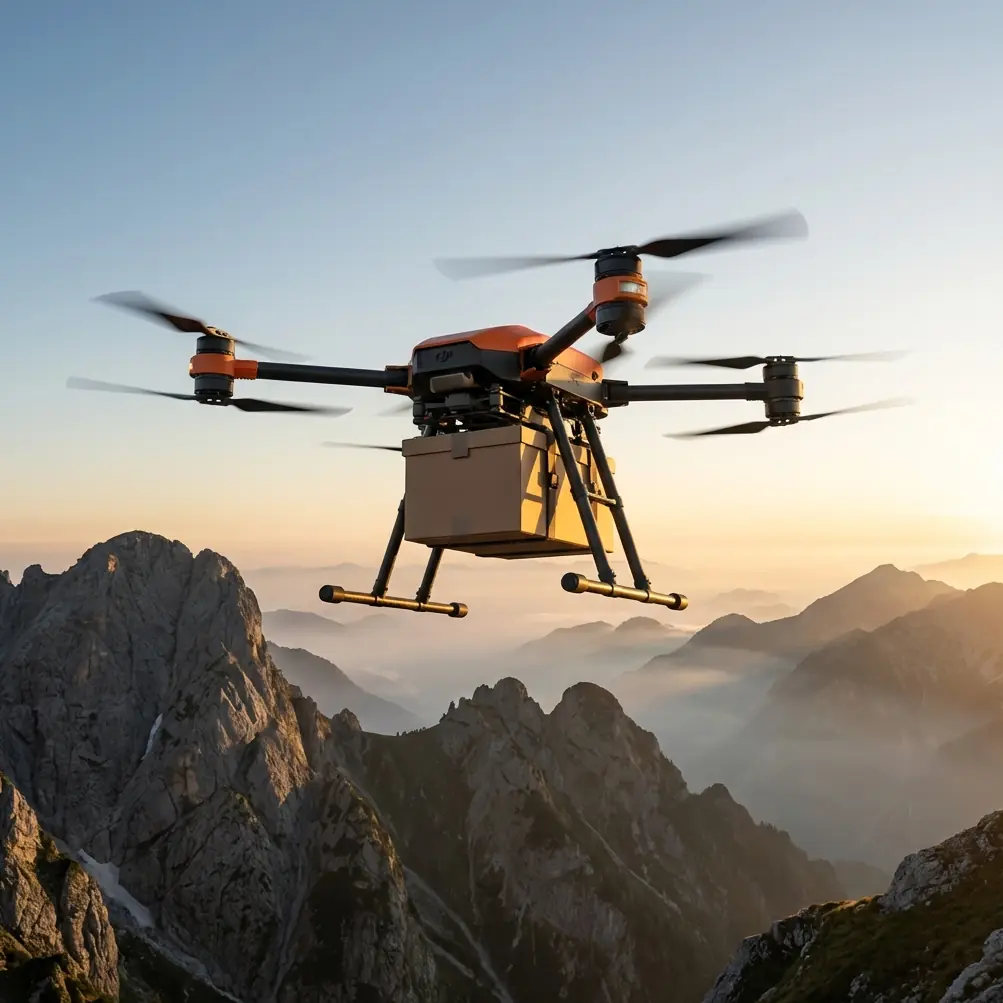
Tracking Dusty Highways with FlyCart 30: A Field Case Study from the World Drone Conference
META: A practical FlyCart 30 case study for dusty highway logistics, covering battery management, route planning, winch use, payload ratio, and why large-scale drone exhibitions matter for real operators.
At the ninth World Drone Conference, more than 5,000 products were put on display. That number matters for one reason: when an event reaches that scale, it stops being a showroom and becomes a filter. Operators, logistics teams, and technical buyers are no longer looking at drones as isolated gadgets. They are comparing complete workflows, mission reliability, energy management, safety systems, and deployment fit.
For anyone focused on the FlyCart 30, that context is useful.
A heavy-lift logistics platform does not earn attention simply because it can carry cargo. It earns attention because supply chain teams have very specific problems to solve. In my case, those problems show up along dusty highway corridors, where road access is inconsistent, stopping points are exposed, and crews often need to move tools, inspection parts, sensors, or emergency consumables without wasting half a day on detours. That is where the FlyCart 30 starts to become less of a product spec and more of an operating method.
I lead logistics planning for field deployments, and the most valuable lesson I can offer is simple: in dusty highway environments, the aircraft is only half the system. The other half is how you manage batteries, route logic, drop procedures, and site discipline under real conditions.
Why the World Drone Conference Signal Matters
The ninth edition of the World Drone Conference featured over 5,000 products, with drone-related systems as the core of the exhibition. That tells us something important about the maturity of the market. Buyers are no longer comparing “drone versus no drone.” They are comparing one mission architecture against another.
For FlyCart 30 operators, that shift raises the standard.
If a logistics drone is being evaluated in the same environment as thousands of other unmanned products, it has to prove operational value in a crowded field. Payload ratio matters. Winch performance matters. Battery swap speed matters. Emergency redundancy matters. A drone that looks impressive on a stand but slows down field turnover will lose to one that reduces cycle time on an actual route.
That is why I read large exhibition news differently than many people do. The headline is not just that there were 5,000-plus products. The real takeaway is that end users now have choices, and those choices force platforms like the FlyCart 30 to justify themselves through workflow efficiency.
The Highway Scenario Most Brochures Skip
Dusty highway tracking work sounds narrow, but it combines several conditions that expose weak operating habits fast.
You may have:
- long linear routes with uneven access points
- work crews spread across multiple kilometers
- cargo that is not especially heavy, but time-sensitive
- variable landing surfaces
- airborne dust kicked up by traffic and roadside activity
- pressure to keep people away from live roadside hazards
That mix changes how I think about FlyCart 30 missions.
The aircraft’s practical value is not just moving items from A to B. It is reducing vehicle repositioning, shrinking idle time for technical crews, and keeping handoff points away from unsafe roadside congestion. In a highway environment, every avoided stop has operational value. Every successful remote drop can save a truck movement. Every minute taken out of a delivery loop compounds across the day.
This is also where a winch system becomes more than a nice feature. If the terrain near the corridor is rough, dusty, or cluttered, forcing a full landing can create unnecessary exposure. A controlled suspended delivery gives the team more flexibility. You can hold the aircraft in a safer hover position, deliver to a cleaner target area, and reduce the number of unstable touchdown events on marginal ground.
What the Payload Ratio Actually Changes
A lot of people treat payload ratio as a brochure metric. In field logistics, it changes planning behavior.
When I am supporting highway operations, I rarely think of payload in isolation. I think in terms of mission density: how much useful material can be moved per sortie without creating battery stress, excessive reserve consumption, or route inefficiency? A stronger payload ratio means the aircraft can carry a more meaningful share of what the crew actually needs, instead of forcing multiple low-value trips.
That affects route optimization immediately.
If one sortie can move a full maintenance package rather than half of it, then the ground team does not need to split work phases around staggered deliveries. If one outbound leg can include all required consumables for a checkpoint, the drone starts acting like a real logistics node instead of a demo asset.
The operational significance is straightforward: payload ratio influences not just lift capability, but the number of touchpoints, dispatch decisions, and battery cycles required to sustain a day’s work.
My Battery Management Tip from the Field
Here is the lesson I wish more teams learned early: in dusty highway work, do not judge battery readiness by charge level alone.
I care just as much about thermal history and turnaround rhythm.
The FlyCart 30’s dual-battery architecture is useful because it supports continuity and redundancy, but crews can still misuse it through rushed rotation habits. On hot, dusty days, one of the easiest mistakes is pulling a pair off a charger, flying a route near payload limit, landing, and then trying to push the next departure too quickly simply because the percentages look good.
That is not disciplined battery management. That is chasing tempo.
My field rule is to tag battery pairs by use pattern during the day, not only by state of charge. I separate “fresh, cool pairs” from “recently stressed pairs,” even if both appear flight-ready on paper. Dusty corridor missions often involve repeated acceleration, hover adjustments for winch delivery, and route deviations around roadside obstacles or traffic-related turbulence. That kind of profile creates a different strain pattern than a clean point-to-point demonstration flight.
The practical tip: rotate battery sets so the next launch pair has both acceptable charge and a calmer recent thermal history. If operations are dense, slow the cycle slightly rather than forcing maximum sortie frequency. You often gain more total productive flying across the day by avoiding overheated, aggressively reused packs than by squeezing in one extra departure before noon.
A dual-battery system gives you structure. Good field discipline turns that structure into reliability.
Route Optimization on Linear Corridors
Highway support missions tempt teams into simplistic route planning. The path looks obvious because the road is linear. In practice, the mission is not.
You need to account for:
- crosswinds along open stretches
- dust plumes from passing vehicles
- changing drop priorities
- safe hover points away from traffic concentration
- return legs with different battery reserve requirements
This is where BVLOS planning, where permitted and properly authorized, becomes strategically meaningful. Long corridor operations are exactly the type of workflow where beyond visual line of sight capability can shift the economics of drone logistics. Without it, you may be limited to shorter hops and more personnel repositioning. With it, a properly structured operation can serve multiple highway segments from a more centralized staging model.
But the route itself should not simply mirror the road centerline.
I prefer to build routes with conservative lateral logic where geography allows, keeping the aircraft offset from the highest dust zones and avoiding unnecessary hover time directly over active roadside movement. That often leads to cleaner air, more stable delivery behavior, and less stress on the mission profile. The shortest route on a map is not always the lowest-friction route in the field.
The Winch System Is a Productivity Tool, Not a Feature List Item
The biggest shift I saw once teams got serious with the FlyCart 30 was how they stopped talking about the winch as an accessory.
For dusty highway tracking, the winch system is often what makes the mission worthwhile.
Landing in dust sounds manageable until you do it repeatedly near loose gravel, uneven shoulders, and improvised work areas. Every landing introduces risk: unstable contact, dust ingestion, crew movement toward the aircraft, and slower turnaround. A winch-assisted drop changes the workflow. The ground team can prepare a compact reception zone, receive the package, clear the line, and let the aircraft depart without a full touchdown.
Operationally, that means:
- fewer compromised landing decisions
- reduced ground handling exposure
- faster handoff in narrow roadside windows
- better consistency across mixed terrain
It also helps when the item being delivered is sensitive to dirt or impact. A controlled lowered delivery is often cleaner than a roadside landing and manual unload.
Emergency Parachute Thinking in a Civil Logistics Context
I always look at safety systems through one question: what do they change in daily planning?
An emergency parachute is not there to make crews complacent. Its value is that it adds another layer to risk mitigation when operating over difficult access corridors. In highway-adjacent work, where there may be scattered infrastructure, slopes, drainage features, and moving civilian traffic nearby, recovery options are not always forgiving.
The operational significance is not dramatic language. It is discipline. A platform with an emergency parachute supports a more complete safety case for commercial logistics missions, especially when paired with clear route design, exclusion awareness, and conservative drop-zone selection. Safety features matter most when they reinforce good planning rather than substitute for it.
Why This Matters in a Market Crowded with 5,000 Products
That exhibition figure keeps coming back for me: over 5,000 products at the ninth World Drone Conference.
In a crowded market, visibility alone means very little. Relevance comes from solving a narrow, expensive, recurring field problem better than alternatives. For the FlyCart 30, dusty highway logistics is exactly that kind of problem. It is not glamorous, but it is operationally rich. It tests whether the aircraft can move useful loads, maintain cycle discipline, support remote delivery methods, and fit into infrastructure workflows that depend on timing and consistency.
This is how mature drone adoption really grows. Not from broad claims, but from specific mission environments where the aircraft removes friction from a real job.
If your team is evaluating corridor logistics concepts and wants to compare notes on practical setup decisions, I usually suggest starting with a direct field conversation rather than a spec sheet. You can reach out here for a working-level discussion: message our logistics team.
Final Takeaway from the Field
My view of the FlyCart 30 is shaped less by marketing language and more by whether it helps crews finish roadside work with fewer vehicle miles, fewer risky stops, and tighter delivery timing.
In dusty highway operations, the aircraft earns its place when several pieces come together:
- a payload ratio that supports meaningful mission density
- a winch system that avoids unnecessary landings
- dual-battery discipline that respects thermal reality, not just percentage readings
- BVLOS-oriented route thinking where operationally and legally appropriate
- emergency safety layering that strengthens planning
The reason the broader market context matters is simple. When thousands of drone products are competing for attention, only the systems tied to credible workflows stand out. The ninth World Drone Conference underscored that scale. For FlyCart 30 operators, the message is clear: field performance is the story.
And on a dusty highway, that story gets written one well-managed sortie at a time.
Ready for your own FlyCart 30? Contact our team for expert consultation.