
FlyCart 30 Power Line Tracking at High Altitude
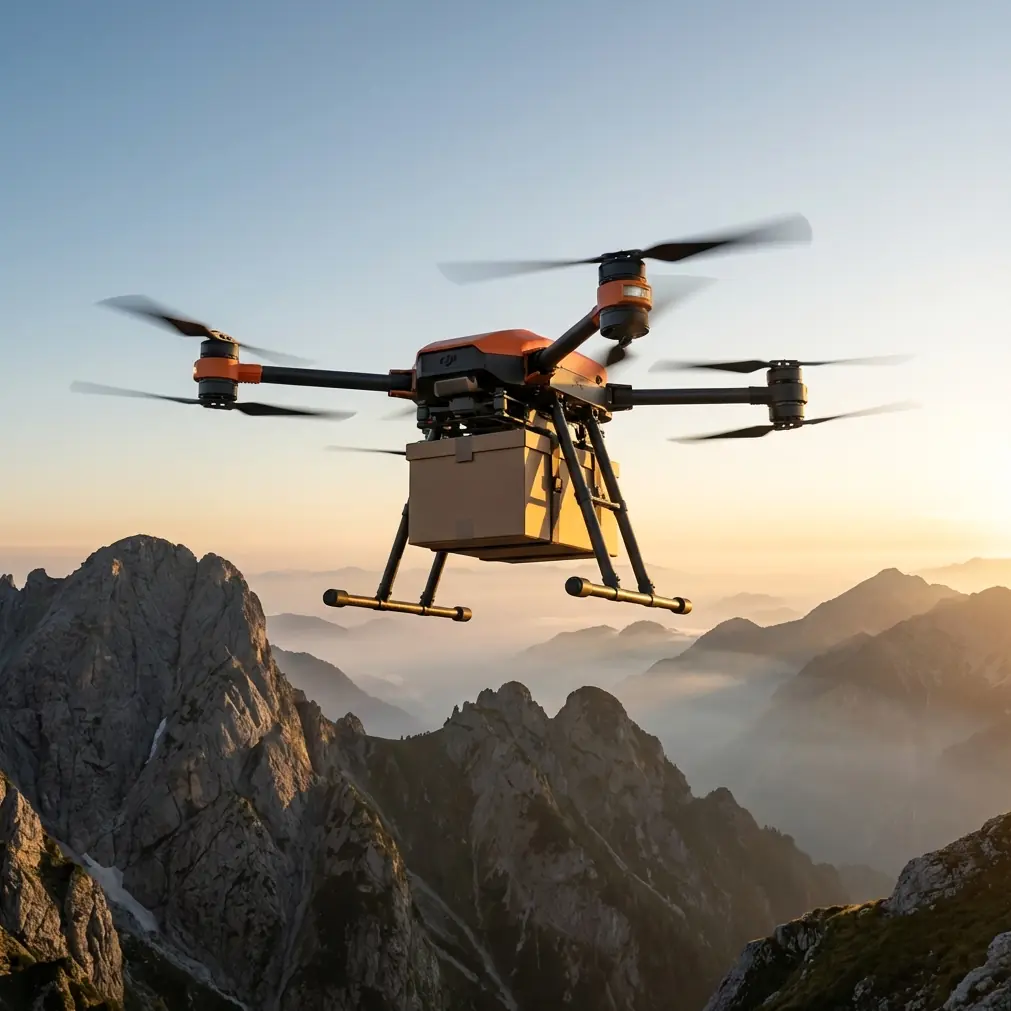
FlyCart 30 Power Line Tracking at High Altitude
META: Master high-altitude power line tracking with FlyCart 30. Expert tips on optimal flight paths, payload management, and BVLOS operations for utility inspections.
TL;DR
- Optimal tracking altitude for power lines sits between 50-80 meters above terrain, balancing obstacle clearance with sensor accuracy
- The FlyCart 30's dual-battery system enables 28km range, perfect for extended transmission line corridors
- Winch system deployment allows precise equipment lowering for close-range inspections without risking collision
- Route optimization software reduces flight time by up to 35% when pre-programming waypoints along transmission corridors
Power line inspections at high altitude present unique challenges that ground-based methods simply cannot address. The FlyCart 30 transforms how utility companies approach transmission line monitoring, combining heavy-lift capability with precision navigation systems designed specifically for linear infrastructure tracking. This guide breaks down exactly how to configure and operate your FlyCart 30 for maximum efficiency along power line corridors.
Understanding High-Altitude Power Line Challenges
Transmission lines running through mountainous terrain create a complex operational environment. Altitude variations, unpredictable wind patterns, and limited ground access points demand equipment that adapts dynamically.
The FlyCart 30 addresses these challenges through its 40kg maximum payload capacity and intelligent flight systems. When tracking power lines at elevations exceeding 3,000 meters, air density drops significantly, affecting both lift performance and battery efficiency.
Key Environmental Factors
Several conditions impact high-altitude power line operations:
- Reduced air density decreases rotor efficiency by approximately 15-20% at 4,000 meters
- Temperature fluctuations between valley floors and ridge lines can exceed 25°C
- Wind acceleration around towers and through mountain passes creates turbulence zones
- Limited emergency landing zones require enhanced safety protocols
- GPS signal interference from terrain features demands redundant positioning systems
Expert Insight: When operating above 3,500 meters, reduce your expected payload capacity by 12-15% to maintain safe power reserves. The FlyCart 30's flight controller automatically adjusts motor output, but conservative payload planning prevents mid-mission complications.
Configuring Your FlyCart 30 for Power Line Tracking
Proper configuration before launch determines mission success. The FlyCart 30's modular design allows customization for specific inspection requirements.
Payload Configuration for Utility Inspections
The payload ratio becomes critical when balancing inspection equipment against flight endurance. Standard power line inspection payloads include:
- Thermal imaging cameras (typically 2-4kg)
- LiDAR scanning units for vegetation encroachment detection (5-8kg)
- Corona discharge detectors for insulator fault identification (1-2kg)
- High-resolution optical cameras for visual documentation (1-3kg)
- Communication relay equipment for real-time data transmission (2-4kg)
Combining multiple sensors pushes total payload toward 15-20kg, leaving substantial margin below the 40kg maximum for additional batteries or specialized equipment.
Dual-Battery Management Strategy
The FlyCart 30's dual-battery architecture provides both redundancy and extended range. For power line tracking missions, configure batteries in sequential discharge mode rather than parallel.
This approach offers several advantages:
- Clear transition point for mission planning
- Emergency reserve if primary battery fails
- Simplified capacity monitoring during extended flights
- Reduced thermal stress on individual battery packs
Each battery pack delivers approximately 14km of range under standard conditions, totaling 28km for complete missions.
Optimal Flight Altitude Selection
Altitude selection balances multiple competing factors. Flying too low risks collision with conductors, towers, and vegetation. Flying too high reduces sensor resolution and increases exposure to wind.
The 50-80 Meter Sweet Spot
For most power line tracking applications, maintaining 50-80 meters above ground level provides optimal results. This range offers:
- Sufficient clearance above highest tower structures (typically 30-45 meters)
- Effective thermal imaging resolution for hot spot detection
- Adequate LiDAR coverage for vegetation mapping
- Reduced ground effect turbulence near tower structures
- Compliance with standard BVLOS operational requirements
Terrain-Following vs. Fixed Altitude
The FlyCart 30 supports both terrain-following and fixed-altitude modes. For power line tracking, terrain-following mode proves essential when lines traverse variable topography.
| Flight Mode | Best Application | Altitude Consistency | Battery Impact |
|---|---|---|---|
| Terrain Following | Mountain corridors | High | +8-12% consumption |
| Fixed Altitude | Flat terrain | Variable relative to ground | Baseline |
| Hybrid Mode | Mixed topography | Moderate | +5-8% consumption |
| Manual Override | Complex tower approaches | Operator dependent | Variable |
Pro Tip: Program terrain-following with a 10-meter buffer above your target altitude. This accounts for minor GPS altitude errors and provides collision margin when approaching unexpected obstacles like communication towers sharing utility corridors.
Route Optimization for Linear Infrastructure
Power lines follow predictable paths, making them ideal candidates for pre-programmed route optimization. The FlyCart 30's mission planning software accepts imported GIS data from utility mapping systems.
Pre-Flight Route Programming
Effective route programming reduces flight time and ensures complete coverage:
- Import transmission line coordinates from utility GIS databases
- Identify tower locations as primary waypoints
- Add intermediate waypoints every 500-800 meters along conductor spans
- Program altitude variations to maintain consistent height above conductors
- Designate emergency landing zones at accessible points along the route
- Set automatic return triggers for battery thresholds and signal loss
BVLOS Considerations
Beyond Visual Line of Sight operations require additional planning for regulatory compliance and safety. The FlyCart 30's communication systems support BVLOS through:
- Dual-link telemetry with automatic failover
- Real-time video transmission for remote pilot monitoring
- Automatic return-to-home with obstacle avoidance
- Position broadcasting for airspace awareness systems
- Geofencing compliance with restricted zone databases
Most jurisdictions require specific BVLOS waivers for power line inspection operations. Document your FlyCart 30's safety features when applying for operational approvals.
Winch System Deployment for Close Inspections
The FlyCart 30's integrated winch system enables inspection techniques impossible with fixed-payload configurations. Lowering sensors directly to conductor level provides detail that overhead passes cannot match.
Effective Winch Operations
Deploy the winch system when inspecting:
- Insulator assemblies for contamination or damage
- Splice connections for thermal anomalies
- Conductor surfaces for corrosion or strand breakage
- Tower hardware for loosened components
- Ground wire attachments for connection integrity
The winch supports payloads up to 15kg on a 20-meter cable, allowing sensor positioning while the aircraft maintains safe separation from energized conductors.
Safety Protocols for Winch Deployment
Winch operations near energized lines demand strict protocols:
- Maintain minimum 5-meter horizontal clearance from conductors
- Deploy only in wind speeds below 8 m/s
- Use non-conductive cable extensions when approaching energized equipment
- Establish clear communication protocols between pilot and payload operator
- Program automatic winch retraction if aircraft attitude exceeds safe limits
Emergency Parachute System Integration
High-altitude operations increase the consequences of system failures. The FlyCart 30's emergency parachute system provides critical protection for expensive payloads and prevents ground damage.
Parachute Deployment Parameters
The system activates automatically when:
- Attitude exceeds 60 degrees from level for more than 2 seconds
- Descent rate exceeds 8 m/s without pilot command
- All motor outputs fail simultaneously
- Pilot triggers manual deployment via dedicated switch
At 40kg total weight, the parachute system achieves terminal descent rates of approximately 5 m/s, reducing impact forces to survivable levels for most payloads.
Common Mistakes to Avoid
Even experienced operators encounter preventable issues during power line tracking missions. Learning from common errors improves efficiency and safety.
Underestimating altitude effects on battery performance. Cold temperatures and thin air reduce capacity by 20-30% compared to sea-level specifications. Always plan missions with conservative endurance estimates.
Neglecting wind pattern analysis. Mountain corridors create predictable but intense wind acceleration zones. Study topographic maps to identify likely turbulence areas before flight.
Overloading payload for "one-trip" efficiency. Pushing payload limits at high altitude leaves no margin for unexpected conditions. Two lighter missions outperform one overloaded failure.
Skipping pre-flight sensor calibration. Thermal cameras and LiDAR units require recalibration when operating temperatures differ significantly from storage conditions.
Ignoring tower guy wire locations. Guy wires supporting transmission towers extend far from visible structures. Verify guy wire positions from utility records before programming flight paths.
Frequently Asked Questions
What is the maximum operating altitude for the FlyCart 30?
The FlyCart 30 operates effectively up to 6,000 meters above sea level, though payload capacity decreases progressively above 3,000 meters. At maximum altitude, expect approximately 25-30% reduction in lift capacity compared to sea-level performance. Most power line inspection missions fall well within optimal operating parameters.
How does the dual-battery system handle failure of one battery pack?
The FlyCart 30's power management system automatically isolates a failing battery and continues operation on the remaining pack. The aircraft immediately calculates range to the nearest programmed landing zone and alerts the operator. This redundancy provides critical safety margin during extended BVLOS operations along remote transmission corridors.
Can the FlyCart 30 operate in rain or snow conditions?
The FlyCart 30 carries an IP54 rating, providing protection against rain and dust. Light precipitation does not prevent operations, though heavy rain or snow reduces visibility for optical sensors and may affect LiDAR accuracy. Avoid operations during active thunderstorms due to electrical hazards near transmission infrastructure.
High-altitude power line tracking demands equipment that matches the complexity of the mission environment. The FlyCart 30 delivers the payload capacity, range, and safety systems that utility inspection operations require. Proper configuration, conservative planning, and adherence to established protocols transform challenging inspections into routine operations.
Ready for your own FlyCart 30? Contact our team for expert consultation.