
FlyCart 30 for Urban Power Line Work: What Quiet Drone
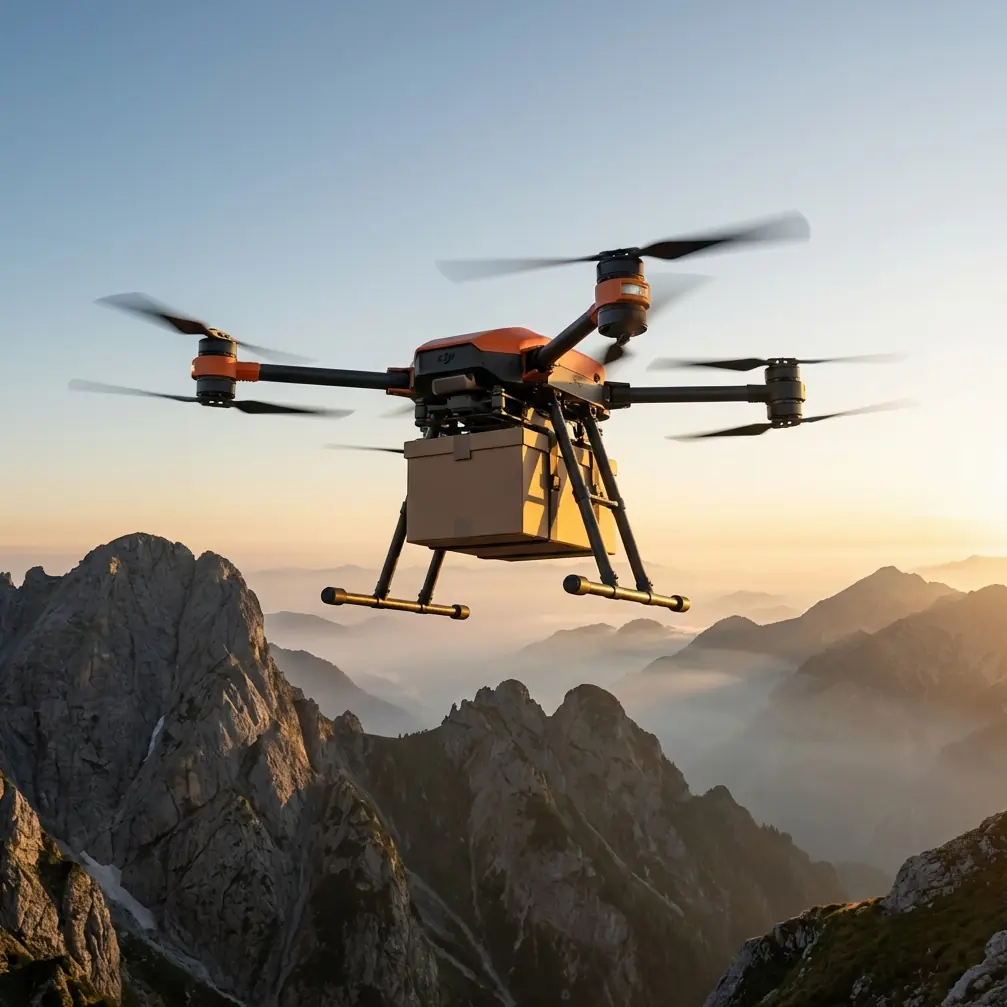
FlyCart 30 for Urban Power Line Work: What Quiet Drone Delivery Expansion Really Tells Us
META: A technical review of DJI FlyCart 30 for urban power line operations, using new U.S. drone delivery expansion data to assess safety, BVLOS readiness, route planning, winch use, and operational fit.
The most useful thing in recent drone delivery news is not the headline. It is the operational subtext.
A recent report noted that Zipline plans to launch autonomous drone delivery service in the Phoenix area later this year. That fact matters on its own, but the stronger signal is the context around it: drone delivery companies have already completed millions of deliveries after years of testing, and their current expansion is centered on safety, consistent operations, and suburban reach. For anyone evaluating the DJI FlyCart 30 for urban power line work, that combination should get your attention.
I approach FlyCart 30 from a logistics and field-operations angle, not from the hype cycle. If your job is tracking power lines in and around urban corridors, the question is not whether heavy-lift drones look impressive. The question is whether a platform can support repeatable, low-drama operations where route discipline, controlled payload handling, and risk management matter more than spectacle. That is where the latest delivery-market expansion offers a surprisingly relevant benchmark for the FC30.
Why delivery news matters to a power line team
At first glance, package delivery in Phoenix and utility line work in an urban environment look like different industries. On the flight-planning side, they are closer than many people think.
Both depend on:
- predictable route design
- obstacle-aware operations in built-up areas
- strong safety architecture
- consistent launch and recovery procedures
- a practical path toward BVLOS-style workflows as regulations and approvals evolve
The drone delivery sector has now accumulated millions of deliveries. That number is operationally significant because it shifts the conversation away from prototype performance and toward fleet reliability. Years of testing followed by expansion into new U.S. markets tells us that scalable unmanned operations are no longer theoretical. They are becoming procedural.
For FlyCart 30 operators working around power infrastructure, that trend matters in two ways.
First, it validates the importance of consistency over peak capability. A drone that can lift a load once is less valuable than one that can do the same mission repeatedly with stable handling, a disciplined route profile, and a dependable contingency stack.
Second, the move toward suburban coverage is a reminder that urban-edge utility work is exactly where advanced drone logistics starts to make sense. Suburban and urban-fringe power line corridors create the same sort of complexity that delivery networks are learning to manage: mixed obstacles, variable landing options, changing traffic patterns below, and pressure to keep operations safe without slowing the surrounding environment.
FlyCart 30 is not a delivery headline drone. That is precisely why it is useful.
The FlyCart 30 sits in a different category from the lightweight, high-volume delivery aircraft grabbing media attention. It is a utility logistics platform. For power line operations, that distinction is helpful.
Urban power line teams rarely need a drone designed around tiny parcels and fixed drop patterns. They need a machine that can move tools, components, lightweight line materials, inspection aids, and specialty equipment to constrained locations without requiring crews to drag everything through difficult access routes. In that context, payload ratio becomes a serious planning metric, not just a spec-sheet talking point.
Payload ratio is one of the most overlooked indicators of operational efficiency. If too much of your sortie capacity is consumed by the aircraft’s own support burden, you end up launching more flights, staging more batteries, and adding more crew friction than expected. The FlyCart 30 enters the conversation because it is built around the practical question utility teams ask every day: how much meaningful work can one sortie actually accomplish?
That is where the dual-battery architecture also becomes more than a convenience. In urban power line operations, battery strategy affects everything from launch sequencing to reserve margins when wind channels form between structures. A dual-battery setup does not eliminate planning pressure, but it supports a more resilient operational model. If you are running repeated logistics hops along utility corridors, system redundancy and predictable power management are not side benefits. They are the center of the mission design.
The winch system is the real star for line-side work
If I had to identify the FlyCart 30 feature with the most direct operational significance for power line teams, it would be the winch system.
Urban line work often punishes any platform that depends on perfect landing zones. Crews may need to move items into narrow clearings, roadside margins, service easements, or areas obstructed by fencing, vegetation, parked vehicles, or uneven terrain. In those situations, the ability to lower a payload without committing the aircraft to a tight touchdown profile can change the economics of the mission.
That matters for safety as much as efficiency.
A controlled winch drop lets the aircraft remain clear of hazards while the payload is placed with more precision. Around power line maintenance and corridor support work, this can reduce the need to hover too close to cluttered ground environments. It can also cut down on manual carry distances for field crews positioned below the line route. When people talk about drone logistics, they often focus on the aircraft. On real job sites, the payload interface is what decides whether the system is genuinely useful.
This is also where a third-party accessory can elevate the platform from capable to field-optimized. One example is a higher-visibility payload hook or line management attachment designed by an aftermarket provider for utility workflows. That kind of accessory sounds minor until you are operating in visually noisy urban terrain where quick confirmation of hook orientation, line tension, and descent path saves time and reduces handling errors. Accessories that improve payload visibility or stabilize suspended loads can have an outsized effect on mission rhythm.
If your team is evaluating options or build-outs for this kind of configuration, a direct project discussion can be more useful than marketing copy; one practical starting point is message a FlyCart specialist here.
Safety is not a feature list. It is an operating philosophy.
The delivery article’s emphasis on safety and consistency should shape how FlyCart 30 is assessed for utility work.
Too many reviews treat safety items as isolated checkboxes: emergency parachute, redundant batteries, route controls, obstacle sensing, and so on. In practice, what matters is how these elements reinforce each other under normal pressure. Urban power line environments are not inherently dramatic, but they are unforgiving of complacency. There are structures, wires, restricted staging zones, and members of the public nearby. A system’s margin for error is narrower than in an open rural field.
The emergency parachute concept is a good example. By itself, it is not a reason to approve a mission profile. Its value appears when it sits inside a broader risk model that includes route optimization, altitude discipline, weather thresholds, payload management, and crew procedures. If a platform offers a parachute recovery layer, the real operational question is not “does it have one?” but “how does its presence affect where and how we are willing to fly?”
The same applies to dual-battery planning. Redundancy is meaningful only when crews treat it as a way to preserve safe completion margins, not as a license to stretch missions.
This is where the drone delivery sector’s millions of completed deliveries become relevant again. Reaching that scale requires more than hardware reliability. It requires standardization. FlyCart 30 operators in utility environments should take the same lesson: write the playbook first, then fit the aircraft into it.
BVLOS thinking starts long before BVLOS approvals
The reference material specifically highlights expansion built around safety, consistency, and suburban reach. That is basically a summary of the conditions under which BVLOS-capable operations become commercially valuable.
For urban power line teams, BVLOS is often discussed as a future-state capability. That misses the point. Even before formal long-corridor BVLOS operations are in place, you can design your FlyCart 30 program around BVLOS logic:
- standardized routes instead of improvised paths
- predefined contingency areas
- repeatable staging points
- tightly controlled payload weights
- consistent communication handoffs between crews
This is not regulatory advice. It is operational maturity.
A lot of urban utility work suffers from “short flight thinking,” where each mission is treated as an isolated visual-range event. That approach creates inefficiency. The better model is corridor-based route optimization. If you already know the structure spacing, ground access limitations, and recurring crew needs, then your FC30 sorties should be planned as part of a network rather than as one-off flights.
That is another reason the Phoenix expansion deserves attention. Moving into a new U.S. market after years of testing implies a high level of route confidence. You do not expand safely into suburban service areas by improvising. You expand by knowing your routes, your edge cases, and your failure responses. Utility drone teams can borrow that discipline directly.
Route optimization is where FlyCart 30 either earns its keep or gets sidelined
In urban line support, route optimization is not just about shortening distance. It is about reducing complexity per minute of flight.
A slightly longer path that avoids reflective glass facades, dense road crossings, and awkward crew repositioning may be the better route. Likewise, a winch delivery point that keeps the aircraft clear of traffic and pedestrians may be more valuable than the theoretically shortest insertion point.
The practical FlyCart 30 workflow should account for:
- utility corridor geometry
- prevailing wind patterns around buildings
- takeoff and recovery spacing
- suspended-load behavior
- battery swap cadence
- public exposure below the route
This is where I see many teams underestimate the platform. They focus on lift capacity and overlook the fact that the FC30’s real value comes from making logistics repeatable in areas where conventional access is inefficient. If the route is poorly designed, even an excellent aircraft becomes a costly workaround. If the route is well designed, FlyCart 30 can remove a surprising amount of friction from daily utility support.
The suburban clue from drone delivery expansion
One detail from the news item deserves more attention than it has received: current expansion efforts are focused on reaching suburban areas.
Suburban operations are operationally awkward. They combine some of the congestion and sensitivity of cities with the spatial spread of lower-density environments. For utility teams, that sounds familiar. Urban power line routes often pass through exactly these mixed settings, where access roads are imperfect, staging areas are constrained, and the public is close enough that professional discipline has to be obvious.
That makes the delivery sector’s quiet scaling especially relevant. If autonomous delivery can begin to normalize safe, consistent activity in these environments, then a platform like FlyCart 30 has a stronger case as a utility logistics tool—provided the operator adopts the same seriousness around procedure.
The point is not that FC30 should mimic a parcel drone. The point is that the market has already shown where advanced drone operations become commercially and socially acceptable: in missions that are quiet, predictable, and boring in the best possible way.
My technical take
As a platform for urban power line support, FlyCart 30 makes the most sense when it is treated as an aerial logistics system first and a drone second.
Its usefulness rises sharply when you build around three things:
Payload handling discipline
The winch system and payload ratio matter more than headline capability because they determine whether the aircraft can deliver real field value in constrained spaces.Energy and redundancy planning
A dual-battery configuration supports more reliable operational margins, especially when missions involve repeated corridor hops and uncertain microclimate conditions.Network-style route design
The strongest lesson from today’s delivery expansion is that scale comes from consistency. Millions of deliveries did not happen because drones got interesting. They happened because operations got repeatable.
If your mission profile involves tracking power lines in urban or suburban corridors, FlyCart 30 belongs in the shortlist. Not because drone logistics is fashionable, but because the broader market is quietly proving that disciplined unmanned operations can move from pilot programs into routine infrastructure support. The Phoenix launch signal, the millions of completed deliveries, and the industry emphasis on safety and consistency all point in the same direction.
For utility teams, the takeaway is simple: the future of heavy-lift drone work will not be decided by isolated demo flights. It will be decided by whether platforms like the FlyCart 30 can perform the same useful task, on the same route, under the same standards, again and again.
Ready for your own FlyCart 30? Contact our team for expert consultation.