
FlyCart 30 Field Report: Power-Line Tracking at Altitude
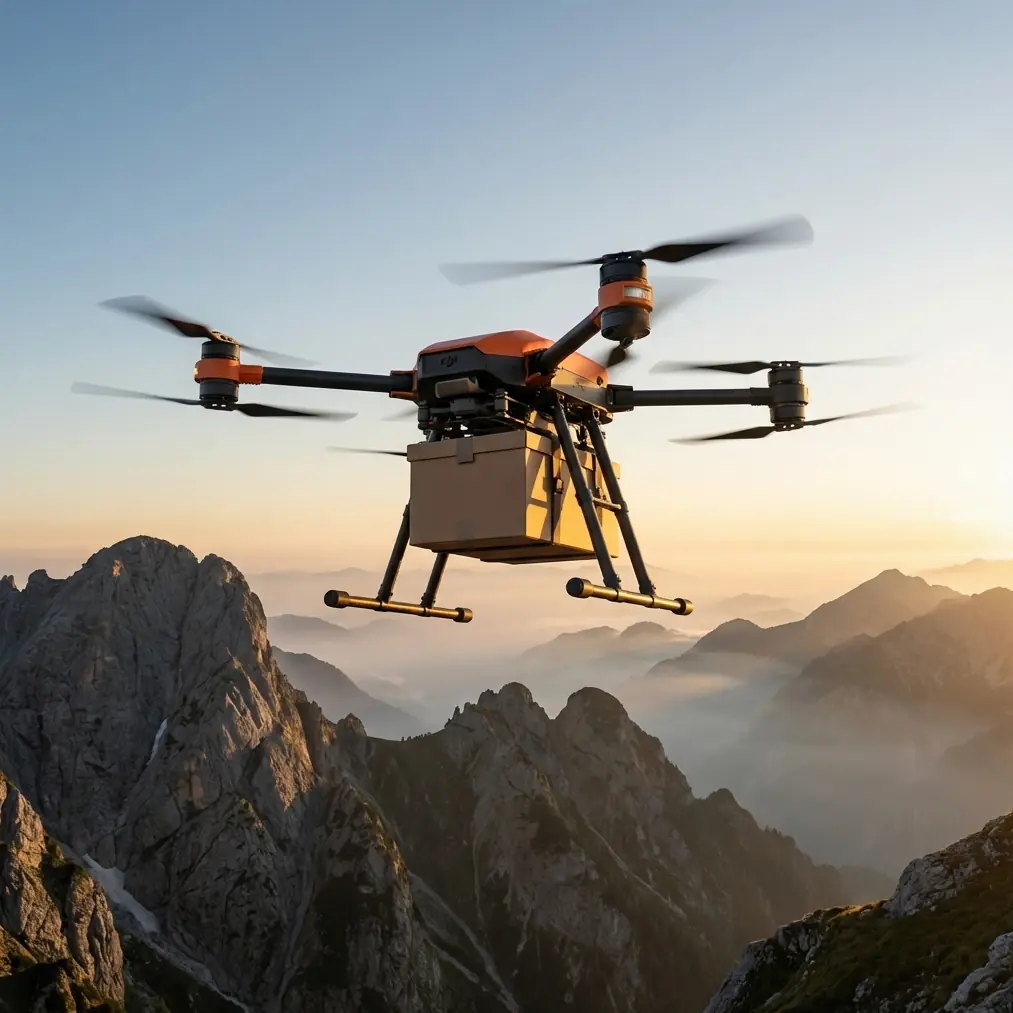
FlyCart 30 Field Report: Power-Line Tracking at Altitude, and Why Battery Strategy Changes the Mission
META: A field-tested FlyCart 30 guide for high-altitude power-line tracking, covering battery planning, antenna positioning, route logic, payload ratio, winch use, BVLOS considerations, and what new drone-delivery battery trends mean in practice.
I’ve spent enough time around mountain corridors and utility routes to know that high-altitude power-line work exposes every weak link in a drone operation. Signal fades sooner than expected. Battery assumptions made at lower elevation stop holding up. Wind bends the timeline. Even simple logistics, like where the crew stands with the controller, start to matter more than the aircraft spec sheet.
That’s where the FlyCart 30 becomes interesting.
Not because it’s a cargo platform in the abstract, but because some of the same traits that make it useful for transport can be repurposed for utility support and line tracking in difficult terrain. If your job is following transmission or distribution corridors across ridgelines, service roads, and cut-through valleys, the aircraft’s lifting architecture, dual-battery design, winch system, and safety stack can solve operational problems that a lighter inspection drone may not.
This field report is written from the viewpoint of a logistics lead looking at one specific scenario: tracking power lines in high altitude, where endurance margins and signal discipline decide whether the day runs cleanly or turns into repeated repositioning and battery swaps.
Why a battery partnership in drone delivery matters to FlyCart 30 operators
A recent development in the commercial drone sector deserves attention even if you’re not doing parcel delivery. Amprius Technologies and Matternet announced a strategic partnership centered on silicon anode battery technology for commercial drone delivery systems. The stated goals were straightforward: improve range, reduce charging time, and strengthen the economics of commercial drone operations.
At first glance, that sounds like delivery-network news. For FlyCart 30 crews working utility corridors, it’s more relevant than it looks.
High-altitude line tracking is basically an endurance-and-turnaround business. The aircraft may be supporting survey gear movement, stringing prep, sensor placement, small tool delivery, or repeated route checks along sections of power infrastructure. In each case, the question is not just whether one flight can complete one task. The real question is whether the system can sustain a useful rhythm across an entire workday.
That’s why the Amprius-Matternet partnership matters. If silicon anode battery chemistry delivers the promised gains in range and charging time for commercial drone operations, operators using aircraft like the FlyCart 30 should pay close attention to where the battery ecosystem is heading. Longer range doesn’t simply mean flying farther. In utility work, it can mean fewer launch relocations, fewer deadhead legs back to a staging point, and more flexibility to fly conservative profiles in thin air without killing productivity.
Charging time matters just as much. On mountain utility jobs, the crew often loses more time on the ground than in the air. Vehicles may be parked on narrow roads, generators positioned awkwardly, and battery rotations managed under temperature constraints. If the broader commercial UAV market pushes battery performance forward, the operational win for power-line teams is not theoretical. It appears in the form of tighter cycle times and less idle labor.
The phrase from that announcement that stands out most to me is delivery economics. Swap “delivery” for “corridor support,” and you get the same management problem. A drone mission becomes viable when the power system supports predictable sortie planning, not just headline endurance.
The FlyCart 30 in a power-line tracking role
The FlyCart 30 is often discussed in terms of lift, but in high-altitude utility work, lift is only half the story. The other half is what that lift buys you operationally.
A stronger payload envelope gives you options with sensor kits, compact line tools, spare field components, marker materials, or even just a more practical combination of mission equipment that would otherwise require multiple flights. That directly affects payload ratio—not only how much you can carry, but how much of each sortie is “productive mass” versus support burden.
In mountain corridors, payload ratio matters because every kilogram of nonessential kit costs time and battery. At altitude, the air is less forgiving. If your aircraft can support the right package in one trip instead of two, you reduce exposure to gust fronts, terrain shadowing, and repeated climb phases.
The dual-battery architecture also deserves more credit than it usually gets. Many teams think of dual-battery setups primarily as redundancy or capacity. Both are valid. In practice, for utility operations, dual-battery logic changes dispatch confidence. It gives crews a more structured way to plan around long ingress segments and variable return conditions. If weather drifts during a line-following run, your reserve planning is not built on wishful thinking. It is built on a system designed for more demanding load management.
Then there’s the winch system. For power-line tracking, this is one of the least appreciated tools in the aircraft’s feature set. You may not need to land at every drop or pickup point. In steep or obstructed terrain, being able to lower a component, retrieve a sample, or place a light support item without committing the aircraft to a tight landing zone changes the risk profile of the mission. It also protects rotors and landing gear from rough surfaces and vegetation strikes.
That may sound like a small advantage until you’re working near rocky slopes under transmission structures where level touchdown areas barely exist.
Antenna positioning advice for maximum range
If I had to pick one habit that most improves real-world range in power-line tracking, it wouldn’t be a battery trick. It would be antenna discipline.
The crew’s antenna setup often decides whether a route is smooth or full of avoidable signal warnings. In high-altitude corridors, the landscape can make a strong link disappear abruptly. Saddles, ridges, towers, and even the slope you’re standing on all shape line-of-sight behavior.
Here’s the field rule I use: place the ground crew where the antenna sees the route, not where the vehicle can park most comfortably.
That usually means resisting the temptation to operate from the lowest convenient roadside pull-off. If the line path crosses behind a ridge, move higher before takeoff if possible. A modest climb on foot can be worth more than carrying extra batteries. The antenna should face the aircraft’s working corridor with the cleanest possible Fresnel zone, especially at the points where the route bends or dips.
A few practical notes:
- Keep the controller antennas oriented according to the manufacturer’s recommended radiation pattern, not pointed like a flashlight directly at the drone.
- Avoid standing immediately beside large metal structures, guardrails, utility hardware stacks, or truck roofs that can distort the RF environment.
- If the route runs along a slope, offset your crew position so the antenna sees “across” the terrain instead of through it.
- Don’t let the pilot become anchored to the launch point psychologically. A short relocation between segments can preserve control quality and often saves more time than recovering from repeated link degradation.
On long corridor missions, I also prefer pre-identifying two or three antenna priority points on a map before the day starts. These are not just alternate takeoff sites. They are communication strongholds—positions chosen specifically for visibility into known terrain trouble spots. When crews do this well, maximum range stops being a marketing number and starts becoming an outcome of route design.
If your team wants a quick field checklist for antenna setup and high-altitude corridor planning, I’ve found it easiest to share one directly here: message our operations desk.
BVLOS thinking starts long before the aircraft leaves the ground
For utility work, the term BVLOS gets thrown around too casually. The real discipline starts before any regulatory discussion. It begins with route logic.
A FlyCart 30 tracking job at altitude should be broken into segments that reflect terrain behavior, not just distance. If one section of line crosses an exposed ridgeline and another drops into a narrow valley, those are two different energy and link-management problems. Treating them as one continuous mission is how crews end up compressing safety margins.
The better approach is to design each segment around three variables:
- Elevation change
- Expected wind exposure
- Communications continuity
This is where route optimization pays off. On paper, the shortest path is attractive. In the mountains, the shortest path can be the most expensive in battery consumption if it forces repeated climb corrections or flies into poor signal geometry. A slightly longer lateral route with cleaner line of sight and steadier airflow may deliver better overall mission economics.
That idea connects directly back to the Amprius-Matternet announcement. Their partnership is aimed at improving the economics of commercial drone operations through better battery performance. That same principle applies here. Battery gains are valuable, but they compound only when paired with smarter route structure. Range alone does not rescue a bad corridor plan.
How the winch system changes utility workflow
The winch system is often treated as an accessory. In line-tracking support, I’d call it a workflow multiplier.
Let’s say your team needs to move lightweight field items to a slope beneath a tower, send a compact sensor package down to a technician access point, or retrieve a sample from rough ground without touching down. The aircraft can hold a safer hover profile while the payload is lowered and released with more precision than a risky landing attempt would allow.
Operationally, that creates three benefits:
- It reduces the number of forced landings in poor terrain.
- It shortens task time at each point.
- It protects battery reserves by avoiding repeated descent-and-landing cycles in unstable wind pockets.
At altitude, that third point matters more than many crews realize. Hovering with purpose is often cheaper than improvising a difficult landing and then climbing out again under load.
Safety stack: emergency parachute and conservative margins
A heavy-lift platform working around utility infrastructure should be flown with a more conservative mindset than a small visual-line inspection drone. That includes making full use of the emergency parachute capability where applicable in your operational framework.
The parachute is not a permission slip to fly aggressively. Its value is strategic. It adds another layer for missions where terrain, altitude, and payload combine to narrow your recovery options. Around power lines, service roads, and remote tower approaches, an emergency descent system can be the difference between a controlled contingency plan and a far more serious incident.
For the same reason, battery reserves should be managed with discipline. High altitude is not the place to chase the last few percentage points just because the route “looks close.” The strongest crews I’ve worked with treat reserve power as a terrain tax. They assume the mountain will ask for more on the way back than the outbound leg suggested.
What FlyCart 30 operators should watch next
The most useful takeaway from the Amprius and Matternet partnership is not brand-specific speculation. It’s the signal it sends about where commercial UAV power systems are heading.
A battery technology partnership built around silicon anodes, with explicit focus on range, charging time, and operating economics, shows that the next performance battleground is no longer just airframe design. Energy density and turnaround efficiency are moving closer to the center of commercial mission planning.
For FlyCart 30 operators in utility environments, that means three things.
First, battery strategy should be treated as part of route design, not a separate maintenance topic.
Second, crews should build workflows that can immediately benefit from faster turnaround when improved battery systems become available. If your ground process is messy, better batteries won’t fix the day.
Third, high-altitude planning will increasingly favor operators who understand the relationship between payload ratio, terrain-aware route optimization, and communications positioning. Those three factors decide how much value you can actually extract from any future battery improvement.
Final field note
The FlyCart 30 is at its best in power-line support when it is used like a logistics system, not just a flying machine. That means looking beyond raw lift and asking harder questions. Where should the crew stand for signal integrity? Which line segment deserves its own battery reserve model? When is a winch drop safer than a landing? How much of your payload is truly productive? What part of the day is really costing you time: flight, charging, or repositioning?
Those questions are why the latest battery-industry moves matter. When companies like Amprius and Matternet focus on extending range, shortening charging time, and improving commercial drone economics, they are speaking directly to the friction points utility teams feel in the field.
For high-altitude power-line tracking, the mission rarely fails because of one dramatic mistake. It usually degrades through small inefficiencies: poor antenna placement, optimistic route planning, careless payload choices, and battery assumptions imported from easier terrain. Fix those, and the FlyCart 30 becomes far more than a transport platform. It becomes a reliable corridor tool.
Ready for your own FlyCart 30? Contact our team for expert consultation.