
FlyCart 30 for Solar Farms in Low Light: A Field Guide
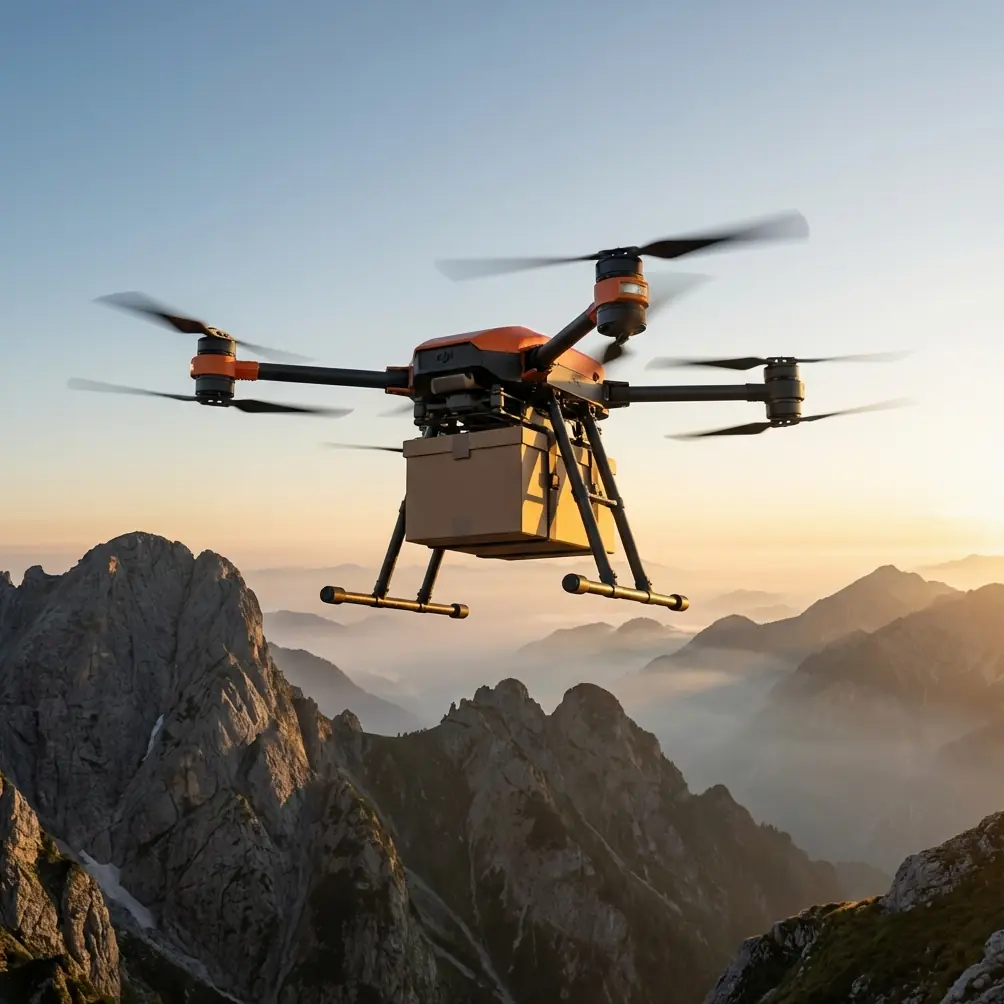
FlyCart 30 for Solar Farms in Low Light: A Field Guide from the Logistics Side
META: Practical expert guide to using the DJI FlyCart 30 on solar farms in low light, with operational planning, BVLOS workflow, payload strategy, winch use, and safety insights tied to current low-altitude aviation trends.
I spend a lot of time thinking about what actually slows work down on utility-scale solar sites. It is rarely the headline problem. Usually it is the friction around distance, fading light, scattered tools, replacement parts that need to move now, and crews waiting at the far end of a field while access roads add twenty minutes to a five-minute task.
That is where the FlyCart 30 starts to make sense.
Not as a novelty. Not as a generic “delivery drone.” As a logistics platform that fits a very specific operating reality: long rows of panels, uneven internal road access, early-morning and late-day maintenance windows, and constant pressure to keep technicians moving instead of waiting.
This guide is written for teams tracking solar farms in low light, especially operators trying to decide whether the FlyCart 30 belongs in their workflow. I am approaching it as a logistics lead would: less about hype, more about route discipline, payload decisions, and what changes on the ground when you have a cargo UAV that can move practical items across a large site.
There is also a bigger industry signal behind this conversation. A recent financing round in China sent 300 million dollars into Volant Aerotech, with the capital aimed at airworthiness certification for the VE25-100 and faster scaled commercial delivery. That matters even if you are focused on the FlyCart 30, because it shows where the low-altitude economy is maturing: investors are no longer just funding concepts, they are backing certification and deployment. For commercial drone operators in energy, that shift has operational significance. It points toward a future where regulated aerial logistics becomes less exceptional and more embedded in industrial work.
For solar farms, that future is already beginning at the small-cargo level.
Why low-light solar operations expose weak logistics
Solar sites are deceptive. On a map, they look tidy. On foot or by vehicle, they can be slow.
A technician identifies a suspected connector issue at one inverter station just after sunset. Another crew spots thermal irregularity during a low-light inspection pass and needs a replacement component, test gear, or fastening hardware. A supervisor wants a battery pack, specialized hand tools, or sensor module delivered to a remote section before the remaining ambient light drops too far.
You can send a utility vehicle. Sometimes that is enough.
But in low light, every delay compounds. Drivers move more cautiously. Internal roads may be dusty, narrow, or partially obstructed. Repeated vehicle movement also creates its own safety and coordination burden. If the item is small but urgent, the transport method becomes the bottleneck.
This is where the payload ratio discussion matters. The value of the aircraft is not only maximum lift. It is how efficiently the platform converts flight time into usable site movement. On solar farms, many urgent items are compact: string testing tools, replacement connectors, communications gear, compact spares, PPE kits, thermal accessories, and support batteries. A cargo drone does not need to replace every ground vehicle. It needs to remove enough short-delay movements to keep maintenance windows intact.
Start with the mission profile, not the aircraft spec sheet
A common mistake is evaluating the FlyCart 30 as a piece of technology first. For solar work, begin with the site task.
Ask four practical questions:
- What items are repeatedly needed at remote array blocks during low-light periods?
- How often does ground transport create wait time?
- Which routes are predictable enough to standardize?
- Can delivery and retrieval be done without adding risk to active crews or infrastructure?
If you cannot answer those, the aircraft will be underused.
A strong FlyCart 30 deployment on a solar site usually revolves around repeatable micro-missions:
- moving diagnostic kits from a central operations point to field crews
- sending replacement parts to identified fault locations
- retrieving failed components for bench inspection
- delivering batteries, radios, and emergency supplies to technicians working beyond easy vehicle reach
That is where route optimization becomes more valuable than raw aircraft capability. The best-performing sites define recurring flight corridors between staging points, inverter pads, service lanes, and maintenance clusters. Low-light operations reward consistency. Pilots should not be improvising paths every time a tool bag needs to move.
The winch system changes how deliveries work around panels
For solar farms, the winch system is often more operationally significant than people expect.
A direct landing is not always ideal. Array spacing, ground obstructions, cable management, and crew positioning can make a touch-down less efficient than a controlled suspended drop. With a winch-based delivery, the aircraft can remain clear of panel rows and sensitive surfaces while lowering cargo precisely to a designated handoff zone.
That reduces unnecessary rotor wash near equipment and gives crews more flexibility in tight spaces.
It also helps when the terrain is poor or muddy after weather events. A technician does not need the drone to find a perfect landing spot. They need the part in hand.
One of the best examples I have seen involved a low-light inspection near the perimeter of a large solar site bordered by scrubland. The aircraft’s sensors picked up movement along the planned approach path: a deer moving across the service corridor just beyond the receiving point. That sounds minor until you remember how quickly twilight can flatten depth perception for both crews and remote pilots. Because the aircraft had sufficient situational awareness to avoid pressing into that movement zone, the operator paused, shifted the handoff point, and completed the winch delivery without pushing wildlife or personnel into a rushed interaction. That is not just a nice story. It is a reminder that low-light logistics depends on sensor confidence and disciplined go/no-go decisions.
Dual-battery thinking is really continuity planning
People mention dual-battery setups as if they are just a hardware feature. On a solar farm, they are better understood as continuity protection.
Low-light work already compresses margins. If your delivery chain is supporting active maintenance near the end of an inspection window, you need stable power management and clear battery policy. Dual-battery architecture matters because it supports mission resilience and helps reduce the chance that a single battery issue becomes a field delay.
But the larger point is procedural: battery policy should match site urgency.
That means:
- assigning battery sets to route categories
- tracking reserve thresholds by cargo weight and distance
- separating “must-complete” delivery missions from discretionary transport
- defining battery swap and recovery timelines before the evening window begins
Operators who do this well treat every low-light sortie as part of a managed logistics cycle, not a standalone flight.
BVLOS can expand value, but only if the site workflow is ready
For very large solar facilities, BVLOS is the obvious next step in thinking about cargo UAVs. If the aircraft can move supplies beyond direct visual observation under an approved operating framework, one pilot can support wider maintenance coverage across the site.
Still, BVLOS should not be treated as the first milestone.
The real question is whether your internal process is mature enough to support it. Can you document repeat routes? Are your receiving crews trained? Do you have clear communication protocols? Have you defined alternate delivery points, abort criteria, and site-specific hazards for dusk operations?
If not, extending distance just extends uncertainty.
Where BVLOS becomes powerful is on sites with repeated maintenance geography. Solar farms are full of patterns: string blocks, inverter stations, perimeter equipment, weather stations, and access roads. Once these are mapped into dependable aerial corridors, the aircraft can stop behaving like an ad hoc responder and start acting like a scheduled logistics layer.
That is one reason the broader financing news around low-altitude aviation deserves attention. When companies like Volant secure 300 million dollars and direct it toward airworthiness certification and scaled commercial delivery, it reinforces the direction of travel for the sector. Certification culture and delivery discipline are becoming central. For industrial users, that means drone logistics is moving away from trial-stage thinking and toward operational systems thinking. Solar operators should be preparing for that by tightening procedures now.
How I would set up a FlyCart 30 workflow for low-light solar tracking
Here is the approach I would use.
1. Build a delivery map from actual maintenance data
Do not start with the whole site. Start with the past ninety days of field callouts. Identify where crews most often wait on tools, spares, or support gear.
That gives you your first aerial lanes.
2. Classify payloads by urgency and handling needs
Some cargo can be boxed and lowered by winch. Some needs soft-case handling. Some should never be rushed into a low-light sortie. Create three simple categories: immediate, scheduled, and ground-only.
This is where payload ratio becomes practical. The right question is not “How much can it carry?” It is “How often can it move the items that are delaying us most?”
3. Standardize handoff zones
Every receiving area should be selected for rotor safety, clear line of approach, and distance from exposed electrical work. Mark them physically if needed. Winch drop zones should be obvious and repeatable.
4. Write a low-light route matrix
Create pre-approved routes by time of day, not just by destination. A corridor that is straightforward in full daylight can become poor at dusk due to glare, shadows, or nearby wildlife activity.
5. Treat emergency parachute logic as part of site risk planning
An emergency parachute should not be thought of as a box-check. On a solar farm, its operational significance lies in where the aircraft is allowed to fly and what sits below those paths. Route planning should account for panel density, technician activity, fencing, and service roads so that any contingency logic aligns with safer overflight choices.
6. Drill communication until it feels boring
The pilot, dispatcher, and receiving technician should all use the same short protocol for launch, approach, lowering, cargo release, and mission complete. In low light, ambiguity is expensive.
If your team wants to compare workflow ideas or field setup options, I usually recommend starting with a direct operations chat rather than a formal inquiry form: message the team here.
What the FlyCart 30 is best at on solar farms
The strongest use case is not replacing trucks. It is removing interruptions.
When the aircraft is assigned to urgent, lightweight, repeatable movements, crews stay where the work is. That has a measurable effect on task continuity. Technicians do not break concentration to retrieve parts. Supervisors stop making transport decisions every fifteen minutes. Inspection windows stay cleaner.
On large sites, those gains stack up.
The second major advantage is precision around infrastructure. With a winch-based handoff, cargo can be delivered near work zones without forcing a landing footprint into awkward spaces. On panel-heavy terrain, that matters.
The third is time quality in low-light conditions. The later the hour, the more valuable direct aerial movement becomes. Not because drones are magic, but because they can cut out the friction of ground access when visibility and urgency are moving in opposite directions.
Where teams go wrong
Three failure points show up repeatedly.
First, they overestimate the value of one-off missions and underestimate scheduled logistics. The biggest ROI usually comes from repeated routes, not dramatic rescues.
Second, they ignore receiving-side discipline. A good cargo flight can still turn into confusion if the field crew is not ready at the handoff point.
Third, they treat safety systems as substitutes for planning. Sensors, dual-battery architecture, and emergency parachute capability all matter. None of them replaces route design, battery policy, and crew communication.
The bigger picture for FlyCart 30 users
The low-altitude economy is entering a more serious phase. Investment is increasingly tied to certification and commercial rollout, not just prototype momentum. That is what the Volant financing story signals. Capital from lead investor Stone, along with participation from Sequoia China, Futer Capital, and oversubscription from existing backers like Future Capital and Legend-related investors, is being directed toward certification and scaled delivery. For people running industrial drone programs, the takeaway is straightforward: aerial logistics is becoming a normal infrastructure conversation.
FlyCart 30 operators in energy should think the same way.
Do not frame the aircraft as an isolated tool. Frame it as part of a site logistics architecture that can mature alongside regulation, procedure, and operational confidence. On solar farms, especially in low light, the practical wins come from consistency: the right item, to the right technician, by the right route, with no wasted motion.
That is what good drone logistics looks like in the field.
Ready for your own FlyCart 30? Contact our team for expert consultation.