
FlyCart 30 for High-Altitude Venues: What This Week’s Drone
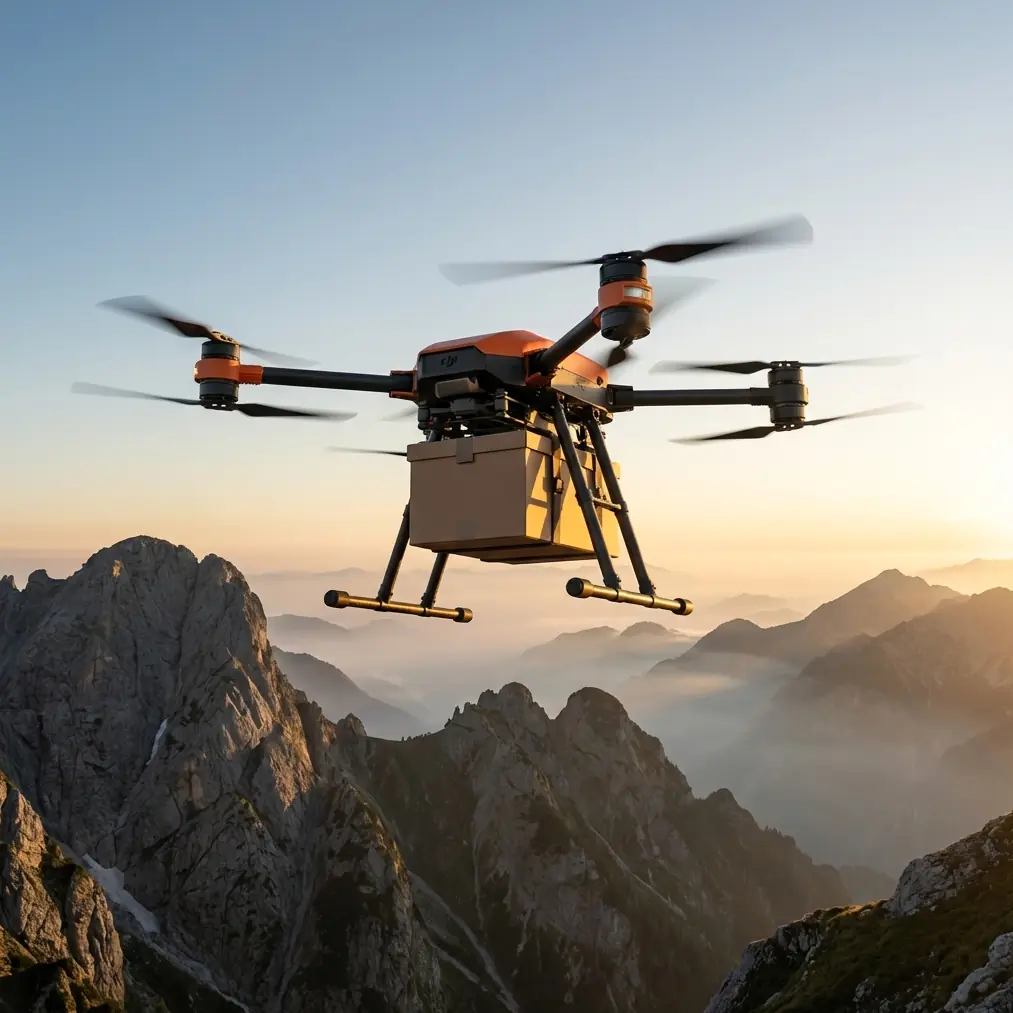
FlyCart 30 for High-Altitude Venues: What This Week’s Drone News Really Means for Sharper, Safer Operations
META: A practical expert analysis of recent drone news through the lens of FlyCart 30 operations at high-altitude venues, covering navigation maturity, counter-UAS readiness, camera focus discipline, BVLOS planning, and mid-flight weather response.
High-altitude venue work exposes every weak link in a drone program.
Air gets thinner. Winds shift faster than the forecast suggests. Landing zones are tighter than they looked on the survey map. If your mission involves moving gear, medical supplies, inspection tools, or event-critical equipment into elevated terrain, success depends on more than lift capacity. It depends on how well the aircraft sees, thinks, adapts, and stays predictable when conditions stop being polite.
That is why three recent pieces of drone news, taken together, say something useful about FlyCart 30 operations even though none of them is a product announcement. One focuses on camera focusing logic for beginners. Another asks why autonomous navigation drones are advancing so quickly. A third covers a live counter-UAS testing initiative at Pendleton UAS Range in northeast Oregon, with a demonstration planned for April 23. On the surface, those stories live in different corners of the UAV world. In practice, they converge on the same operational truth: venue logistics at altitude demand disciplined sensing, reliable autonomy, and proof under real-world pressure.
From my side of the table as a logistics lead, that matters more than marketing claims ever will.
The real problem at high-altitude venues is not payload alone
People often start with the obvious metric: how much the aircraft can carry. Fair enough. Payload ratio matters because every kilogram you move by air changes staffing, timing, and ground access requirements. With a platform like the FlyCart 30, though, payload capacity is only part of the planning stack.
At altitude, the mission risk profile changes quickly. Route optimization becomes more than efficiency math; it becomes a safety function. A direct line across a ridge may look efficient on a map, but the more resilient route may trace a contour that avoids rotor turbulence and preserves battery margin. The dual-battery architecture matters here because it supports continuity and operational confidence, but batteries do not solve bad decisions. They buy options. The team still has to use those options intelligently.
The same goes for the winch system. For venue delivery, especially where touchdown areas are congested, muddy, sloped, or blocked by temporary structures, a controlled lowering operation can be more useful than a conventional landing. At a mountain venue or elevated event site, that changes the job from “Can the drone get there?” to “Can the drone complete the handoff cleanly without exposing crews to unnecessary risk?”
That question becomes even sharper when weather turns mid-flight.
Why a camera focusing article matters more than it seems
One of the recent stories is a Chinese-language beginner guide explaining why photos often come out soft: not because the operator lacks talent, but because they do not understand the camera’s focusing logic. It breaks down single autofocus for static subjects, continuous autofocus for moving subjects, and manual focus for difficult conditions such as low light or low-contrast scenes.
That may sound elementary. It is not.
At high-altitude venues, visual clarity is a logistics issue. If the pilot or payload operator cannot clearly confirm the drop zone, spot obstructions, read terrain texture, or verify that a suspended load is stable, the mission timeline stretches and the safety margin shrinks. The article’s core point about matching focus mode to the scene has direct operational significance.
Single-shot autofocus works when the world is stable. High-altitude venue work is rarely stable. Continuous autofocus becomes more relevant when the aircraft is tracking a changing delivery corridor, a moving support team, or a shifting visual reference in gusty conditions. Manual focus, which the article positions as a solution for low light and low contrast, also deserves more respect in mountain operations. Snow fields, pale rock, haze, cloud edge, and flat dawn light can all reduce scene contrast. In those conditions, an operator who understands when automation may “lose the subject” has an advantage.
This is one of those details that gets dismissed until it causes a problem. A soft image is not merely an aesthetic failure. It can delay a release decision, force a second pass, or create uncertainty exactly when the aircraft needs decisive handling.
For FlyCart 30 teams supporting high venues, camera discipline should sit beside payload planning and battery checks, not behind them.
Autonomous navigation is moving fast because the missions demand it
Another recent news item asks a simple question: why are autonomous navigation drones developing so quickly, and where are they heading next? The source text is brief, but the question itself is the point. Demand is pulling the industry forward.
High-altitude logistics is a clear example.
When operators talk about autonomy, they sometimes reduce it to a convenience feature. That misses the operational reality. In difficult terrain, autonomous navigation supports consistency. It helps aircraft hold a clean route through narrow windows, repeat successful corridors, and reduce workload during phases of flight where human attention is already saturated. For venue support, that includes outbound delivery, precision hover over a drop point, safe egress, and return routing under changing weather.
The relevance to FlyCart 30 is obvious when you add BVLOS planning into the picture. Venue operations in mountainous or elevated regions often involve terrain masking, long approaches, and limited ground access. A mature route optimization workflow can make the difference between a mission that remains comfortably inside safety limits and one that starts eating into reserves. Autonomous navigation is advancing because customers need aircraft that can do more than obey a joystick. They need systems that can execute a plan, adapt within defined boundaries, and remain legible to the human team overseeing the mission.
That does not mean removing people from the loop. It means using autonomy where it reduces variability.
A well-run FlyCart 30 mission at altitude still depends on judgment: assessing wind layers, validating the route, selecting winch versus landing delivery, and deciding when conditions no longer justify continuation. But stronger autonomous behavior makes those human decisions more effective because the aircraft itself is less erratic and more repeatable.
The Pendleton counter-UAS story points to a bigger standard
The third news item may seem far removed from venue delivery. Pendleton UAS Range and Gambit are partnering to provide Red Force as a Service for counter-UAS testing, validation, and operator training, with a live demonstration scheduled for April 23 in northeast Oregon.
Why does that matter to FlyCart 30 users tracking venues in high altitude?
Because it shows where the industry is headed: realistic validation. Not brochure validation. Not ideal-weather validation. Realistic testing with adversarial or operational complexity built in.
For venue operators, especially those working near sensitive sites, crowded event perimeters, or controlled access corridors, this trend matters in two ways.
First, airspace awareness is becoming more serious. Even if your mission is purely logistical, you are operating in an environment where detection, identification, and response standards are tightening. Professional operators need aircraft procedures that are defensible, traceable, and trainable.
Second, the phrase “operator training” in that Pendleton announcement carries weight. Too many drone programs still behave as if platform capability alone creates mission readiness. It does not. The best payload system in the world will not rescue a weak SOP. The most advanced navigation stack will not compensate for crews that have never practiced degraded comms, visual ambiguity, or a surprise weather shift over uneven terrain.
That is where FlyCart 30 programs can separate themselves. Use the aircraft’s safety systems, including emergency parachute logic where applicable, not as a comfort blanket but as part of a wider training doctrine. If the broader UAS sector is moving toward realistic test environments, logistics teams serving high-altitude venues should do the same in their own lane.
A mid-flight weather change is where theory becomes useful
Let’s make this concrete.
Imagine a FlyCart 30 mission supporting a venue perched above a winding access road. The task is straightforward on paper: move time-sensitive equipment from a lower staging point to an upper operations area without tying up ground vehicles. Departure conditions are workable. Wind is present but manageable. Visibility is good enough for normal procedures.
Halfway through the route, the weather shifts.
This is common in elevated terrain. A crosswind builds along one face of the slope. Temperature changes tighten battery expectations. Light flattens as cloud cover moves in. The visual character of the drop zone changes, and the edge contrast that made targeting easy five minutes earlier starts to disappear.
Now the recent news stories stop being abstract.
The camera-focus lesson matters because low-contrast scenes can confuse automated visual confirmation. An operator who understands focus behavior will recognize the difference between a true obstacle and a blurred impression of one. The autonomy story matters because route planning and navigation stability determine whether the aircraft can transition to a safer corridor without compounding pilot workload. The Pendleton testing story matters because this is exactly the kind of scenario crews should rehearse before the mission is real.
In a well-managed FlyCart 30 operation, several systems and habits work together here. The dual-battery setup helps preserve decision space rather than forcing a rushed release or return. Route optimization offers predefined alternates instead of improvised guesses. The winch system reduces the need to force a landing into a compromised zone. Emergency parachute preparedness sits in the background as a last-resort protection layer, not a primary plan. And BVLOS procedures, if the mission is structured that way, define what information has to be confirmed before the team continues, reroutes, or aborts.
The key point is simple: the aircraft handles the weather change well only when the operation around it is designed well.
What venue operators should change right now
If you are evaluating FlyCart 30 for elevated venues, do not focus only on maximum delivery performance. Build your operating model around the friction points that recent news is quietly highlighting.
Start with sensing. Review how your team uses focus modes and visual confirmation during delivery operations. If your pilots cannot explain when they would switch from continuous autofocus logic to manual intervention in a low-contrast environment, training is incomplete.
Next, stress-test your navigation assumptions. Autonomous route execution is valuable, but only if your routes reflect terrain behavior, not just map geometry. That means accounting for wind exposure, rotor wash effects near structures, alternate egress paths, and hover stability over winch drop points.
Then look at validation. The Pendleton initiative underscores a bigger industry pattern: realistic demonstrations are becoming the benchmark. For high-altitude venue work, that means practicing under variable light, shifting wind, and imperfect communications rather than waiting for perfect days. If you want a useful starting point for operational planning conversations, you can share your scenario details through this quick field-ops channel: message our logistics desk.
None of this is glamorous. That is precisely why it works.
Why this matters specifically for FlyCart 30
FlyCart 30 sits in a category where operational sloppiness gets exposed quickly. Heavy-lift logistics platforms promise time savings and access advantages, but they also raise the stakes. A missed focus lock on a creative shoot is annoying. A missed visual cue during a venue delivery in thinning air is something else entirely.
The current news cycle reinforces three practical truths for FC30 users.
First, perception quality matters. The camera article’s emphasis on understanding focusing modes is not just for photographers. In logistics, image clarity supports correct decisions under pressure.
Second, autonomy is accelerating because complex missions need it. The question raised by the autonomous navigation story reflects what operators already know: in demanding environments, repeatable route behavior is no longer optional.
Third, realistic training is becoming non-negotiable. Pendleton UAS Range and Gambit planning a live demonstration on April 23 is a reminder that the industry is investing in proof, not assumptions. High-altitude venue teams should adopt the same standard in their own workflows.
That is the real takeaway for FlyCart 30 users. Not hype. Not theory detached from field work. Just a sharper way to think about how payload ratio, winch deployment, BVLOS discipline, route optimization, emergency parachute planning, and dual-battery resilience fit together when the mountain decides to rewrite your flight plan.
Ready for your own FlyCart 30? Contact our team for expert consultation.