
How I Track Venues in Complex Terrain With the FlyCart 30
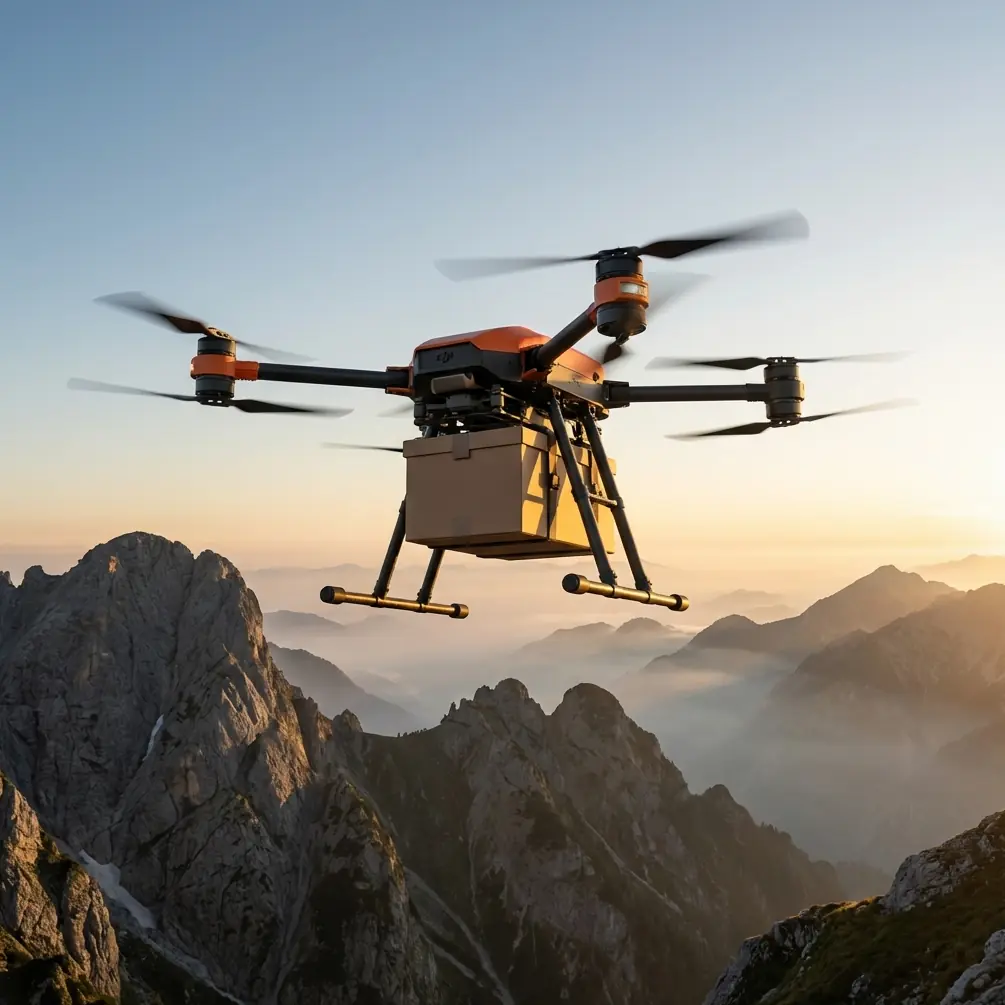
How I Track Venues in Complex Terrain With the FlyCart 30
META: A practical FlyCart 30 field guide for tracking venues in complex terrain, covering route optimization, winch use, payload planning, weather response, BVLOS workflow, and safety systems.
Tracking venues in complex terrain is rarely a straight flight from point A to point B. It is a chain of small decisions made under pressure: where the wind funnels through a ridgeline, where GPS confidence drops near rock walls, where people gather unexpectedly, where a delivery point looks usable on a map but turns into a rotor-wash trap in real life. That is exactly where the FlyCart 30 earns its keep.
I work in logistics, and when teams ask me whether the FlyCart 30 is a fit for venue support in broken terrain, my answer depends less on headline specs and more on how they plan to use three features in the field: the winch system, the dual-battery architecture, and the aircraft’s safety stack, especially the emergency parachute. Those are not brochure talking points. They directly affect whether a mission stays controlled when the terrain gets awkward and the weather shifts halfway through the route.
This guide is built for a very specific scenario: tracking temporary or semi-permanent venues spread across uneven ground, narrow access corridors, tree lines, slopes, and changing weather. Think race checkpoints, mountain event stations, hillside production sites, remote hospitality setups, or field operations where the last few hundred meters are the hardest part. If that is your operating picture, the FlyCart 30 can be extremely effective, but only if you set it up around the terrain rather than assuming the drone will solve a poor plan.
Start With the Terrain, Not the Aircraft
The first mistake I see is treating complex terrain like a scaled-up flatland mission. It is not. Venue tracking in these areas is about vertical separation, approach discipline, and alternate options.
Before I even think about payload, I define three things:
- The safe approach corridor
- The true drop or handoff zone
- The abort path if conditions deteriorate
With the FlyCart 30, that matters because its operational value is tied to controlled access rather than brute force. A platform with cargo capability is only as good as its ability to arrive without forcing a risky landing profile. In rough terrain, the winch system often matters more than touchdown capability. If the venue is ringed by uneven ground, loose dust, cables, tents, or foot traffic, lowering cargo from a hover can turn a marginal site into a workable one.
That changes site selection completely. Instead of searching for a perfect landing spot, you can search for a stable hover point with clean vertical clearance. Operationally, that is a major advantage. It reduces the need to bring the aircraft low into clutter and lets the team serve a venue that would otherwise be impractical.
Use Payload Ratio as a Planning Tool
Payload ratio is not just a performance metric; it is a route-planning filter. On a venue-support mission, every added kilogram changes more than endurance. It changes how much margin you keep for wind, rerouting, and reserve power during hover or winch deployment.
The FlyCart 30 is most effective when operators stop thinking in terms of “maximum carry” and start thinking in terms of “useful carry with a weather margin.” That distinction becomes critical when terrain creates microclimates. A sheltered takeoff zone can fool teams into underestimating the conditions at the ridgeline or inside a narrow valley.
My rule is simple: if the route includes terrain-driven wind variability, I do not plan around the upper edge of payload capacity. I plan around a payload ratio that leaves room for a changed return profile. That matters because route optimization is not purely about the shortest line. In complex terrain, the best route is often the one that avoids the worst air, even if it adds distance.
A heavier payload can still be workable, but only if the route offers predictable airflow and the drop sequence is clean. If either of those is uncertain, reducing cargo weight can produce a safer mission overall than trying to force a single heavy lift. Logistics teams sometimes resist that logic because they want fewer cycles. In practice, two stable runs beat one stressed run every time.
The Winch System Is the Real Venue Tool
For venue tracking, the FlyCart 30 winch system is often the feature that moves the platform from useful to operationally decisive.
A lot of venues in difficult terrain are not inaccessible because they are far away. They are inaccessible because the last 20 meters are messy. Maybe there is a steep grade. Maybe vehicles have churned the surface into mud. Maybe a temporary structure creates turbulence. Maybe the only open area is full of people who should not be standing under a descending aircraft.
The winch system lets you work around that last segment. You keep the aircraft in a more stable hover position, lower the payload into a controlled target area, and minimize the need for close-in maneuvering. That reduces the risk exposure at the hardest part of the job.
From an operational standpoint, the significance is huge:
- It preserves separation between the aircraft and ground obstacles.
- It helps maintain cleaner rotor safety around staff and attendees.
- It broadens the number of viable delivery points inside constrained venues.
The biggest mistake with winch ops is assuming the line solves everything. It does not. You still need a drop area with disciplined personnel movement, clear visual references, and a plan for line sway in variable wind. The winch gives you flexibility, not immunity.
How I Build a BVLOS Mindset Even When the Route Is Short
Even where regulations require a particular operating model, teams benefit from planning with a BVLOS mindset. By that, I mean designing the mission as if direct proximity and perfect visual clarity cannot be relied on at every moment.
Complex terrain does strange things to visibility, signal confidence, and situational awareness. A short route can still behave like a high-complexity corridor if it ducks behind terrain features or passes through changing light and weather. The FlyCart 30 becomes more reliable when the operator builds in route checkpoints, alternate holds, and pre-briefed loss-of-clarity actions rather than improvising.
For venue tracking, I structure the route around decision gates:
- Departure check after climb-out
- Mid-route air assessment
- Approach suitability check
- Delivery execution point
- Return corridor confirmation
That sounds basic, but it creates discipline. Each gate asks a different question. Is the aircraft performing as expected? Is the wind aligned with the forecast? Is the venue approach still clear? Is the drop zone still controlled? Is the return path still the best option?
If your team is running repeated support flights to the same venue cluster, route optimization should also include timing. A route that is safe at 8 a.m. can become unpleasant by early afternoon once thermals and slope winds build. The aircraft might still complete the mission, but with less margin than the morning profile. For recurring venue support, the route is never just geographic. It is temporal.
What Changed When the Weather Turned Mid-Flight
One recent scenario captures the FlyCart 30’s practical strengths better than any generic feature list.
We launched in stable conditions to support a venue positioned beyond a ridgeline with a sloped receiving area. The initial leg was clean. Air was calm near departure, visibility was solid, and the planned hover-and-lower sequence looked straightforward.
Then the weather shifted.
Not dramatically enough to look like a crisis from the ground, but enough to change the mission. Wind began to shear across the slope, and what had been a stable approach lane started producing lateral movement near the intended handoff point. This is where many teams make the wrong call. They press on because the venue is close and the route is almost complete.
Instead, we widened the approach, held higher, and re-evaluated the drop geometry. The FlyCart 30’s winch system gave us options. Rather than forcing the aircraft into a lower, more turbulent position, we maintained a safer hover offset and adjusted the lowering sequence to keep the airframe out of the worst disturbed air. That was the difference between a controlled delivery and an avoidable near-miss.
The dual-battery setup also mattered here for a reason that does not get enough attention. In changing weather, battery architecture is not only about duration. It is about preserving operational confidence when a mission shifts from straightforward transit to extended hover, reassessment, and a more conservative return. If the weather change adds time and workload, reserve matters psychologically as well as technically. Pilots make better decisions when they are not mentally bargaining against a collapsing power margin.
And if conditions had degraded beyond an acceptable threshold, the aircraft’s emergency parachute would have remained part of the risk envelope. Nobody wants to invoke that layer, but in venue environments with people, structures, and uneven ground, the significance is obvious: safety systems are not abstract. They are part of the reason the mission can be approved in the first place.
Dual-Battery Planning Is Really Resilience Planning
Operators often talk about dual-battery systems in terms of redundancy or convenience. For venue support in difficult terrain, I think of it as resilience planning.
The FlyCart 30’s dual-battery design gives teams more flexibility in how they handle uncertainty. That uncertainty may come from weather, routing changes, hover time during winch deployment, or a delayed handoff because the receiving team is not ready.
Here is the operational takeaway: if your mission depends on a narrow power budget, your process is weak, no matter what aircraft you fly.
Use the battery margin to absorb friction. Venue operations always have friction. A truck blocks the zone. A marshal moves people late. Fog edges into the return corridor. A gust front arrives earlier than expected. The aircraft should not be operating so close to its limits that a minor delay becomes a decision emergency.
Build the Receiving Site Like a Mini Air Operation
The best FlyCart 30 missions are won on the ground before they are won in the air.
For venue tracking, I set up the receiving point as a small aviation operation, not a casual meeting spot. That means:
- One person owns the drop zone.
- One person confirms payload readiness.
- One person manages bystander separation.
- Nobody enters the zone without a callout.
This is especially important when you are relying on the winch system. A well-run receiving site shortens hover time, reduces confusion, and keeps the delivery phase predictable. That predictability feeds directly into route optimization because the less time you burn in the final segment, the more margin you retain for the return.
If your venue teams need a practical walkthrough of how we structure those handoff zones, I usually share it directly here: message my field ops desk.
Emergency Parachute: Why It Matters More Over Venues
The emergency parachute deserves a blunt assessment. In complex terrain near active venues, it is not just a backup feature. It is part of the case for operating at all.
Terrain compresses options. People compress options further. A cargo drone working above or adjacent to event spaces has fewer forgiving outcomes if something goes seriously wrong. That makes the emergency parachute operationally significant in a way that flat, empty test fields do not fully reveal.
It does not replace route discipline. It does not justify aggressive flying. What it does is add a final layer to the risk model in an environment where ground consequences can escalate quickly. For logistics leads, that matters when writing procedures, briefing venue managers, and defining what conditions are acceptable for flight.
A Practical How-To Workflow for FlyCart 30 Venue Tracking
If I were setting up a fresh FlyCart 30 program for complex venue support, this is the sequence I would use:
First, map terrain behavior rather than simply marking waypoints. Identify ridge crossings, funnel zones, hidden turbulence areas, and safe hover pockets. A route line without terrain interpretation is incomplete.
Second, choose delivery points based on hover quality and clearance, not visual convenience. The best receiving site is often the one with the least air disturbance, not the one closest to the venue tent or gate.
Third, set payload ratio with reserves for weather and delay. The mission should survive a changed approach and a longer hover than planned.
Fourth, rehearse the winch sequence with the ground team. Most avoidable problems happen in the handoff, not in cruise.
Fifth, define BVLOS-style decision gates even if the route is short. Preplanned reassessment points reduce bad judgment when conditions change.
Sixth, brief the emergency response logic, including what would trigger an abort. A team that waits to invent abort criteria in the air is already behind.
Seventh, log every friction point after each mission. Over time, that data improves route optimization more than abstract theory does.
The Real Value of the FlyCart 30 for Complex Terrain
The FlyCart 30 is not interesting because it can carry cargo. Many platforms can move weight. It is interesting because, in the right hands, it can keep a logistics chain working where terrain disrupts normal ground access and where the receiving point is too constrained for a simple landing profile.
For tracking venues in complex terrain, its value comes from the interaction of features, not any one of them alone. The winch system expands where you can safely serve. The dual-battery setup gives you decision margin when weather or ground readiness changes. The emergency parachute strengthens the risk posture around people and infrastructure. And a disciplined BVLOS-style planning method turns those features into repeatable operations instead of hopeful flights.
If you approach the aircraft that way, the FlyCart 30 stops being a spec-sheet object and becomes what it should be: a reliable logistics tool for difficult places, especially when the easy routes are already gone.
Ready for your own FlyCart 30? Contact our team for expert consultation.