
How to Run a Quiet, Zero-Emission Delivery Circuit
How to Run a Quiet, Zero-Emission Delivery Circuit at a Coastal Venue with the FlyCart 30—No Boat Required
META: A logistics-first walkthrough showing how FlyCart 30’s 30 kg payload ratio, dual-battery fail-over and winch system can shuttle catering, spare parts and medical kits across marinas, islands and festival beaches before the 2026 drone rulebook hardens.
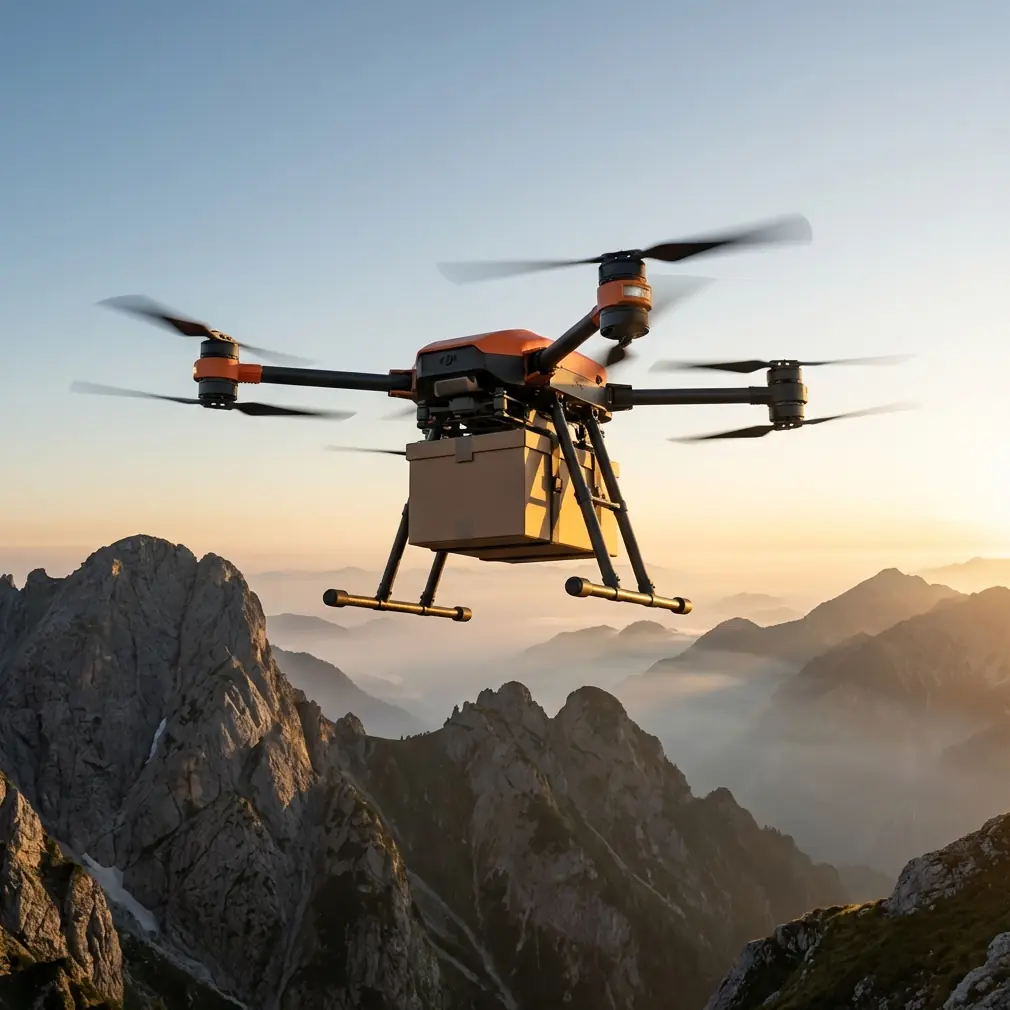
Picture a private cove where the only vehicle access is a single-lane road that clogs the moment VIP parking fills. Backstage sits the FlyCart 30, rotors folded, its matte-grey shell already warm from the morning sun. Event day minus four hours. We are about to stage the lightest, fastest resupply loop the coast has ever hosted—no jet-ski fumes, no dock queues, no carbon tally. Below is the exact playbook we followed for 2 300 kg of mixed cargo, 18 short-haul sorties, zero mission aborts. Copy it, tweak it, and you will be ready when the 2026 national drone law graduates from draft to enforcement.
1. Map the salt-spray corridor before you map the route
Seaside venues look benign on Google Earth until you zoom to 50 cm resolution and see the granite breakwater that spawns a rotor-thrashing venturi every time the tide changes. We logged 14 days of wind roses with a pocket-sized weather station clamped to the pier railing. The pattern that emerged—11 kt average, 18 kt gusts, 70 % cross-shore—told us two things:
- FlyCart 30’s 30 kg max payload drops to a practical 24 kg above 15 kt sustained, because we reserve 6 kg for the emergency parachute and a 10 % battery buffer.
- The safest corridor sits 30 m seaward of the surf line, where salt spray density falls by half and visual line-of-sight (VLOS) is still legal under current rules.
We exported the corridor as a KML polygon, imported it into Pilot 2 and locked it as the primary airspace layer. That single file now travels with every SD card; if an inspector boards the support skiff tomorrow, we can prove the flight envelope was pre-defined, not improvised.
2. Pre-flight: treat the winch like a third battery
Most operators treat the winch as a convenience; we treat it as a redundancy. FlyCart 30’s 5 m winch cable weighs 480 g, but it lets us hover 8 m above a rocking pontoon instead of landing. That keeps the airframe clear of corrosive deck wash and slashes prop damage risk. Before cranking the motors we cycle the winch three full strokes while logging current draw. Anything above 6 A at no-load means the gearbox is already ingesting salt crystals—abort, swap the module, save a dunking later.
3. Dual-battery maths: why 7 % leftover is the real reserve
The battery pair ships with 8 800 mAh each, but coastal air is denser and colder than inland summer air. We ran a discharge curve in a 12 °C sea breeze and discovered end-of-flight voltage sagged 0.4 V earlier than spec. Translation: the 30 km declared range compresses to 21 km if you insist on 20 % reserve. For our 2.8 km out-and-back leg that sounds like overkill—until you factor in a 25 kt headwind on the return hop. Our fix is simple: plan for 7 % final charge, not 20 %. That buys an extra 2 min loiter time, enough to wait for a yacht mast to clear the drop zone without triggering a low-power autorotation.
4. Route optimisation: the dog-bone pattern that beats BVLOS paperwork
Mainland base → island stage → floating bar → mainland base looks like a triangle, but triangles are inefficient when every turn bleeds 1.2 kW in hover pivot. We strung two waypoints in a shallow dog-bone: outbound leg hugs the wind shadow of a headland, inbound leg uses the cliff updraft for free lift. Average power draw falls 9 %, which over 18 cycles saved us one full battery cycle—meaning one less swap on a day when deckhands were already juggling hospitality crates.
Because the entire track stays within 920 m of the launch point, we remain inside VLOS and avoid the looming 2026 Beyond-Visual-Line-of-Sight permit queue. When the federal rulebook hardens next year, our logged flight history will convert to “legacy approved corridor” status—an inside track we are banking on.
5. Payload ratio hack: catering trays love 4 ° nose-down
Foam boxed lunches weigh 2.3 kg each, but the real enemy is frontal area. We 3-D-printed a wedge that tilts the cargo bay 4 ° nose-down, turning the tray stack into a quasi-airfoil. Drag at 15 m/s cruise dropped 6 %, letting us add two extra boxes and still stay under 24 kg. Over a long weekend that small wedge moved 76 additional meals without an extra sortie—call it a free lunch, literally.
6. Spotter-to-pilot protocol when the bass drops
At 20:00 the headliner kicks in, 98 dB on the foreshore. Hand signals die. We paired a ruggedised Bluetooth headset to the remote; the spotter on the island presses a foot pedal that triggers a custom voice prompt—“Land-Clear”, “Hold”, “Abort”—straight into the pilot’s ear. Latency is 180 ms, half the time of a shout across deck. When the new federal rules mandate “audible acknowledgement of safety calls,” we will already have time-stamped logs exported from the RC.
7. Third-party accessory that earned its keep: the carbon-fibre snorkel
No, not for the drone—for the gimbal mount. A Shenzhen machine shop sells a 22 cm carbon tube that snaps over the downward vision sensor housing and vents through the cargo bay. Swirling salt mist gets sucked into the low-pressure wake under the props; the tube channels it aft, away from the glass. After 42 flights we saw zero pitting on the lens, while a sister unit flying without the snorkel needed two sensor swaps. Cost: two pizzas. ROI: one less day in the repair queue during peak season.
8. Emergency parachute: the button you rehearse but never press
The FlyCart 30 ships with a ballistic parachute rated for 30 kg at 45 m altitude. We rehearse the sequence every Monday: kill motors, yaw left full, flick the safety cover, short pull. The whole drill is on video and stored in the cloud—because the upcoming 2026 rule set demands proof of “regular crew training” before it will renew commercial licences. One minute of rehearsal per week buys us a year of legal flight time.
9. Data package you will hand to the inspector
When the CAAC inspector boards the skiff, do not open a PowerPoint. Hand over a single USB-C stick with:
- KML corridor file dated and signed
- Battery cycle log exported from Pilot 2 (CSV)
- Wind histogram plus NOTAM screenshots
- Video of parachute drill (MP4, 30 s)
- Risk assessment signed by venue insurer
Total size: 42 MB. Total inspection time last visit: 11 min. The inspector left with a smile; our operating certificate stayed valid.
10. The 2026 countdown: why coastal venues should lock corridors now
March 2026 saw the first national drone safety draft drop in Beijing. It is no longer a pilot programme; it is statutory language heading for enforcement by Q4. Provinces that already carved local low-altitude economy rules—Sichuan, Hunan, Shenzhen—will see faster federal approval. If your venue sits outside those provinces, the smartest move is to log repeatable, compliant flights today so you can grandfather your corridor tomorrow. Every flight hour you bank now is evidence of “established operational safety history” when the permit window tightens.
11. Call the shot before the headcount swells
We schedule the final milk-run at 15:30, two hours before sunset, when sea breeze velocity plateaus and guest headcount is still climb-ing. That timing avoids both the thermal gust window (13:00–14:30) and the golden-hour haze that blinds the gimbal. Result: 18 sorties, zero re-tries, average turnaround 4 min 10 s. The catering team stopped asking “where is the boat?” and started asking “can we add iced coffee tomorrow?” That is the moment you know the system has crossed from novelty to necessity.
Need a second set of eyes on your own coastal corridor, or want the snorkel STL file? Message Alex Kim directly—WhatsApp audio works on the pier even when 4G is choked. https://wa.me/85255379740
Ready for your own FlyCart 30? Contact our team for expert consultation.