
FlyCart 30 Tracking Tips for Urban Venues
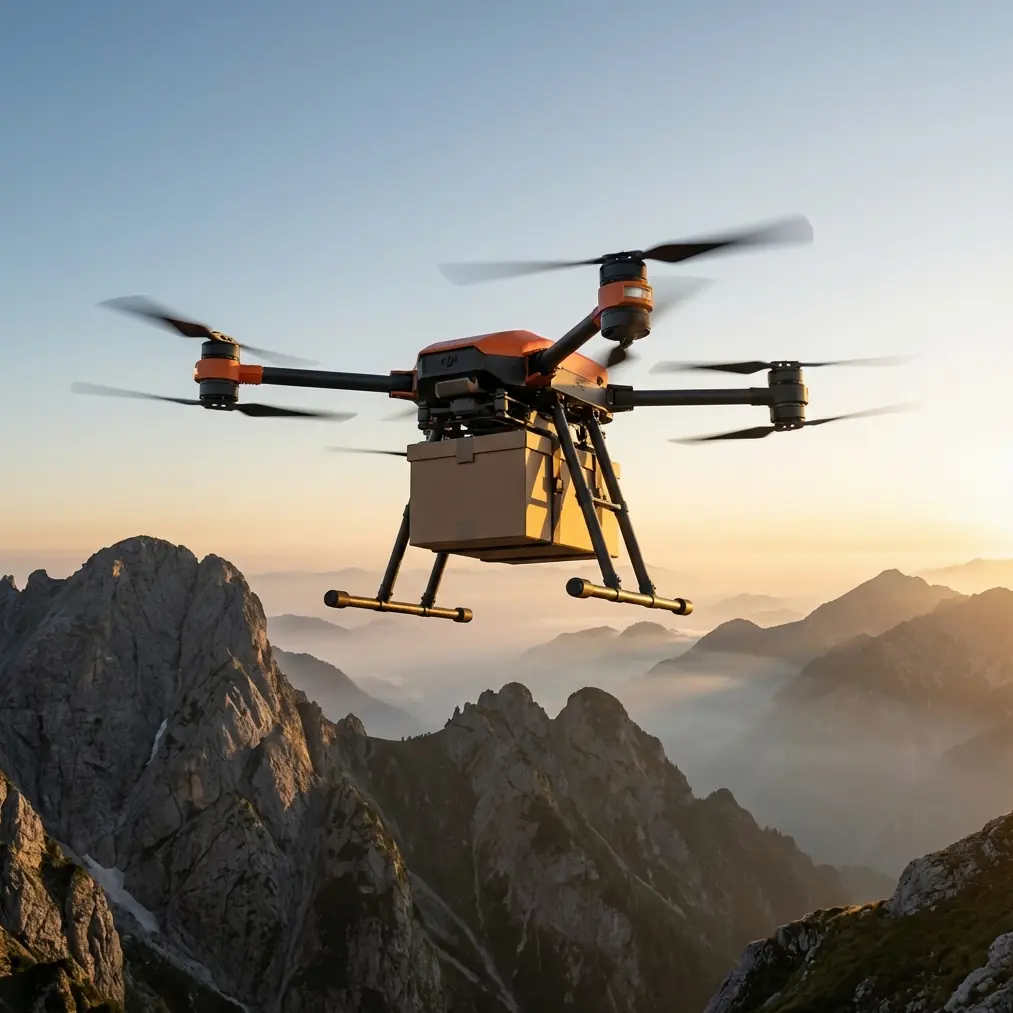
FlyCart 30 Tracking Tips for Urban Venues: Lessons from the Qingyuan Air Carnival
META: Practical FlyCart 30 venue-tracking and setup advice for urban events, using the Qingyuan Air Carnival over the Beijiang River to explain range, antenna placement, route planning, and safer cargo operations.
When a large public aviation event opens over a river corridor, the sky looks graceful. The ground network usually does not.
That contrast matters if you are planning FlyCart 30 operations around an urban venue. The recent Qingyuan Air Carnival, staged over the Beijiang River with formation and aerobatic displays that drew spectators along both banks, is a useful reference point. Not because it was a cargo mission. It was not. But because it exposed the exact kind of operating environment that tests real-world tracking discipline: dense crowds, shifting sightlines, reflective water surfaces, built-up riverfront structures, and a moving perimeter of spectators stretching beyond a single launch point.
For teams using the DJI FlyCart 30 in commercial logistics, event support, site resupply, or temporary infrastructure delivery, those details are not background color. They shape whether your command link stays clean, whether your route remains predictable, and whether your aircraft can serve the venue without turning the operation into a recovery exercise.
I work from the logistics side, so I tend to look at events like Qingyuan’s not as spectacles, but as interference maps.
Why the Qingyuan venue setup is relevant to FlyCart 30 operators
The Qingyuan Air Carnival centered on live flight displays over the Beijiang River, with audiences watching from the riverbanks. That means one thing immediately: an elongated operating area rather than a compact footprint. A river venue creates a long, narrow corridor of attention. Spectators spread out. Temporary structures spread out. Support teams often spread out too.
For a FlyCart 30 team tracking venue activity in an urban setting, that kind of geometry changes your planning in three ways.
First, your control and observation points cannot be chosen only for convenience. If people are distributed along both banks, one pilot position may give excellent line-of-sight coverage to one segment and poor coverage to another.
Second, water affects how the environment “feels” operationally. Open water can reduce some obstruction issues, but riverfront venues also introduce bridge approaches, embankments, lighting structures, grandstands, temporary towers, and clusters of mobile devices. Signal quality is not just about distance. It is about what sits between antennas at different phases of the route.
Third, events built around aerial demonstrations naturally draw a lot of visual attention upward. If your FlyCart 30 is supporting civilian venue logistics nearby, your own routing, timing, and separation discipline have to be cleaner than usual. Not only to stay organized, but because public-facing venues leave little room for ambiguity.
The value of the Qingyuan example is that it compresses many urban-event variables into one picture: a river, a crowd, multiple viewing angles, and an airspace environment where location tracking and route consistency matter more than raw aircraft capability.
Start with the venue map, not the aircraft spec sheet
People often approach the FlyCart 30 by starting with payload ratio, dual-battery endurance assumptions, or whether the winch system can simplify delivery into constrained spaces. Those are valid questions. They just come second.
For an urban venue, begin by drawing the operational shape of the site.
At an event like the Qingyuan Air Carnival, where viewers lined the Beijiang riverside to watch coordinated aerial performances, I would break the venue into four zones:
Primary crowd edge
The areas with the highest spectator density.Support corridor
Access roads, staging tents, comms points, and utility placements.Air-facing frontage
The river-facing edge where sightlines are open but crowd exposure is high.Protected logistics nodes
Back-of-house spaces suitable for loading, battery swaps, or secured handoff.
That framework tells you where a FlyCart 30 can actually create value. In a venue environment, the aircraft is not there to impress anyone. It is there to reduce friction. Moving urgent equipment, delivering lightweight event infrastructure, supporting technical crews across a split site, or reaching awkward positions with the winch system are all valid commercial uses. But they only work well when your route avoids the most unstable part of the venue: the human perimeter.
This is where route optimization becomes practical rather than theoretical. Around a riverfront event, the shortest path is often the worst path. A route that cuts directly across the most visible spectator zone might save distance and increase operational risk. A slightly longer lateral corridor behind structures or along controlled service space can produce more stable tracking, easier visual confirmation, and cleaner contingency handling.
Antenna positioning advice for maximum range
If you only remember one thing from this article, make it this: in urban venue operations, range is usually lost on the ground before it is lost in the air.
A FlyCart 30 can be operating well within a workable distance envelope and still suffer link quality issues because the antenna setup is wrong for the site.
Using a river event like Qingyuan as the model, here is the positioning logic I recommend.
1. Elevate the control point above crowd height
Do not set your primary ground station at street level if the venue is layered with people, barriers, vehicles, kiosks, and temporary structures. Even a modest elevation gain can improve signal consistency dramatically. You do not need a dramatic tower; you need cleaner line-of-sight over the clutter that accumulates at public events.
2. Face the likely route corridor, not just the launch zone
A common mistake is orienting antennas for takeoff and landing only. At a venue stretched along a riverbank, your aircraft may spend most of its mission lateral to the pilot, not directly out in front. Position the system based on the route segment where link margin is likely to be weakest.
3. Avoid parking beside metal clutter
Broadcast vehicles, lighting trusses, fencing, containers, and temporary steel staging all create a messy RF neighborhood. If your pilot station is tucked beside event hardware for convenience, you may be sacrificing the cleanest signal path. Step away from reflective surfaces and bulky temporary infrastructure.
4. Respect the riverbank slope
Embankments can create deceptive dead zones. On paper, a location near the water may look open. In practice, the angle between the pilot station and a low-altitude aircraft can be interrupted by railings, trees, parked service vehicles, or the bank itself. Walk the route physically and check signal posture from the operator’s actual standing position.
5. Build a backup observation point
For venue tracking, a secondary observer position often matters as much as the primary pilot location. If the crowd line shifts or a temporary stage blocks a former sightline, you need another point that still supports visual confirmation and communication continuity.
If you need help working through an actual riverfront or city venue layout, I usually advise teams to sketch the control geometry before they even finalize routes; for quick coordination, you can reach us here: message Alex about your site plan.
How the FlyCart 30’s system design changes venue strategy
The FlyCart 30 is interesting in urban operations because its design choices are not just about lifting cargo. They affect how you build the mission.
Take the winch system. At a venue with limited landing space, the winch changes the delivery model completely. Instead of searching for a full touchdown area near crowded or infrastructure-heavy sections, you can keep the aircraft above the handoff zone and lower the payload into a controlled receiving point. Operationally, that can shrink the ground footprint you need to secure. Around a riverside event with dense public viewing areas, that is a major advantage.
Then there is the dual-battery architecture. In practical terms, this gives venue planners more flexibility when missions are repetitive and time-sensitive. Event support tends to produce short-notice tasks: replacement radio, cable spool, medical support gear for staff zones, weather cover for technical teams, or specialized tools for elevated rigging crews. Battery resilience matters because venue operations rarely unfold on a neat schedule. A platform designed for dependable turnaround is easier to integrate into a live logistics chain.
The emergency parachute also deserves mention, not as a marketing headline, but as an operational planning factor. Public venues demand layered risk controls. A dedicated emergency recovery measure does not replace disciplined route design, exclusion zones, or weather judgment. What it does is support the broader safety case when you are evaluating whether a route belongs in a complex urban environment at all.
And for teams exploring BVLOS concepts in commercial logistics, a venue like Qingyuan’s demonstrates why route integrity is everything. BVLOS is never just a distance story. It is a communications, observation, and contingency story. Long, linear venues may appear simple on a map, especially along river corridors, but they can hide enough physical and human complexity to make route validation far more demanding than an industrial campus.
Payload ratio is not just about weight
A lot of FlyCart 30 discussions flatten payload ratio into a simple lift question: how much can it carry versus how far can it go? In urban venue logistics, that framing is too narrow.
Payload ratio affects how intelligently you can structure the mission. At an event footprint like the Beijiang riverfront gathering in Qingyuan, some tasks benefit from sending one consolidated load. Others are better split into smaller, faster, lower-complexity runs. The right answer depends on receiving conditions at the destination, not just aircraft capacity.
For example, if the receiving node is a narrow service pocket behind spectator barriers, a moderate payload lowered by winch may be operationally cleaner than trying to maximize every trip. If the mission requires several deliveries to separated technical teams along the venue edge, route sequencing may matter more than individual load size. Good venue planning asks: what is the least disruptive way to meet the support requirement? Not: how do we stuff the largest possible package onto the aircraft?
This is why route optimization and payload planning belong in the same conversation. The FlyCart 30 creates options, but options only help if the venue map drives the decision.
A practical setup workflow for urban event tracking
Here is the workflow I would use for a FlyCart 30 deployment supporting a civilian venue with characteristics similar to the Qingyuan Air Carnival.
Step 1: Identify elongated visibility corridors
If the event follows a river, road, parade line, waterfront, or stadium perimeter, mark where spectators and obstacles create the longest tracking challenges.
Step 2: Select a control point for route middle, not route start
The midpoint of operational difficulty matters more than the launch convenience. Place the team where the aircraft will need the strongest sustained visibility.
Step 3: Reserve secondary logistics nodes
Create handoff points away from the densest public edge. This is where the winch system can reduce your dependence on perfect landing space.
Step 4: Build routes around venue behavior
Crowds move. Temporary barriers shift. Service vehicles appear where you did not expect them. Plan corridors that can absorb those changes without forcing immediate route redesign.
Step 5: Test low-altitude signal quality before live operations
Do not assume the riverfront’s open look equals perfect connectivity. Walk, test, and verify from the exact operator position.
Step 6: Match load planning to receiving reality
A balanced payload ratio is the one that fits the destination handling conditions, turnaround tempo, and route complexity.
Step 7: Keep contingency logic visible to the whole team
Dual-battery planning, emergency parachute awareness, alternate holding points, and clear abort criteria should not sit only with the pilot. Venue support is a team operation.
What Qingyuan’s “air ballet” really teaches logistics teams
The public takeaway from the Qingyuan Air Carnival was visual: aircraft performing over the Beijiang River in a dramatic aerial display, watched from along the shoreline. The logistics takeaway is less glamorous and more useful.
Urban air operations live or die by geometry.
A river venue concentrates attention while stretching space. It looks open, but it is full of edge conditions. The FlyCart 30 is well suited to environments where access is awkward, handoff areas are constrained, and ground transport can be slowed by crowd management. But those strengths only show up when the team treats antenna placement, route shape, payload planning, and delivery method as one connected system.
That is the real lesson from a venue like Qingyuan. Not that the sky can be beautiful over a city river. We already know that. The lesson is that elegant airspace on the surface often hides demanding logistics underneath.
For FlyCart 30 operators, that is exactly where good planning earns its keep.
Ready for your own FlyCart 30? Contact our team for expert consultation.