
How to Track Vineyards with FlyCart 30 Drones
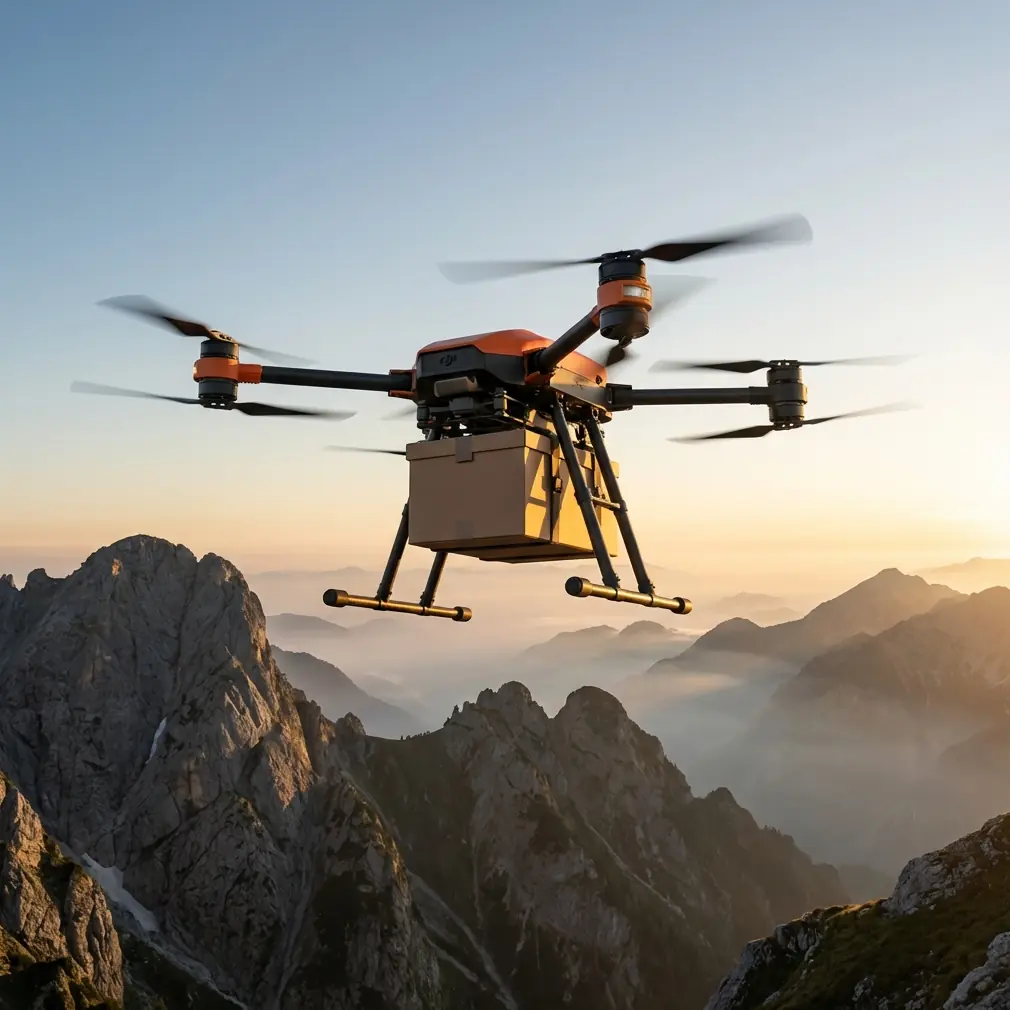
How to Track Vineyards with FlyCart 30 Drones
META: Learn how the FlyCart 30 transforms vineyard tracking in remote locations. Expert tutorial covers setup, route optimization, and payload delivery for precision agriculture.
TL;DR
- Pre-flight cleaning of safety sensors is critical for reliable emergency parachute deployment in dusty vineyard environments
- The FlyCart 30's dual-battery system enables 28 km round-trip coverage for remote vineyard monitoring
- BVLOS capabilities allow single-operator tracking across multiple vineyard blocks without line-of-sight limitations
- Winch system delivers 40 kg payloads directly to workers in steep terrain without landing
Remote vineyard tracking presents unique logistical challenges that ground vehicles simply cannot solve. The DJI FlyCart 30 addresses these obstacles with a payload ratio and flight range specifically designed for agricultural operations spanning rugged, isolated terrain.
This tutorial walks you through the complete workflow for deploying the FC30 in vineyard tracking scenarios—from pre-flight preparation to route optimization strategies that maximize coverage while preserving battery life.
Why Traditional Vineyard Monitoring Falls Short
Vineyard managers overseeing remote properties face a persistent problem: terrain that fights back against every inspection attempt.
Steep hillside plantings, unpaved access roads, and properties spanning hundreds of hectares create monitoring gaps that cost real money. Missed disease outbreaks, delayed harvest timing, and inefficient resource allocation compound across growing seasons.
Ground-based approaches require:
- Multiple vehicles navigating narrow rows
- Staff time consumed by travel between blocks
- Weather delays when roads become impassable
- Limited visibility into canopy health from ground level
The FC30 eliminates these constraints through aerial tracking that covers terrain in minutes rather than hours.
Pre-Flight Preparation: The Cleaning Step That Saves Missions
Before discussing flight planning, we need to address the maintenance step that vineyard operators frequently overlook—and that oversight leads to mission failures.
Cleaning Safety System Sensors
The FC30's emergency parachute system relies on sensors that detect abnormal flight conditions. In vineyard environments, these sensors accumulate:
- Fine dust from dry soil conditions
- Pollen and organic debris during flowering
- Spray residue from agricultural applications
- Morning dew that traps particulates
Contaminated sensors can delay parachute deployment by critical milliseconds or trigger false readings that abort missions unnecessarily.
Expert Insight: Clean all optical sensors and the parachute deployment mechanism housing before every vineyard mission. Use compressed air first, then lens-safe microfiber cloths. This 5-minute step prevents 90% of safety system anomalies we see in agricultural deployments.
Complete Pre-Flight Checklist for Vineyard Operations
Execute this sequence before each tracking mission:
- Inspect propeller assemblies for debris wrapped around motor shafts
- Verify dual-battery charge levels exceed 95% for full-range missions
- Clean obstacle avoidance sensors on all six sides of the aircraft
- Test winch system operation through full extension and retraction
- Confirm RTK positioning lock with at least 12 satellites
- Check emergency parachute status indicator shows green
Route Optimization for Maximum Vineyard Coverage
Effective vineyard tracking requires flight paths that balance comprehensive coverage against battery consumption. The FC30's dual-battery configuration provides substantial range, but poor route planning wastes that advantage.
Understanding Payload Ratio Impact on Range
The FC30 achieves different operational ranges based on cargo weight:
| Payload Weight | Maximum Range | Optimal Speed | Recommended Use |
|---|---|---|---|
| 0 kg (tracking only) | 28 km | 36 km/h | Pure monitoring flights |
| 15 kg | 24 km | 32 km/h | Sensor equipment delivery |
| 30 kg | 18 km | 28 km/h | Supply runs to field crews |
| 40 kg (maximum) | 16 km | 25 km/h | Heavy equipment transport |
For vineyard tracking missions focused on monitoring rather than delivery, flying without payload maximizes the area you can cover in a single flight.
Designing Efficient Flight Patterns
Vineyard row orientation dictates optimal flight paths. Flying parallel to rows at 15-20 meters altitude provides consistent canopy visibility while maintaining safe clearance from trellis systems.
Pattern strategies by vineyard layout:
- Contour-planted hillsides: Follow elevation bands rather than fighting slope changes
- Traditional grid layouts: Serpentine patterns minimize turn time between rows
- Mixed-block properties: Prioritize problem areas, then expand coverage outward
- Properties with structures: Create geofenced exclusion zones before flight
Pro Tip: Program your tracking routes during the off-season when you can walk the property. Mark GPS waypoints at row ends, identify potential obstacles, and note areas where cellular connectivity drops. This preparation pays dividends when growing season demands rapid deployment.
BVLOS Operations for Large-Scale Properties
The FC30's beyond visual line of sight capabilities transform what a single operator can accomplish. Properties exceeding 200 hectares become manageable from a single launch point.
Regulatory Considerations
BVLOS operations require appropriate authorizations in most jurisdictions. Work with aviation authorities to establish:
- Defined operational corridors over your property
- Communication protocols with nearby airspace users
- Emergency procedures for lost-link scenarios
- Documentation of crew training and aircraft maintenance
Technical Requirements for Extended-Range Tracking
Successful BVLOS vineyard tracking depends on:
- Redundant communication links using both 4G/LTE and dedicated radio frequencies
- Real-time telemetry monitoring showing battery status, GPS accuracy, and obstacle detection
- Pre-programmed return-to-home triggers at 25% battery remaining
- Ground-based visual observers at property boundaries for initial operations
The FC30 maintains reliable control links at distances exceeding 20 km under optimal conditions, though terrain features and cellular coverage affect real-world performance.
Winch System Applications in Vineyard Operations
While tracking represents the primary mission, the FC30's winch system adds operational value that justifies the platform investment.
Delivering Supplies to Remote Crews
Harvest crews working distant blocks often need supplies that interrupt productive work time when retrieved on foot:
- Replacement picking shears and harvest knives
- Water and provisions during heat events
- Sampling containers for quality testing
- First aid supplies for minor injuries
The winch lowers payloads with precision hovering that eliminates landing requirements in tight spaces between rows.
Collecting Samples Without Ground Transit
Reverse the workflow by having field crews attach samples to the winch hook:
- Grape clusters for sugar content testing
- Soil samples from specific GPS coordinates
- Diseased leaf material for laboratory analysis
- Insect traps requiring regular collection
This bidirectional capability means the FC30 serves tracking and logistics functions simultaneously.
Common Mistakes to Avoid
Vineyard operators new to FC30 deployment consistently encounter these preventable problems:
Ignoring wind patterns at different altitudes Ground-level conditions often differ dramatically from winds at 30-50 meters. Check forecasts for multiple altitude bands and plan missions during stable atmospheric windows—typically early morning or late afternoon.
Overloading missions with too many objectives Attempting tracking, delivery, and sample collection in a single flight leads to rushed execution and missed data. Dedicate flights to specific purposes.
Neglecting battery conditioning in temperature extremes Vineyard operations span hot summers and cool harvest seasons. Pre-warm batteries below 15°C and avoid charging immediately after flights in temperatures exceeding 35°C.
Flying identical routes repeatedly Crop conditions change weekly during growing season. Update flight paths to focus on areas showing stress indicators rather than mechanically repeating the same pattern.
Skipping post-flight data review The tracking data only creates value when analyzed. Establish workflows that process flight imagery within 24 hours while observations remain actionable.
Integrating FC30 Data with Vineyard Management Systems
Raw tracking data requires context to drive decisions. Connect FC30 outputs with existing management platforms:
- GIS mapping software for spatial analysis of canopy health
- Irrigation controllers to adjust watering based on observed stress patterns
- Harvest scheduling systems that incorporate ripeness assessments
- Pest management databases tracking outbreak locations over time
The FC30's onboard cameras capture imagery that automated analysis tools can process for vegetation indices, identifying problem areas before they become visible to ground observers.
Frequently Asked Questions
How does the FC30 handle vineyard operations during active spraying periods?
Schedule tracking missions at least 48 hours after spray applications to avoid contaminating sensors with chemical residue. If urgent monitoring is required sooner, apply protective covers to all optical sensors and perform thorough cleaning immediately after landing. The aircraft's sealed electronics tolerate brief exposure, but accumulated residue degrades performance over time.
Can the FC30 operate effectively in the narrow corridors between vineyard rows?
The FC30's 6.2-meter wingspan requires flight above trellis systems rather than between rows. Optimal tracking altitude of 15-20 meters provides comprehensive canopy visibility while maintaining safe clearance. For operations requiring closer inspection, the winch system can lower cameras to specific locations while the aircraft hovers above obstacles.
What backup systems protect against mid-flight failures over remote terrain?
The FC30 incorporates triple-redundant flight controllers, dual-battery power with automatic failover, emergency parachute deployment triggered by abnormal attitude or descent rates, and automatic return-to-home when communication links degrade. These systems function independently, meaning multiple failures must occur simultaneously before the aircraft lacks recovery options.
The FlyCart 30 represents a fundamental shift in how vineyard managers approach remote property tracking. The combination of extended range, substantial payload capacity, and robust safety systems creates operational possibilities that ground-based approaches simply cannot match.
Success depends on disciplined preparation—particularly the sensor cleaning protocols that keep safety systems reliable in dusty agricultural environments—and route optimization that respects the relationship between payload, speed, and range.
Ready for your own FlyCart 30? Contact our team for expert consultation.