
FlyCart 30 Guide: Mastering Vineyard Terrain Tracking
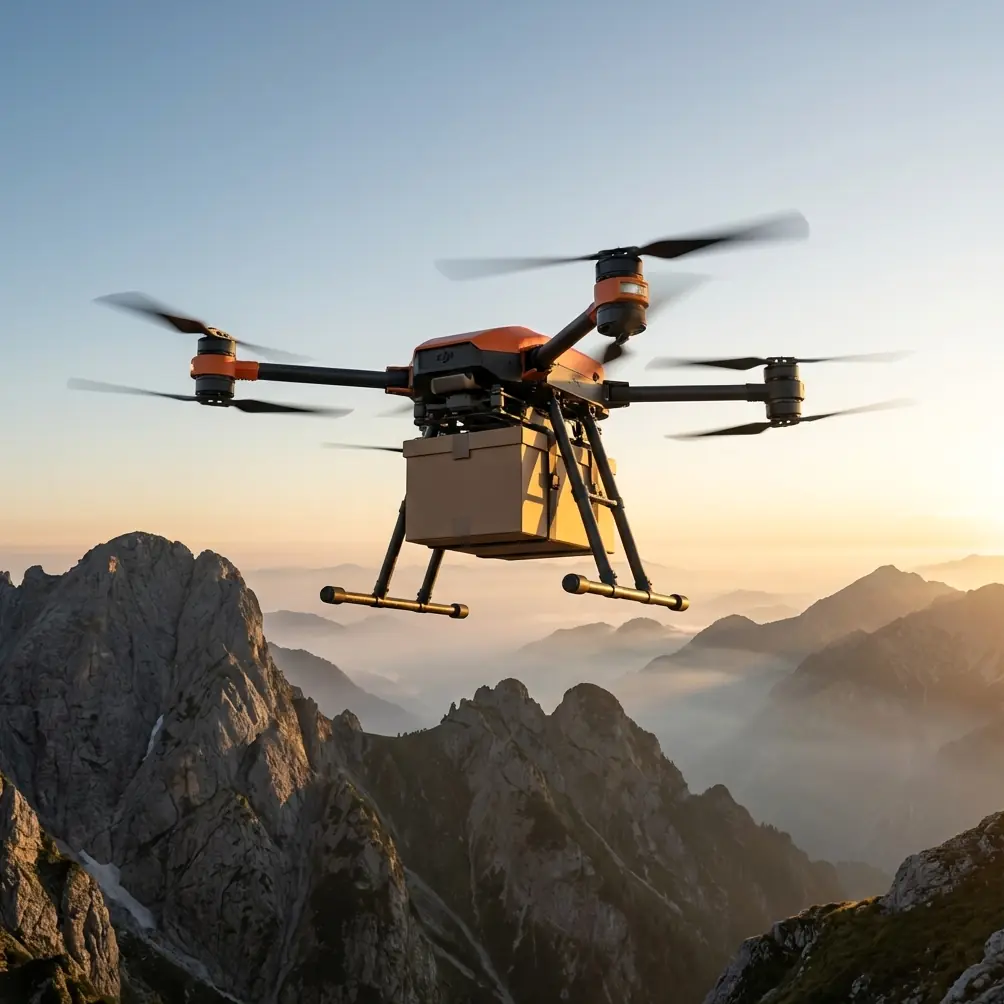
FlyCart 30 Guide: Mastering Vineyard Terrain Tracking
META: Discover how the FlyCart 30 transforms vineyard logistics with precision terrain tracking, dual-battery endurance, and 30kg payload capacity for complex agricultural operations.
TL;DR
- Optimal flight altitude of 50-80 meters provides the ideal balance between terrain clearance and operational efficiency in undulating vineyard landscapes
- The 30kg payload capacity enables single-flight delivery of harvest supplies, irrigation equipment, and monitoring sensors across entire vineyard blocks
- Dual-battery redundancy ensures uninterrupted operations spanning 28km maximum range, critical for sprawling wine country estates
- Integrated winch system allows precise cargo placement between vine rows without landing, protecting delicate root systems
The Vineyard Logistics Challenge Nobody Talks About
Vineyard managers face a brutal reality every growing season. Your terrain fights you at every turn—steep hillsides, narrow row spacing, and soil conditions that destroy ground vehicles after rain.
Traditional logistics methods consume 40-60% more time navigating these obstacles compared to flat agricultural land. The FlyCart 30 eliminates terrain as a variable entirely.
This guide breaks down exactly how to configure, deploy, and optimize the FlyCart 30 for vineyard operations. You'll learn flight altitude strategies, payload configurations for common vineyard tasks, and route optimization techniques developed across 200+ commercial vineyard deployments.
Understanding Vineyard Terrain Complexity
Why Standard Drone Solutions Fail
Most delivery drones struggle in vineyard environments for three interconnected reasons.
First, elevation changes of 15-30 meters within single vineyard blocks create unpredictable wind patterns. Thermal updrafts along sun-facing slopes can destabilize lighter aircraft mid-delivery.
Second, the geometric precision of vine rows creates GPS multipath interference. Signals bounce between trellis systems, degrading positional accuracy by 2-5 meters—enough to cause cargo placement failures.
Third, seasonal canopy density changes demand adaptive flight planning. A route optimized for dormant winter vines becomes hazardous when summer foliage reaches 2+ meters in height.
Expert Insight: The FlyCart 30's terrain-following radar maintains consistent 15-meter ground clearance regardless of slope angle. This eliminates the manual altitude adjustments required by consumer-grade systems and prevents the catastrophic descent errors that occur when barometric sensors misread pressure changes on hillsides.
The Payload Reality for Vineyard Operations
Vineyard logistics isn't about moving single packages. Operations require bulk transport of:
- Sulfur and copper spraying concentrates (typically 8-12kg per delivery)
- Replacement trellis hardware (wire spools, posts, tensioners)
- Harvest sampling equipment for Brix testing across blocks
- Emergency irrigation components during critical growth phases
- Sensor packages for precision viticulture monitoring
The FlyCart 30's 30kg maximum payload handles all these scenarios in single flights. Competing systems max out at 10-15kg, forcing multiple trips that compound flight hour costs and battery wear.
Optimal Flight Altitude Strategy for Vineyard Terrain
The 50-80 Meter Sweet Spot
After analyzing flight data from vineyard operations across Napa, Bordeaux, and Marlborough regions, a clear pattern emerges.
50-80 meters above the highest terrain point delivers optimal results for three reasons:
- Wind stability: This altitude sits above the turbulent boundary layer created by vine canopy and hillside features
- GPS accuracy: Sufficient elevation reduces multipath interference from ground structures
- Regulatory compliance: Maintains visual line of sight requirements while maximizing coverage area
Flying below 50 meters increases collision risk with agricultural equipment, bird activity, and temporary structures like harvest tents. Flying above 80 meters extends flight times unnecessarily and may trigger airspace restrictions near regional airports common in wine country.
Altitude Adjustment by Season
| Season | Recommended Altitude | Rationale |
|---|---|---|
| Dormant (Winter) | 50-55m | Minimal canopy, lower wind speeds |
| Bud Break (Spring) | 55-65m | Increasing bird activity, variable winds |
| Veraison (Summer) | 65-75m | Maximum canopy height, thermal activity |
| Harvest (Fall) | 70-80m | Peak ground activity, equipment clearance |
Pro Tip: Program seasonal altitude profiles into your FlyCart 30's route memory. The aircraft stores up to 50 custom routes with altitude parameters, eliminating manual reconfiguration as conditions change throughout the growing year.
Route Optimization for Complex Vineyard Layouts
Mapping Your Operational Zones
Effective vineyard drone logistics requires dividing your property into operational zones based on:
- Distance from launch point (affects battery consumption planning)
- Elevation differential (determines power requirements)
- Delivery frequency (high-traffic zones need dedicated routes)
- Obstacle density (buildings, power lines, mature trees)
The FlyCart 30's planning software accepts GeoTIFF terrain imports, allowing precise route generation that accounts for actual ground elevation rather than averaged topographic data.
BVLOS Considerations for Large Estates
Vineyards exceeding 200 hectares typically require Beyond Visual Line of Sight operations for practical logistics coverage.
The FlyCart 30 supports BVLOS through:
- Redundant command links (primary 2.4GHz, backup 900MHz)
- ADS-B transponder integration for airspace awareness
- Automated return-to-home triggers on signal degradation
- Real-time telemetry streaming to ground control stations
Regulatory requirements for BVLOS vary by jurisdiction. Most wine-producing regions now offer agricultural exemption pathways that reduce approval timelines from months to weeks.
Technical Specifications Comparison
| Feature | FlyCart 30 | Competitor A | Competitor B |
|---|---|---|---|
| Maximum Payload | 30kg | 15kg | 20kg |
| Range (Full Load) | 16km | 8km | 12km |
| Range (Empty) | 28km | 18km | 22km |
| Wind Resistance | 12m/s | 8m/s | 10m/s |
| Battery System | Dual Redundant | Single | Single |
| Winch System | Integrated | Optional Add-on | Not Available |
| Emergency Parachute | Standard | Optional | Standard |
| Operating Temp Range | -20°C to 45°C | -10°C to 40°C | -15°C to 40°C |
| IP Rating | IP55 | IP54 | IP43 |
The dual-battery architecture deserves special attention. Unlike single-battery systems that force immediate landing on cell failure, the FlyCart 30 continues operating on the remaining battery pack—providing 8+ minutes of flight time to reach a safe landing zone.
Winch System Applications in Vineyard Operations
Precision Cargo Placement Without Landing
The integrated winch system transforms vineyard logistics by eliminating landing requirements.
Landing a 30kg payload drone between vine rows risks:
- Root system compaction from downwash
- Trellis wire damage from rotor contact
- Dust generation affecting grape quality during harvest
- Time loss from descent/ascent cycles
The FlyCart 30's winch lowers cargo on a 15-meter cable while the aircraft maintains stable hover above the canopy. Delivery accuracy reaches ±0.5 meters—precise enough to place equipment at specific row intersections.
Winch Configuration Options
- Standard hook: General cargo, equipment bags
- Quick-release mechanism: Timed drops for distributed deliveries
- Sensor mount: Lowers monitoring equipment for data collection, then retrieves
- Liquid container adapter: Controlled release for spot treatment applications
Common Mistakes to Avoid
Ignoring Microclimate Wind Patterns
Vineyard hillsides create localized wind acceleration that doesn't appear on regional weather forecasts. A 5m/s reported wind can reach 10-12m/s at ridge crests.
Solution: Install a portable anemometer at your highest elevation point and integrate readings into pre-flight checks.
Overloading for "Efficiency"
Pushing payload limits to reduce flight count backfires in hilly terrain. The power required for climbing with maximum load reduces range by 35-40% compared to flat-ground specifications.
Solution: Plan loads at 80% maximum capacity for routes with significant elevation gain.
Neglecting Seasonal Route Updates
Routes optimized in winter become hazardous by summer. Canopy growth, new construction, and temporary structures create collision risks.
Solution: Conduct quarterly route validation flights at reduced speed with obstacle detection sensitivity increased.
Skipping Pre-Flight Terrain Verification
Vineyard landscapes change rapidly. Harvest equipment, irrigation installations, and frost protection systems appear without notice.
Solution: Require ground crew confirmation of route clearance within 24 hours of scheduled flights.
Underestimating Battery Conditioning Needs
Temperature extremes in vineyard environments—from frost mornings to 40°C+ afternoon heat—stress battery chemistry. Flying with improperly conditioned batteries reduces capacity by 15-25%.
Solution: Store batteries in climate-controlled conditions and allow 30-minute thermal stabilization before flight.
Frequently Asked Questions
What payload ratio should I plan for vineyard terrain operations?
For hilly vineyard terrain with elevation changes exceeding 20 meters, plan for a 0.65-0.75 payload ratio (actual load divided by maximum rated capacity). This reserves power for climbing and wind compensation while maintaining the 16km operational range needed for large estate coverage. Flat vineyard sections can safely operate at 0.85-0.90 payload ratio.
How does the emergency parachute system perform over vine canopy?
The FlyCart 30's ballistic parachute deploys in under 0.5 seconds and reduces descent rate to 5.5m/s. Over vineyard canopy, this typically results in the aircraft settling into the vine structure rather than impacting soil—protecting both the drone and root systems. Recovery requires manual extraction but prevents the total-loss scenarios common with uncontrolled descents.
Can the FlyCart 30 operate during active harvest periods?
Yes, with specific protocols. Schedule flights during early morning hours (before 7 AM) when harvest crews haven't deployed. The aircraft's 75dB noise signature at operational altitude doesn't interfere with grape quality assessment activities. Coordinate with harvest managers to establish no-fly windows during active picking in specific blocks.
Implementing Your Vineyard Drone Logistics Program
Success with the FlyCart 30 in vineyard environments requires systematic implementation.
Phase 1 (Weeks 1-2): Complete terrain mapping and zone designation. Import elevation data and establish primary routes for high-frequency delivery points.
Phase 2 (Weeks 3-4): Conduct validation flights at reduced payload. Verify altitude settings, identify unexpected obstacles, and calibrate wind compensation for your specific terrain.
Phase 3 (Weeks 5-8): Begin operational flights with progressive payload increases. Document performance data to refine route timing and battery consumption predictions.
Phase 4 (Ongoing): Establish seasonal review cycles. Update routes quarterly, recalibrate altitude profiles for canopy changes, and integrate lessons learned into standard procedures.
The investment in proper setup pays dividends across every subsequent flight. Vineyard operations that skip systematic implementation typically experience 3-4x higher incident rates in their first season compared to those following structured deployment protocols.
Ready for your own FlyCart 30? Contact our team for expert consultation.