
FlyCart 30 in Remote Vineyards: How to Set Up for Reliable
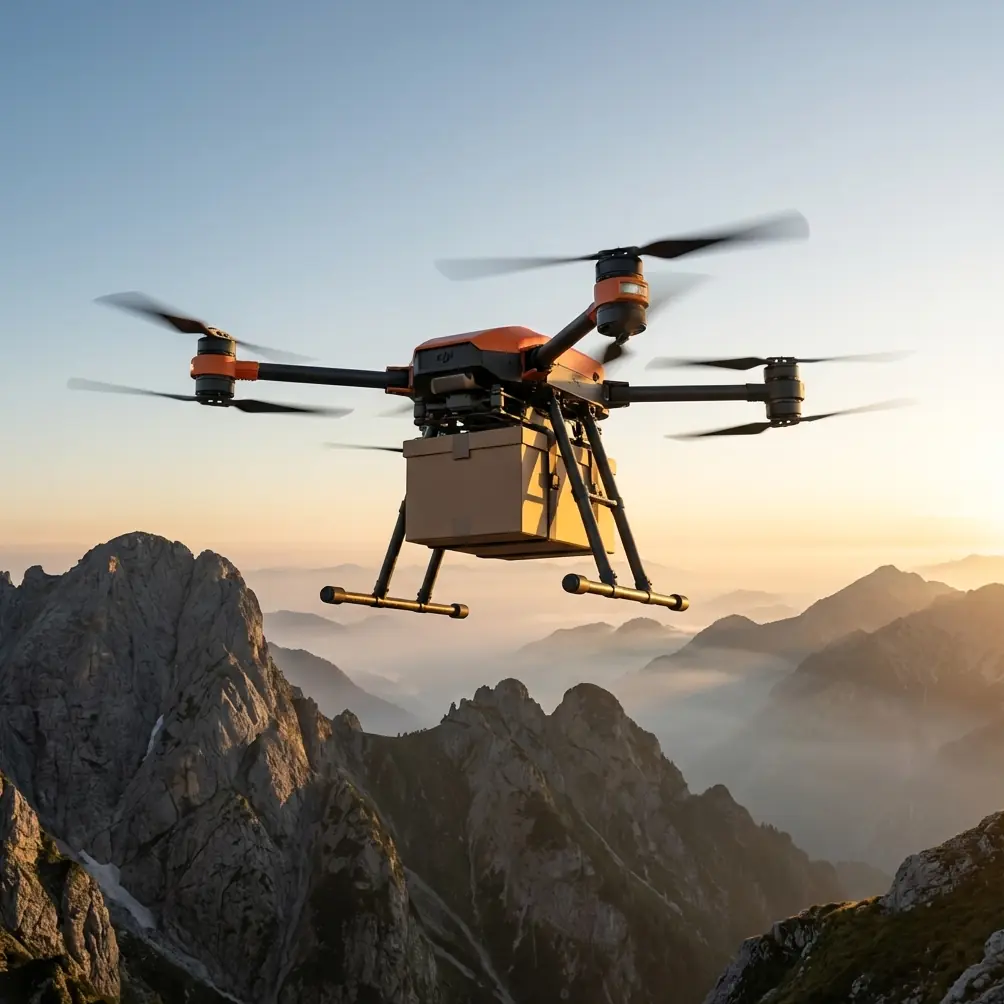
FlyCart 30 in Remote Vineyards: How to Set Up for Reliable Long-Range Tracking and Delivery
META: Practical FlyCart 30 guidance for remote vineyard operations, covering antenna positioning, route planning, payload ratio, winch use, BVLOS considerations, dual-battery strategy, and emergency parachute readiness.
Remote vineyards expose every weakness in an aerial logistics plan.
You feel it first in the terrain. Rows break over ridgelines. Signal paths get blocked by tree lines, trellis wire, sheds, and small elevation changes that look harmless on a map but punish range in the field. Then the operational reality sets in: a forgotten sensor node, replacement parts for irrigation controls, scouting equipment, sample kits, or crop-monitoring gear all need to move between points that are too far to walk efficiently and too awkward for vehicles to reach quickly.
That is where the FlyCart 30 becomes interesting—not as a headline machine, but as a working aircraft for real logistics in difficult agricultural environments.
I’m writing this from the perspective of a logistics lead thinking about remote vineyard tracking, not trade-show spectacle. That distinction matters. One recent aviation news item out of Egypt focused on the public display of aircraft, missiles, and drones as symbols of national aerospace capability. That kind of event tells you one thing clearly: unmanned aircraft are now mature enough to be used as proof of technical strength on an international stage. But for vineyard operators, the useful question is much narrower. Can a cargo UAV hold a stable link, move equipment predictably, and do it over broken terrain where conventional access is slow?
For FlyCart 30 users, the answer depends less on the brochure and more on setup discipline.
Below is the field method I recommend when the mission is remote vineyard tracking and light logistics support.
Start with the mission, not the aircraft
A lot of drone failures in agriculture begin with a vague objective. “We want to use the FlyCart 30 in the vineyard” is not a mission plan. A mission plan is specific:
- Move tracking devices or diagnostic tools to a ridge block twice daily
- Deliver replacement vineyard sensors to remote zones without vehicle access
- Retrieve sample containers from predefined pickup points
- Support recurring BVLOS observation routes tied to vineyard health checks
Those are workable tasks because they define distance, destination type, urgency, and payload condition.
The FlyCart 30’s value rises when your task has three characteristics at once: distance, repetition, and poor ground access. Remote vineyards often check all three boxes. That is why route optimization matters as much as payload capacity. Saving three minutes on a one-off flight is trivial. Saving three minutes on four flights per day over an entire growing season changes labor planning.
Before the first operational day, map every destination in terms of line-of-sight quality, elevation difference, and landing or drop constraints. In vineyards, radio performance is rarely about pure distance alone. A shorter route that crosses a ridge shoulder can produce a weaker control and telemetry link than a slightly longer route that stays inside a cleaner corridor.
Antenna positioning advice for maximum range
If you only fix one thing before flying in remote vineyards, fix antenna placement.
This is the most common source of avoidable link degradation, especially when crews assume “high ground” automatically equals “best signal.” Sometimes it does. Often it does not. The goal is not simply height. The goal is an unobstructed and stable radio path through the actual flight corridor.
Here is the practical approach I use:
1. Place the ground station where the route opens, not where the vehicle parks
The easiest setup point is often beside a road, maintenance shed, or edge-of-block access track. That may be convenient, but convenience can put the antenna behind trellis structures, tree cover, or slope shoulders. Walk the site. Look down the intended route corridor. If the first third of the route is partially screened, move.
A 20-meter relocation on the ground can matter more than any later tuning.
2. Prioritize forward visibility over dramatic elevation
Operators love hilltops. But a ridge crest can create its own problem if the aircraft drops quickly beyond that edge. You gain visibility near launch and lose it immediately afterward. In vineyard terrain, a shoulder position with clean forward exposure can outperform a crest position with a sharp signal shadow behind it.
3. Keep the antenna clear of metal clutter
Parking near utility boxes, steel fencing, farm machinery, wire racks, or dense roof structures can introduce reflection and inconsistency. Vineyards are full of conductive materials that do not look threatening until signal quality becomes erratic. Keep the antenna zone physically clean.
4. Face the actual work zone
This sounds obvious, but many range complaints come from poor orientation discipline. If your highest-risk segment is a far block behind a fold in the terrain, align your setup around that segment rather than around the launch pad. In long agricultural runs, the weak point of the route should dictate antenna direction.
5. Test with a light operational profile first
Do not validate antenna placement under a heavy or time-sensitive run. Fly a low-risk route, observe link behavior, and note where signal quality dips. Then adjust the ground position before committing to repetitive operations.
For teams setting up recurring vineyard routes and wanting a second opinion on field layout, it can help to share your route sketch here before locking in the operating position.
Payload ratio is not just about lifting power
People talk about payload as if the only question is whether the aircraft can carry the weight. In vineyard logistics, payload ratio is really about margin.
A remote operation is rarely a neat point-to-point movement in ideal weather. You may be climbing over uneven terrain, hovering near pickup zones, or using the winch system to avoid landing in muddy, rocky, or tightly planted areas. Every one of those conditions makes excess payload less forgiving.
That is why payload ratio should be planned around mission quality, not maximum load. A lighter payload often delivers better route stability, cleaner energy management, and more consistent timing. For tracking operations, this matters because the cargo is usually not bulky. It is often compact but mission-critical: batteries for field devices, network relays, cameras, replacement trackers, sample packs, or communication modules.
In other words, carrying less can actually produce a more valuable result if it increases route confidence.
When the winch system is better than landing
In remote vineyards, landing is frequently the wrong answer.
Rows can be narrow. Soil can be soft. Ground vegetation may be high. Slopes may look manageable from above but prove uneven and unsafe for touchdown. Add wires, posts, and irrigation hardware, and a clean landing zone becomes surprisingly rare.
This is where a winch system changes the operating model.
Instead of searching for a perfect touchdown point, you can hold a stable hover over a verified drop or pickup location and lower the load vertically. Operationally, that does three useful things:
- It reduces the need to prepare landing pads across multiple vineyard blocks
- It limits ground contact in dirty or unstable terrain
- It shortens the time spent maneuvering in confined spaces
For sample retrieval or device delivery, the winch workflow is often cleaner than landing because the aircraft stays above row-level clutter. That translates to less risk around posts, trellis wire, and uneven ground. In remote tracking missions, a well-managed hover-and-lower sequence can be the difference between a scalable routine and a route crews avoid using.
Dual-battery planning is a logistics discipline
Dual-battery architecture is often discussed as a feature. It should really be managed as a procedure.
In vineyard operations, you are not just trying to finish a flight. You are trying to maintain a repeatable service window across changing field conditions. That means energy management must support scheduling, not just endurance.
A disciplined dual-battery workflow should include:
- Pairing batteries with consistent cycle history
- Tracking performance by route, not just by aircraft
- Reserving extra margin for uphill legs and hover-intensive winch use
- Avoiding route approval based on one unusually favorable test day
Why route-specific tracking? Because vineyards create asymmetric energy demand. The outbound leg may be easy, while the return includes a climb, a crosswind, or a longer hover for pickup confirmation. If you only estimate battery need on total distance, you can miss where the real drain occurs.
The FlyCart 30 becomes more useful when battery planning is tied to route behavior. That is especially true for remote tracking tasks where delays ripple outward into scouting schedules, maintenance timing, and labor coordination.
BVLOS in vineyards means disciplined corridor design
BVLOS gets treated too casually in some drone discussions, as if it simply means “farther away.” In remote vineyards, BVLOS is really about corridor control.
A route is not ready because the map line is straight. It is ready when you understand its terrain interactions, communication consistency, emergency options, and handoff procedures if the destination crew is involved in loading or unloading.
For agricultural logistics, the strongest BVLOS routes usually share four traits:
- They avoid abrupt terrain masking
- They use repeatable waypoints tied to physical landmarks
- They have pre-checked delivery or pickup points
- They include conservative altitude planning over the weakest signal segment
This is where that international aviation reference is indirectly useful. Public aerospace displays may emphasize strength and capability, but commercial operators should read the lesson differently: aircraft technology only matters when supported by disciplined operating systems. In a vineyard, there is no audience and no spectacle. There is only whether the route works on Tuesday morning when the fog has lifted, the maintenance crew is waiting, and the far block still has no vehicle access.
Route optimization is about reducing uncertainty
The best route is not always the shortest.
In remote vineyard work, route optimization should favor the path that offers the most predictable communications, cleanest obstacle picture, and easiest recovery options. If one route cuts distance by 8% but passes close to a ridge shadow and another is slightly longer with stronger link stability, I would choose the stable route for routine operations.
Why? Because uncertainty is expensive.
A predictable route lets you standardize departure windows, payload handling, battery expectations, and destination readiness. Once that rhythm is established, the drone stops being an experiment and starts being infrastructure.
A practical optimization sequence looks like this:
- Build a safe route
- Fly it repeatedly and log weak segments
- Adjust antenna position and waypoint geometry
- Re-test with realistic payloads
- Only then trim time or distance
Skipping those steps usually creates a route that looks efficient on paper and performs poorly in the field.
Do not treat the emergency parachute as a footnote
In complex agricultural terrain, an emergency parachute is not there to make the spec sheet look complete. It is part of operational risk design.
Remote vineyards often involve slopes, isolated work teams, and areas where direct access is slow. A parachute system matters because it adds a layer of mitigation when something goes wrong away from the launch point. It should be checked with the same seriousness as batteries, payload attachment, and route programming.
The operational significance is straightforward: in a remote environment, your response time after an incident is usually longer. Any onboard safety system that helps reduce the consequences of an in-flight failure deserves procedural attention before launch, not after a briefing slide mentions it.
A simple field workflow for FlyCart 30 vineyard tracking
If I were standing up a FlyCart 30 operation for remote vineyard tracking tomorrow, this is the order I would use:
Pre-mission
- Define exactly what is being moved and why
- Set payload limits below the mission maximum
- Confirm destination conditions for winch or landing
- Match dual-battery sets by performance history
- Verify emergency parachute status
Site setup
- Walk the launch area and route opening
- Place the antenna for the cleanest corridor, not easiest access
- Remove nearby metal and vehicle clutter from the immediate setup zone
- Face and tune for the weakest route segment
Test flights
- Run a light payload validation flight
- Watch for signal dips near terrain breaks
- Adjust the antenna position before approving routine use
- Record real energy use, hover time, and route duration
Operational flights
- Use the winch where landing zones are unreliable
- Keep route geometry consistent
- Avoid ad hoc detours unless the corridor is re-evaluated
- Log anomalies by location so the route improves over time
That is not glamorous. It is what works.
And that, really, is the right lens for FlyCart 30 in remote vineyards. The aircraft is only part of the answer. The larger answer is how well you design the operating corridor around terrain, signal behavior, and repetitive farm logistics. The vineyards that benefit most will be the ones that stop thinking in terms of isolated drone flights and start thinking in terms of aerial route architecture.
Ready for your own FlyCart 30? Contact our team for expert consultation.