
FlyCart 30 for Remote Vineyards: A Practical Field Guide
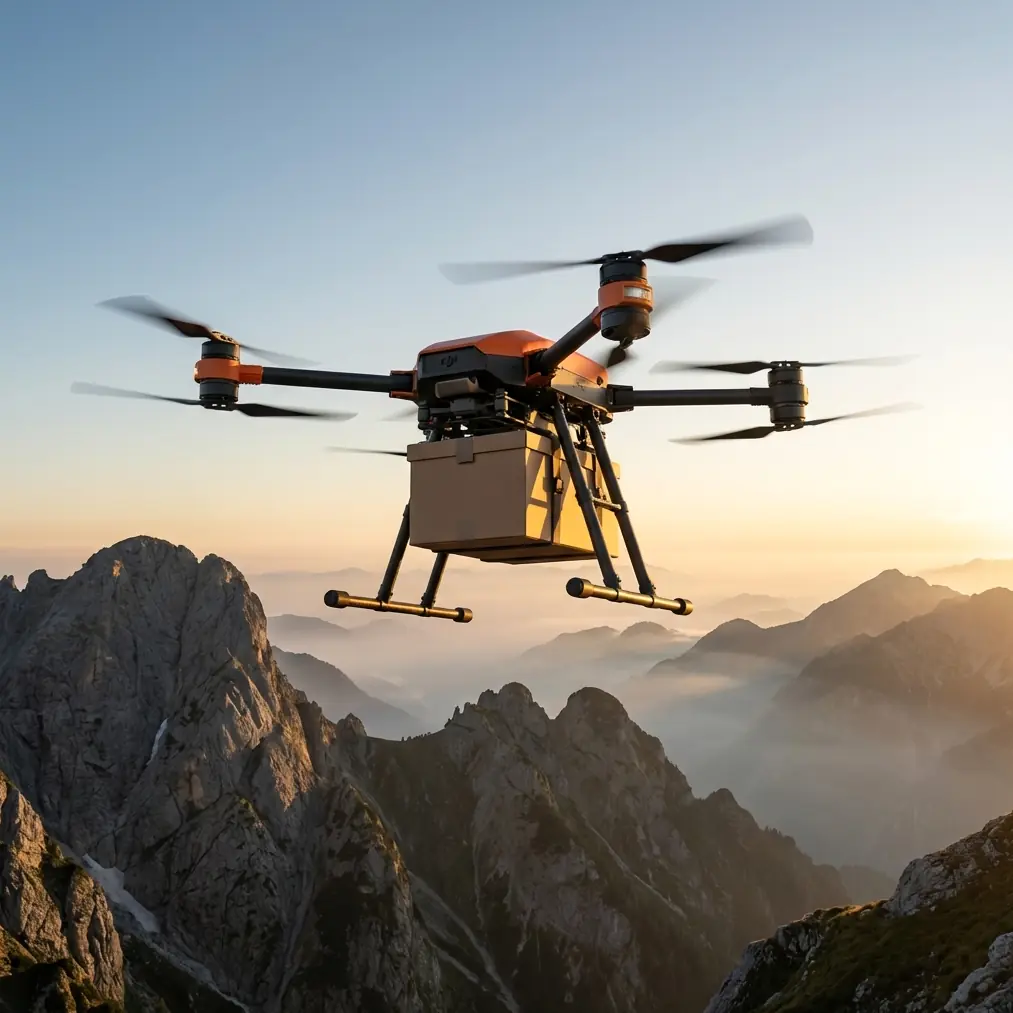
FlyCart 30 for Remote Vineyards: A Practical Field Guide to Smarter Tracking and Aerial Logistics
META: A field-driven guide to using FlyCart 30 in remote vineyards, with practical advice on flight altitude, route planning, payload handling, winch use, BVLOS workflows, and safer visual monitoring.
Remote vineyards create a strange mix of beauty and friction. Rows look orderly from the ground, but the work behind them rarely is. Uneven terrain, narrow access roads, patchy mobile coverage, long walking distances between blocks, and frequent pressure to move tools, samples, or urgent supplies without losing half a day in transit all add up fast.
That is where the FlyCart 30 starts to make sense.
Not as a novelty aircraft. Not as a substitute for every vehicle or field team. As a specific tool for a specific problem: keeping track of vineyard conditions and moving lightweight operational loads across difficult ground with less delay and more consistency. If you are managing remote vineyard blocks, the real value of the FC30 is not one headline spec. It is how several systems work together: payload ratio, dual-battery architecture, BVLOS-ready workflows, winch-based delivery, route optimization, and emergency parachute protection.
I’ll frame this from the perspective of a logistics lead because that is usually where the gains become visible first. If your job is to keep field operations moving while preserving safety and timing, the FlyCart 30 can become part of a repeatable vineyard workflow rather than a one-off aircraft mission.
Start with the actual vineyard problem
Most remote vineyard operations don’t need dramatic airlift. They need reliable small-mission execution.
Examples are familiar:
- moving replacement sensors to a weather station on a hard-to-reach slope
- carrying sampling kits between blocks
- sending irrigation parts or treatment tools to a crew without forcing a vehicle detour
- checking canopy development, edge conditions, drainage lines, or access paths after weather changes
- maintaining visual awareness across distant parcels during time-sensitive operations
For that reason, “tracking vineyards” should not be interpreted as only image collection. In practice, tracking is a blend of visual monitoring, supply movement, route discipline, and response speed. The FlyCart 30 sits at that intersection.
Why payload ratio matters more in vineyards than many operators expect
A lot of aircraft discussions focus on maximum payload as if that alone answers the logistics question. In vineyards, payload ratio often matters more.
Why? Because the loads are usually awkward rather than massive. A replacement valve, a compact field instrument, a few hand tools, a sample container, or a communications pack may not weigh much, but every kilogram changes battery strategy, route margin, and safe operating radius.
A strong payload ratio gives the FC30 practical flexibility. It allows you to carry loads that are meaningful enough to replace a ground trip, without pushing the aircraft into a narrow mission envelope every time. In remote vineyard settings, that reduces the number of “maybe we should just send the truck” decisions that kill efficiency.
The operational significance is simple: if the payload ratio is favorable, dispatch becomes easier to standardize. Teams stop treating each movement as an exceptional case and start treating it as a routine airborne handoff.
That matters in harvest windows, irrigation maintenance periods, and storm recovery. Routine beats improvisation every time.
The winch system changes how deliveries work on vineyard terrain
If your vineyard includes terraces, steep inclines, soft soil after rain, or rows with limited safe landing space, the winch system is one of the most useful features in the FC30 ecosystem.
A landing-based delivery sounds straightforward on paper. In vineyard reality, it can be the worst option. Ground conditions shift. Vegetation catches rotor wash. Workers may be close to the drop point. Surface slope may exceed what you are comfortable with. A suspended delivery solves a lot of that.
With a winch, the aircraft can remain clear of vines, posts, trellis lines, and uneven ground while lowering the load into a defined zone. That creates cleaner workflows for remote parcel resupply and reduces the pressure to identify perfect landing spots in every block.
Operationally, this matters in two ways.
First, it cuts turnaround time. You are not spending extra minutes setting up or securing a landing area every time a part or sample needs to move.
Second, it reduces disturbance. In vineyards, rotor wash is not just an inconvenience. It can affect loose materials, dust, and nearby work activity. Holding position above a controlled drop area and lowering cargo is often the cleaner method.
For teams building standard operating procedures, this is one of the clearest arguments for the FC30 in vineyard logistics.
Optimal flight altitude for vineyard tracking: practical guidance, not theory
Altitude is one of the most misunderstood parts of agricultural drone work. People often ask for a universal number. There isn’t one. There is only an altitude range that fits the task, terrain, and risk profile.
For remote vineyard tracking with the FlyCart 30, my default recommendation is to think in layers:
1. Broad situational tracking
For general block-to-block awareness, route verification, crew coordination, and surface-condition checks, a moderate altitude usually works best. In many vineyard environments, that means flying high enough to maintain a broad view of multiple rows and access paths, but low enough to preserve useful visual detail on canopy consistency, row interruption, pooling water, or track obstructions.
The sweet spot is often the lowest altitude that still gives you efficient coverage of the relevant block shape. If you fly too high, you lose task-specific detail. Too low, and you spend battery on unnecessary passes and tighter maneuvering.
2. Delivery corridor transit
For moving cargo between known points, altitude should prioritize obstacle clearance and route simplicity. Vineyard posts, utility lines, edge trees, and changing elevation all argue for a conservative margin. The best altitude is rarely the minimum legal or technical option. It is the one that leaves room for terrain variation and wind effects without wasting energy.
3. Precision drop or winch release
This is where you step down carefully. Once overhead conditions are confirmed and the drop zone is clear, lower only as much as needed for a stable, accurate handoff. The right answer depends on slope, obstacles, rotor wash sensitivity, and crew proximity.
In other words, the FC30 should not be locked into one altitude doctrine across the mission. Segment the route. Use one altitude for transit, another for observation, another for cargo handoff. That single shift in planning often improves both battery use and mission confidence.
Route optimization is where vineyard operators win back time
A remote vineyard is full of small inefficiencies that look harmless in isolation. One extra turn. One unnecessary crossing. One resupply mission launched too late. One visual check combined with the wrong cargo leg. By the end of a week, those small errors become labor loss.
Route optimization with the FlyCart 30 should be built around agricultural geography, not generic map lines.
That means:
- grouping flights by block priority rather than by request order
- aligning resupply missions with visual tracking tasks where safe and appropriate
- avoiding repeated climbs and descents across variable elevation if a contour-friendly route is available
- defining fixed loading and receiving points at the edge of operational zones
- treating weather exposure, especially wind along ridgelines, as part of route design rather than a day-of surprise
This is where BVLOS can become operationally relevant for larger or fragmented vineyard holdings. If your workflow and regulatory environment support beyond visual line of sight operations, BVLOS can allow the FC30 to connect remote blocks with less dependence on vehicle movement and less downtime between dispatch and delivery.
That does not mean “longer flights are always better.” It means route design can reflect the actual shape of the vineyard estate rather than the physical comfort zone of the nearest operator position.
Dual-battery architecture: reliability is the real vineyard benefit
Dual-battery systems are easy to reduce to one talking point: redundancy. That is true, but in vineyard operations the benefit is broader.
Remote agricultural work punishes fragile planning. A mission is rarely just a mission. It sits inside a chain of activity involving field crews, irrigation schedules, agronomy checks, weather timing, and road access. When an aircraft delay hits, it can ripple through the day.
Dual-battery architecture helps create a more stable operating rhythm. It supports mission continuity and gives operators more confidence when planning repeated dispatches into distant blocks. That confidence matters because vineyard work often includes time-compressed windows when delays are expensive even if no individual flight is dramatic.
From a logistics perspective, the significance is clear: a more resilient power system supports more dependable dispatch planning.
Dependable dispatch planning supports crew trust.
And crew trust is what turns a drone program from “interesting” into “useful.”
Emergency parachute systems are not just about compliance optics
Remote vineyards may seem forgiving compared with dense urban operations, but that assumption can create bad habits. Terrain shifts, winds funnel unpredictably, and crews may be spread out across rows or service roads. A cargo aircraft working above agricultural land still needs robust contingency thinking.
An emergency parachute system matters because it changes how risk is managed when a flight does not go as planned. For vineyard operators, its significance is practical, not cosmetic. It supports safer operations over uneven terrain and around distributed work zones, where a controlled emergency response can be the difference between a contained incident and a serious operational disruption.
The takeaway is not that the parachute replaces good planning. It doesn’t. The point is that the FC30’s safety stack should be used as part of layered risk control: route discipline, altitude segmentation, weather checks, load security, clear receiving zones, trained personnel, and emergency systems working together.
A surprisingly useful lesson from composition theory
One recent photography piece published on 2026-04-15 by 御空逐影 described two visual composition methods in plain terms: centering the subject to create stability, and placing a subject along a diagonal to increase fullness and visual impact.
At first glance, that sounds far removed from a heavy-lift logistics drone. It isn’t.
Those same visual principles can help FC30 operators track vineyards more effectively during observation passes.
A centered framing mindset is useful when you need stable visual confirmation of a fixed target: a transfer point, irrigation node, weather station, or crew receiving area. Keeping the subject centered supports clean verification before a winch drop or site check.
The diagonal principle is useful in vineyard monitoring because rows naturally create diagonal energy across a frame, especially on slopes. If you align your observation angle so the vineyard structure runs diagonally through the image, you often gain a stronger sense of row continuity, interruptions, erosion pathways, and terrain shape. That translates into faster visual interpretation, not prettier footage for its own sake.
This is one of those small field insights that operators remember once they see it in practice. Stable center views for confirmation. Diagonal row views for reading the landscape.
The photography article was about portraits, but the operational logic carries over.
Build a repeatable vineyard workflow
If I were deploying the FlyCart 30 for remote vineyard tracking, I would build the operating day like this:
Morning route review
Confirm weather, elevation-sensitive segments, battery readiness, and priority blocks.Task separation by mission type
Split visual tracking, cargo transfer, and urgent-response flights. Do not force one route to do everything unless it genuinely saves time.Altitude plan by segment
Decide transit height, observation height, and delivery height in advance.Fixed handoff points
Standardize loading and receiving areas to reduce confusion in the field.Winch-first logic where terrain is uncertain
Use suspended delivery whenever landing conditions add avoidable risk.Visual framing discipline
Use centered views for target confirmation and diagonal views for row-reading during monitoring passes.Post-flight route refinement
Track where the FC30 actually saved time, where it lost time, and where battery use climbed unexpectedly.
That last step is where route optimization becomes real. Not in software menus. In comparing planned efficiency against field reality.
If your team is evaluating what that might look like on a specific property, it often helps to discuss block layout, delivery points, and communication gaps with someone who has done logistics planning before. A direct field conversation can save weeks of trial and error: message a FlyCart workflow specialist.
The real value of FlyCart 30 in remote vineyards
The FC30 is most effective in vineyards when it is treated as an operational bridge.
A bridge between distant blocks.
A bridge between observation and action.
A bridge between crew demand and supply response.
Its winch system matters because vineyard ground conditions are rarely ideal. Its dual-battery design matters because remote operations punish uncertainty. BVLOS potential matters because vineyard holdings are often spread across terrain that does not respect simple line-of-sight assumptions. Emergency parachute capability matters because rural does not mean risk-free. And payload ratio matters because what saves time in the field is not abstract capacity, but the ability to carry the right item at the right moment without turning every mission into an edge case.
If you are tracking vineyards in remote areas, the best altitude is not a fixed number copied from a manual. It is a planned variable tied to task, terrain, and safety margin. The best route is not the shortest line. It is the one that reduces friction across the full operating day.
That is how the FlyCart 30 earns its place in a vineyard program: not by replacing everything on the ground, but by solving the costly gaps the ground team deals with every day.
Ready for your own FlyCart 30? Contact our team for expert consultation.