
FlyCart 30 in Vineyard Terrain: What Actually Matters When
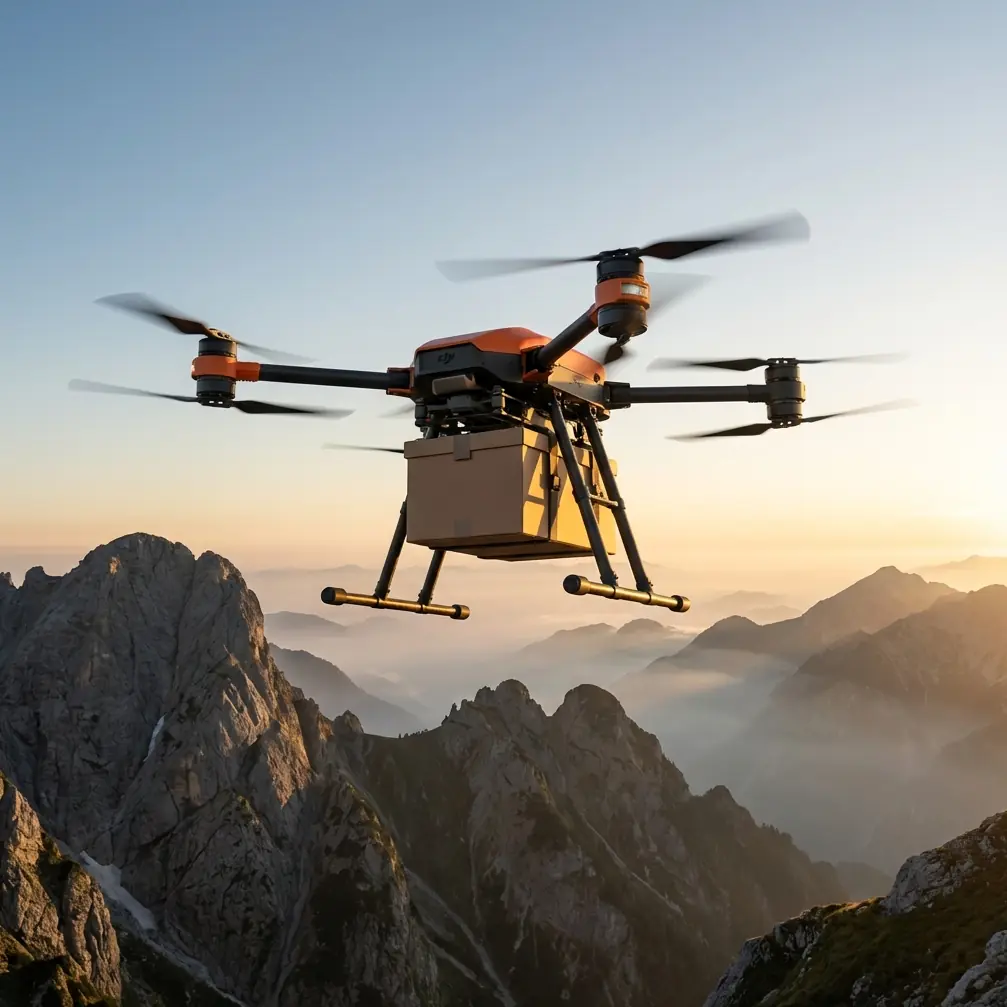
FlyCart 30 in Vineyard Terrain: What Actually Matters When the Ground Won’t Cooperate
META: A field-driven FlyCart 30 case study for vineyard operations in complex terrain, covering route planning, antenna positioning, winch use, dual-battery considerations, payload ratio, and safer long-range workflow.
Vineyards look orderly from a distance. Walk them in person and the illusion disappears fast.
Terraces break line of sight. Rows bend around slopes. Access tracks narrow into loose gravel. Elevation shifts turn a simple transport task into a stop-start exercise in patience. For teams moving tools, sensors, samples, maintenance parts, or field supplies across this kind of ground, the challenge is rarely just lift capacity. The real issue is consistency under terrain pressure.
That is where the FlyCart 30 becomes interesting.
I’m writing this from the perspective of a logistics lead, because that’s the lens that matters here. In vineyard work, equipment only proves its value when it reduces friction across an entire day of operations. Not when it looks impressive on a spec sheet. Not when it performs perfectly on open flat land. The question is simpler: can it help a crew keep moving when terrain works against every handoff?
For complex vineyard tracking and supply movement, the FlyCart 30 stands out less as a “heavy drone” and more as a terrain management tool. That distinction matters.
The operational problem in vineyards is not distance alone
People often talk about range first. In hilly vineyard blocks, range is only half the story. A route can be geographically short yet operationally difficult because the aircraft, operator position, and receiving point are constantly fighting for clean signal geometry.
That is why antenna positioning deserves more attention than it usually gets.
If you are tracking operations across complex terrain, maximum range is rarely achieved by simply standing at the nearest edge of the field. It comes from choosing an operator location with the best line-of-sight profile to the intended route. In practice, that often means climbing slightly higher than feels convenient, stepping away from vehicles and metal infrastructure, and orienting the antenna field toward the route corridor rather than the destination alone.
In vineyards with rolling topography, I advise teams to think of antennas as part of route design, not as an afterthought. A poor operator position can create avoidable dropouts over a short leg. A smart one can stabilize a much longer mission path. That has direct implications for BVLOS-style workflow planning, even where actual regulatory approval and site rules will define what is allowed. The point is operational: if the terrain blocks your signal path, your aircraft’s theoretical capability doesn’t help you much.
This is where route optimization and antenna strategy meet. The best route is not always the straight line. It is often the path with the cleanest communication envelope and the least terrain masking.
Why the winch system changes vineyard logistics
In steep or irregular vineyard sections, landing is often the least elegant part of the job.
Ground clearance can be uneven. Dust and loose leaves interfere with stable touchdown zones. Workers may be positioned on narrow terraces with limited space to receive anything safely. In those situations, the winch system becomes more than a convenience. It changes the delivery method entirely.
Instead of forcing a landing in compromised terrain, the aircraft can hold a safer hover position and lower cargo into the working area. That reduces rotor wash impact near vines and minimizes the need to search for makeshift landing spots. For vineyard operations, this matters because the terrain is not just difficult; it is often biologically sensitive. You don’t want repeated landings where roots, irrigation lines, or fragile row edges can be disturbed.
A winch-based workflow is also easier to standardize. Crews can define a receiving zone, train around that zone, and repeat the same handling procedure block after block. Predictability is a logistics multiplier. It reduces the little errors that eat time.
If your vineyard team is moving monitoring equipment, replacement parts, field tools, or collected samples, a winch delivery profile can be more useful than simple point-to-point drop capacity. The aircraft doesn’t just carry. It adapts to the handoff environment.
Payload ratio is not a vanity metric
A lot of conversations around cargo drones become fixated on maximum payload in isolation. That misses the practical question vineyard managers should ask: what payload ratio can you sustain while still preserving route reliability, battery margin, and task repetition?
Payload ratio matters because vineyard logistics usually involve repeated missions, not one dramatic lift. You may need to move smaller loads to several blocks, support technicians on a ridge, then return with samples or empty containers. A platform that carries efficiently within a realistic operating rhythm beats a machine that looks powerful only in ideal conditions.
For the FlyCart 30, the useful discussion is how its payload ratio fits a day of actual field work. In complex terrain, every extra kilogram influences flight profile, climb behavior, battery draw, and safety margin. That is why route optimization should always be linked to load planning. If one route segment climbs hard over a ridge and another can contour around it with better signal and lower energy demand, the second route may be the smarter choice even if it adds some travel time.
This is also why logistics teams should classify payloads before deployment. Emergency maintenance parts, spray system components, irrigation sensors, mapping kits, and sample containers all place different demands on the airframe and on turnaround planning. Once the categories are clear, the aircraft’s role becomes easier to structure.
Dual-battery thinking is about uptime, not just redundancy
When people hear “dual-battery,” they often think first about backup. That is understandable, but in the field the bigger story is operational continuity.
Vineyard work rarely unfolds in a clean, uninterrupted sequence. Conditions change. Priorities shift. A crew on one slope suddenly needs a tool first. A sensor issue on a distant row becomes urgent. When you’re managing those moving parts, dual-battery architecture supports a more stable mission rhythm by giving the platform a stronger foundation for repeated sorties and safer planning margins.
That matters especially in terrain where every route has hidden costs. Climb gradients, wind exposure along ridge lines, and signal management all compound battery demand. A platform built around robust power management gives the operator more flexibility to adjust routes without immediately compromising the day’s schedule.
The practical takeaway is simple: don’t treat battery planning as a fixed number exercise. Treat it as a terrain-adjusted resource model. Build your flight plan around route shape, elevation changes, and delivery method, then evaluate battery margin with those variables in mind.
Emergency parachute systems are operationally meaningful in agricultural settings
Safety features are easy to mention and easy to forget. In agriculture, that is a mistake.
An emergency parachute system matters in vineyards because flights often take place over uneven ground where recovery options are limited and where workers, trellises, and plant rows create a busy operating environment. The presence of a parachute system does not remove the need for disciplined planning, but it does strengthen the broader safety framework around commercial deployment.
That is operationally significant for two reasons.
First, it helps risk managers and site supervisors think in terms of layered mitigation rather than single-point confidence. Second, it supports adoption. Vineyard owners and field teams are far more likely to accept repeated drone logistics when they understand the platform includes dedicated safety mechanisms rather than relying solely on pilot skill.
In other words, the emergency parachute is not just a technical feature. It is part of the trust architecture that makes routine agricultural drone use viable.
A case study mindset: tracking a vineyard across broken terrain
Let’s frame this in a realistic scenario.
A vineyard spans multiple elevation bands. The lower blocks are accessible by vehicle, but the upper sections require a long detour on rough tracks. The operations team needs to support monitoring staff carrying lightweight field instruments, retrieve sample containers from several points, and keep maintenance crews supplied without pulling vehicles repeatedly across the site.
Here’s how I would structure the FlyCart 30 workflow.
The first step is not loading cargo. It is route reconnaissance. Identify where terrain causes signal shadowing. Find the ridgelines, tree stands, structures, and slope breaks that affect line of sight. Then choose the antenna position based on route visibility, not operator convenience. In many cases, a central elevated staging point will outperform an edge-based position even if it means more setup effort.
The second step is route optimization by mission type. A direct route may work for outbound tools but not for return trips carrying samples if wind or climb angle changes the energy profile. Build separate corridors if needed. There is no prize for forcing symmetry onto an asymmetric landscape.
The third step is delivery method selection. If upper blocks have unstable landing surfaces, use the winch system as the standard receiving method rather than improvising from mission to mission. Standardization reduces crew confusion and supports safer handoffs.
The fourth step is power discipline. Use the dual-battery capability as part of an uptime strategy, but still brief every sortie around terrain-adjusted battery thresholds. Vineyards create deceptive routes. A path that feels short on the map can demand more power than expected once the aircraft has to climb, reposition, or hold during a winch drop.
The fifth step is safety layering. Emergency parachute awareness, exclusion zones around receiving areas, and clear worker communication protocols should be built into the operating routine, not added later after the first near-miss or confusion event.
That is what a mature FlyCart 30 deployment looks like in agriculture. Not a single dramatic mission. A repeatable chain.
What the reference material quietly gets right
The source material behind this article is not about heavy-lift drones at all. It is a beginner-friendly smartphone video piece published on 2026-05-05, and its central claim is almost disarmingly simple: people often create stiff, lifeless footage because they rely on fixed shots, while three basic movement techniques can make results look far better without a gimbal or complex editing.
On the surface, that has nothing to do with the FlyCart 30.
Operationally, it has everything to do with it.
The source points out two details worth borrowing. First, static positioning often produces rigid, underwhelming results. Second, sophisticated outcomes do not always require more hardware; sometimes they come from improving movement strategy.
That logic translates directly to vineyard drone logistics. Teams often assume that difficult terrain demands brute-force solutions: larger support crews, more vehicle movement, or simply accepting delays. But many of the biggest improvements come from motion design, not equipment escalation. Adjust the route. Adjust the antenna position. Adjust the handoff method with a winch instead of forcing a landing. The result is a smoother operation without unnecessary complexity.
The analogy is stronger than it looks. A beginner filming with a phone gets better footage by introducing intentional movement. A vineyard logistics team gets better drone performance by introducing intentional route geometry. In both cases, the breakthrough is not magic. It is structure.
That matters for decision-makers evaluating the FlyCart 30. The platform’s value in complex terrain is not just that it can carry load. It is that it rewards thoughtful operational design.
Practical antenna positioning advice for maximum range
Since this point deserves specificity, here is the distilled field advice:
- Choose the highest practical control position with the cleanest visual corridor toward the route.
- Avoid standing directly beside trucks, steel sheds, dense fencing, or other structures that can interfere with signal quality.
- Aim the antenna coverage toward the full mission corridor, not just the far endpoint.
- Test short route segments first to identify terrain shadow zones before committing to repeated longer flights.
- If the vineyard has multiple elevation basins, consider relocating the control point between mission clusters rather than forcing one compromised position to cover the entire estate.
That last point is often the difference between a smooth day and a frustrating one. Maximum range is not purely a device property. In hilly agriculture, it is partly a staging decision.
If you’re comparing layouts for a specific site and want a practical second opinion, this FlyCart 30 field planning channel can be useful for discussing route shape and antenna placement before deployment.
Why this platform fits vineyard tracking better than a generic drone discussion
A generic drone overview won’t help much when your rows step down a hillside and your team is spread across several blocks. What matters is whether the aircraft’s systems line up with the real pain points of the site.
For vineyard terrain, the FlyCart 30 makes sense when you look at the pairing of features with field constraints:
- The winch system addresses awkward receiving zones.
- Dual-battery design supports repeated agricultural sorties with stronger planning margins.
- An emergency parachute contributes to safer routine operation over busy and uneven work areas.
- Payload ratio becomes useful when treated as part of route and battery planning, not as a standalone boast.
- BVLOS-style thinking, where permitted and properly governed, becomes relevant because line of sight in vineyards is often disrupted by terrain rather than raw distance.
That is the right way to evaluate the platform. Through the operational bottlenecks it removes.
In a flat test field, many drones can look capable. In a vineyard cut into difficult ground, capability is revealed by how well the aircraft handles imperfect handoffs, interrupted sightlines, repeated lift cycles, and the need for disciplined route structure.
That is where the FlyCart 30 earns serious attention.
Ready for your own FlyCart 30? Contact our team for expert consultation.