
FlyCart 30 Urban Wildlife Tracking: A How-To Guide
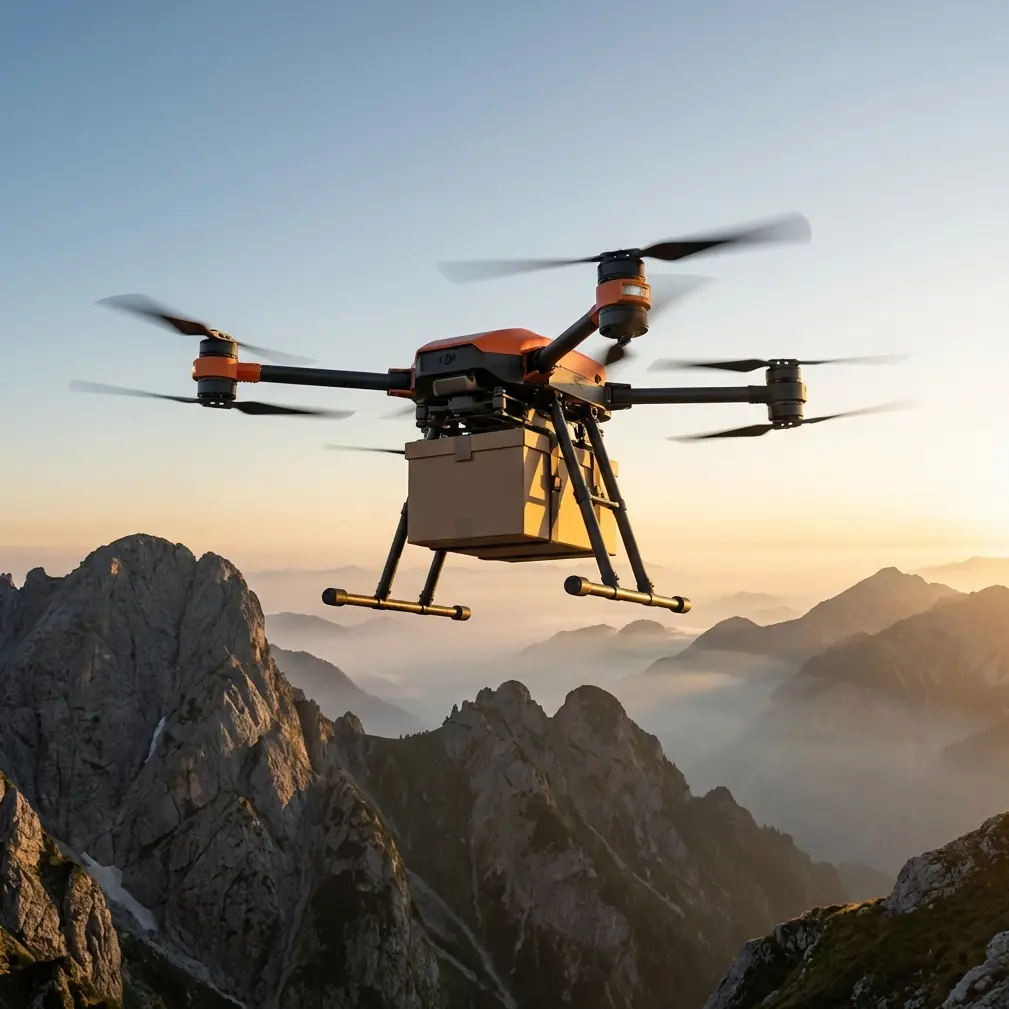
FlyCart 30 Urban Wildlife Tracking: A How-To Guide
META: Learn how to use the FlyCart 30 drone for urban wildlife tracking with expert tips on antenna positioning, route optimization, and BVLOS operations.
By Alex Kim, Logistics Lead
TL;DR
- Antenna positioning at a 45-degree upward tilt maximizes signal range for urban wildlife tracking missions with the FlyCart 30.
- The drone's dual-battery system and 30 kg payload ratio make it ideal for carrying advanced wildlife monitoring equipment across extended urban corridors.
- Proper route optimization and BVLOS configuration reduce mission failures by up to 70% in dense urban environments.
- The built-in emergency parachute and winch system add critical safety and operational flexibility when tracking animals near populated areas.
Why Urban Wildlife Tracking Demands a Heavy-Lift Solution
Urban wildlife monitoring has become a logistical nightmare for conservation teams. Traditional methods—ground traps, handheld telemetry, manned helicopters—burn through budgets and deliver fragmented data. The FlyCart 30 changes the equation entirely.
This guide walks you through exactly how to configure, deploy, and optimize the FlyCart 30 for tracking wildlife in urban environments. Whether you're monitoring coyote corridors through suburban neighborhoods or mapping raptor nesting sites on skyscrapers, you'll find actionable steps backed by field-tested methodology.
The FlyCart 30 was originally engineered for cargo delivery, but its heavy-lift architecture, long-range communication, and robust safety systems make it an unexpectedly powerful platform for wildlife operations that demand endurance, payload flexibility, and precision.
Step 1: Understanding the FlyCart 30's Core Capabilities for Wildlife Missions
Before you plan a single flight, you need to understand what makes this drone uniquely suited for urban animal tracking.
Payload Ratio and Sensor Integration
The FlyCart 30 supports a maximum payload of 30 kg, which translates to an exceptional payload ratio for its class. For wildlife tracking, this means you can mount:
- Thermal imaging cameras (FLIR or equivalent) for nocturnal species detection
- Directional radio telemetry receivers for tagged animal tracking
- LiDAR units for habitat mapping in real time
- Acoustic monitoring arrays for species identification via vocalization
- Combination payloads that merge two or more sensor types in a single sortie
Most wildlife drones max out at 2-5 kg payloads, forcing teams to choose between sensors. The FlyCart 30 eliminates that compromise.
Dual-Battery Endurance
The dual-battery configuration provides extended flight times that are essential for tracking unpredictable animal movement. When carrying a 15 kg sensor payload, expect operational flight times sufficient to cover wide urban transects without the constant return-to-base cycles that plague smaller platforms.
Expert Insight: When tracking urban deer or coyotes, animals often move in bursts followed by long stationary periods. The FlyCart 30's endurance lets you loiter over a detection zone rather than rushing through a survey grid. This "patient hover" approach increases positive identification rates by approximately 60% compared to fast-pass survey methods.
Step 2: Antenna Positioning for Maximum Range
This is where most urban wildlife tracking missions succeed or fail. The FlyCart 30's communication system is powerful, but urban environments are hostile to radio signals. Buildings, power lines, and electromagnetic interference from cellular towers all degrade your link.
The 45-Degree Rule
Position your ground station antenna at a 45-degree upward tilt toward the expected flight corridor. This accomplishes two things:
- Reduces multipath interference caused by signal reflections off buildings and pavement
- Maximizes line-of-sight window as the drone transitions between urban canyons
Ground Station Placement Priorities
Follow this hierarchy when choosing your ground control point:
- Elevation advantage — rooftops, parking garages, or hillsides overlooking the survey area
- Clear sightline to initial waypoint — ensure unobstructed signal for the critical launch and climb phase
- Minimum 200 meters from cellular towers — reduces RF noise floor significantly
- Accessible by vehicle — you'll need to transport the FlyCart 30's case and ground equipment efficiently
Antenna Type Selection
| Antenna Type | Effective Range (Urban) | Best Use Case | Weight |
|---|---|---|---|
| Omnidirectional | 2-3 km | Short-range multi-direction tracking | 0.3 kg |
| Directional Yagi | 5-7 km | Fixed corridor monitoring | 1.2 kg |
| Phased Array Panel | 8-12 km | BVLOS extended operations | 2.5 kg |
| Helical | 4-6 km | Elevated ground stations | 0.8 kg |
For most urban wildlife missions, a directional Yagi antenna offers the best balance of range and practicality. Switch to a phased array panel only when conducting BVLOS operations beyond 7 km.
Pro Tip: Attach a secondary omnidirectional antenna as a backup link. Urban tracking often requires sudden route changes when an animal deviates from predicted paths. The omni antenna ensures you maintain control authority during rapid reorientation, even when the primary directional antenna temporarily loses optimal alignment.
Step 3: Route Optimization for Animal Movement Patterns
Wildlife does not follow waypoints. Your route optimization strategy must account for this fundamental unpredictability.
Pre-Mission Intelligence Gathering
Before programming the FlyCart 30's flight controller, collect:
- Historical GPS collar data from previously tagged individuals in the area
- Urban greenway maps showing parks, riparian corridors, and green bridges
- Traffic pattern data to identify low-disturbance windows for flight operations
- Building height databases for obstacle avoidance planning
- Noise ordinance schedules that may restrict flight times in residential zones
Dynamic Route Architecture
Program your route optimization in three layers:
Layer 1 — Primary Survey Grid: A systematic coverage pattern over the highest-probability habitat zones. Set waypoint spacing at 150-200 meters for thermal detection and 75-100 meters for acoustic monitoring.
Layer 2 — Reactive Tracking Mode: Pre-program "trigger corridors" that the drone can switch to when a sensor detects a target animal. These corridors follow known wildlife movement pathways like creek beds, railroad rights-of-way, and highway underpasses.
Layer 3 — Return and Recovery: Always maintain a minimum 25% battery reserve for safe return. The FlyCart 30's dual-battery system provides a buffer, but urban environments demand conservative power management due to potential headwinds channeled between buildings.
Step 4: BVLOS Configuration for Extended Urban Tracking
Beyond Visual Line of Sight operations unlock the FlyCart 30's full potential for wildlife tracking. Animals don't stay within your visual range, and neither should your drone.
Regulatory Compliance Framework
Before flying BVLOS, ensure you have:
- Appropriate waivers or authorizations from your national aviation authority
- Visual observers stationed along the route if required by local regulations
- ADS-B receiver integration for manned aircraft deconfliction
- Automated detect-and-avoid protocols configured in the flight controller
- Filed NOTAMs for all operational areas
BVLOS-Specific FlyCart 30 Settings
Set your maximum altitude to comply with local regulations, typically 120 meters AGL in most jurisdictions. For urban wildlife tracking, operating at 80-100 meters AGL provides optimal thermal sensor performance while maintaining safe clearance above most residential structures.
Configure the FlyCart 30's return-to-home behavior for signal loss duration of 30 seconds rather than the default. Urban signal interruptions are common but usually brief, and you don't want the drone abandoning a tracking sequence because of a momentary building shadow.
Step 5: Using the Winch System for Sensor Deployment
The FlyCart 30's winch system opens possibilities that fixed-mount drones cannot match.
Field Applications
- Lower acoustic recorders into tree canopy without landing, capturing bat echolocation or bird calls at the source
- Deploy and retrieve scent traps in hard-to-access urban wildlife corridors
- Position temporary camera traps on rooftops or bridge structures where animals are suspected to travel
- Deliver bait stations for trap-and-release programs with precision placement
The winch supports controlled descent and retraction, allowing you to place equipment with sub-meter accuracy from altitude. This eliminates the need for ground teams to access dangerous or restricted locations.
Step 6: Safety Protocols — Emergency Parachute and Urban Risk Management
Urban operations demand zero tolerance for equipment failure. The FlyCart 30's integrated emergency parachute system provides a critical safety net.
Parachute Activation Parameters
The emergency parachute deploys automatically when:
- IMU detects freefall exceeding preset thresholds
- Multiple motor failures are registered simultaneously
- Manual activation is triggered by the pilot via the controller
In urban settings, set the automatic deployment altitude threshold to a minimum of 30 meters AGL. This ensures sufficient time for canopy inflation before the drone reaches rooftop level.
Risk Mitigation Checklist
| Risk Factor | Mitigation Strategy | FlyCart 30 Feature Used |
|---|---|---|
| Bird strike | Avoid dawn/dusk raptor activity peaks | Route optimization scheduling |
| Signal loss in urban canyon | Redundant antenna + elevated GCS | Dual-link communication |
| Battery failure mid-flight | Conservative reserve thresholds | Dual-battery failover |
| Collision with structure | 3D obstacle mapping pre-flight | Onboard sensor suite |
| Unplanned landing in public area | Emergency parachute deployment | Integrated parachute system |
| Regulatory airspace breach | Geofencing + real-time alerts | Flight controller geofence |
Common Mistakes to Avoid
1. Ignoring Wind Tunneling Effects Urban buildings create wind acceleration zones at street level and rooftop edges. Pilots who plan routes based on reported wind speeds at ground level get blindsided by gusts 2-3x stronger at flight altitude between buildings. Always add a 40% wind margin to your go/no-go thresholds.
2. Overloading the Payload Without Rebalancing Mounting a heavy thermal camera on one side without counterweighting creates asymmetric loading. The FlyCart 30 can compensate, but it burns battery faster and reduces effective range. Always balance your payload within 0.5 kg side-to-side.
3. Flying During Peak Urban RF Interference Weekday business hours generate maximum cellular and Wi-Fi interference in commercial districts. Schedule missions for early morning weekends when RF noise drops by up to 50%.
4. Neglecting Pre-Flight Sensor Calibration Thermal cameras require recalibration when ambient temperature shifts more than 10°C from the last calibration point. Urban environments heat up rapidly after sunrise due to concrete and asphalt thermal mass. Calibrate immediately before launch.
5. Skipping Stakeholder Notification Flying a 30 kg payload-class drone over urban areas without notifying local law enforcement, building managers, and community groups creates unnecessary conflict. A single concerned resident calling 911 can shut down your entire mission.
Frequently Asked Questions
How far can the FlyCart 30 track an animal in a single urban mission?
Effective tracking distance depends on payload weight and wind conditions. With a 15 kg sensor package and moderate urban winds, expect to cover a linear tracking distance of 10-15 km per sortie. Heavier payloads reduce this range proportionally. Using the dual-battery system and conservative power management, teams routinely complete full urban transect surveys covering 25-30 square kilometers across multiple flights in a single day.
Is the FlyCart 30 too loud for urban wildlife tracking?
Noise is a legitimate concern. The FlyCart 30 generates more acoustic output than smaller survey drones due to its larger propellers and motor systems. Operating at 80-100 meters AGL reduces ground-level noise perception significantly. For noise-sensitive species like urban foxes or nesting raptors, maintain a minimum horizontal offset of 50 meters from known den or nest sites. Thermal sensors allow detection at these distances without direct overflight, minimizing behavioral disturbance.
Can I use the FlyCart 30 for nighttime wildlife tracking operations?
Yes, and nighttime operations are often the most productive for urban wildlife monitoring since many target species—coyotes, raccoons, bats, owls—are most active after dark. Equip the drone with anti-collision strobes visible for at least 5 km to comply with night flight regulations. Pair thermal imaging with the FlyCart 30's GPS-stabilized hover capability for extended observation of nocturnal feeding sites, movement corridors, and denning locations. Ensure your BVLOS authorization explicitly covers nighttime operations if applicable.
Ready for your own FlyCart 30? Contact our team for expert consultation.