
FlyCart 30 Beginner Guide: Mastering Forest Cargo Delivery in Complex Terrain
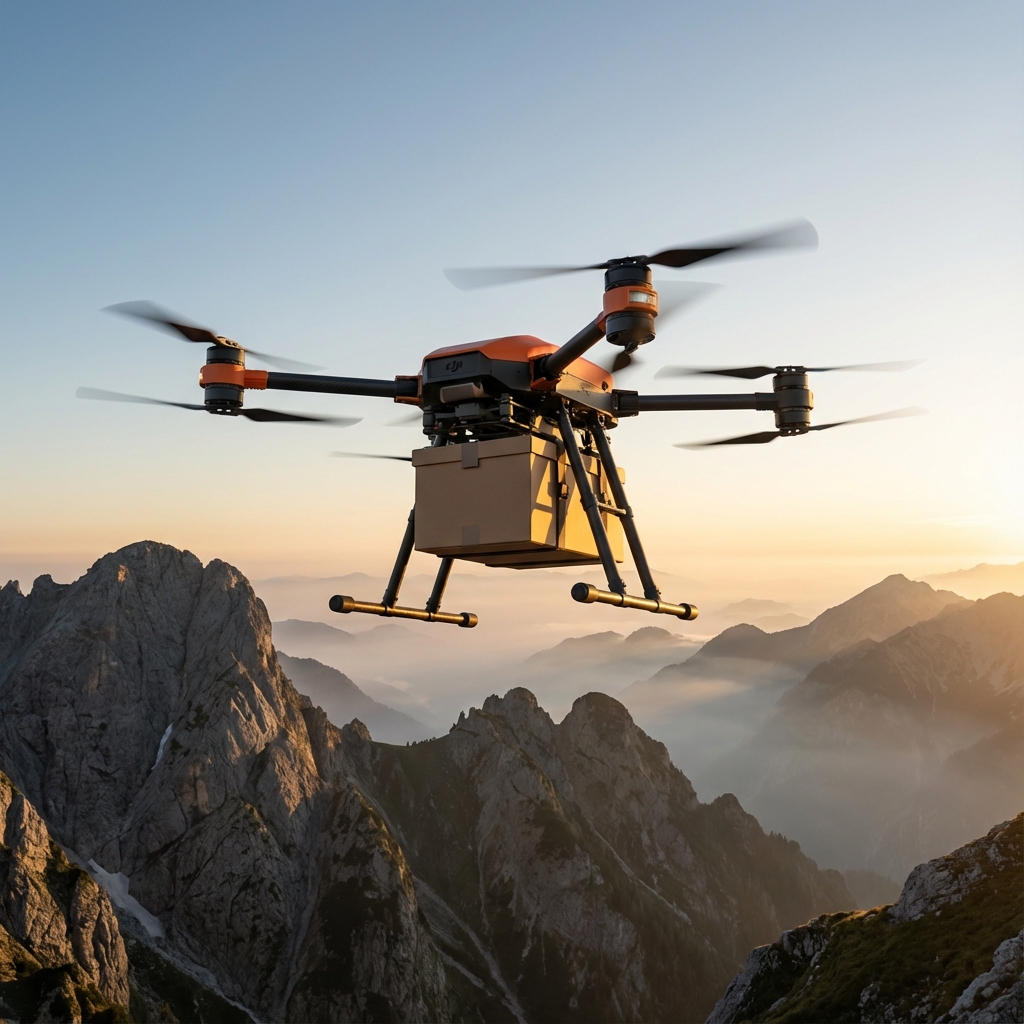
FlyCart 30 Beginner Guide: Mastering Forest Cargo Delivery in Complex Terrain
TL;DR
- The FlyCart 30 delivers 30kg payloads across challenging forest environments with dual-battery redundancy and IP55 weather protection
- Pre-flight sensor cleaning—especially the obstacle avoidance cameras—directly impacts emergency system response times in dense canopy operations
- The integrated winch system enables precision cargo drops without requiring landing clearance in rugged terrain
- Beginners should master route optimization fundamentals before attempting Beyond Visual Line of Sight (BVLOS) forest missions
Forest terrain presents some of the most demanding conditions for cargo drone operations. Unpredictable updrafts, dense canopy interference, and limited emergency landing zones create an environment where equipment reliability separates successful missions from costly failures.
The DJI FlyCart 30 was engineered specifically for these scenarios. This technical review breaks down exactly how beginners can leverage this delivery platform for forest cargo operations—from essential pre-flight protocols to advanced route planning strategies.
Understanding the FlyCart 30's Forest-Ready Architecture
The FlyCart 30 represents a purpose-built approach to heavy-lift cargo delivery. Unlike consumer drones adapted for commercial use, every system component addresses real-world logistics challenges.
Core Specifications for Forest Operations
| Specification | Value | Forest Relevance |
|---|---|---|
| Maximum Payload | 30kg (Dual Battery) | Handles emergency supplies, equipment, research gear |
| Flight Time | 28 minutes | Sufficient for most forest penetration missions |
| Weather Rating | IP55 | Operates through rain, humidity, dust common in forests |
| Safety Systems | Emergency Parachute | Critical backup for canopy-adjacent operations |
| Delivery Method | Winch System | Enables drops without ground clearance |
| Redundancy | Dual-battery system | Maintains operation if single battery fails |
The payload-to-weight ratio of the FlyCart 30 stands out among delivery platforms. This metric determines how efficiently the aircraft converts power into useful cargo capacity—a critical factor when planning multi-stop forest supply runs.
Expert Insight: After operating delivery drones across Pacific Northwest timber operations for three years, I've found that the dual-battery redundancy isn't just a safety feature—it's an operational enabler. Forest missions frequently encounter unexpected headwinds above the canopy line. That redundancy means you plan routes based on realistic conditions, not worst-case battery scenarios.
The Pre-Flight Cleaning Protocol That Protects Your Mission
Here's something most beginner guides skip entirely: the direct relationship between sensor cleanliness and emergency system performance.
The FlyCart 30's obstacle avoidance system, emergency parachute deployment triggers, and automated return-to-home functions all depend on clean sensor arrays. Forest operations expose these sensors to:
- Pollen and organic particulates
- Morning dew and condensation
- Fine dust from logging roads
- Sap residue from low-altitude canopy passes
The 90-Second Sensor Cleaning Checklist
Before every forest mission, complete this sequence:
- Forward vision sensors: Use a microfiber cloth with gentle circular motions—never apply pressure
- Downward positioning sensors: Check for debris accumulation around the ultrasonic modules
- GPS antenna housing: Wipe clean to ensure satellite acquisition isn't degraded
- Parachute deployment sensor window: This small optical sensor triggers emergency deployment—contamination here delays response by critical milliseconds
- Battery contact points: Forest humidity accelerates oxidation; clean contacts ensure proper power delivery
This protocol takes 90 seconds and directly impacts whether safety features operate at 100% efficiency when you need them most.
Pro Tip: Carry a dedicated sensor cleaning kit in your flight case. I use a soft-bristle brush for initial debris removal, followed by lens-specific microfiber cloths. Never use compressed air—it can force particles deeper into sensor housings.
Route Optimization Fundamentals for Forest Terrain
Effective route optimization in forest environments requires understanding three-dimensional airspace in ways that open-terrain operations never demand.
Vertical Profile Planning
Forest missions involve distinct altitude zones:
- Below canopy (under 30m): Maximum GPS interference, highest obstacle density, but protected from wind
- Canopy transition (30-50m): Turbulent zone where wind meets tree resistance—avoid hovering here
- Above canopy (50m+): Clean GPS signal, predictable winds, but full weather exposure
The FlyCart 30's 28-minute flight time requires careful altitude planning. Climbing and descending consume significant battery—optimize your vertical transitions to preserve payload capacity for horizontal distance.
Waypoint Strategy for Complex Terrain
When planning forest delivery routes:
- Set waypoints at natural terrain features (ridgelines, clearings, water bodies) for visual reference
- Build in 15% battery reserve beyond calculated requirements
- Identify emergency landing zones every 2km along your route
- Account for the winch system deployment time when calculating hover duration at delivery points
The winch system transforms delivery possibilities in forest terrain. Traditional landing-based delivery requires cleared zones of at least 10m diameter. The FlyCart 30's winch enables precision cargo placement through canopy gaps as narrow as 3m—assuming proper pilot training and favorable wind conditions.
Common Pitfalls: What Forest Delivery Beginners Get Wrong
Even experienced drone operators make predictable mistakes when transitioning to forest cargo missions. Recognizing these patterns accelerates your learning curve.
Environmental Misjudgments
Underestimating canopy wind effects: Ground-level wind readings mean nothing for above-canopy operations. Trees create turbulent boundary layers that can exceed surface winds by 300%. Always obtain wind data at your planned cruise altitude.
Ignoring humidity impacts on flight time: The FlyCart 30's motors work harder in humid air. Expect 8-12% reduced flight time during high-humidity forest operations compared to manufacturer specifications tested in controlled conditions.
Misjudging GPS reliability: Dense forest canopy degrades GPS accuracy. The FlyCart 30's redundant positioning systems compensate well, but beginners often plan routes assuming open-sky GPS precision. Build wider margins around obstacles.
Operational Errors
Rushing the pre-flight sequence: The temptation to skip sensor cleaning or abbreviated system checks increases with experience. Resist this. Forest environments punish complacency.
Overloading on initial missions: The 30kg payload capacity represents maximum capability, not recommended starting point. Begin with 50-60% payload until you understand how your specific forest environment affects performance.
Neglecting return-path planning: Outbound routes through forests rarely work as return paths. Wind direction changes, lighting shifts, and thermal patterns evolve throughout the day. Plan distinct return routes.
Regulatory Oversights
Assuming BVLOS authorization covers all scenarios: Beyond Visual Line of Sight operations require specific approvals that vary by jurisdiction and forest classification. National forests, private timber land, and state parks each have distinct requirements.
Forgetting wildlife considerations: Many forest areas have seasonal restrictions protecting nesting birds or sensitive species. Verify current restrictions before every mission—they change frequently.
Mastering the Winch System for Precision Forest Delivery
The FlyCart 30's winch system deserves dedicated attention for forest operations. This capability fundamentally changes what's possible in complex terrain.
Winch Deployment Best Practices
The winch enables cargo delivery without landing—essential when ground conditions are unsuitable or access is restricted. Key operational parameters:
- Maximum winch cable length: Sufficient for most canopy penetration scenarios
- Descent rate: Controllable for precision placement
- Load release mechanism: Automated or manual trigger options
For forest operations, practice these scenarios before live missions:
- Stationary hover delivery: Aircraft holds position while winch lowers cargo
- Slow-transit delivery: Aircraft moves at minimal speed during winch operation for linear drop zones
- Abort procedures: Rapid winch retraction if cargo snags or conditions change
Expert Insight: The winch system's value multiplies in emergency supply scenarios. During wildfire support operations, we delivered water testing equipment to crews in locations where helicopter access was impossible due to smoke density. The FlyCart 30 operated below the smoke layer, using the winch to place 25kg supply packages within 2m of designated coordinates.
Building Your Forest Operations Competency
Skill development for forest cargo delivery follows a logical progression. Rushing stages creates dangerous knowledge gaps.
Phase 1: Controlled Environment Mastery (Weeks 1-2)
- Complete all manufacturer training modules
- Practice payload attachment and winch operation in open areas
- Achieve consistent sub-meter delivery accuracy before adding complexity
Phase 2: Simple Forest Transitions (Weeks 3-4)
- Operate along forest edges where retreat to open space remains easy
- Practice altitude transitions between below-canopy and above-canopy flight
- Document battery consumption patterns in your specific environment
Phase 3: Complex Terrain Operations (Weeks 5-8)
- Execute full forest penetration missions with moderate payloads
- Practice emergency procedures including parachute deployment scenarios
- Build route libraries for repeated mission profiles
Phase 4: Advanced Scenarios (Ongoing)
- Attempt maximum payload missions
- Operate in challenging weather within IP55 parameters
- Pursue BVLOS certification for extended forest operations
Technical Performance in Forest Conditions
Real-world forest performance differs from specification sheets. Understanding these variations prevents mission failures.
Battery Performance Variables
| Condition | Impact on Flight Time | Mitigation Strategy |
|---|---|---|
| High humidity (>80%) | -8 to -12% | Reduce planned payload |
| Headwinds above canopy | -15 to -25% | Route with prevailing winds |
| Frequent altitude changes | -10 to -18% | Optimize vertical profile |
| Cold temperatures (<5°C) | -12 to -20% | Pre-warm batteries |
| Maximum payload operations | -5 to -10% | Build larger reserves |
The dual-battery redundancy provides crucial safety margins when these factors combine. A single-battery system operating at specification limits has no reserve. The FlyCart 30's architecture ensures mission completion even when individual factors exceed planning assumptions.
Emergency Parachute Considerations
The integrated emergency parachute system requires specific attention for forest operations:
- Deployment altitude must exceed canopy height plus minimum 30m for full inflation
- Parachute descent through canopy will likely result in aircraft suspension in trees—plan recovery accordingly
- The parachute system protects the aircraft and prevents uncontrolled ground impact—it's not designed for canopy landing
Frequently Asked Questions
What payload weight should beginners start with for forest delivery missions?
Start at 50-60% of maximum capacity—approximately 15-18kg—for your first forest missions. This provides performance margin while you learn how your specific environment affects the FlyCart 30. The aircraft handles differently at maximum payload, and forest conditions add variables that require experience to anticipate. Increase payload incrementally as you document performance patterns and build confidence with emergency procedures.
How does the FlyCart 30 handle GPS signal degradation under dense forest canopy?
The FlyCart 30 employs redundant positioning systems that maintain operational accuracy even when GPS signals degrade. The aircraft combines satellite positioning with visual positioning sensors and inertial measurement units. For below-canopy operations, plan routes that include periodic clearings where full GPS lock can be reestablished. The system handles brief GPS degradation well, but extended below-canopy flight requires careful waypoint planning and manual oversight readiness.
Can the emergency parachute system be relied upon for operations near the canopy line?
The emergency parachute provides reliable deployment when sufficient altitude exists for full canopy inflation—generally 30m or more above any obstruction. For operations near canopy height, the parachute serves as a last-resort system rather than a primary safety measure. Your primary protection comes from proper route planning, maintained safety margins, and the dual-battery redundancy that prevents the power failures most likely to require emergency intervention. The parachute adds a final layer of protection but shouldn't factor into routine operational planning.
Forest cargo delivery represents one of the most demanding applications for commercial drones. The FlyCart 30's combination of 30kg payload capacity, IP55 weather protection, winch system, and emergency parachute creates a platform genuinely suited to these challenges.
Success requires more than capable equipment. The protocols, planning approaches, and progressive skill development outlined here transform the FlyCart 30 from an impressive specification sheet into a reliable operational tool.
Ready to discuss how the FlyCart 30 fits your specific forest logistics requirements? Contact our team for a consultation tailored to your operational environment and mission profiles.