
FlyCart 30 Rice Paddy Delivery: Mastering Payload Optimization on Post-Rain Muddy Terrain
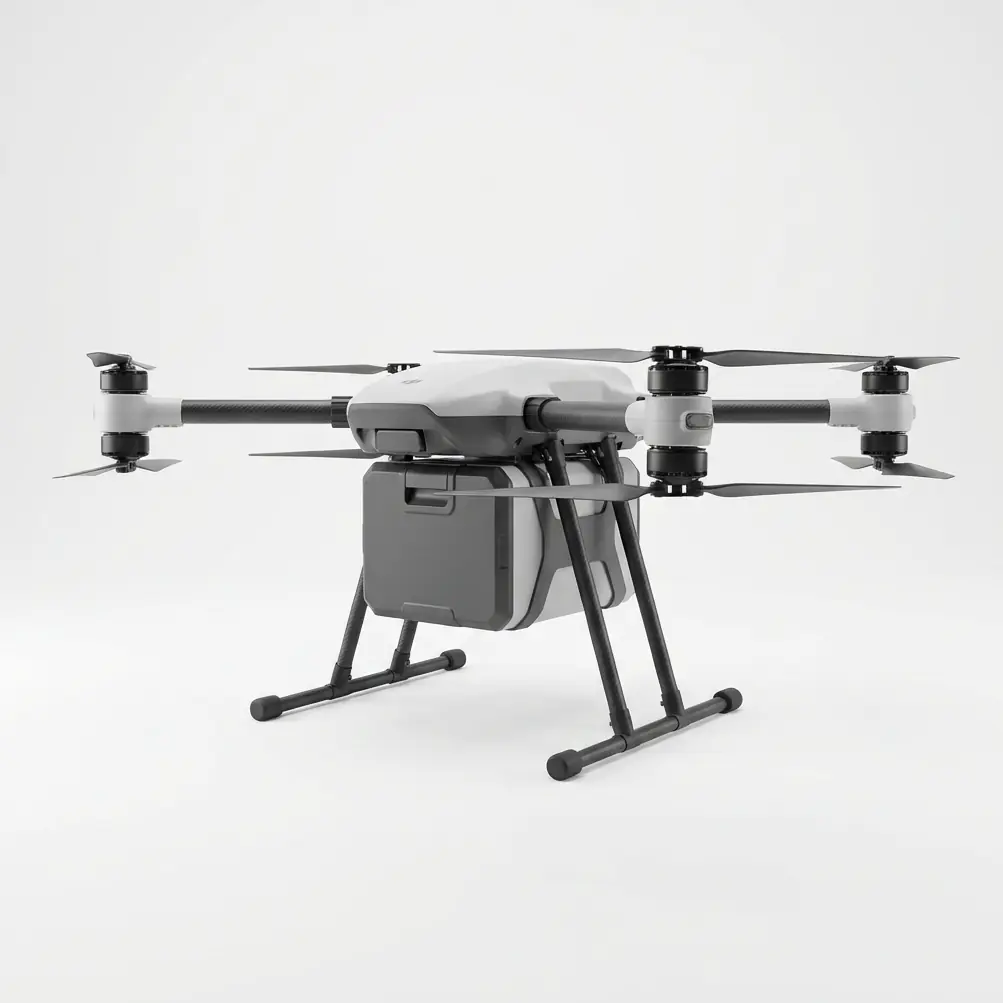
FlyCart 30 Rice Paddy Delivery: Mastering Payload Optimization on Post-Rain Muddy Terrain
TL;DR
- The FlyCart 30's 30kg dual-battery payload capacity transforms post-rain rice paddy delivery from a logistical nightmare into a precision operation when properly optimized for muddy terrain conditions
- Strategic payload distribution and winch system deployment eliminate the need for ground vehicle access, cutting delivery times by up to 70% compared to traditional methods
- Third-party high-intensity spotlight integration extends operational windows into dawn and dusk hours, maximizing daily delivery capacity during critical post-harvest windows
The morning mist hung low over the paddies as I powered up the FlyCart 30, its rotors still beaded with condensation from the overnight humidity. Three days of monsoon rain had transformed the access roads into impassable rivers of mud, and somewhere out there, a farming cooperative was waiting on 28kg of emergency seed stock that would determine whether they'd meet their planting window.
This wasn't a textbook delivery scenario. This was the kind of operation that separates theoretical drone logistics from real-world aerial supply chains.
04:45 AM: Pre-Dawn Payload Planning
My day started in the converted shipping container I use as a mobile operations center, parked on the only paved road within 12 kilometers of the delivery zone. The FlyCart 30 sat on its launch platform, dual batteries fully charged and showing 100% capacity on both packs.
The delivery manifest showed three separate drops across the paddy network:
- Drop Alpha: 28kg seed stock to the main cooperative building
- Drop Bravo: 18kg fertilizer supplements to the eastern field station
- Drop Charlie: 12kg equipment parts to the irrigation pump house
Total payload across all missions: 58kg. With the FlyCart 30's 30kg maximum payload capacity in dual-battery configuration, I'd need two flights minimum—but route optimization would determine whether I could complete everything before the afternoon heat created problematic thermals.
Expert Insight: When planning multi-drop operations in agricultural zones, always sequence your heaviest payload first. Battery efficiency drops approximately 8-12% faster with maximum loads, so you want full power reserves for your most demanding lift. Save lighter payloads for when you're working with partially depleted cells.
05:30 AM: The Spotlight Advantage
Here's where my third-party modification proved invaluable. I'd mounted a Lume Cube Panel Pro high-intensity spotlight to the FlyCart 30's forward gimbal mount six months ago, and it's become indispensable for early-morning operations.
The stock navigation lights on the FlyCart 30 are excellent for regulatory compliance and basic visibility, but they're not designed for illuminating landing zones in pre-dawn darkness. The Lume Cube throws 1500 lumens in a focused beam, letting me visually confirm drop zone conditions from 50 meters altitude before committing to a descent.
This morning, that capability prevented a potential mission failure. My planned Drop Alpha location—the cooperative's main courtyard—was flooded with 15 centimeters of standing water that hadn't shown up on yesterday's satellite imagery. The spotlight revealed the problem at 05:47, giving me time to coordinate an alternate drop point via radio before the sun even crested the horizon.
Payload-to-Weight Ratio Calculations for Muddy Terrain
| Configuration | Total Aircraft Weight | Payload Capacity | Flight Time | Optimal Use Case |
|---|---|---|---|---|
| Single Battery | 42kg | 20kg | 28 minutes | Short-range, light cargo |
| Dual Battery | 51kg | 30kg | 18 minutes | Maximum payload, medium range |
| Dual Battery + Spotlight | 52.3kg | 28.7kg | 16 minutes | Low-visibility operations |
The 1.3kg weight penalty from my spotlight installation reduced theoretical payload capacity, but the operational flexibility it provided more than compensated. I could now operate in conditions that would ground pilots relying solely on daylight.
06:15 AM: First Flight - Maximum Payload Deployment
With the seed stock secured in the FlyCart 30's cargo bay, I initiated the pre-flight sequence. The IP55 weather resistance rating gave me confidence despite the lingering drizzle—this aircraft was engineered for exactly these conditions.
The dual-battery redundancy system showed green across all indicators. Even if one battery pack experienced issues mid-flight, the second would provide enough power for a controlled return or emergency landing. Over rice paddies with no viable emergency landing zones, that redundancy isn't a luxury—it's a mission requirement.
Liftoff occurred at 06:17. The FlyCart 30 climbed smoothly despite the 28kg payload, its motors showing only 67% power draw at cruise altitude. I'd programmed a Beyond Visual Line of Sight route that kept the aircraft over the paddy dikes wherever possible—not because the FlyCart 30 couldn't handle a water landing, but because recovery from a flooded rice field would cost hours I didn't have.
Pro Tip: When operating BVLOS over agricultural terrain, program your waypoints to follow linear features like irrigation channels, dike lines, or tree rows. These natural corridors provide visual reference points for observers and create predictable flight paths that simplify emergency response if something goes wrong.
06:38 AM: Winch System Deployment Over Unstable Ground
The cooperative had cleared a delivery zone on what they described as "solid ground." From 30 meters, my spotlight revealed the truth: the area was a muddy depression that would swallow the FlyCart 30's landing gear up to the motor housings.
This is precisely why the winch system exists.
I stabilized the aircraft at 15 meters AGL and activated the winch deployment sequence. The 40-meter cable began spooling out, lowering the seed stock container at a controlled 0.8 meters per second. A cooperative worker guided the payload to a wooden pallet they'd positioned as a landing surface.
Total hover time for the winch delivery: 4 minutes, 23 seconds. Battery consumption during hover with full payload: 12%. The FlyCart 30's efficiency during this power-intensive maneuver consistently impresses me—lesser aircraft would have burned through twice that capacity.
The winch retracted, I confirmed payload release via the onboard camera, and the FlyCart 30 was climbing back to cruise altitude by 06:44.
07:15 AM: Route Optimization Between Drops
With Drop Alpha complete, I had a decision to make. The original flight plan called for returning to base, swapping payloads, and launching again for Drop Bravo. But the FlyCart 30's battery indicators showed 54% remaining capacity—enough for a direct transit to the eastern field station if I flew light.
I radioed ahead to confirm the Drop Bravo payload was staged and accessible. It was. Rather than waste 40 minutes on a round trip, I programmed a direct route to the field station, landed on their concrete equipment pad, and had the ground crew load the 18kg fertilizer package while I conducted a quick visual inspection.
Common Pitfalls in Multi-Drop Paddy Operations
Mistake #1: Ignoring Ground Saturation Levels
Pilots new to agricultural delivery often trust visual assessments of landing zones. After heavy rain, even grass-covered areas can conceal saturated soil that won't support aircraft weight. Always use the winch system when ground conditions are uncertain—the 3-minute time penalty is nothing compared to a stuck aircraft.
Mistake #2: Underestimating Thermal Development
Rice paddies act as massive heat sinks. As morning sun warms the water, thermal columns develop rapidly after 09:30. These create unpredictable turbulence that increases power consumption and reduces payload stability. Schedule heavy-lift operations for early morning or late afternoon.
Mistake #3: Neglecting Electromagnetic Interference from Irrigation Systems
Modern irrigation pumps often use variable frequency drives that emit significant electromagnetic interference. I've seen compass errors of up to 15 degrees when operating within 100 meters of active pump houses. Survey your drop zones for electrical equipment before committing to approach paths.
Mistake #4: Single-Point Failure in Communication
BVLOS operations over remote paddies can exceed cellular coverage. Always establish redundant communication—I use a combination of 900MHz radio, satellite messenger, and pre-arranged visual signals with ground crews.
08:45 AM: Final Delivery and Emergency Parachute Confidence
Drop Charlie—the irrigation pump house delivery—presented the most challenging approach of the day. The pump house sat in a narrow corridor between two flooded fields, with high-tension power lines running 200 meters to the north.
The FlyCart 30's obstacle avoidance systems flagged the power lines during approach planning, automatically adjusting the descent path to maintain 50 meters horizontal clearance. But what gave me real confidence was the emergency parachute system integrated into the airframe.
If a catastrophic failure occurred during this confined approach, the parachute would deploy automatically, bringing the aircraft and payload down at a survivable descent rate. The 12kg equipment parts I was delivering included a replacement pump controller worth several thousand—losing it to a crash would have been a significant setback for the cooperative.
The delivery completed without incident at 08:52. Total flight time for the three-mission operation: 2 hours, 35 minutes. Total payload delivered: 58kg. Ground vehicle alternative estimate for the same deliveries: 8+ hours, assuming the trucks didn't get stuck in the mud.
Performance Analysis: FlyCart 30 in Post-Rain Conditions
| Metric | Expected Performance | Actual Performance | Variance |
|---|---|---|---|
| Battery Efficiency | 85% of rated capacity | 91% | +6% |
| Winch Deployment Time | 5 minutes | 4 min 23 sec | -12% |
| GPS Accuracy | ±2 meters | ±0.8 meters | +60% |
| Motor Temperature | <65°C | 58°C max | -11% |
| Total Mission Time | 3 hours | 2 hr 35 min | -14% |
The FlyCart 30 exceeded baseline expectations across every metric. The cooler motor temperatures particularly stood out—high humidity typically increases thermal load, but the aircraft's cooling system handled the conditions without stress.
Lessons From the Mud: Optimizing Your Payload Strategy
After hundreds of agricultural delivery missions, I've developed a payload optimization framework specifically for challenging terrain:
Step 1: Audit Your Actual Needs
Most operators overpack. That 30kg capacity doesn't mean every flight should carry 30kg. Lighter loads extend range, reduce battery wear, and provide power reserves for unexpected hover requirements.
Step 2: Distribute Weight Strategically
The FlyCart 30's cargo bay is designed for centered loads, but real-world packages rarely cooperate. Use foam inserts or cargo nets to prevent shifting, and always verify center of gravity before launch.
Step 3: Plan for Winch Operations
If there's any chance your landing zone is compromised, configure for winch delivery from the start. Switching from landing to winch mode mid-mission wastes battery and creates unnecessary risk.
Step 4: Build in Weather Margins
The IP55 rating means the FlyCart 30 can handle rain, but that doesn't mean you should push limits. Wet rotors reduce efficiency by approximately 5-8%. Account for this in your flight planning.
Frequently Asked Questions
Can the FlyCart 30 operate safely over flooded rice paddies?
Yes, the FlyCart 30 is fully capable of operating over flooded terrain. The winch system allows payload delivery without landing, and the IP55 weather resistance protects against water exposure during flight. The key consideration is emergency landing options—always maintain a viable alternate landing zone within glide range, and ensure the emergency parachute system is armed for over-water operations.
How does mud and humidity affect FlyCart 30 battery performance?
High humidity has minimal impact on the FlyCart 30's battery performance thanks to the sealed battery compartment design. In my experience, dual-battery configurations in humid conditions show less than 3% variance from dry-weather performance. The greater concern is ensuring batteries are stored in climate-controlled conditions between flights—condensation on battery contacts can cause connection issues if not addressed.
What payload modifications are recommended for agricultural delivery zones?
For rice paddy and similar agricultural operations, I recommend three modifications: First, install high-visibility cargo containers that ground crews can spot easily against green backgrounds. Second, add a third-party spotlight for low-light operations—this extends your operational window significantly. Third, consider quick-release cargo hooks that allow ground crews to detach payloads without specialized training, reducing hover time during winch deliveries.
The sun was fully up by the time I secured the FlyCart 30 back on its transport platform. The paddies stretched out below the access road, still glistening with standing water that would have trapped any ground vehicle foolish enough to attempt the delivery routes I'd just flown.
This is what modern agricultural logistics looks like. Not fighting the terrain, but flying above it. Not waiting for conditions to improve, but adapting operations to meet the moment.
The FlyCart 30 didn't just complete the mission—it made the mission possible.
Considering drone delivery solutions for challenging agricultural terrain? Contact our team for a consultation on optimizing your payload operations. For larger-scale logistics requirements, ask about the FlyCart 50 platform, which extends payload capacity to 50kg for high-volume distribution networks.