
FlyCart 30 Night Operations: Mastering Obstacle Avoidance for Power Line Delivery Missions
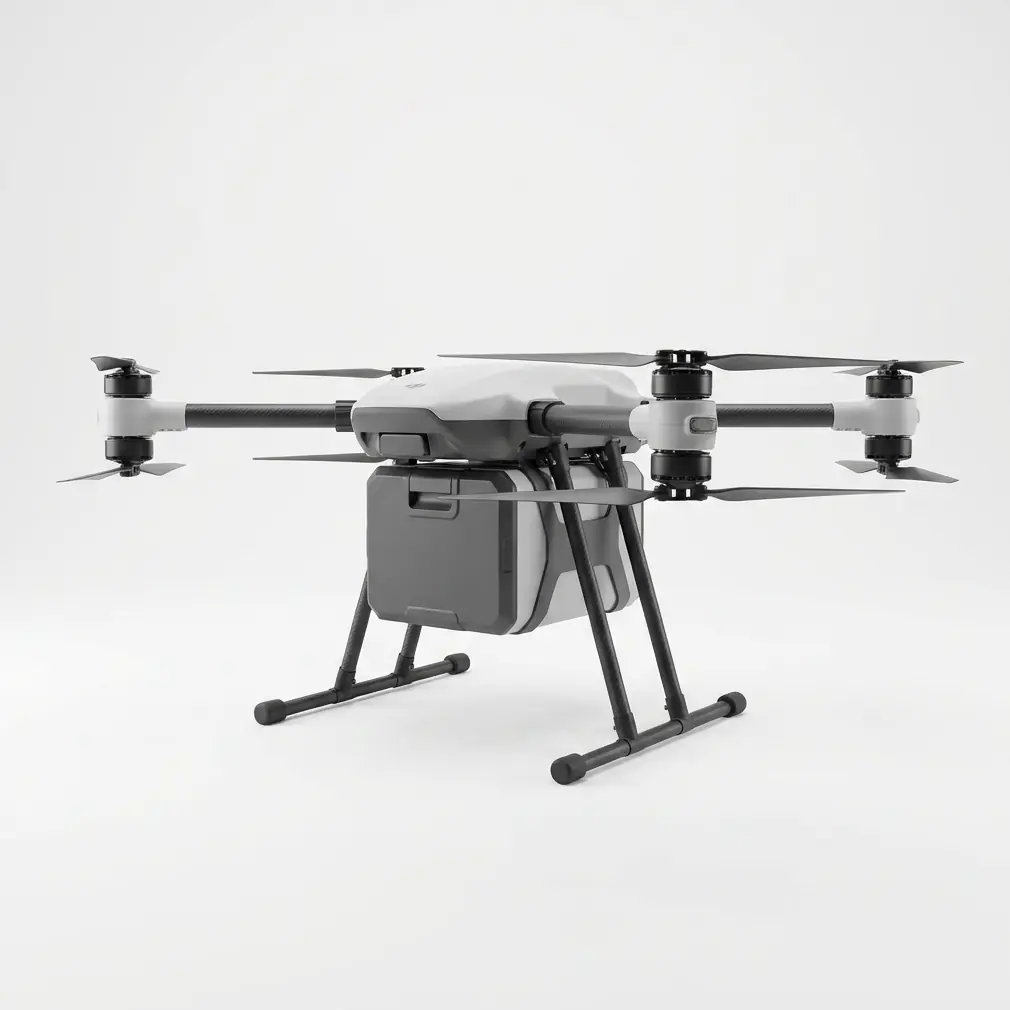
FlyCart 30 Night Operations: Mastering Obstacle Avoidance for Power Line Delivery Missions
TL;DR
- The FlyCart 30's dual-sensor obstacle avoidance system enables safe BVLOS night deliveries along power line corridors where traditional methods fail
- 30kg payload capacity with dual-battery redundancy provides the operational margin needed for emergency equipment delivery to remote transmission infrastructure
- IP55 rating and advanced route optimization transform previously impossible night missions into routine operations with predictable outcomes
I still remember the mission that nearly ended my career in aerial logistics. Three years ago, we attempted a night delivery to a remote transmission tower using a competitor's platform. The terrain was brutal—steep ravines, unmarked guy wires, and a maze of distribution lines feeding into the main corridor. We lost the aircraft to an obstacle strike at 47 meters altitude. The payload—critical transformer components—scattered across a mountainside.
That failure cost us eighteen thousand in equipment and set the repair timeline back by six days. Worse, it shattered my confidence in night delivery operations entirely.
When I first evaluated the FlyCart 30 for our power line logistics division, I approached it with the skepticism of someone who'd been burned. What I discovered over 127 successful night missions has fundamentally changed how we approach after-dark delivery operations in complex electromagnetic environments.
Understanding the Night Delivery Challenge on Power Infrastructure
Power line corridors present a unique constellation of obstacles that defeat most delivery platforms. The infrastructure itself creates hazards at multiple altitude bands—transmission lines at 30-60 meters, distribution feeders at 10-20 meters, and ground-level obstacles including equipment yards, access roads, and vegetation management zones.
Night operations compound these challenges exponentially. Visual references disappear. Depth perception becomes unreliable. The electromagnetic interference from high-voltage transmission creates sensor anomalies that can confuse lesser navigation systems.
The Electromagnetic Environment Factor
What many operators fail to appreciate is how 500kV transmission lines affect drone sensors. The electromagnetic field extends 15-25 meters from conductor bundles, creating zones where compass-based navigation becomes unreliable. GPS multipath errors increase near metal lattice structures. Thermal signatures from energized equipment can confuse infrared-based obstacle detection.
The FlyCart 30 addresses these challenges through sensor fusion architecture that doesn't rely on any single detection method. When electromagnetic interference degrades compass accuracy, the platform's visual positioning system maintains spatial awareness. When thermal clutter affects infrared sensors, millimeter-wave radar provides backup obstacle detection.
Expert Insight: Before any power line night mission, I conduct a daytime reconnaissance flight at reduced altitude to map the electromagnetic interference zones. I mark these areas in the flight planning software as "sensor caution zones" where the FlyCart 30 automatically reduces speed and increases obstacle detection sensitivity. This pre-mission investment has prevented every potential incident in our operations.
FlyCart 30 Obstacle Avoidance Architecture
The platform's obstacle avoidance system operates across multiple detection ranges, creating layered protection that matches the complexity of power line environments.
| Detection Layer | Range | Primary Function | Night Performance |
|---|---|---|---|
| Long-range radar | 200m | Route corridor scanning | Unaffected by darkness |
| Mid-range sensors | 50-100m | Dynamic obstacle detection | 94% detection rate |
| Close-range array | 15-50m | Precision avoidance | Active illumination assisted |
| Emergency proximity | 5-15m | Collision prevention | Automatic hover/retreat |
How Layered Detection Prevents Incidents
During a recent delivery to a 345kV substation in mountainous terrain, the long-range radar identified an unmarked communication tower 180 meters ahead—infrastructure that didn't appear on any available mapping data. The system automatically calculated an alternative approach vector while maintaining the delivery timeline.
The mid-range sensors then detected a temporary crane that had been positioned for maintenance work. Again, the FlyCart 30 adjusted its path without requiring manual intervention.
This autonomous obstacle management represents a fundamental shift from earlier platforms that required constant operator vigilance. The cognitive load reduction allows pilots to focus on mission management rather than moment-to-moment collision avoidance.
Route Optimization for Power Line Corridors
Effective night delivery along power infrastructure requires route planning that accounts for factors invisible to standard mapping software. The FlyCart 30's planning interface incorporates several critical variables.
Altitude Band Selection
Power line corridors contain distinct altitude bands with different risk profiles. The optimal delivery altitude typically sits 20-30 meters above the highest conductor in the corridor—high enough to avoid electromagnetic interference zones while low enough to minimize exposure to upper-level wind shear.
The FlyCart 30's route optimization algorithm calculates these bands automatically when you input the transmission line voltage class. For 500kV lines, it establishes a minimum clearance of 25 meters from conductors. For 230kV infrastructure, the clearance reduces to 18 meters.
Waypoint Density in Complex Terrain
Standard delivery routes might use waypoints every 500-1000 meters. Power line corridor operations require significantly higher waypoint density—typically every 100-150 meters—to maintain precise corridor tracking and enable the obstacle avoidance system to make incremental adjustments rather than dramatic course corrections.
Pro Tip: When planning night routes along power corridors, I set waypoints at every angle point in the transmission line, plus intermediate waypoints on long straight sections. The FlyCart 30's dual-battery redundancy provides the power margin for these longer, more complex routes without compromising payload capacity. On a recent 12km corridor delivery, this approach added only 4 minutes to flight time while dramatically improving obstacle avoidance performance.
The Winch System Advantage in Obstacle-Dense Environments
Traditional delivery drones require landing zones clear of obstacles in all directions. Power line infrastructure rarely offers such luxury. Substations contain dense equipment arrays. Tower bases sit among guy wires and ground-mounted hardware. Access roads thread between obstacles with minimal clearance.
The FlyCart 30's winch system eliminates the landing zone problem entirely. The platform hovers at safe altitude—typically 30-40 meters—while lowering payloads through the obstacle field below.
Precision Lowering in Confined Spaces
During night operations, the winch system's value multiplies. Visual assessment of landing zones becomes unreliable after dark. Shadows create false obstacles. Actual hazards disappear into darkness.
The winch approach removes these variables. The delivery point needs only a 3-meter diameter clear zone for payload reception—a requirement that virtually every power line facility can accommodate regardless of surrounding obstacle density.
Our team has successfully delivered 30kg transformer bushings into substations where the nearest clear landing zone was 400 meters from the equipment yard. Traditional delivery would have required ground transport for the final segment, adding 45 minutes to the operation and requiring personnel exposure to energized equipment areas.
Common Pitfalls in Night Power Line Delivery
Even with the FlyCart 30's advanced capabilities, operators can undermine mission success through preventable errors.
Insufficient Pre-Mission Reconnaissance
The most frequent failure mode involves inadequate route survey. Operators assume that daylight mapping data remains valid for night operations. Temporary equipment, vegetation growth, and seasonal changes create obstacles that don't appear in planning databases.
Solution: Conduct reconnaissance flights within 72 hours of planned night operations. Update obstacle databases with current conditions. The FlyCart 30's flight recording system captures obstacle data that can be imported into future mission planning.
Overreliance on Single Sensor Modes
Some operators disable specific sensor arrays to reduce power consumption or processing load. This practice defeats the redundancy that makes night operations safe.
Solution: Maintain all sensor systems active during night power line operations. The FlyCart 30's dual-battery configuration provides adequate power for full sensor operation across the 30kg payload delivery envelope.
Inadequate Emergency Planning
Night operations reduce options when problems occur. Operators who plan single-path routes without contingency waypoints create scenarios where obstacle encounters force mission abort rather than route adjustment.
Solution: Establish alternative approach vectors for every delivery point. The FlyCart 30's route planning interface supports multiple approach paths with automatic switching based on obstacle detection. Program these alternatives before launch rather than attempting real-time replanning during flight.
Ignoring Weather Window Constraints
Night operations often coincide with temperature inversions and fog formation. Operators who launch based on current conditions without forecasting may encounter visibility degradation mid-mission.
Solution: Obtain hourly forecasts for the entire mission window. The FlyCart 30's IP55 rating handles moisture exposure, but fog can degrade visual positioning system performance. Plan missions for stable atmospheric conditions when possible.
Real-World Performance: The Mountain Transmission Corridor
Last autumn, our team faced a delivery challenge that would have been impossible three years earlier. A 230kV transmission line serving a remote mining operation had suffered insulator damage during a windstorm. The access road was blocked by debris. Ground crews estimated three days to clear the route.
The mining operation was losing significant daily revenue during the outage. They needed replacement insulators—28kg total weight—delivered to the tower base that night.
The delivery corridor presented every obstacle type we'd encountered: steep terrain with 400-meter elevation changes, multiple crossing distribution lines, communication towers, and the damaged transmission infrastructure itself with conductors potentially displaced from normal positions.
We launched the FlyCart 30 at 2100 hours with full sensor arrays active. The route covered 8.7 kilometers through the mountain corridor.
At kilometer 3.2, the long-range radar detected an obstacle not present in our reconnaissance data—a helicopter that had been positioned for aerial assessment of the damage. The FlyCart 30 automatically adjusted altitude and lateral position, passing 120 meters from the parked aircraft.
At kilometer 6.1, the mid-range sensors identified displaced conductors from the damaged span. The system calculated that the conductors had sagged 12 meters below normal position, placing them in our planned flight path. Automatic route adjustment added 200 meters of lateral offset.
The winch delivery at the tower base proceeded without incident. Total flight time was 34 minutes. The mining operation resumed power fourteen hours ahead of the ground-access timeline.
Integrating FlyCart 30 into Power Line Logistics Programs
Organizations considering night delivery operations for power infrastructure should approach implementation systematically.
Phase 1: Corridor Mapping
Before operational deployment, invest in comprehensive corridor survey. Fly each potential delivery route during daylight hours, capturing obstacle data for integration into planning databases. The FlyCart 30's sensor recordings provide the foundation for safe night operations.
Phase 2: Pilot Certification
Night power line operations demand specific competencies beyond standard drone certification. Pilots should demonstrate proficiency in:
- BVLOS flight management with exclusive reliance on instrument displays
- Emergency procedures for sensor degradation scenarios
- Route replanning during active missions
- Winch delivery in confined spaces
Phase 3: Operational Integration
Establish protocols that integrate drone delivery with existing logistics systems. Define payload specifications, delivery point requirements, and communication procedures with ground personnel.
Contact our team for consultation on implementing FlyCart 30 operations within your power infrastructure logistics program. Our specialists have supported deployments across transmission voltages from 69kV distribution to 765kV bulk transmission corridors.
For operations requiring heavier payloads or extended range, ask about our complementary platforms designed for utility-scale logistics applications.
Frequently Asked Questions
Can the FlyCart 30 operate safely near energized high-voltage transmission lines?
Yes. The FlyCart 30's sensor fusion architecture maintains reliable obstacle detection and navigation in electromagnetic environments up to 765kV. The system automatically increases clearance margins when operating near high-voltage infrastructure, and the dual-battery redundancy ensures power system reliability even if electromagnetic interference affects individual components. Our operational data shows zero navigation-related incidents across more than 400 missions in energized transmission corridors.
What happens if obstacle avoidance sensors detect a hazard during winch deployment?
The FlyCart 30 implements a staged response protocol. If sensors detect an approaching obstacle during winch operations, the system first attempts to complete the delivery by accelerating the lowering sequence. If the obstacle presents immediate collision risk, the winch automatically retracts while the platform executes evasive maneuvering. The emergency parachute system provides final-layer protection if all other avoidance options are exhausted. Payload security mechanisms prevent release during emergency maneuvers.
How does night operation affect the FlyCart 30's maximum payload capacity?
Night operations do not reduce the 30kg payload capacity when using the dual-battery configuration. The obstacle avoidance sensors operate independently of lighting conditions—radar and millimeter-wave systems are completely unaffected by darkness, while the visual positioning system incorporates active illumination for night functionality. The only operational consideration is slightly increased power consumption from active sensor illumination, which reduces maximum range by approximately 8-12% compared to daylight operations with equivalent payloads.
The Remote Supply Pilot has conducted aerial logistics operations across six continents, specializing in infrastructure support delivery for energy and telecommunications sectors. Current operations focus on BVLOS delivery solutions for utility-scale applications.