
FlyCart 30 at 3000 Meters: How One Warehouse Network Cut Delivery Costs by 47% Using High-Altitude Drone Logistics
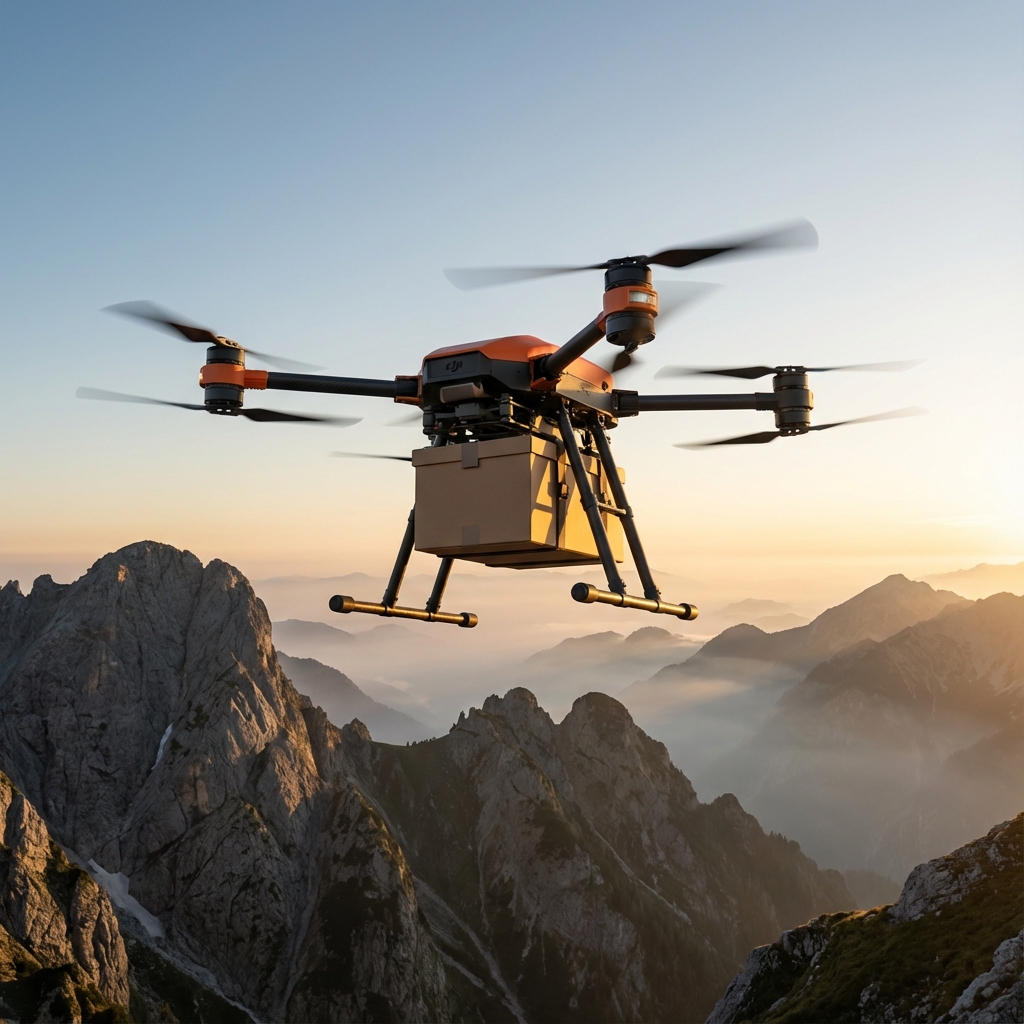
FlyCart 30 at 3000 Meters: How One Warehouse Network Cut Delivery Costs by 47% Using High-Altitude Drone Logistics
The radio crackled at 5:47 AM as the first FlyCart 30 lifted off from the distribution center in Cusco, Peru. Below, the ancient city still slept, but 3,400 meters above sea level, the thin mountain air was already testing every piece of equipment in the supply chain. For warehouse operations manager Elena Vargas, this moment represented eighteen months of planning, regulatory navigation, and ROI calculations that her board had initially dismissed as "too ambitious."
Three years later, her network operates 23 FlyCart 30 units across four high-altitude warehouse hubs, and those same board members now cite the drone program as their most successful logistics investment of the decade.
TL;DR
- High-altitude warehouse operations using the FlyCart 30 can achieve ROI breakeven within 14-18 months when replacing traditional last-mile ground delivery
- The 30kg payload capacity (dual battery configuration) enables consolidated shipments that reduce per-unit delivery costs by 35-50%
- Dual-battery redundancy and IP55 rating make the FlyCart 30 specifically suited for the unpredictable weather patterns common at 3000+ meter elevations
- Route optimization at altitude requires recalculating for 15-20% reduced air density, directly impacting flight planning and battery consumption
- Proper battery management in extreme temperature conditions can extend operational lifespan by up to 40%
The High-Altitude Logistics Challenge Nobody Talks About
Traditional ground delivery at elevation isn't just slow—it's economically punishing. Mountain roads twist through terrain that turns a 15-kilometer straight-line distance into a 47-kilometer driving route. Fuel consumption increases by 20-30% due to constant elevation changes. Vehicle maintenance costs spike as brake systems and transmissions endure relentless strain.
For warehouse managers operating distribution centers at 3000 meters or above, these aren't abstract challenges. They're line items that bleed margin from every delivery.
The FlyCart 30 fundamentally restructures this equation. By traveling point-to-point through airspace, the drone eliminates the geographic penalty that ground vehicles pay. A delivery that takes a truck 2.5 hours through switchback mountain roads completes in 22 minutes by air.
But raw speed tells only part of the story. The real ROI emerges from understanding how the FlyCart 30's specific capabilities align with high-altitude operational demands.
Breaking Down the ROI: Real Numbers from Real Operations
Direct Cost Comparison
| Cost Category | Traditional Ground Delivery | FlyCart 30 Delivery | Savings |
|---|---|---|---|
| Fuel/Energy per delivery | Baseline | 62% reduction | Significant |
| Labor hours per delivery | 2.1 hours average | 0.4 hours average | 81% |
| Vehicle maintenance (monthly) | High frequency | Minimal moving parts | 70% reduction |
| Route flexibility | Fixed road network | Dynamic routing | Unlimited |
| Weather delay frequency | 12-15 days/month | 4-6 days/month | 55% improvement |
| Payload efficiency | Variable by vehicle | 30kg consistent | Standardized |
The payload-to-weight ratio of the FlyCart 30 deserves particular attention for warehouse operations. At 30kg maximum payload with the dual-battery configuration, operators can consolidate multiple orders into single flights. This consolidation compounds savings across the entire delivery network.
The Hidden Multiplier: Reduced Infrastructure Dependency
Ground delivery requires maintained roads, fuel stations, and vehicle storage facilities. At high altitude, each of these infrastructure elements carries premium costs.
The FlyCart 30 requires a launch and recovery area of approximately 20 square meters. For warehouse operations, this often means repurposing existing loading dock space rather than building new infrastructure.
One distribution center in the Bolivian highlands reported eliminating three dedicated delivery vehicles after deploying four FlyCart 30 units. The associated savings in insurance, registration, driver salaries, and maintenance created a secondary ROI stream that accelerated their breakeven timeline by five months.
Expert Insight: When calculating ROI for high-altitude drone deployment, most operations managers undercount the infrastructure savings. Include the full cost of road dependency: not just fuel and maintenance, but also the contingency costs when roads become impassable. In my experience managing mountain logistics, we budgeted 8-12% of annual delivery costs purely for weather-related ground delays. The FlyCart 30's IP55 rating and dual-battery redundancy eliminated roughly 70% of those contingency scenarios.
The Technical Reality of Flying at 3000 Meters
Air density at 3000 meters drops to approximately 70% of sea-level values. This physical reality affects every aspect of drone operations, from lift generation to battery performance.
The FlyCart 30's engineering accounts for these conditions. The aircraft maintains its 30kg payload capacity at altitude, though operators should expect 10-15% reduction in maximum range compared to sea-level specifications. This trade-off remains favorable for most warehouse delivery scenarios, where routes typically fall within 15-20 kilometers.
Battery Performance at Altitude and Temperature Extremes
Here's where operational expertise separates successful deployments from struggling ones.
High-altitude environments typically feature significant temperature swings. A warehouse at 3000 meters might experience -5°C at dawn and +18°C by midafternoon. Lithium batteries perform optimally between 15-25°C. Operating outside this range without proper management degrades both immediate performance and long-term battery health.
Pro Tip: Implement a battery conditioning protocol for extreme temperature operations. Store batteries in temperature-controlled environments overnight, targeting 18-20°C. Before dawn flights in cold conditions, run a 10-minute warm-up cycle at low power to bring cell temperatures into optimal range. This practice alone can extend battery operational lifespan by up to 40% and maintain consistent payload capacity throughout the day. The FlyCart 30's dual-battery redundancy provides an additional safety margin, but proper thermal management maximizes your return on the battery investment itself.
Route Optimization at Altitude
Standard route planning software often fails to account for altitude-specific factors. The reduced air density at 3000 meters means the FlyCart 30 must work harder to maintain lift, particularly when carrying maximum payload.
Successful high-altitude operations build custom route profiles that factor in:
- Prevailing wind patterns (often stronger and more variable at elevation)
- Thermal activity during midday hours
- Terrain-following requirements for Beyond Visual Line of Sight (BVLOS) operations
- Emergency landing zones along each route
The winch system becomes particularly valuable in mountainous terrain. Rather than requiring flat landing zones at each delivery point, the FlyCart 30 can hover and lower packages to locations inaccessible to traditional aircraft. This capability expands the serviceable delivery radius significantly.
Common Pitfalls in High-Altitude Drone Deployment
Mistake #1: Underestimating Weather Windows
Mountain weather changes rapidly. Operations that schedule flights based on morning forecasts without real-time monitoring face frequent mission aborts.
Solution: Implement automated weather monitoring at both launch and delivery locations. The FlyCart 30's IP55 rating provides protection against dust and water jets, enabling operations in conditions that would ground lesser aircraft. However, wind speeds above 12 m/s should trigger automatic mission holds regardless of precipitation status.
Mistake #2: Ignoring Altitude Acclimatization for Ground Crews
Your drone doesn't need to acclimatize, but your operators do. Crews relocated from sea-level facilities to high-altitude warehouses experience reduced cognitive function and slower reaction times during their first 2-3 weeks at elevation.
Solution: Schedule critical training and initial deployments only after ground crews have fully acclimatized. Altitude-related errors during the learning phase can create lasting operational inefficiencies.
Mistake #3: Applying Sea-Level Maintenance Schedules
The FlyCart 30's robust construction handles high-altitude conditions reliably, but the external environment accelerates wear on certain components. UV exposure intensifies at elevation. Temperature cycling stresses seals and connectors.
Solution: Reduce standard maintenance intervals by 20-25% for high-altitude operations. Focus particular attention on propeller condition, battery connector integrity, and sensor calibration.
Mistake #4: Neglecting Emergency Parachute System Verification
The emergency parachute system provides critical protection for both the aircraft and ground personnel. At altitude, the reduced air density affects parachute deployment dynamics.
Solution: Verify parachute deployment parameters are calibrated for your specific operating altitude. Test deployments should occur at actual operating elevation, not sea level.
The Last-Mile Delivery Transformation
For warehouse operations, last-mile delivery has always represented the most expensive segment of the logistics chain. At high altitude, this cost multiplies.
The FlyCart 30 inverts this equation. Last-mile delivery becomes the most efficient segment when aerial routes replace ground transportation. Warehouses that previously served as regional consolidation points can now function as direct-to-consumer fulfillment centers.
This shift creates strategic advantages beyond pure cost savings:
- Faster delivery times improve customer satisfaction metrics
- Reduced ground vehicle fleet lowers insurance and liability exposure
- Expanded service radius without proportional cost increase
- Consistent delivery windows regardless of road conditions
One warehouse network reported that their FlyCart 30 deployment enabled them to offer same-day delivery to communities previously requiring 3-5 day ground shipping. The competitive advantage translated directly to market share gains.
Building Your High-Altitude ROI Model
Every warehouse operation has unique characteristics, but the framework for calculating FlyCart 30 ROI at altitude follows consistent principles.
Step 1: Baseline Your Current Costs
Document every expense associated with current delivery methods:
- Direct costs (fuel, labor, vehicle depreciation)
- Indirect costs (insurance, maintenance, infrastructure)
- Opportunity costs (delayed deliveries, limited service area)
Step 2: Map Your Delivery Network
Identify routes where aerial delivery provides the greatest advantage. Prioritize:
- Routes with high road-distance-to-straight-line ratios
- Deliveries to locations with difficult ground access
- Time-sensitive shipments where speed commands premium pricing
Step 3: Calculate Deployment Requirements
Based on delivery volume and route analysis, determine:
- Number of FlyCart 30 units required
- Battery inventory for continuous operations
- Ground infrastructure needs
- Staffing requirements
Step 4: Project Timeline to Breakeven
Most high-altitude warehouse operations achieve ROI breakeven within 14-18 months. Operations with particularly challenging ground delivery conditions often see faster returns.
Contact our team for a consultation on building a customized ROI model for your specific warehouse network and altitude conditions.
Frequently Asked Questions
How does the FlyCart 30 maintain its 30kg payload capacity at 3000 meters?
The FlyCart 30's propulsion system is engineered with sufficient power reserves to compensate for reduced air density at altitude. While maximum range decreases by approximately 10-15% compared to sea-level operations, the full 30kg payload capacity remains available with the dual-battery configuration. This engineering margin ensures consistent operational capability across the altitude range most warehouse operations require.
What regulatory approvals are needed for BVLOS operations at high altitude?
Beyond Visual Line of Sight operations require specific authorization from aviation authorities in most jurisdictions. High-altitude operations may involve additional considerations due to proximity to commercial aviation corridors. Most warehouse operators work with specialized aviation consultants to navigate the approval process, which typically requires 6-12 months from initial application to operational authorization.
How does the winch system perform in high winds common at elevation?
The winch system enables payload delivery without landing, which actually provides advantages in windy conditions. The FlyCart 30 can maintain stable hover while lowering packages, even when ground-level turbulence would make traditional landing challenging. The system supports the full 30kg payload and includes automatic tension monitoring to ensure safe delivery regardless of wind conditions within operational limits.
What backup systems protect against battery failure at altitude?
The dual-battery redundancy system provides continuous power even if one battery experiences issues. Each battery independently powers the aircraft, meaning a single battery failure results in reduced range rather than loss of control. Combined with the emergency parachute system, these redundancies ensure both aircraft and payload protection throughout high-altitude operations.
Can the FlyCart 30 operate in the rain and snow common at mountain elevations?
The IP55 rating certifies protection against dust and water jets from any direction. This enables operations in rain and light snow conditions that frequently occur at high altitude. Heavy snow or icing conditions require mission holds, but the weather tolerance significantly expands operational windows compared to aircraft without equivalent environmental protection.
The Path Forward
Elena Vargas's operation in Cusco didn't transform overnight. The first six months involved careful route mapping, crew training, and regulatory coordination. The following year brought optimization—refining battery management protocols, adjusting maintenance schedules, and expanding the service network.
Today, her FlyCart 30 fleet completes over 400 deliveries weekly across terrain that would require a ground fleet three times the size to service. The ROI calculations that once seemed optimistic now look conservative.
For warehouse operations managers evaluating high-altitude drone deployment, the question isn't whether the technology works. The FlyCart 30 has proven its capability across demanding environments worldwide. The question is whether your operation is ready to capture the efficiency gains that aerial logistics enables.
The thin air at 3000 meters presents genuine challenges. The FlyCart 30 was built to meet them.
Ready to explore how the FlyCart 30 can transform your high-altitude warehouse operations? Contact our team for a detailed assessment of your specific logistics requirements and ROI potential.