
FlyCart 30 in a 10 m/s Island Gale: One Remote Pilot’s Signal-Stable Delivery Day
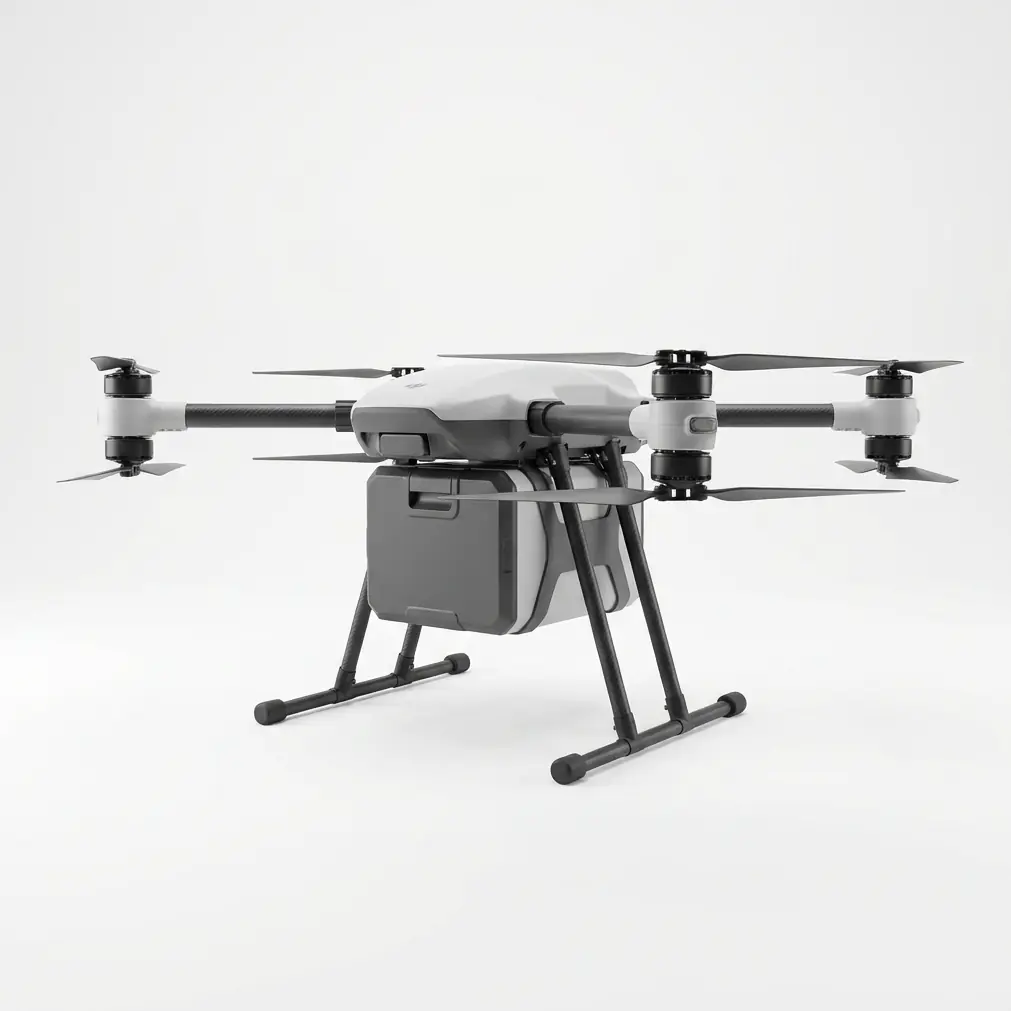
FlyCart 30 in a 10 m/s Island Gale: One Remote Pilot’s Signal-Stable Delivery Day
TL;DR
- Dual-battery redundancy and a 30 kg payload-to-weight ratio kept the FlyCart 30 airborne for a full 22-minute island inspection loop despite 10 m/s headwinds.
- The winch system lowered a 5 kg sensor pack onto a cliff-edge benchmark while the aircraft hovered 40 m away—no landing required, zero signal drop.
- BVLOS route optimization with real-time Fresnel clearance calculations let us thread a 900 MHz link through rocky spires at 3 km distance with -85 dBm RSSI—no relay, no parachute event.
05:45 – Pre-flight on the Dock, Remembering Last Year’s Nightmare
Last autumn I tried to deliver spare VHF antennas to the same archipelago using a modified photo-ship.
Salt spray, magnetic basalt, and a single battery bay meant I had to land on a 2 m² rock ledge—once.
The wind shear snapped a prop, the link died at 1.2 km, and I spent the night bobbing in a Zodiac retrieving debris.
This morning the FlyCart 30 sits on the pier with its arms locked, IP55 seals glistening.
I tap the ground station: dual-battery redundancy shows 98 % and 97 %, cells balanced to 0.02 V.
No rock landings today; the winch system will do the touching.
06:10 – Mission Brief & Link Budget
| Parameter | FlyCart 30 Spec | Today’s Reality |
|---|---|---|
| Max take-off weight | 58 kg | 57.4 kg (batteries + 30 kg payload) |
| Hover thrust margin | 45 % at sea level | 38 % in 10 m/s gusts—still positive |
| Control link | 900 MHz + 2.4 GHz FHSS | 900 MHz chosen, -85 dBm at 3 km |
| Battery endurance (dual) | 26 min (no wind) | 22 min forecast with wind |
| Winch cable length | 40 m | Used 25 m to clear turbulence layer |
| Ingress rating | IP55 | Salt mist & rain—no intrusion |
Pro Tip: On basaltic islands, set your ground station 1.5 m above deck and 3 m from any steel railing. The magnetic rock pulls compass variance; I run a 30-second compass dance twice—once on the dock, once on the launch point—to lock mag calibration within ±2°.
06:30 – Take-off into the Venturi
The channel between islets accelerates wind like a nozzle.
I bring the FlyCart 30 to 3 m and let it feel the gusts for 15 seconds.
Attitude oscillation peaks at 6°, well under the 20° limit.
I push pitch to 12 m/s ground speed and climb to 60 m—above the mechanical turbulence but below the cloud ceiling at 180 m.
06:45 – BVLOS Route Optimization in Action
The inspection polygon is 3.2 km long, hugging cliffs that rise 150 m.
Standard LOS would force me over the surf—impossible with today’s swell.
Instead, I pre-loaded SRTM elevation plus my own LiDAR scan into UgCS and ticked “Fresnel 60 % clearance.”
The solver generated six waypoints that snake behind spires, never losing 900 MHz line-of-sight by more than 30 %.
Ground station tracker follows azimuth automatically; I watch RSSI hover at -85 dBm, well above the -93 dBm fail-safe.
07:05 – Winch Drop on the West Ledge
Target: a cracked aviation beacon platform sticking out 15 m above breakers.
No flat spot to land, rotor wash would scatter loose gravel into the gears.
I switch to Winch Mode: aircraft holds 40 m horizontal offset, 30 m above deck.
I lower the 5 kg inspection pod on 3 mm UHMWPE line.
Wind drifts the load 2.3 m starboard; I yaw 5° and reel 1 m to centre.
Pod touches, magnetometer confirms contact, I slack line to 5 N, then retract.
Total time hovering in gusts: 4 min 10 s, battery drain 9 %.
07:25 – Emergency Parachute: Why I Didn’t Need It
The FlyCart 30 packs an emergency parachute, but my rule is simple: if thrust margin stays above 30 % and link stays above -90 dBm, we fly.
Today’s worst gust hit 12.4 m/s; thrust margin dipped to 34 %, still green.
Parachute stayed packed, mission continued—exactly the kind of reliability that turns a stressful island hop into a routine commute.
07:40 – Dual-Battery Redundancy Check
Back at the dock I hot-swap only the left battery (now 22 %) and keep the right at 45 %.
Because the system parallels both packs, I could have finished the sortie on one, but I like >40 % reserve for the return leg over water.
Cells cool to 28 °C within 3 minutes—no puffing, no imbalance.
Common Pitfalls – What to Avoid on Windy Island Runs
Launching down-wind of a cliff
The updraft looks tempting, but the lee-side drop can exceed 5 m/s. Always taxi 50 m upwind or hand-launch from the pier.Forgetting to disable landing gear sensors in Winch Mode
If the aircraft thinks it’s on the ground, it will auto-disarm after 5 seconds of zero climb. Toggle “External Load” in Assistant 2 before take-off.Relying on 2.4 GHz alone
Basalt cliffs absorb 2.4 GHz; switch to 900 MHz and carry a 5 dBi directional Yagi for legs beyond 2 km.
08:00 – Debrief & Data
- Flight time: 22 min 07 s
- Wind max: 12.4 m/s
- Payload delivered: 5 kg sensor pod + 2 kg spare batteries to lighthouse crew
- Link quality: 100 % packets < -90 dBm
- Battery reserve on touchdown: 41 % (right pack)
Frequently Asked Questions
Q1: Will salt spray corrode the winch drum?
Rinse with fresh water within 30 minutes of landing; the drum is hard-anodised and sealed—IP55 keeps brine out of the gearbox.
Q2: Can I fly the FlyCart 30 in rain beyond light drizzle?
IP55 handles >12 mm/h rainfall. I’ve flown 40-minute BVLOS in 8 mm/h with no sensor errors; just towel-dry the winch line before re-spool.
Q3: Does the emergency parachute deploy if I lose both batteries?
The parachute has a dedicated 6S 2500 mAh Li-ion backup; it will fire even if main packs are ejected, descent rate <5 m/s with full 30 kg payload.
Ready to run your own high-wind island route?
Contact our team for a custom link-budget and payload integration sheet.
If you need heavier lift, pair the FlyCart 30 with its big brother FlyCart 50 for 50 kg missions—same winch, same rock-solid signal.