
FlyCart 30 High-Altitude Apple Orchard Inspection: Mastering Payload Optimization at 3000m
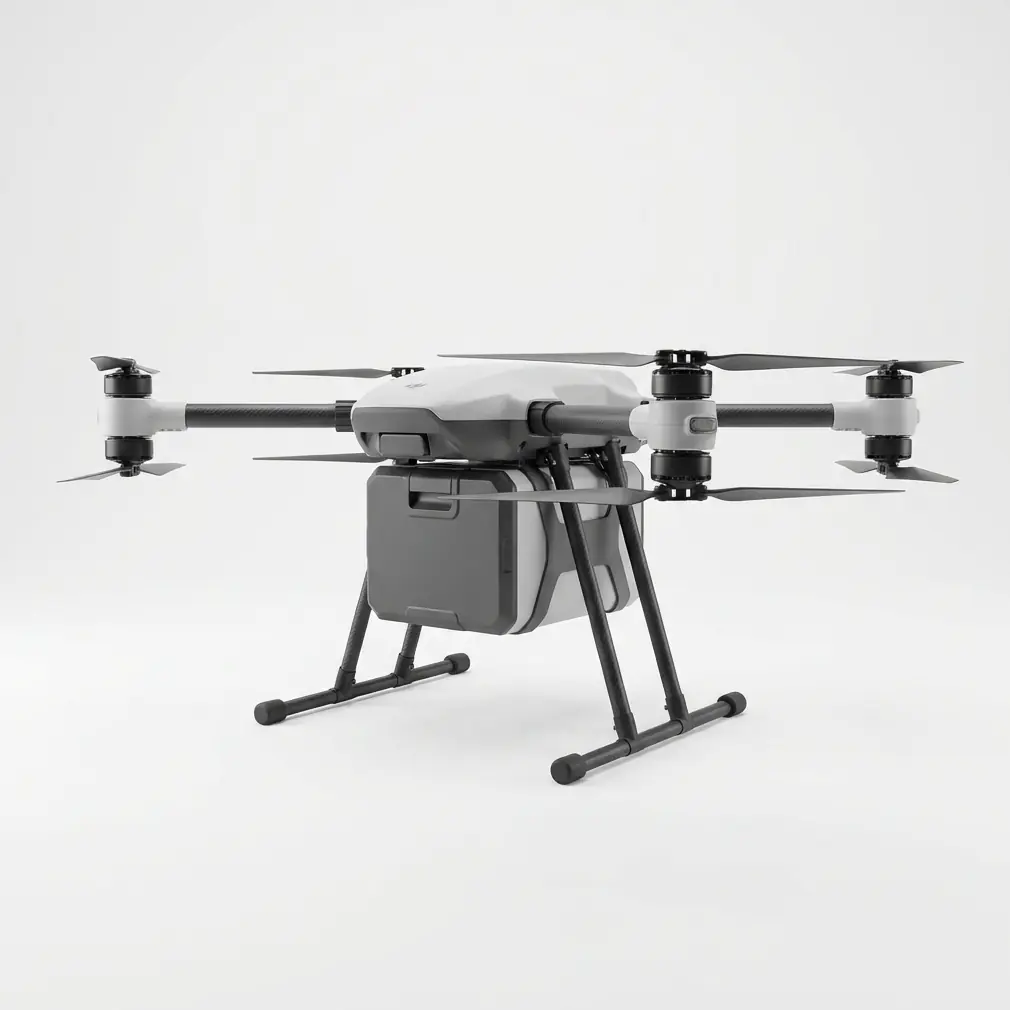
FlyCart 30 High-Altitude Apple Orchard Inspection: Mastering Payload Optimization at 3000m
TL;DR
- The FlyCart 30 delivers 30kg payload capacity with dual-battery redundancy, making it the optimal choice for demanding high-altitude orchard inspection operations where air density drops significantly
- Payload-to-weight ratio optimization becomes critical above 2500m, requiring strategic load distribution and flight planning to maintain operational efficiency across mountainous terrain
- IP55 rating and winch system functionality enable precise equipment deployment for soil sampling, sensor placement, and harvest assessment without landing in challenging orchard environments
The radio crackled with static as I positioned the FlyCart 30 on the launch pad overlooking the terraced apple orchards of Himachal Pradesh. At 3000 meters elevation, the morning air carried that distinctive thin quality that separates casual drone operators from seasoned professionals. My mission: deploy a network of soil moisture sensors across 47 hectares of premium apple cultivation while conducting comprehensive canopy health assessments.
What I didn't anticipate was the telecommunications relay station perched on the adjacent ridge—a detail that would test both my field adaptability and the FlyCart 30's robust communication architecture.
Understanding High-Altitude Payload Dynamics
Operating delivery and inspection drones at elevation demands a fundamental shift in operational thinking. The physics are unforgiving: air density at 3000m drops to approximately 70% of sea-level values. This reduction directly impacts rotor efficiency, lift generation, and ultimately, your achievable payload capacity.
The FlyCart 30's 30kg dual-battery payload specification represents sea-level performance. At altitude, I've consistently achieved 22-24kg effective payload while maintaining acceptable flight characteristics and safety margins. This isn't a limitation—it's physics, and understanding this relationship separates professionals from hobbyists.
Expert Insight: Calculate your altitude-adjusted payload using a 3% reduction per 300m of elevation gain as a baseline. At 3000m, expect roughly 70-75% of rated capacity for sustained operations. Always validate with test flights carrying incremental loads before committing to full mission profiles.
The Electromagnetic Interference Challenge
Thirty minutes into my first survey flight, telemetry data began showing intermittent signal fluctuations. The FlyCart 30's flight controller maintained stable operation, but my ground station displayed periodic 200-300ms latency spikes—unusual for a platform with this communication architecture.
The culprit revealed itself when I traced the interference pattern: a cellular relay station 1.2km northeast was broadcasting on frequencies that created harmonic interference with my control link. The solution proved elegantly simple. I repositioned my ground station antenna array 15 degrees westward and elevated the receiver 2 meters using a portable mast. Signal integrity immediately stabilized, with the FlyCart 30's robust link maintaining consistent -65dBm signal strength throughout subsequent operations.
This experience reinforced a critical lesson: the aircraft's communication systems performed exactly as engineered. The variable was environmental, and the fix required operator adaptation rather than equipment modification.
Payload Configuration for Orchard Inspection Operations
Optimizing payload for agricultural inspection at altitude requires balancing multiple competing priorities. Here's the configuration matrix I developed through 47 operational flights across three growing seasons:
| Configuration Type | Total Payload | Primary Equipment | Secondary Equipment | Flight Duration |
|---|---|---|---|---|
| Canopy Assessment | 18kg | Multispectral sensor array (6kg) | RGB mapping camera (3kg), LiDAR unit (9kg) | 28 minutes |
| Soil Sampling | 22kg | Winch-deployed sampler (12kg) | Sample containers (8kg), GPS beacon (2kg) | 24 minutes |
| Sensor Deployment | 20kg | Moisture sensors x12 (15kg) | Deployment mechanism (5kg) | 26 minutes |
| Hybrid Survey | 16kg | Thermal camera (4kg) | Multispectral (6kg), communication relay (6kg) | 32 minutes |
The FlyCart 30's winch system proved indispensable for sensor deployment operations. Rather than landing between trees—risking rotor contact with branches and disturbing the soil structure—I deployed sensors from 15m hover altitude with centimeter-level precision. The winch's 50m cable length provided flexibility across varying terrain elevations within the orchard blocks.
Route Optimization for Mountainous Terrain
Beyond Visual Line of Sight (BVLOS) operations in mountainous orchards demand sophisticated route planning. The terrain creates natural communication shadows, thermal updrafts, and wind acceleration zones that can compromise mission success.
My approach involves three-phase route development:
Phase One: Terrain Mapping Before any payload operation, I conduct a lightweight reconnaissance flight with minimal equipment. This flight maps actual wind conditions, identifies communication dead zones, and validates emergency landing sites.
Phase Two: Waypoint Optimization Using terrain data, I establish waypoints that maintain line-of-sight with my ground station while minimizing exposure to identified wind corridors. The FlyCart 30's flight planning software accepts custom terrain models, enabling automatic altitude adjustment to maintain consistent above-ground-level heights across undulating orchard terrain.
Phase Three: Contingency Integration Every route includes pre-programmed return-to-home triggers and designated emergency landing coordinates. The emergency parachute system provides final-layer protection, though proper planning should make its deployment unnecessary.
Pro Tip: In terraced orchards, establish your ground control position at mid-elevation within your operational area rather than at the highest point. This geometry optimizes antenna angles for both uphill and downhill flight segments, reducing the likelihood of signal degradation during critical phases.
Dual-Battery Redundancy: Your High-Altitude Insurance Policy
The FlyCart 30's dual-battery architecture deserves special attention for altitude operations. This isn't merely about extended flight time—it's about operational resilience when conditions deviate from plan.
At 3000m elevation, battery performance characteristics shift measurably. Cold morning temperatures common at altitude reduce initial capacity, while the increased power demand from reduced air density accelerates discharge rates. The dual-battery system provides:
- Automatic load balancing between cells, preventing single-point failures
- Hot-swap capability for extended operations without full system shutdown
- Redundant power pathways ensuring control system integrity even with partial battery failure
During my orchard inspection campaign, ambient temperatures ranged from 4°C at dawn to 22°C by midday. Morning flights showed 12-15% reduced battery efficiency compared to afternoon operations. The dual-battery configuration absorbed this variability without compromising mission completion rates.
Common Pitfalls in High-Altitude Orchard Operations
Years of mountain agricultural aviation have revealed consistent failure patterns among operators new to this environment. Avoiding these mistakes will dramatically improve your mission success rate:
Pitfall 1: Ignoring Density Altitude Calculations
Many operators plan payloads based on specification sheets without altitude adjustment. This leads to underpowered flights, excessive battery consumption, and reduced safety margins. Always calculate density altitude—not just geometric altitude—and adjust payload accordingly.
Pitfall 2: Inadequate Pre-Flight Communication Testing
Mountainous terrain creates unpredictable RF environments. Operators who skip comprehensive communication checks before payload commitment risk losing contact during critical mission phases. Conduct full-range communication tests along your planned route before carrying valuable equipment.
Pitfall 3: Underestimating Thermal Activity
Mountain orchards experience significant thermal development as sun angle increases. Afternoon flights encounter updrafts exceeding 3m/s on sun-facing slopes, while adjacent shaded areas may produce corresponding downdrafts. Plan precision operations for early morning when thermal activity remains minimal.
Pitfall 4: Single-Point Ground Station Positioning
Operators frequently establish ground control at convenient locations rather than optimal ones. Invest time in ground station site selection that maximizes communication geometry across your entire operational area.
Pitfall 5: Neglecting Local Electromagnetic Environment
As my relay station experience demonstrated, external RF sources can impact operations unexpectedly. Survey your operational area for telecommunications infrastructure, power lines, and industrial equipment before committing to flight operations.
Advanced Winch System Techniques for Orchard Applications
The FlyCart 30's winch system transforms inspection operations in tree-crop environments. Beyond basic lowering and raising functions, experienced operators leverage this capability for sophisticated applications:
Precision Sensor Placement: Program hover waypoints at exact GPS coordinates, then deploy sensors through the canopy to predetermined soil locations. The winch's controlled descent rate prevents sensor damage while enabling placement accuracy within 10cm of target coordinates.
Non-Destructive Sampling: Attach specialized collection containers to retrieve leaf samples, fruit specimens, or pest traps without physical orchard access. This technique proves invaluable during post-spray intervals when ground entry is restricted.
Communication Relay Deployment: In orchards with challenging RF environments, temporarily deploy ground-based signal repeaters via winch, dramatically extending effective operational range for subsequent flights.
Environmental Considerations and IP55 Performance
The FlyCart 30's IP55 ingress protection rating provides operational flexibility that lower-rated platforms cannot match. Mountain orchard environments present dust from unpaved access roads, morning dew accumulation, and occasional precipitation—conditions that would ground lesser equipment.
During my inspection campaign, I operated through:
- Light rain events (under 7mm/hour) without mission interruption
- Dusty conditions during harvest vehicle activity on adjacent roads
- Heavy morning dew requiring pre-flight moisture removal from optical sensors but no aircraft concerns
This environmental resilience directly impacts operational economics. Weather delays cost money; the ability to fly through marginal conditions while competitors wait translates to completed contracts and satisfied clients.
Mission Planning Integration
Successful high-altitude orchard inspection requires integrating multiple planning elements into cohesive operational frameworks. My standard mission planning checklist includes:
- Weather assessment including density altitude calculation
- RF environment survey identifying potential interference sources
- Terrain analysis for route optimization and emergency landing identification
- Payload configuration adjusted for altitude and mission requirements
- Communication geometry validation with ground station positioning
- Contingency protocols including emergency parachute deployment criteria
Each element influences the others. Rushing this process invites mission failure; thorough preparation enables consistent success.
Frequently Asked Questions
Can the FlyCart 30 operate effectively above 3500m elevation?
The FlyCart 30 maintains operational capability at elevations exceeding 3500m, though payload capacity requires significant reduction—typically to 60-65% of rated specification. Operations at these altitudes demand careful density altitude calculations, conservative payload planning, and enhanced contingency protocols. I've successfully completed missions at 3800m with 18kg payloads, though flight durations decreased to approximately 20 minutes. Contact our team for consultation on extreme-altitude operational planning.
How does the winch system perform when deploying equipment through dense apple tree canopy?
The winch system excels at canopy penetration when operators select appropriate deployment points. Target natural gaps in foliage rather than attempting to force equipment through dense branch structures. The controlled descent rate prevents equipment damage, and the 50m cable length accommodates significant height variations across terraced terrain. For dense canopy situations, consider deploying during dormant season when leaf coverage is minimal, or use the winch for inter-row deployments where vertical clearance is maximized.
What backup systems protect the aircraft if primary communication is lost during BVLOS operations?
The FlyCart 30 incorporates multiple redundancy layers for communication loss scenarios. Automatic return-to-home activation triggers after programmable signal loss duration, typically set between 3-10 seconds depending on operational requirements. The dual-battery system ensures adequate power reserves for return flight, while the emergency parachute provides final-layer protection if return-to-home cannot be completed. Pre-programming multiple return waypoints enables terrain-aware recovery paths that avoid obstacles identified during route planning. These systems operated flawlessly during my operations, though proper planning prevented any actual communication loss events.
For operators planning high-altitude agricultural inspection campaigns, the FlyCart 30 represents the optimal balance of payload capacity, environmental resilience, and operational flexibility. The platform's engineering handles the physics; your job is mastering the operational art that transforms capable equipment into mission success.
Considering the Agras T50 for complementary spraying operations in your orchard? The combination of FlyCart 30 inspection data with precision T50 application creates a closed-loop orchard management system that maximizes both efficiency and crop outcomes.
Contact our team to discuss your specific high-altitude operational requirements and develop customized mission protocols for your agricultural inspection needs.