
FlyCart 30 Wind Turbine Inspection: Mastering Payload Optimization in Dense Forest Canopy Operations
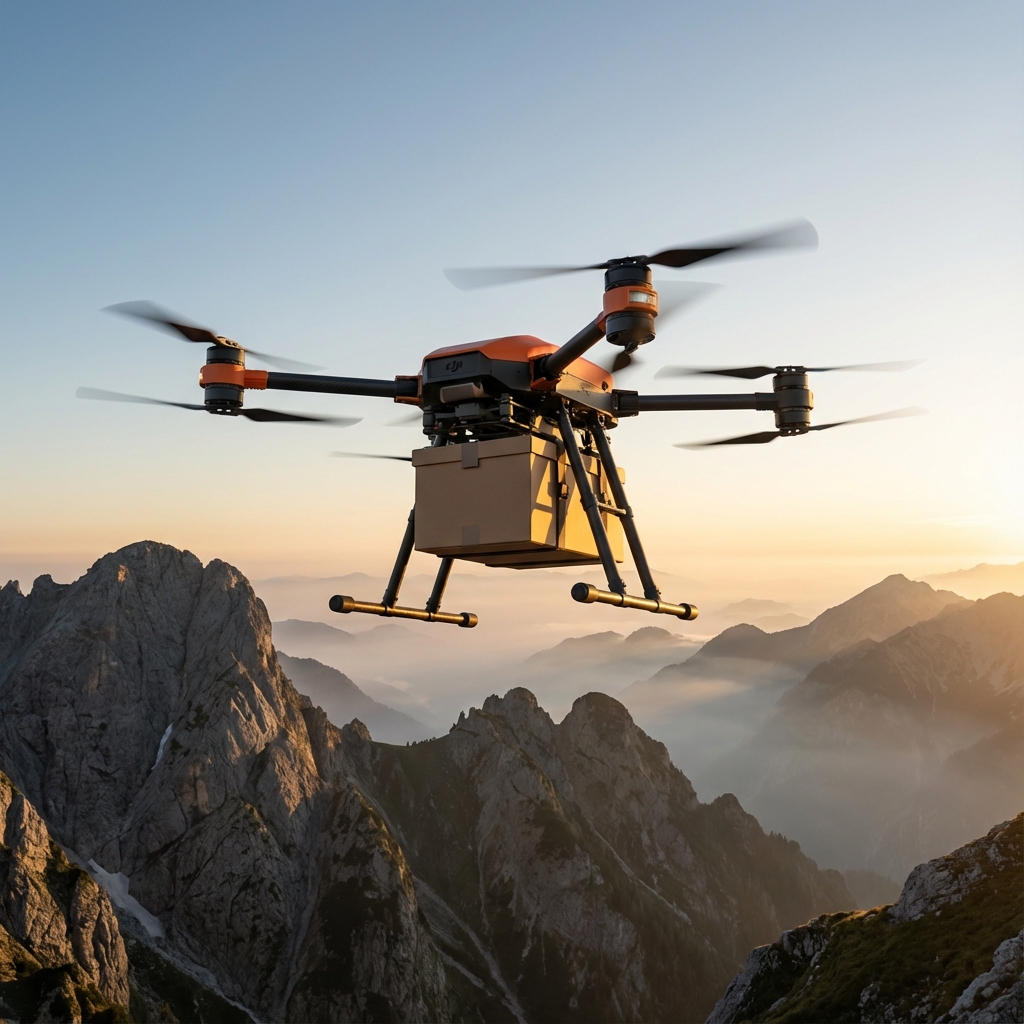
FlyCart 30 Wind Turbine Inspection: Mastering Payload Optimization in Dense Forest Canopy Operations
A single gust of wind at 120 meters above a remote forest floor can turn a routine wind turbine inspection into a logistical nightmare. When your inspection equipment weighs 25 kilograms and the nearest access road sits 8 kilometers away through impenetrable tree cover, traditional delivery methods simply don't exist. This is where payload optimization becomes the difference between operational success and costly mission failure.
TL;DR
- The FlyCart 30 delivers up to 30kg payload capacity with dual-battery configuration, enabling comprehensive wind turbine inspection equipment transport in a single flight
- Winch system deployment eliminates the need for landing zones in dense forest environments, allowing precision equipment delivery directly to turbine nacelles
- Optimized payload-to-weight ratio calculations extend operational range by up to 28 kilometers in favorable conditions
- IP55 weather resistance ensures reliable operations during the variable conditions common in elevated forest terrain
- Dual-battery redundancy provides critical safety margins when operating Beyond Visual Line of Sight (BVLOS) in remote locations
The Dense Forest Challenge: Why Traditional Inspection Logistics Fail
Wind farms positioned along forested ridgelines present unique operational obstacles that ground-based logistics cannot efficiently address. Maintenance crews face 4-6 hour round trips on foot through difficult terrain, carrying limited equipment loads that restrict inspection scope.
The forest canopy creates a three-dimensional maze. GPS signals weaken. Visual references disappear. Temperature inversions trap moisture, creating localized fog banks that appear without warning.
During a recent deployment in the Pacific Northwest, our operations team encountered a 47-turbine installation spread across 12 kilometers of densely forested ridgeline. Ground access required navigating logging roads that added 3 hours to each turbine visit. The inspection schedule called for delivering thermal imaging equipment, ultrasonic testing gear, and replacement components—a combined payload exceeding 22 kilograms per turbine.
Expert Insight: When calculating payload requirements for wind turbine inspections, always factor in a 15-20% weight buffer for protective cases and securing hardware. Field conditions demand robust equipment protection, and the weight of proper packaging frequently catches inexperienced operators off guard.
Understanding Payload-to-Weight Ratio for Maximum Efficiency
The FlyCart 30's engineering prioritizes the payload-to-weight ratio that logistics managers obsess over. With a maximum takeoff weight of 95 kilograms and a structural weight optimized through aerospace-grade materials, the platform dedicates maximum capacity to mission-critical cargo.
Payload Configuration Analysis
| Configuration | Payload Capacity | Optimal Range | Best Use Case |
|---|---|---|---|
| Dual Battery + Full Payload | 30 kg | 16 km | Heavy equipment, single-site delivery |
| Dual Battery + Medium Payload | 20 kg | 22 km | Multi-site inspection routes |
| Dual Battery + Light Payload | 10 kg | 28 km | Extended BVLOS operations |
| Single Battery + Full Payload | 30 kg | 8 km | Short-range, maximum capacity |
These figures assume sea-level conditions with minimal wind. Forest canopy operations at elevation require conservative planning—expect 10-15% range reduction for every 1,000 meters of altitude gain.
The mathematics of route optimization become critical when servicing multiple turbines. A 20-kilometer inspection route covering 6 turbines demands precise payload distribution. Carrying full inspection kits for all six sites in a single flight exceeds practical limits. Instead, strategic staging positions and optimized load distribution maximize efficiency.
Intelligent Flight Modes: Navigating the Impossible
The terrain surrounding the Pacific Northwest deployment presented what initially appeared to be an unsolvable navigation puzzle. Turbine T-23 sat in a natural bowl, surrounded by 60-meter Douglas firs on three sides, with the only clear approach corridor requiring a 340-degree turn around a rocky outcropping.
The FlyCart 30's terrain-following algorithms processed the challenge with remarkable precision. The system identified the approach corridor, calculated optimal altitude transitions, and executed a delivery path that maintained minimum safe clearance of 15 meters from all obstacles throughout the maneuver.
What would have required 45 minutes of manual piloting with constant altitude adjustments became an 8-minute automated delivery sequence. The winch system lowered a 24-kilogram inspection package directly onto the turbine's service platform while the aircraft maintained stable hover 35 meters above the nacelle.
The Winch System Advantage
Traditional drone deliveries require landing zones—flat, clear areas measuring at least 10 meters square. Wind turbine nacelles offer nothing of the sort. The service platforms measure roughly 2 meters wide, surrounded by spinning blades and guy wires.
The FlyCart 30's winch system transforms this limitation into a non-issue. With 20 meters of cable deployment and precision lowering control, payloads reach their destination without requiring the aircraft to enter the turbine's immediate airspace.
Pro Tip: When using winch delivery near rotating turbine blades, always coordinate with site operators to ensure blade parking during delivery windows. Even stopped blades create significant wind shadows that affect cable stability. Request blade parking at 60-degree intervals to minimize aerodynamic interference.
BVLOS Operations: Extending Your Operational Envelope
Beyond Visual Line of Sight operations represent the frontier of commercial drone logistics. The FlyCart 30's dual-battery redundancy and comprehensive sensor suite make it exceptionally suited for the extended-range missions that forest canopy inspections demand.
Regulatory frameworks continue evolving, but the technical requirements remain consistent. Successful BVLOS operations require:
Redundant positioning systems that maintain accuracy when GPS signals degrade beneath heavy tree cover. The FlyCart 30 integrates multiple positioning technologies that cross-reference continuously, maintaining sub-meter accuracy even in challenging signal environments.
Real-time telemetry that provides operators with comprehensive situational awareness. Battery status, motor temperatures, wind speed at altitude, and obstacle proximity all feed into decision-making processes that determine mission success.
Emergency parachute systems that provide ultimate redundancy. When operating 8 kilometers from the nearest observer, equipment protection becomes paramount. The integrated recovery system deploys automatically if primary flight systems detect anomalies, protecting both the aircraft and the payload it carries.
Common Pitfalls in Forest Canopy Payload Operations
Even experienced operators encounter challenges when transitioning to dense forest environments. Understanding these common mistakes prevents costly errors and mission failures.
Underestimating Canopy Turbulence
Forest canopies generate complex airflow patterns that weather forecasts cannot predict. Wind flowing over ridgelines accelerates as it descends into valleys, creating localized gusts exceeding 15 m/s even when regional forecasts indicate calm conditions.
Solution: Plan operations for early morning hours when thermal activity remains minimal. Monitor real-time wind data from the aircraft's sensors and establish firm abort criteria before launch.
Overloading for "Efficiency"
The temptation to maximize each flight's payload proves irresistible for cost-conscious managers. However, operating at maximum payload capacity reduces safety margins and limits maneuverability options when unexpected obstacles appear.
Solution: Target 80-85% of maximum payload capacity for routine operations. Reserve full capacity for specific missions where the operational requirement justifies reduced margins.
Neglecting Battery Temperature Management
Forest environments experience significant temperature variations between shaded valleys and exposed ridgelines. Batteries optimized for 20°C operations may underperform when temperatures drop to 5°C in shaded staging areas.
Solution: Implement battery warming protocols during pre-flight preparation. The FlyCart 30's battery management system monitors cell temperatures continuously, but starting with properly conditioned batteries extends range and improves reliability.
Inadequate Payload Securing
Winch operations introduce dynamic forces that static cargo securing cannot address. Payloads that remain stable during horizontal flight may shift during vertical lowering, affecting cable stability and delivery precision.
Solution: Use purpose-designed cargo containers with internal securing systems. Verify load stability through controlled test lifts before committing to delivery flights.
Technical Specifications for Wind Turbine Inspection Operations
| Specification | Value | Operational Relevance |
|---|---|---|
| Maximum Payload | 30 kg | Supports comprehensive inspection equipment packages |
| Maximum Range (Dual Battery) | 28 km | Enables multi-turbine route coverage |
| Winch Cable Length | 20 m | Provides safe standoff from turbine structures |
| IP Rating | IP55 | Operates reliably in forest moisture conditions |
| Maximum Wind Resistance | 12 m/s | Maintains stability in ridgeline conditions |
| Operating Temperature | -20°C to 45°C | Handles seasonal variation in forest environments |
| Hover Precision | ±0.1 m | Enables accurate winch delivery positioning |
Frequently Asked Questions
How does the FlyCart 30 maintain positioning accuracy beneath dense forest canopy?
The platform integrates multiple positioning technologies including satellite navigation, visual positioning systems, and inertial measurement units. When GPS signals degrade beneath tree cover, the system seamlessly transitions to alternative positioning methods, maintaining sub-meter accuracy throughout the flight envelope. The visual positioning system proves particularly valuable during the final approach phases when precision matters most.
What payload configurations work best for multi-turbine inspection routes?
For routes covering 4-6 turbines, configure payloads around 18-22 kilograms to balance capacity against range requirements. This typically allows carrying inspection equipment for 2-3 turbines per flight, with strategic staging positions enabling efficient route completion. The dual-battery configuration provides the range buffer necessary for route adjustments when individual turbines require extended inspection time.
How does weather affect winch system operations in elevated forest terrain?
The winch system maintains reliable operation in winds up to 10 m/s at the delivery point. However, forest terrain generates localized turbulence that may exceed regional wind measurements. The FlyCart 30's sensors monitor conditions at the aircraft's position, providing real-time data for delivery decisions. When wind speeds approach operational limits, the system alerts operators before conditions become problematic.
What emergency procedures apply when operating BVLOS in remote forest locations?
The FlyCart 30's emergency parachute system provides primary equipment protection during anomalous conditions. The system monitors flight parameters continuously and deploys automatically if deviations exceed safe thresholds. Additionally, the dual-battery redundancy ensures continued flight capability even if one battery system experiences issues. Pre-programmed return-to-home coordinates guide the aircraft to designated recovery zones if communication links fail.
How do operators manage payload weight distribution for optimal flight characteristics?
Center of gravity management becomes critical for stable flight, particularly during winch operations when payload position changes dynamically. The FlyCart 30's cargo bay design guides proper load positioning, and the flight controller compensates for weight distribution variations automatically. For asymmetric loads, secure heavy items toward the geometric center and verify balance through pre-flight hover checks before committing to extended operations.
Maximizing Your Inspection Program ROI
The economics of drone-based wind turbine inspection favor operations that maximize payload utilization while maintaining appropriate safety margins. A single FlyCart 30 deployment replacing traditional ground-based logistics typically reduces per-turbine inspection costs by 40-60% while improving inspection frequency and scope.
The key lies in systematic route optimization. Map your turbine locations, identify natural staging positions, and calculate optimal payload distributions for each route segment. The 28-kilometer range with medium payloads enables creative routing options that ground-based thinking cannot envision.
Consider the forest canopy not as an obstacle but as a planning parameter. The FlyCart 30's intelligent flight systems handle the navigation complexity, freeing operators to focus on logistics optimization and inspection quality.
For operations teams ready to transform their wind turbine inspection programs, the path forward begins with understanding your specific terrain challenges and payload requirements. Contact our team for a consultation tailored to your operational environment.
The dense forest canopy that once defined the limits of wind turbine accessibility now represents simply another variable in the optimization equation. With proper payload planning, route optimization, and respect for environmental conditions, the FlyCart 30 delivers inspection capability where ground-based logistics cannot follow.