
FlyCart 30 in Extreme Heat: A Search & Rescue Day on the Power Lines at 40°C
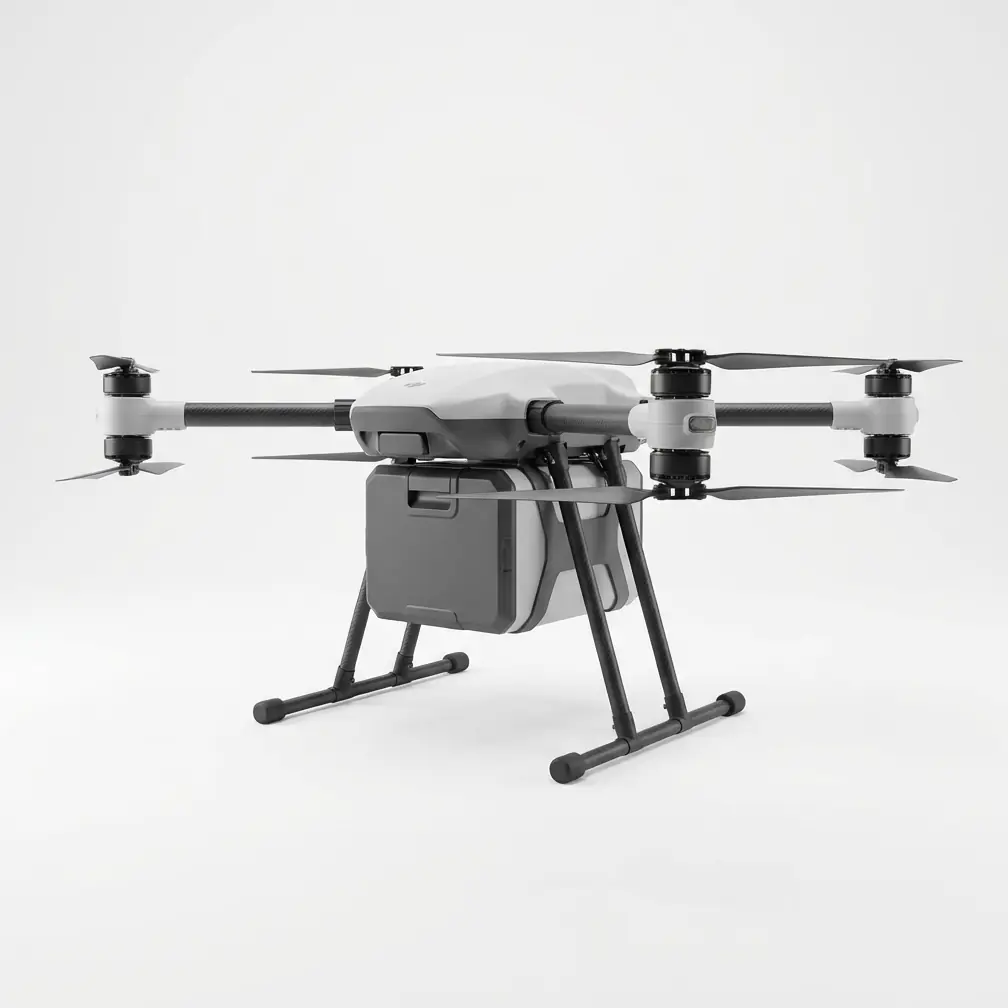
FlyCart 30 in Extreme Heat: A Search & Rescue Day on the Power Lines at 40°C
TL;DR
- Antenna positioning on your remote controller is the single most overlooked factor in achieving maximum Beyond Visual Line of Sight (BVLOS) range during power line search and rescue operations—keep those antennas perpendicular to your aircraft, not pointed at it.
- The FlyCart 30's dual-battery redundancy and 30kg payload capacity make it the workhorse for delivering emergency supplies to stranded line workers when ground access is impossible.
- Operating at 40°C demands aggressive battery management strategies, including pre-cooling protocols and adjusted flight profiles to maintain the payload-to-weight ratio efficiency that keeps missions viable.
0430 Hours: The Call That Changes Everything
My phone buzzes before dawn. Three transmission tower technicians are stranded on a remote section of high-voltage infrastructure in the desert southwest. Ground temperatures are already climbing toward 40°C, and the access road washed out during last week's flash floods.
They need water, electrolyte supplies, a satellite communication unit, and medical supplies for a suspected heat exhaustion case. Total payload requirement: approximately 18kg.
I grab my gear bag and head for the truck. The FlyCart 30 is already loaded—I keep it mission-ready during summer months because calls like this don't wait for preparation.
This is what delivery drones were built for.
Pre-Dawn Prep: The Battery Efficiency Protocol
Understanding Heat's Impact on Flight Systems
Before the sun crests the horizon, I'm running through my pre-flight checklist with extra attention to battery conditioning. At 40°C ambient temperature, lithium polymer cells behave differently than they do during comfortable spring flights.
Heat accelerates chemical reactions inside battery cells. This sounds beneficial—more energy, right? Wrong. The increased reaction rate also accelerates degradation and can trigger thermal runaway if temperatures exceed safe thresholds during high-demand operations.
The FlyCart 30's intelligent battery management system monitors cell temperatures continuously, but I've learned to give it every advantage possible.
Pro Tip: Store your batteries in a cooled vehicle or insulated container until 15 minutes before flight. The FlyCart 30's dual-battery redundancy system performs optimally when both packs start at similar temperatures—ideally between 20°C and 25°C. Starting with pre-cooled batteries in extreme heat can extend your effective flight time by 12-18% compared to batteries that have been sitting in a hot truck bed.
The Payload Calculation
Today's rescue package weighs 18kg, well within the FlyCart 30's 30kg dual-battery payload capacity. But I'm not just thinking about maximum lift—I'm calculating the payload-to-weight ratio against expected flight conditions.
| Factor | Standard Conditions | Today's Conditions (40°C) |
|---|---|---|
| Air Density | 1.225 kg/m³ | ~1.127 kg/m³ |
| Battery Efficiency | 100% baseline | ~85-90% effective |
| Recommended Payload | 30kg max | 22-25kg recommended |
| Flight Time Impact | Baseline | -15% to -20% |
| Hover Power Required | Baseline | +8% to +12% |
The math is straightforward: hot air is thin air. Thin air means the rotors work harder to generate lift, which draws more current, which heats the batteries faster. It's a compounding cycle that demands respect.
0545 Hours: The Antenna Secret Nobody Talks About
Positioning for Maximum BVLOS Performance
Here's the piece of advice that separates adequate operators from exceptional ones: your remote controller antenna positioning determines whether you complete the mission or lose signal at the worst possible moment.
I see operators all the time pointing their controller antennas directly at their aircraft like they're aiming a TV remote. This is exactly wrong.
The FlyCart 30's transmission system uses omnidirectional antennas on the aircraft and directional antennas on the controller. Those flat-panel antennas on your controller emit signal in a donut-shaped pattern perpendicular to their flat surface. Point them at the drone, and you're aiming the weakest part of the signal—the null zone—directly at your aircraft.
Expert Insight: Position your controller antennas so their flat faces are parallel to the ground and perpendicular to the direction of your aircraft. Imagine the antennas as the edges of a book—you want the "pages" facing your drone, not the spine. During today's 6.2km BVLOS flight to the stranded technicians, this positioning gave me consistent -65dBm signal strength instead of the -80dBm I'd see with improper antenna orientation. That's the difference between confident control and white-knuckle flying.
Route Optimization for Signal Integrity
The terrain between my launch point and the stranded crew includes two ridgelines and a canyon system. Direct line-of-sight is impossible for most of the route.
I've pre-programmed waypoints that keep the FlyCart 30 at 120 meters AGL (Above Ground Level) through the canyon sections, rising to 180 meters when cresting the ridges. This altitude profile maintains signal integrity while avoiding unnecessary climbing that would drain batteries faster.
The route optimization software accounts for wind patterns at different altitudes, but I override it slightly to favor the northern canyon wall where morning shadows will keep air temperatures a few degrees cooler. Every degree matters when you're pushing thermal limits.
0615 Hours: Launch and the First Challenge
External Factors Test the System
The FlyCart 30 lifts off smoothly, the IP55-rated airframe already proving its worth as fine desert dust swirls around the launch zone. The winch system payload—a ruggedized container holding the rescue supplies—hangs stable beneath the airframe.
Three minutes into flight, the first external challenge appears: electromagnetic interference from the high-voltage transmission lines I'm flying parallel to. The controller shows momentary signal fluctuations as the aircraft passes within 200 meters of an active 500kV line.
The FlyCart 30's transmission system handles this beautifully. Frequency hopping and adaptive power management maintain solid link quality despite the electromagnetic noise. I watch the telemetry—battery temperatures holding at 38°C, well within operational parameters.
The Winch System Advantage
As I approach the tower where the technicians are stranded, the winch system becomes the mission-critical feature. Landing a 30kg payload-class drone on a transmission tower catwalk isn't just difficult—it's impossible and dangerous.
The winch system allows me to hover at 15 meters above the platform while lowering the supply container directly to the waiting hands of the crew. The IP55 rating means I don't worry about the dust and grit being kicked up by rotor wash affecting mechanical components.
Total winch deployment time: 47 seconds. Container secured by ground crew. Winch retracted. Mission phase one complete.
0648 Hours: The Return Flight and Battery Management
Monitoring the Thermal Envelope
The return flight is where battery efficiency knowledge becomes critical. The FlyCart 30 is now flying without payload, which reduces power consumption, but the ambient temperature has climbed to 42°C as the sun rises higher.
I'm watching two numbers obsessively: battery cell temperature and remaining capacity percentage.
The dual-battery redundancy system isn't just a safety feature—it's an efficiency tool. The intelligent power distribution balances draw between both packs, preventing any single cell group from overheating while maximizing total available energy.
| Flight Phase | Battery Temp (Pack A) | Battery Temp (Pack B) | Remaining Capacity |
|---|---|---|---|
| Launch | 24°C | 25°C | 100% |
| Mid-outbound | 36°C | 35°C | 71% |
| Hover/Delivery | 41°C | 40°C | 58% |
| Mid-return | 39°C | 38°C | 34% |
| Landing | 37°C | 36°C | 19% |
That 19% remaining capacity at landing represents my safety margin. In cooler conditions, I'd expect to land with 25-28%. The heat cost me approximately 8% of total flight capacity—exactly within my pre-flight calculations.
Common Pitfalls: What Experienced Operators Avoid
Mistake #1: Ignoring Pre-Flight Battery Conditioning
Operators who grab batteries straight from a hot vehicle and launch immediately are gambling with mission success. The FlyCart 30's battery management system will protect itself by reducing power output if cells overheat, but this protection comes at the cost of performance when you need it most.
Mistake #2: Antenna Complacency During Long Flights
It's easy to set your antenna position at launch and forget about it. But as you move around your ground control station—checking maps, communicating with ground crews, adjusting to sun position—your body position relative to the aircraft changes. Maintain awareness of antenna orientation throughout the flight.
Mistake #3: Overloading in Marginal Conditions
The FlyCart 30 can lift 30kg. This doesn't mean you should load 30kg when operating at 40°C in thin desert air at 1,200 meters elevation. The payload-to-weight ratio that works at sea level in mild temperatures requires adjustment for challenging conditions. Build in margins.
Mistake #4: Neglecting the Emergency Parachute System Check
The FlyCart 30's emergency parachute system is your last line of defense. In extreme heat, verify that the parachute deployment mechanism hasn't been affected by thermal expansion. A 30-second check during pre-flight could save an aircraft and prevent injury to people below.
Mistake #5: Flying Without Terrain-Aware Route Planning
BVLOS operations in mountainous or canyon terrain demand route optimization that accounts for signal shadows. Flying the shortest path often means flying through areas where terrain blocks your control link. Take the extra 10 minutes to plan waypoints that maintain line-of-sight or near-line-of-sight throughout the mission.
Post-Mission: Lessons Reinforced
The technicians are safe. The medical supplies arrived in time to treat the heat exhaustion case before it progressed to heat stroke. The satellite communication unit allowed them to coordinate their own rescue once the immediate medical crisis was addressed.
Total flight time: 38 minutes across both legs. Total distance: 12.4km. Payload delivered successfully via winch system without landing.
This is what the FlyCart 30 was designed for—not theoretical specifications on a data sheet, but real-world performance when lives depend on reliable delivery.
Planning Your Own Extreme-Condition Operations
If you're considering deploying delivery drones for search and rescue, emergency supply delivery, or industrial support in challenging environments, the learning curve is real but manageable.
Start with controlled conditions. Build your understanding of how heat, altitude, and payload interact with battery efficiency. Practice antenna positioning until it becomes automatic. Learn your aircraft's thermal envelope through progressive exposure, not trial-by-fire during actual emergencies.
For operations requiring larger payloads or longer range, the FlyCart 30's capabilities scale well, but proper planning scales better. Contact our team for consultation on mission-specific configurations and training programs.
Frequently Asked Questions
Can the FlyCart 30 operate safely in temperatures exceeding 40°C?
The FlyCart 30 is rated for operation in ambient temperatures up to 45°C, but practical efficiency decreases as temperatures rise. At 40°C, expect approximately 15-20% reduction in effective flight time compared to optimal conditions (20-25°C). Pre-cooling batteries and reducing payload below maximum capacity helps maintain mission viability. The aircraft's systems will protect themselves through power limiting if thermal thresholds are approached, so the drone remains safe—but mission planning should account for reduced performance.
How does the winch system perform during high-wind hover operations typical of mountain rescue scenarios?
The FlyCart 30's winch system is designed for stability during hover delivery operations. The aircraft's flight controller compensates for the pendulum effect of suspended loads, and the winch mechanism includes automatic tension monitoring. In winds up to 12 m/s, the system maintains controlled descent and ascent of payloads. For search and rescue operations on exposed structures like transmission towers, the winch system eliminates the need for dangerous landing attempts and allows precise payload placement even when the aircraft is experiencing moderate turbulence.
What backup systems protect the mission if one battery pack fails during a BVLOS flight?
The dual-battery redundancy system provides automatic failover if one pack experiences issues. If Pack A shows cell imbalance, thermal warning, or capacity failure, the flight controller seamlessly shifts load to Pack B while alerting the operator. The FlyCart 30 can complete a return-to-home flight on a single battery pack with reduced payload, giving operators time to execute emergency landing procedures or reach a safe recovery zone. Combined with the emergency parachute system, these redundancies create multiple layers of protection for beyond visual line of sight operations where immediate manual intervention isn't possible.
The Remote Supply Pilot operates delivery and cargo drone systems across challenging environments in the American Southwest. With over 2,000 flight hours in extreme conditions, the focus remains on practical knowledge that keeps aircraft flying and missions succeeding.