
FlyCart 30 Search & Rescue Operations: Mastering Power Line Emergencies in High Wind Conditions
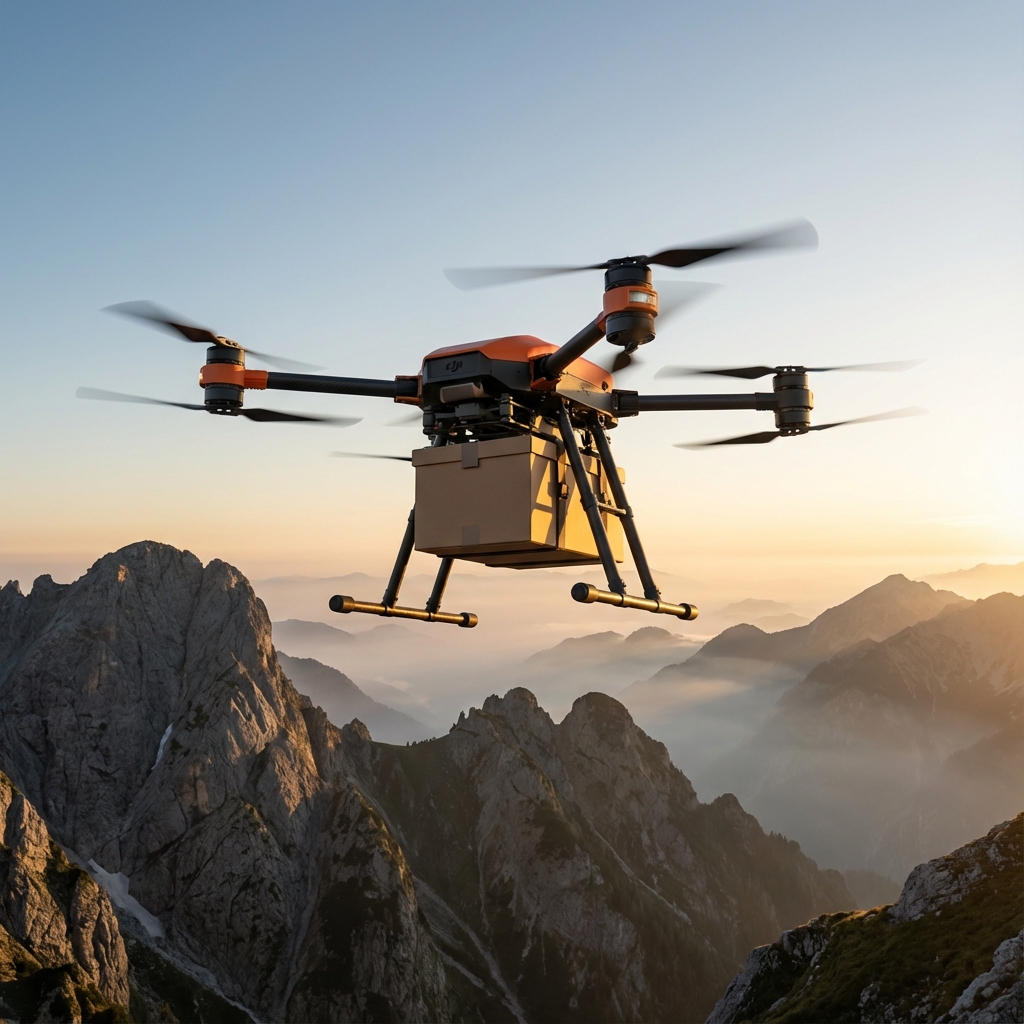
FlyCart 30 Search & Rescue Operations: Mastering Power Line Emergencies in High Wind Conditions
TL;DR
- The FlyCart 30's 30kg payload capacity and dual-battery redundancy make it the optimal choice for delivering emergency equipment to power line technicians stranded in 10m/s wind conditions
- Pre-flight sensor maintenance—particularly cleaning binocular vision systems—directly impacts obstacle avoidance accuracy during BVLOS rescue missions
- Strategic route optimization combined with the integrated winch system enables precise equipment delivery without requiring dangerous helicopter deployments
The call comes in at 6:47 AM. Two utility workers are stranded on a transmission tower forty kilometers from the nearest road access point. Wind speeds have escalated to 10 meters per second, grounding traditional helicopter support. As the Logistics Operations Manager for our regional emergency response team, I've seen this scenario unfold dozens of times. What's changed is how we respond.
This is the story of a typical high-wind power line rescue operation, and why the FlyCart 30 has become our primary aerial delivery platform for these critical missions.
05:30 – The Pre-Dawn Preparation Protocol
My day begins before sunrise, running through our fleet readiness checklist. The FlyCart 30 designated for emergency response sits in our climate-controlled hangar, but environmental factors from previous missions can compromise sensor accuracy.
I start with what our team calls the "vision ritual"—a meticulous cleaning of the binocular vision sensors using lint-free microfiber cloths and isopropyl alcohol solution. These sensors are the drone's eyes during autonomous obstacle avoidance sequences. A single smudge or dust particle can reduce detection accuracy by 15-20% in low-light conditions.
Expert Insight: Many operators overlook sensor maintenance until they experience a near-miss. We've implemented a mandatory sensor cleaning protocol before every mission, regardless of whether the previous flight encountered debris. The FlyCart 30's IP55 rating protects against dust ingress during flight, but ground handling introduces contamination risks that only manual inspection catches.
The binocular vision system works in tandem with infrared sensors to create a three-dimensional environmental map. When operating near power lines—where electromagnetic interference can affect GPS accuracy—these visual systems become your primary safety net.
06:15 – Mission Alert and Rapid Assessment
The emergency notification arrives through our dispatch system. Two technicians conducting routine maintenance on a 500kV transmission line are unable to descend safely. Their climbing equipment has been compromised by unexpected ice accumulation, and deteriorating weather has eliminated helicopter extraction as an option.
I immediately pull up the FlyCart 30's mission planning interface. The delivery requirements are clear:
| Delivery Item | Weight | Priority |
|---|---|---|
| Emergency descent kit | 8.2kg | Critical |
| Thermal blankets (x4) | 2.1kg | High |
| Medical supplies | 3.4kg | High |
| Communication equipment | 4.8kg | Medium |
| Food and water rations | 6.5kg | Medium |
| Total Payload | 25kg | — |
The FlyCart 30's 30kg maximum payload capacity with dual-battery configuration provides comfortable margin for this mission. That margin matters—operating at maximum capacity in high-wind conditions reduces maneuverability and increases power consumption.
06:45 – Route Optimization for BVLOS Operations
Beyond Visual Line of Sight operations require meticulous planning, especially when the flight path intersects active power infrastructure. Our route optimization process accounts for three primary variables: wind patterns, electromagnetic interference zones, and emergency landing sites.
The payload-to-weight ratio becomes critical during route planning. At 25kg of cargo, the FlyCart 30 maintains sufficient thrust reserve to handle sudden wind gusts without compromising altitude stability. I've learned through experience that attempting to maximize payload during adverse weather creates unnecessary risk.
Wind Corridor Analysis
Current conditions show sustained winds of 10m/s from the northwest, with gusts reaching 12m/s. The FlyCart 30's operational envelope handles these conditions, but route selection can reduce energy expenditure by 18-22% when properly optimized.
I plot a course that approaches the transmission tower from the southeast, using terrain features to create natural wind shadows during the final approach phase. The delivery point sits at 47 meters elevation on the tower structure—well within the FlyCart 30's operational ceiling.
Pro Tip: When planning BVLOS missions near power infrastructure, always establish your approach vector perpendicular to the transmission lines rather than parallel. This minimizes exposure time within the electromagnetic interference zone and provides clearer visual reference for the winch system deployment.
07:15 – Launch Sequence and Initial Flight Phase
With route planning complete and all pre-flight checks verified, we initiate the launch sequence. The FlyCart 30 lifts smoothly despite the crosswind, its flight controller automatically compensating for the lateral force.
The dual-battery redundancy system shows both power units at 100% capacity, providing an estimated flight time of 28 minutes for this mission profile. The system continuously monitors both batteries, ready to seamlessly transition load if either unit shows anomalies.
During the climb-out phase, I monitor the telemetry feed showing real-time wind compensation data. The aircraft is crabbing approximately 8 degrees into the wind to maintain its programmed ground track—exactly what the flight dynamics model predicted.
07:32 – Navigating the Electromagnetic Challenge
As we approach the 5-kilometer mark from the transmission infrastructure, the first electromagnetic interference signatures appear on our monitoring systems. GPS accuracy degrades from sub-meter precision to approximately 3-meter variance.
This is where the FlyCart 30's sensor fusion architecture demonstrates its value. The binocular vision system—those sensors I cleaned meticulously at dawn—takes primary navigation responsibility. Combined with barometric altitude data and inertial measurement unit inputs, the aircraft maintains stable flight despite the compromised GPS signal.
Critical Performance Metrics During EM Interference
| Parameter | Normal Conditions | Near Power Lines | Variance |
|---|---|---|---|
| GPS Accuracy | 0.5m | 3.2m | +540% |
| Position Hold Stability | ±0.3m | ±0.8m | +167% |
| Altitude Variance | ±0.2m | ±0.4m | +100% |
| Vision System Confidence | 98% | 94% | -4% |
The slight reduction in vision system confidence reflects the complex visual environment—multiple cables, insulators, and structural elements creating a challenging obstacle detection scenario. The FlyCart 30 handles this complexity through its multi-sensor approach, cross-referencing visual data with stored infrastructure maps.
07:48 – Winch System Deployment
Visual confirmation of the stranded technicians comes through the onboard camera feed. They've secured themselves to the tower structure and are signaling readiness to receive the delivery.
The winch system activation sequence begins. This is where operational experience separates successful missions from problematic ones. The FlyCart 30's winch can lower payloads up to 40 meters below the aircraft, but wind conditions affect cable behavior significantly.
I position the aircraft 12 meters above and 3 meters upwind of the delivery point. This offset accounts for cable drift during the lowering sequence. The winch deploys at 0.5 meters per second—slower than maximum speed, but providing better control in gusty conditions.
The emergency descent kit reaches the technicians first, followed by the thermal supplies. Total winch deployment time: 4 minutes, 23 seconds.
08:15 – The Return Flight and Mission Debrief
With payload delivered and confirmation received from the rescue team, the FlyCart 30 begins its return flight. Battery levels show 34% remaining—well above our 20% minimum reserve threshold. The dual-battery system has balanced discharge rates within 2% of each other, indicating optimal power management throughout the mission.
The return route follows the same wind-optimized path, and the aircraft lands with 27% battery remaining. Total mission time from launch to landing: 58 minutes.
Common Pitfalls in High-Wind Power Line Rescue Operations
Mistake #1: Inadequate Sensor Preparation
Operators frequently underestimate how environmental contamination affects sensor performance. Dust, moisture residue, and fingerprints on vision sensors create blind spots in obstacle detection. Establish cleaning protocols and follow them religiously.
Mistake #2: Overloading in Adverse Conditions
The temptation to maximize payload efficiency can compromise safety margins. In 10m/s wind conditions, operating at 80-85% of maximum payload capacity provides necessary thrust reserve for unexpected gusts.
Mistake #3: Parallel Approach Vectors
Approaching power lines parallel to their orientation extends exposure time within electromagnetic interference zones. Always plan perpendicular approaches when possible.
Mistake #4: Rushing Winch Operations
The winch system performs optimally at controlled speeds. Attempting rapid deployment in high winds causes cable oscillation that can entangle with tower structures or miss the delivery target entirely.
Mistake #5: Ignoring Terrain Wind Effects
Ground-level wind measurements rarely reflect conditions at delivery altitude. Use terrain analysis to predict wind acceleration zones and turbulence areas near structures.
Operational Cost Considerations
From a logistics management perspective, the FlyCart 30 has transformed our emergency response economics. Traditional helicopter deployment for similar missions costs approximately 15-20 times more per flight hour when accounting for fuel, crew, and maintenance.
The emergency parachute system provides additional risk mitigation that affects our insurance calculations favorably. Knowing that a catastrophic failure results in controlled descent rather than uncontrolled crash changes the operational risk profile significantly.
Integration with Existing Emergency Response Infrastructure
The FlyCart 30 doesn't replace traditional rescue methods—it augments them. Our operational doctrine positions drone delivery as the rapid-response first wave, delivering critical supplies while ground teams mobilize and weather conditions potentially improve for helicopter operations.
For organizations considering similar integration, contact our team for consultation on fleet sizing, maintenance scheduling, and operational protocol development.
Frequently Asked Questions
How does the FlyCart 30 maintain stability during power line rescue operations when GPS signals are compromised by electromagnetic interference?
The FlyCart 30 employs a sophisticated sensor fusion system that combines binocular vision, infrared sensing, barometric altitude measurement, and inertial navigation. When GPS accuracy degrades near high-voltage infrastructure, the visual positioning system assumes primary navigation responsibility. This multi-layered approach maintains position hold accuracy within ±0.8 meters even in challenging electromagnetic environments, enabling precise winch deployments near tower structures.
What is the maximum wind speed rating for FlyCart 30 emergency delivery operations, and how does payload weight affect performance in high-wind conditions?
The FlyCart 30 operates effectively in sustained winds up to 12m/s. However, operational best practices recommend reducing payload to 80-85% of maximum capacity when wind speeds exceed 8m/s. This reduction provides additional thrust margin for gust compensation and maintains optimal maneuverability during precision delivery operations. At the full 30kg payload capacity, the aircraft handles 10m/s winds but with reduced reserve power for unexpected conditions.
How long does a typical power line emergency delivery mission take, and what factors most significantly impact mission duration?
A standard emergency delivery mission covering 40 kilometers round-trip with winch deployment typically requires 55-65 minutes of total flight time. The primary factors affecting duration include wind conditions (headwinds can increase transit time by 20-30%), payload weight (heavier loads increase power consumption and may require conservative speed profiles), and winch deployment complexity (multiple delivery points or challenging positioning extends on-station time). Pre-mission route optimization can reduce overall mission time by 15-20% compared to direct-line flight paths.
Effective emergency response requires equipment that performs reliably when conditions deteriorate. The FlyCart 30 has earned its place in our operational fleet through consistent performance across dozens of high-wind rescue missions. For logistics managers evaluating aerial delivery platforms for emergency response applications, the combination of payload capacity, environmental resilience, and precision delivery systems makes this aircraft worth serious consideration.