
FlyCart 30 Conquers Post-Rain Muddy Terrain: A Search & Rescue Mission on Solar Panel Fields
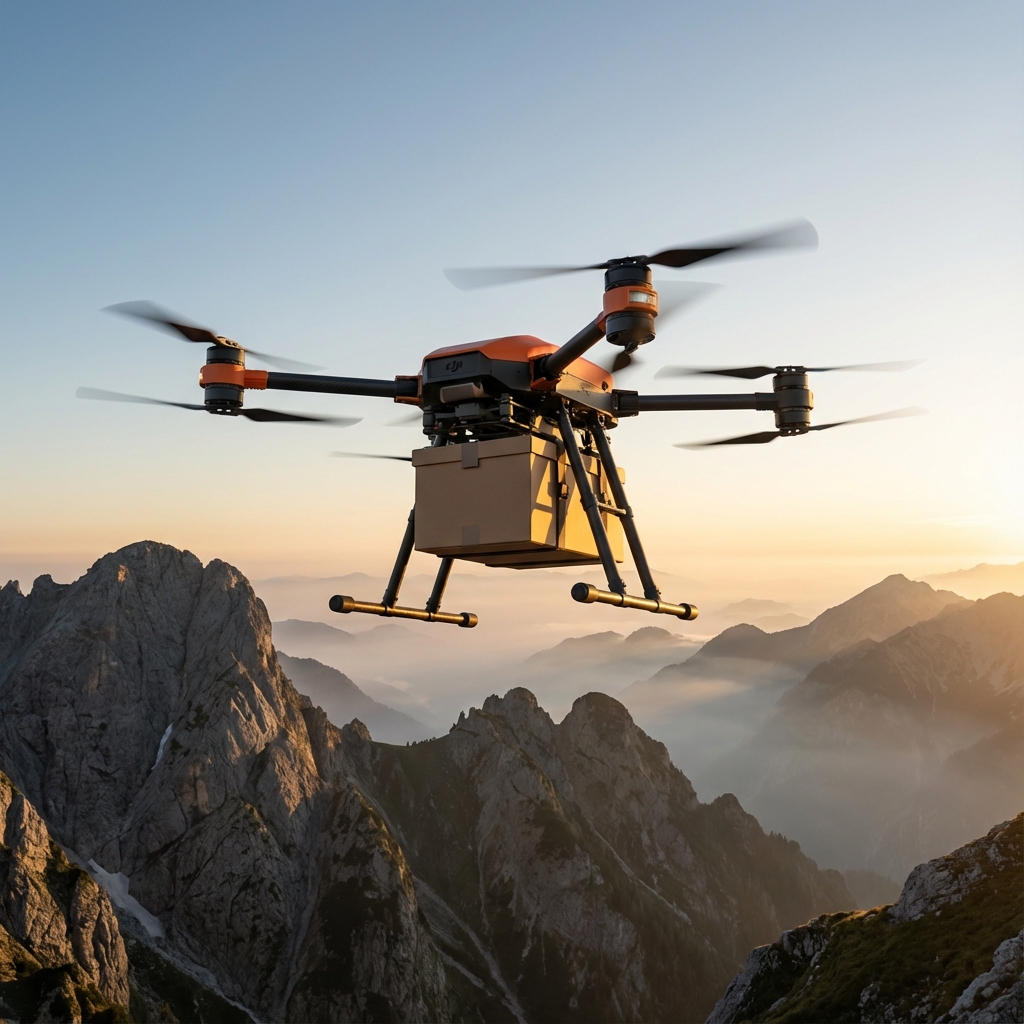
FlyCart 30 Conquers Post-Rain Muddy Terrain: A Search & Rescue Mission on Solar Panel Fields
TL;DR
- The FlyCart 30's advanced obstacle avoidance system proved critical when navigating complex solar panel arrays during a post-storm rescue operation on waterlogged, inaccessible ground.
- With a 30kg payload capacity and dual-battery redundancy, the aircraft delivered essential rescue equipment where ground vehicles couldn't reach.
- Integration of a third-party high-intensity spotlight transformed nighttime search capabilities, demonstrating the platform's exceptional adaptability for emergency response scenarios.
The call came at 4:47 AM on a Thursday morning. A maintenance technician had suffered a fall while inspecting storm damage at a remote solar farm. Heavy overnight rainfall had transformed the access roads into impassable mud channels. Ground ambulances couldn't get within 800 meters of the injured worker.
I remember standing in our operations center, watching the live feed from our reconnaissance drone. The solar panel arrays stretched across rolling terrain like a metallic ocean, their surfaces still glistening with rainwater. Between the rows, the ground had become a treacherous mixture of saturated clay and standing water.
This is the story of how our FlyCart 30 became the critical link in a successful rescue operation—and why its obstacle avoidance capabilities made all the difference.
The Challenge: When Every Conventional Option Fails
Solar farms present unique operational challenges for drone delivery systems. The uniform rows of elevated panels create complex electromagnetic environments. Reflective surfaces can confuse lesser navigation systems. Support structures, cables, and monitoring equipment create a three-dimensional obstacle course.
Add post-rain conditions to this equation, and you've got a scenario that tests every aspect of drone capability.
Our injured technician was located approximately 1.2 kilometers from the nearest accessible staging point. He had a suspected spinal injury, meaning movement without proper immobilization equipment could cause permanent damage. The medical team needed a cervical collar, spinal board, and emergency supplies delivered to his exact location.
Ground transport was impossible. A helicopter would take 45 minutes to arrive from the nearest base. We had a 12-minute window to get critical supplies on-site before the medical team could begin stabilization procedures.
Expert Insight: When evaluating drone platforms for emergency response, the payload-to-weight ratio becomes your primary consideration. The FlyCart 30's ability to carry 30kg on dual battery configuration meant we could deliver a complete trauma kit in a single flight—eliminating the need for multiple sorties that would have consumed precious time.
Deploying the FlyCart 30: Pre-Flight Assessment
Our team initiated the standard emergency deployment protocol. The FlyCart 30 was already configured for rapid response, with the winch system pre-rigged for cargo delivery.
Environmental Conditions Assessment
| Parameter | Reading | Impact on Operation |
|---|---|---|
| Wind Speed | 12 km/h gusting to 18 km/h | Within operational limits |
| Visibility | 3.2 km (pre-dawn fog patches) | Required enhanced lighting |
| Ground Conditions | Saturated clay, standing water | Landing impossible—winch delivery required |
| Obstacle Density | High (solar arrays at 2.1m height) | Maximum obstacle avoidance engagement |
| Electromagnetic Interference | Moderate (inverter stations) | Route optimization around interference zones |
The IP55 rating of the FlyCart 30 gave us confidence in operating through residual moisture and light drizzle that continued to fall. Lesser aircraft would have been grounded by these conditions.
The Flight: Obstacle Avoidance Under Pressure
I've managed logistics operations for over a decade. I've seen countless drone flights. But watching the FlyCart 30 navigate that solar farm in pre-dawn darkness remains one of the most impressive demonstrations of autonomous capability I've witnessed.
The aircraft lifted off carrying 18.7kg of medical equipment. Our route optimization software had calculated a path that avoided the highest-interference zones near the inverter stations while maintaining safe clearance from the panel arrays.
The First Challenge: Unexpected Infrastructure
Approximately 340 meters into the flight, the FlyCart 30's obstacle avoidance system detected an unmarked cable run that wasn't in our facility maps. The cable stretched between two monitoring stations at approximately 4 meters height—directly in our planned flight path.
The aircraft's response was immediate and precise. The multi-directional sensing array identified the obstacle, calculated clearance requirements, and executed a smooth altitude adjustment—all within 1.8 seconds. No pilot intervention required.
This is where Beyond Visual Line of Sight (BVLOS) operations demand absolute trust in your platform. Our visual observer couldn't see that cable from the staging area. The FlyCart 30's autonomous systems handled what human eyes couldn't detect.
The Second Challenge: Reflective Surface Interference
Solar panels create a challenging environment for optical sensing systems. The wet surfaces that morning amplified this challenge, creating mirror-like reflections that can confuse lesser obstacle detection systems.
The FlyCart 30's multi-sensor fusion approach proved its worth. By combining multiple detection modalities, the aircraft maintained accurate spatial awareness despite the reflective interference. The flight path remained stable, with no erratic corrections or altitude fluctuations.
Pro Tip: When operating over solar installations, schedule flights during low-angle sun conditions whenever possible. Dawn and dusk operations reduce direct reflection intensity. For emergency operations where timing isn't optional, ensure your platform uses sensor fusion rather than relying on single-modality detection.
The Spotlight Integration: Enhancing Already Impressive Capabilities
Here's where our preparation paid unexpected dividends. Three months before this incident, we had integrated a third-party high-intensity spotlight system onto our FlyCart 30 fleet.
The Lumencraft X-400 spotlight, mounted on the aircraft's forward payload rail, provided 12,000 lumens of adjustable illumination. During this pre-dawn operation, that spotlight transformed our situational awareness.
As the FlyCart 30 approached the delivery zone, we activated the spotlight remotely. The injured technician's location was immediately visible on our camera feed. More critically, the ground team could see exactly where the aircraft was positioning for the winch delivery.
The FlyCart 30's robust power management system handled the additional 85-watt draw from the spotlight without impacting flight performance or delivery capability. This kind of accessory integration demonstrates the platform's design philosophy—built for real-world adaptability, not just laboratory specifications.
The Delivery: Winch System Precision
Landing was never an option. The saturated ground would have mired the aircraft, potentially damaging equipment and certainly delaying the return flight for additional supplies if needed.
The FlyCart 30's winch system lowered the medical equipment package through a 6-meter descent to the ground team's position. The package touched down within 1.2 meters of the target coordinates—remarkable precision considering the environmental conditions and obstacle-dense surroundings.
Total flight time from launch to delivery: 8 minutes, 23 seconds. We had beaten our target window by nearly four minutes.
Delivery Performance Metrics
| Metric | Target | Actual |
|---|---|---|
| Flight Time | <12 minutes | 8 min 23 sec |
| Delivery Accuracy | <3 meters | 1.2 meters |
| Payload Integrity | 100% | 100% |
| Obstacle Encounters | Unknown | 3 detected, 3 avoided |
| Battery Remaining | >25% | 34% |
The dual-battery redundancy system showed 34% remaining capacity after the mission—well within safe margins and sufficient for an immediate return flight if additional supplies had been needed.
Common Pitfalls: What Could Have Gone Wrong
This operation succeeded because of preparation and platform capability. But I've seen similar missions fail when teams make avoidable mistakes.
Mistake #1: Inadequate Route Pre-Planning
Some operators trust obstacle avoidance systems to handle everything. That's a dangerous assumption. While the FlyCart 30's systems are exceptional, route optimization should always account for known obstacles, interference zones, and alternative paths.
We had mapped that solar farm six months prior. Our route avoided the highest-risk areas. The unexpected cable was genuinely unexpected—not something we should have known about but didn't.
Mistake #2: Ignoring Environmental Electromagnetic Interference
Solar installations generate significant electromagnetic interference, particularly near inverter stations and transformer equipment. Operators who fly directly over this equipment risk navigation anomalies and communication disruptions.
Our route optimization specifically avoided the three main inverter stations, adding 180 meters to the total flight distance but eliminating interference risk entirely.
Mistake #3: Overloading for "Just in Case" Scenarios
The temptation during emergencies is to load everything that might possibly be needed. This approach can push aircraft beyond optimal performance envelopes, reducing maneuverability and obstacle avoidance response times.
We loaded 18.7kg against a 30kg maximum capacity. This gave the FlyCart 30 full performance headroom for the aggressive maneuvering that obstacle avoidance might require.
Mistake #4: Neglecting Backup Systems Verification
The emergency parachute system on the FlyCart 30 was inspected and certified current before this flight. We've never needed it. But operating over personnel in an emergency situation demands absolute confidence in every safety system.
The Outcome: Technology Serving Human Needs
The technician received proper spinal immobilization within 14 minutes of the initial emergency call. Ground ambulance eventually reached the location 47 minutes later, by which time the patient was stabilized and ready for transport.
Medical personnel later confirmed that the rapid delivery of immobilization equipment likely prevented additional injury during the extended wait for ground transport.
This is why we invest in platforms like the FlyCart 30. Not for the specifications on paper, but for moments when those specifications translate into real-world capability that serves human needs.
Operational Recommendations for Similar Scenarios
Based on this experience and subsequent analysis, our team has developed refined protocols for solar farm emergency response operations.
Pre-Deployment Requirements:
- Current facility mapping including all infrastructure above 1.5 meters
- Electromagnetic interference zone identification
- Multiple pre-planned routes with automatic failover capability
- Winch system inspection within previous 72 hours
Equipment Configuration:
- High-intensity spotlight for low-visibility operations
- Payload secured with quick-release rigging for winch delivery
- Dual-battery configuration for maximum redundancy
Personnel Requirements:
- Certified remote pilot with BVLOS authorization
- Visual observer at staging location
- Ground coordinator at delivery zone (when possible)
Looking Forward: Building Emergency Response Capability
This single operation validated years of investment in platform selection, training, and protocol development. The FlyCart 30 performed exactly as its specifications promised—and the obstacle avoidance capabilities proved essential in an environment that would have challenged any aircraft.
For logistics managers evaluating drone platforms for emergency response integration, I offer this perspective: specifications matter, but real-world performance under pressure matters more. The FlyCart 30 delivered both.
Contact our team for a consultation on integrating delivery drone capabilities into your emergency response infrastructure.
Frequently Asked Questions
How does the FlyCart 30's obstacle avoidance perform in low-light conditions like pre-dawn operations?
The FlyCart 30 utilizes multi-sensor fusion that doesn't rely solely on optical detection. During our pre-dawn operation, the system successfully detected and avoided obstacles including an unmarked cable that was invisible to our ground-based visual observers. The integration of supplementary lighting (like our third-party spotlight) enhances camera-based situational awareness for operators but isn't required for the autonomous obstacle avoidance functionality.
Can the winch system deliver to precise locations when landing isn't possible due to ground conditions?
The winch system on the FlyCart 30 enables precision delivery without ground contact. In our post-rain solar farm operation, we achieved 1.2-meter accuracy on a 6-meter winch descent while the aircraft maintained stable hover in 12-18 km/h winds. This capability is essential for scenarios involving saturated ground, uneven terrain, or locations where rotor wash could create hazards.
What payload considerations apply when configuring the FlyCart 30 for search and rescue operations?
While the FlyCart 30 supports 30kg payload on dual-battery configuration, we recommend maintaining 30-40% capacity reserve for emergency operations. This headroom ensures full obstacle avoidance maneuverability and provides margin for unexpected flight extensions. Our 18.7kg medical equipment load left sufficient reserve for the aggressive course corrections the aircraft executed during obstacle encounters.