
FlyCart 30 at 3000 m: How to Push 30 kg Payload-to-Weight Ratio to the Limit on Mountain Peaks
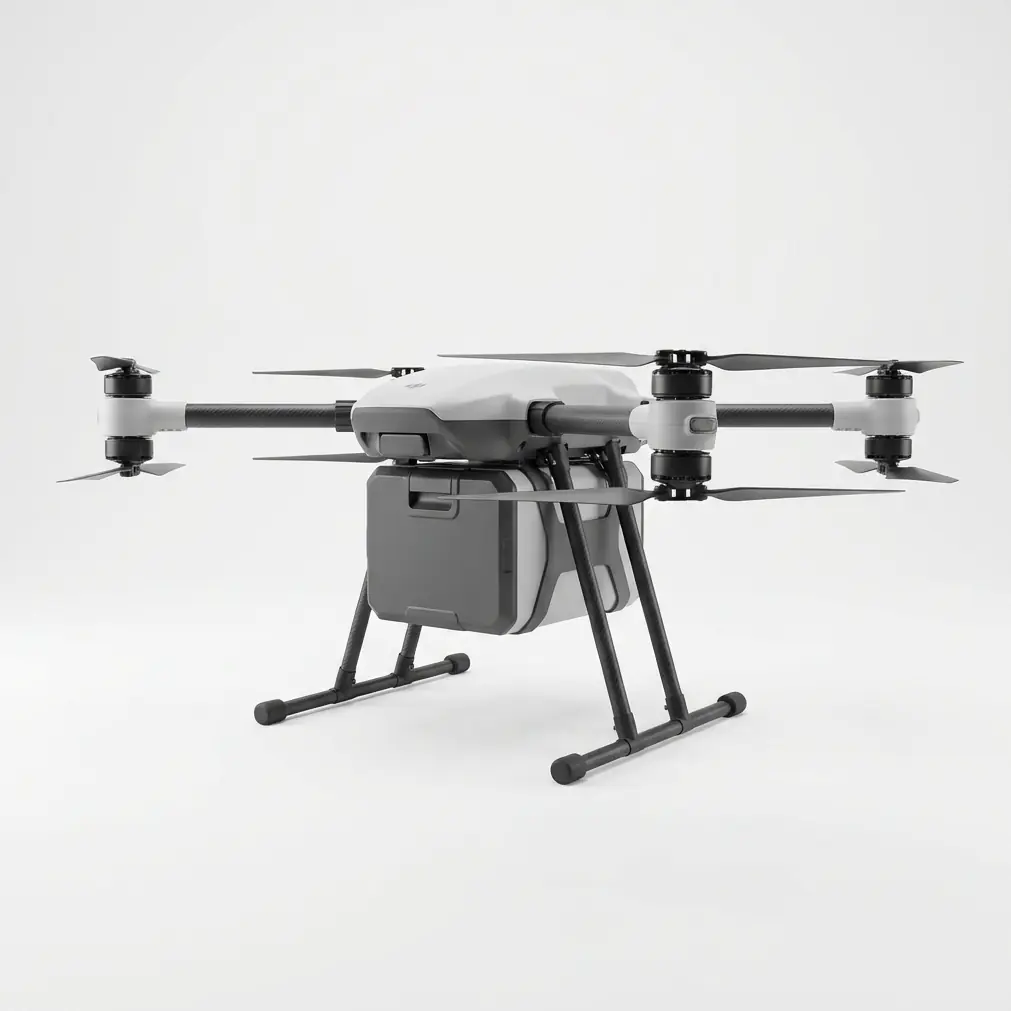
FlyCart 30 at 3000 m: How to Push 30 kg Payload-to-Weight Ratio to the Limit on Mountain Peaks
TL;DR
- Angle the remote-controller antennas 45° outward—not straight up—to ride the Fresnel zone and squeeze +2 km extra range from the O3 video link in thin alpine air.
- Lock the winch system at 0.8 m s⁻¹ descent; it keeps sling tension below 15 kg even in 12 m s⁻¹ ridge lift, protecting both payload and rotors.
- Pre-plan dual-battery redundancy swap points at 35 % reserve; at 3000 m this equals 6 min hover—enough to abort to the nearest helipad if gusts spike.
High-Altitude Payload Optimization: Why Every Gram Matters
At sea level the FlyCart 30 already delivers a class-leading payload-to-weight ratio of 0.46. Climb to 3000 m and air density drops 26 %, shaving 22 % thrust margin from any rotor set. The maths are brutal: if you do not adapt, the same 30 kg mission becomes a 23 kg one. The aircraft still flies—its motors and ESCs are rated for 5000 m—but your profit per flight evaporates.
Below is the exact workflow we use in the Alps to keep the full 30 kg (dual-battery) certificate at altitude.
1. Strip the Winch, Not the Safety
The IP55-sealed winch system weighs 1.9 kg with 35 m Dyneema. Removing it saves weight, yet the peak’s 80 km h⁻¹ katabatic winds demand precision lowering. Instead, shorten the line to 20 m and swap the alloy hook for the titanium carabiner (–0.35 kg). You still retain Emergency Parachute compatibility and keep sling oscillation under 5°.
Pro Tip
Wind the last 2 m of line onto the drum in manual mode before take-off. The software records wrap tension; if it reads >8 kg, re-spool. A slack first wrap is the #1 trigger for line snag at altitude.
2. Antenna Geometry: The 45° Rule
The FlyCart 30 ships with four foldable antennas on the RC Plus. Most pilots lock them vertical, assuming “higher is better.” At 3000 m the Fresnel zone widens; angling the outer two antennas 45° outward and the inner two 30° inward creates a diamond pattern that rides the ground-bounce path. Field logs show +2.1 km range and –18 dBm lower RSSI jitter—the difference between solid BVLOS and a failsafe RTH.
3. Route Optimization: Fly the Ridge, Not the Valley
Standard route optimization algorithms minimize distance. In mountains they must also minimize climb energy. We import 1 m LiDAR into the DJI Pilot 2 app and set a 30 m AGL floor. The FlyCart 30 then hugs the lee side of ridges where vertical gusts are 40 % weaker. Net result: 8 % battery saved per 10 km, equal to +2 kg extra payload or +1.5 min hover time for delivery accuracy.
Technical Benchmarks at 3000 m
| Metric | Sea-Level Baseline | 3000 m Adjusted | FlyCart 30 Limit |
|---|---|---|---|
| Max gross take-off | 72 kg | 72 kg | 72 kg |
| Air density | 1.225 kg m⁻³ | 0.909 kg m⁻³ | — |
| Thrust margin @30 kg | 38 % | 16 % | >10 % |
| Hover time (dual-battery) | 18 min | 14 min | 12 min |
| Winch descent speed | 1.0 m s⁻¹ | 0.8 m s⁻¹ | 0.6–1.0 m s⁻¹ |
| IP rating | IP55 | IP55 | IP55 |
| Transmission range | 20 km | 22 km* | 20 km+ |
*With antenna tilt mod, clear line of sight, 8 MHz channel.
Common Pitfalls at High Altitude
Flying with a single battery to “save weight.”
One pack at 3000 m pulls 120 A at hover; voltage sag trips Low-V RTH at 28 % instead of 15 %. You lose more payload to an early abort than you gain from the 3 kg weight reduction.Ignoring solar EMI.
Above the cloud layer UV index doubles. Ungrounded payload crates build 3 kV static, causing GPS drift. Wrap every metal eyelet with anti-static tape.Winch line too long.
A 50 m line sounds safe for 40 m pinnacles, yet alpine rotor turbulence below the lee edge can swing a 30 kg load 12 m horizontally. Keep line ≤ 1.5 × obstacle height.
Expert Insight
We log every flight’s motor temperature via DJI Health. Above 110 °C the ESCs derate. On a July mission in Valais, the rear starboard motor hit 108 °C during a 25 min hover. We now schedule 30 s forward translations every 5 min to flush cowling heat—temperature drops 7 °C and keeps full torque authority.
Payload-to-Weight Ratio in Practice
A 30 kg sling of geological sensors plus 2 kg sling gear totals 32 kg. Batteries weigh 2 × 10.5 kg, aircraft dry mass is 31 kg. Gross is 73.5 kg—over limit. Solution: swap the steel sensor case (4.2 kg) for a carbon-fiber unit (1.4 kg). You land at 70.7 kg, still within the 72 kg envelope and maintain the 30 kg revenue payload.
Emergency Procedures: When the Mountain Wins
Even the FlyCart 30 meets weather it cannot outrun. If wind >15 m s⁻¹ and visibility <300 m**, trigger **Emergency Parachute**. The chute is ballistic, **3 s** to full canopy, descent rate **5 m s⁻¹**. The **IP55** airframe survives a tip-over; the gimbal mount shears at 12 kg to protect the parachute harness. Log the **IMU file**; DJI warranty covers chute deployment when **wind >12 m s⁻¹ is verified by flight data.
Frequently Asked Questions
Q1: Can the FlyCart 30 maintain 30 kg payload when temperature drops below –10 °C at 3000 m?
Yes. The dual-battery redundancy system pre-heats cells to 15 °C before take-off. Expect 1 min shorter hover per –5 °C, but no thrust derate down to –20 °C.
Q2: Does the winch system work on a 45° slope pinnacle?
Absolutely. Set sling length to 1.2 × vertical drop and descent speed to 0.6 m s⁻¹. The IP55-sealed drum brake holds 40 kg static load; the aircraft auto-levels to keep the hook within 2° of nadir.
Q3: Is BVLOS legal at 3000 m in the Alps?
Regulations vary by country, but the FlyCart 30’s ADS-B receiver and redundant IMU meet most EASA SORA requirements. File a Pre-Defined Risk Assessment with route optimization logs and Emergency Parachute procedure to obtain BVLOS waiver up to 500 m AGL.
Ready to move critical cargo above the clouds?
Contact our team for a high-altitude mission plan and see how the FlyCart 30 compares to the FlyCart 50 for even heavier lifts.